


Neurovascular Stents Market Size
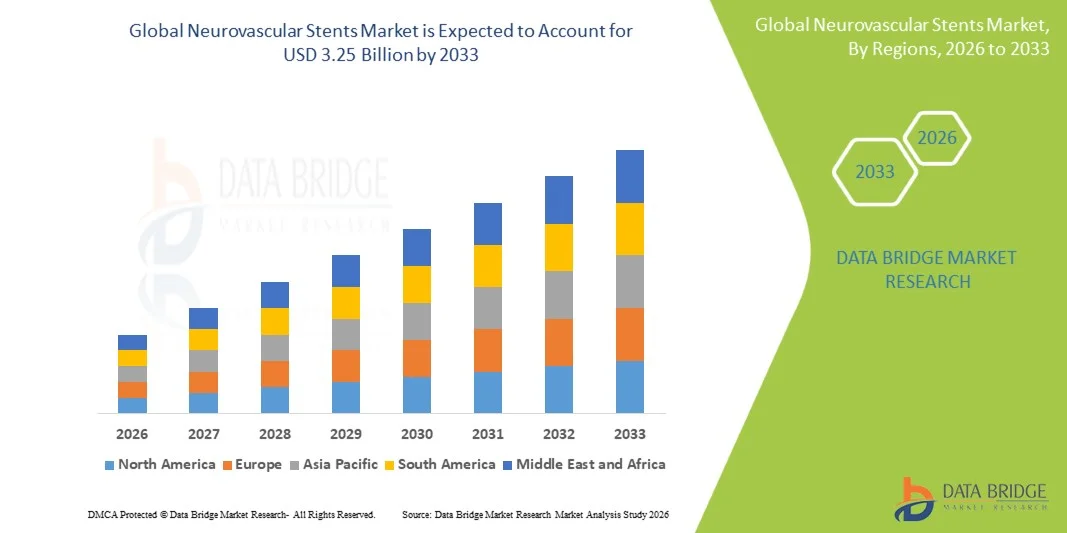
- The global neurovascular stents market size was valued at USD 1.52 billion in 2025 and is expected to reach USD 3.25 billion by 2033, at a CAGR of 10.00% during the forecast period
- The market growth is largely fueled by the increasing prevalence of neurovascular disorders such as aneurysms and ischemic strokes, along with advancements in minimally invasive endovascular procedures and device technologies
- Furthermore, rising demand for effective, less invasive treatment options, coupled with improvements in imaging technologies, stent design, and clinical outcomes, is driving wider adoption of neurovascular stents in hospitals and specialty centers. These converging factors are accelerating the uptake of neurovascular stent solutions, thereby significantly boosting the industry's growth
Neurovascular Stents Market Analysis
- Neurovascular stents, used to treat conditions such as intracranial aneurysms and carotid artery disease, are increasingly essential in modern neurointerventional procedures due to their ability to restore and maintain blood flow in cerebral vessels through minimally invasive techniques, offering improved patient outcomes and reduced recovery times in both emergency and elective settings
- The escalating demand for neurovascular stents is primarily fueled by the rising prevalence of cerebrovascular disorders, increasing aging population, and continuous advancements in stent materials and designs, alongside growing preference for minimally invasive endovascular procedures over traditional surgical interventions
- North America dominated the neurovascular stents market with the largest revenue share of 42.4% in 2025, supported by advanced healthcare infrastructure, high adoption of innovative neurointerventional technologies, strong reimbursement systems, and the presence of key medical device manufacturers, with the U.S. accounting for a significant share of procedures
- Asia-Pacific is expected to be the fastest growing region in the neurovascular stents market during the forecast period due to expanding healthcare infrastructure, increasing healthcare expenditure, rising awareness of stroke treatment options, and a growing patient pool affected by neurovascular conditions
- Intracranial stents segment dominated the neurovascular stents market in 2025 with an estimated share of 60.9%, driven by their extensive use in treating intracranial aneurysms and complex cerebrovascular lesions
Report Scope and Neurovascular Stents Market Segmentation
|
Attributes |
Neurovascular Stents Key Market Insights |
|
Segments Covered |
|
|
Countries Covered |
North America
Europe
Asia-Pacific
Middle East and Africa
South America
|
|
Key Market Players |
|
|
Market Opportunities |
|
|
Value Added Data Infosets |
In addition to the insights on market scenarios such as market value, growth rate, segmentation, geographical coverage, and major players, the market reports curated by the Data Bridge Market Research also include in-depth expert analysis, patient epidemiology, pipeline analysis, pricing analysis, and regulatory framework |
Neurovascular Stents Market Trends
“Advancements in Minimally Invasive Neurointerventions with Next-Generation Stent Technologies”
- A significant and accelerating trend in the global neurovascular stents market is the advancement of minimally invasive neurointerventional procedures supported by next-generation stent technologies, improving treatment precision and patient outcomes in complex cerebrovascular conditions
- For instance, the increasing use of flow-diverting and self-expanding stents has enabled clinicians to treat intracranial aneurysms more effectively by redirecting blood flow and promoting vessel healing without the need for open surgery
- Innovations in stent design, including enhanced flexibility, biocompatible coatings, and improved radial strength, are improving navigability through tortuous cerebral vessels and reducing procedural complications. Furthermore, integration with advanced imaging techniques allows for better visualization and accurate placement of stents during procedures
- The growing adoption of hybrid operating rooms and image-guided neurointerventions facilitates real-time monitoring and precise deployment of neurovascular stents, enabling a more controlled and safer treatment environment. Through these advancements, clinicians can manage complex cases with higher confidence and efficiency
- The integration of AI-driven imaging analysis and procedural planning tools is emerging as a key trend, helping clinicians improve stent selection, optimize placement strategies, and enhance overall procedural accuracy
- This trend toward technologically advanced, patient-specific, and image-guided neurovascular interventions is fundamentally reshaping treatment approaches. Consequently, companies are focusing on developing innovative stent platforms tailored for improved deliverability, safety, and long-term efficacy across diverse patient populations.
- The demand for advanced neurovascular stents is growing rapidly across hospitals and specialized neuro centers, as healthcare providers increasingly prioritize minimally invasive procedures that reduce recovery time and improve clinical outcomes
Neurovascular Stents Market Dynamics
Driver
“Rising Incidence of Cerebrovascular Diseases and Expanding Neurointerventional Procedures”
- The increasing prevalence of cerebrovascular diseases such as ischemic stroke, intracranial aneurysms, and carotid artery stenosis, coupled with the expanding adoption of neurointerventional procedures, is a significant driver for the heightened demand for neurovascular stents
- For instance, in recent years, healthcare systems have expanded stroke treatment centers and endovascular capabilities to manage the growing burden of neurovascular conditions, supporting wider adoption of stent-based interventions
- As patients and clinicians increasingly prefer minimally invasive alternatives to open neurosurgery, neurovascular stents offer effective treatment options with reduced procedural risks, shorter hospital stays, and improved recovery times, making them a preferred choice in many cases
- Furthermore, the rising aging population, which is more susceptible to neurovascular disorders, along with improved diagnostic capabilities such as advanced imaging and screening, is contributing to earlier detection and higher treatment rates. The growing availability of skilled neurointerventionalists and specialized care facilities further supports market expansion
- The increasing investments in healthcare infrastructure and expansion of stroke care networks in emerging economies are also enabling broader access to neurovascular treatments, thereby supporting market growth
- Continuous clinical research and product approvals for advanced stent systems are further encouraging physicians to adopt these technologies in routine practice, strengthening procedural volumes globally
- The convenience of endovascular access, combined with continuous improvements in device performance and procedural success rates, is key factors propelling the adoption of neurovascular stents in both developed and emerging healthcare markets. The increasing focus on expanding stroke care infrastructure further contributes to sustained market growth
Restraint/Challenge
“High Procedural Complexity and Risk of Complications Alongside Cost Constraints”
- Concerns surrounding the technical complexity of neurovascular stent procedures and the risk of complications such as in-stent thrombosis, restenosis, and vessel injury pose a significant challenge to broader market penetration. As these procedures require high precision and specialized expertise, they may not be widely available in all healthcare settings
- For instance, reports of procedure-related complications in complex intracranial interventions have led to cautious adoption in certain regions, particularly where experienced neurointerventional specialists and advanced infrastructure are limited
- Addressing these challenges requires extensive clinician training, adherence to strict procedural protocols, and the use of advanced imaging and guidance systems to minimize risks. Companies are also focusing on improving device safety profiles through enhanced materials and design innovations to reduce complications. Additionally, the relatively high cost of neurovascular stents and associated procedures compared to conventional treatments can limit accessibility, especially in cost-sensitive healthcare systems. While reimbursement policies in developed regions support adoption, affordability remains a concern in emerging markets
- Limited availability of specialized neurointerventional centers and uneven access to advanced healthcare infrastructure in low- and middle-income regions further restricts the widespread adoption of neurovascular stents
- Strict regulatory requirements and lengthy approval processes for neurovascular devices can also delay product launches and market entry, impacting the speed of innovation adoption
- Although technological advancements are gradually improving safety and outcomes, the perceived procedural risks and economic burden can still hinder widespread adoption, particularly in under-resourced healthcare environments or regions with limited access to specialized care
- Overcoming these challenges through improved device design, enhanced physician training, supportive reimbursement frameworks, and the development of cost-effective stent solutions will be vital for sustained market growth
Neurovascular Stents Market Scope
The market is segmented on the basis of product type, material, and end-user.
- By Product Type
On the basis of product type, the neurovascular stents market is segmented into intracranial stents and carotid artery stents. The intracranial stents segment dominated the market with the largest market revenue share of 60.9% in 2025, driven by the rising prevalence of intracranial aneurysms and complex cerebrovascular conditions that require precise and minimally invasive treatment. These stents are widely used in neurointerventional procedures due to their ability to support vessel walls and assist in flow diversion, improving clinical outcomes. Increasing adoption of advanced neurovascular procedures, along with continuous improvements in stent flexibility and deliverability, further supports the dominance of this segment. Growing clinical preference for endovascular treatment over open surgery also contributes significantly to its leading position. Additionally, expanding availability of skilled neurointerventionalists and specialized treatment centers enhances the utilization of intracranial stents globally.
The carotid artery stents segment is expected to witness the fastest growth rate during the forecast period, driven by the increasing incidence of carotid artery stenosis and ischemic stroke cases worldwide. Rising awareness regarding early diagnosis and treatment of carotid artery diseases is encouraging more patients to undergo stenting procedures as a less invasive alternative to carotid endarterectomy. Technological advancements in stent design, including improved scaffolding and embolic protection systems, are enhancing procedural safety and outcomes. Furthermore, the growing aging population and increasing prevalence of lifestyle-related risk factors such as hypertension and diabetes are contributing to the expansion of this segment. Expanding healthcare infrastructure in emerging economies and increasing access to vascular screening programs are also supporting faster adoption of carotid artery stents.
- By Material
On the basis of material, the neurovascular stents market is segmented into metal, polymers, and others. The metal segment dominated the market with the largest revenue share of 70% in 2025, owing to its superior mechanical strength, durability, and proven clinical performance in neurovascular interventions. Metals such as nitinol and stainless steel are widely used due to their excellent flexibility, shape memory properties, and ability to navigate complex cerebral anatomies. Metal stents are preferred by clinicians for their reliability in maintaining vessel patency and supporting long-term treatment of aneurysms and stenotic lesions. Continuous innovations in metal alloys and surface coatings have further improved biocompatibility and reduced the risk of complications such as thrombosis. The widespread availability of metal-based stents and their established use in clinical practice reinforce their dominant position in the market.
The polymers segment is expected to witness the fastest growth rate during the forecast period, driven by increasing research and development in bioresorbable and polymer-based stent technologies. These stents offer advantages such as reduced long-term foreign body presence, lower risk of chronic complications, and improved compatibility with the vascular system. Advancements in polymer engineering are enabling the development of stents with controlled degradation rates and enhanced mechanical properties. Growing interest in next-generation, patient-specific treatment solutions is accelerating the adoption of polymer-based stents in clinical settings. Additionally, ongoing clinical trials and regulatory approvals for innovative polymer stents are expected to further boost segment growth. Increasing focus on improving patient outcomes and minimizing long-term complications is also supporting the rapid expansion of this segment.
- By End-User
On the basis of end-user, the neurovascular stents market is segmented into hospitals, medical centers, ambulatory surgical centers, and others. The hospitals segment dominated the market with the largest revenue share of 65% in 2025, due to the availability of advanced neurointerventional infrastructure, skilled specialists, and comprehensive care facilities required for complex neurovascular procedures. Hospitals serve as primary centers for stroke management and emergency interventions, making them the leading setting for stent-based treatments. The presence of hybrid operating rooms and advanced imaging systems in hospitals enables precise stent placement and improved procedural outcomes. Additionally, high patient inflow and strong reimbursement frameworks in hospital settings further support their dominant position. Hospitals also play a key role in adopting advanced technologies and conducting complex neurovascular procedures, reinforcing their leadership in this segment.
The ambulatory surgical centers (ASCs) segment is expected to witness the fastest growth rate during the forecast period, driven by the increasing shift toward outpatient and minimally invasive procedures. ASCs offer cost-effective treatment options, shorter hospital stays, and faster recovery times, making them an attractive alternative for both patients and healthcare providers. Advancements in medical technology and improved procedural safety are enabling more neurovascular interventions to be performed in outpatient settings. Rising demand for convenient and efficient care delivery, along with increasing investments in ASC infrastructure, is supporting segment growth. Furthermore, growing preference for decentralized healthcare services and the expansion of specialized neurovascular care in ambulatory settings are contributing to the rapid adoption of neurovascular stents in ASCs.
Neurovascular Stents Market Regional Analysis
- North America dominated the neurovascular stents market with the largest revenue share of 42.4% in 2025, supported by advanced healthcare infrastructure, high adoption of innovative neurointerventional technologies, strong reimbursement systems, and the presence of key medical device manufacturers
- Healthcare providers in the region highly value the availability of advanced neuroimaging technologies, skilled neurointerventional specialists, and innovative stent devices that improve procedural accuracy and patient outcomes
- This widespread adoption is further supported by high healthcare expenditure, favorable reimbursement policies, and a strong presence of leading medical device companies, establishing neurovascular stents as a preferred treatment option in both hospital and specialized clinical settings
U.S. Neurovascular Stents Market Insight
The U.S. neurovascular stents market captured the largest revenue share of 80% in North America in 2025, fueled by the high prevalence of cerebrovascular diseases and the rapid adoption of advanced neurointerventional procedures. Healthcare providers are increasingly prioritizing minimally invasive treatments for conditions such as intracranial aneurysms and stroke, driving demand for neurovascular stents. The strong presence of leading medical device companies, coupled with continuous product innovations and FDA approvals, further supports market expansion. Additionally, well-established healthcare infrastructure, favorable reimbursement policies, and a high concentration of specialized neurointerventional centers are contributing to the widespread adoption of neurovascular stents.
Europe Neurovascular Stents Market Insight
The Europe neurovascular stents market is projected to expand at a substantial CAGR throughout the forecast period, primarily driven by increasing cases of stroke and growing demand for minimally invasive treatment options. Rising healthcare expenditure, along with supportive regulatory frameworks and expanding access to advanced medical technologies, is fostering market growth across the region. European healthcare systems emphasize early diagnosis and preventive care, which is encouraging the use of neurovascular interventions. Additionally, the presence of well-developed hospitals and increasing adoption of innovative neurointerventional devices are supporting market penetration across residentially developed countries.
U.K. Neurovascular Stents Market Insight
The U.K. neurovascular stents market is anticipated to grow at a noteworthy CAGR during the forecast period, driven by increasing awareness of cerebrovascular diseases and the rising adoption of advanced endovascular treatments. The National Health Service (NHS) plays a key role in facilitating access to neurointerventional procedures, supporting the use of neurovascular stents in public healthcare settings. Growing concerns related to stroke management and improved diagnostic capabilities are encouraging early intervention. Furthermore, the U.K.’s strong clinical research ecosystem and adoption of innovative medical technologies are contributing to steady market growth across hospitals and specialized centers.
Germany Neurovascular Stents Market Insight
The Germany neurovascular stents market is expected to expand at a considerable CAGR during the forecast period, fueled by the country’s advanced healthcare infrastructure and strong focus on medical innovation. Germany’s well-established hospital network and high standards of clinical care support the adoption of neurovascular interventions. Increasing prevalence of neurological disorders, along with a growing aging population, is driving demand for effective treatment solutions such as stents. Additionally, Germany’s emphasis on precision medicine and integration of advanced imaging technologies with neurointerventional procedures is promoting the use of neurovascular stents in both public and private healthcare systems.
Asia-Pacific Neurovascular Stents Market Insight
The Asia-Pacific neurovascular stents market is poised to grow at the fastest CAGR during the forecast period, driven by rising healthcare expenditure, increasing prevalence of stroke and aneurysms, and improving access to advanced medical treatments. Rapid urbanization and the expansion of healthcare infrastructure in countries such as China, Japan, and India are significantly contributing to market growth. Government initiatives aimed at strengthening healthcare systems and increasing awareness of neurovascular diseases are further accelerating adoption. Additionally, the region’s growing pool of trained specialists and increasing availability of cost-effective treatment options are supporting wider use of neurovascular stents across both public and private healthcare facilities.
Japan Neurovascular Stents Market Insight
The Japan neurovascular stents market is gaining momentum due to the country’s advanced healthcare system, aging population, and high prevalence of cerebrovascular diseases. Japan places strong emphasis on minimally invasive procedures, driving the adoption of neurovascular stents in clinical practice. The integration of cutting-edge imaging technologies and robotics in neurointerventional procedures is enhancing treatment precision and outcomes. Additionally, the country’s focus on innovation and early adoption of medical technologies is supporting the use of advanced stent systems. Increasing demand for effective stroke management solutions is further contributing to steady market growth in both hospital and specialized care settings.
India Neurovascular Stents Market Insight
The India neurovascular stents market accounted for a significant market share in Asia Pacific in 2025, attributed to the country’s large patient population, rising incidence of cerebrovascular diseases, and expanding healthcare infrastructure. Increasing awareness regarding stroke treatment and the availability of advanced neurointerventional procedures are driving demand for neurovascular stents. India’s growing network of multi-specialty hospitals and increasing investments in healthcare facilities are supporting wider access to treatment. Additionally, the presence of cost-effective medical solutions and improving affordability of advanced procedures are key factors propelling market growth across both urban and semi-urban regions.
Neurovascular Stents Market Share
The Neurovascular Stents industry is primarily led by well-established companies, including:
- Medtronic (Ireland)
- Stryker (U.S.)
- Johnson & Johnson Services, Inc. (U.S.)
- Terumo Corporation (Japan)
- MicroPort Scientific Corporation (China)
- Penumbra, Inc. (U.S.)
- Acandis GmbH (Germany)
- Phenox GmbH (Germany)
- Cook (U.S.)
- Cordis Corporation (U.S.)
- W. L. Gore & Associates, Inc. (U.S.)
- Biotronik SE & Co. KG (Germany)
- Balt (France)
- Integer Holdings Corporation (U.S.)
- InspireMD, Inc. (U.S.)
- Merit Medical Systems, Inc. (U.S.)
- Cardinal Health, Inc. (U.S.)
- Cerus Endovascular (U.S.)
- Rapid Medical (Israel)
- NeuroVasc Technologies (U.S.)
What are the Recent Developments in Global Neurovascular Stents Market?
- In July 2025, InspireMD commercially launched the FDA-approved CGuard® Prime Carotid Stent System in the United States, marking its transition from regulatory approval to active market availability, with the device engineered to trap and seal plaque against the arterial wall, reducing embolic risk during carotid stenting procedures
- In June 2025, InspireMD, Inc. announced that the U.S. Food and Drug Administration (FDA) granted premarket approval (PMA) for its CGuard® Prime Carotid Stent System, a next-generation mesh-covered carotid stent designed to prevent stroke by providing sustained embolic protection and demonstrating strong clinical outcomes in pivotal trials. This regulatory milestone enables broader clinical use in the U.S. for treating carotid artery stenosis, expanding treatment options for patients at risk of stroke
- In April 2025, Terumo Neuro received FDA Premarket Approval (PMA) for its dual-layer micromesh Carotid Stent System, the first of its kind approved in the U.S., offering clinicians a new option for treating carotid artery stenosis with a design aimed at improving patient outcomes and expanding neurovascular treatment capabilities
- In February 2025, InspireMD and contract research organization NAMSA announced a strategic partnership to conduct the CGUARDIANS II pivotal clinical trial of the CGuard Prime™ 80 cm carotid stent system for use in transcarotid artery revascularization (TCAR) procedures, representing an important step in expanding clinical evidence and potential indications for the stent platform
- In May 2023, InspireMD reported the first successful human procedure using its next-generation CGuard Prime carotid artery stent platform as part of its investigational IDE trial, marking a key clinical milestone in the development and validation of the stent system ahead of regulatory review and approval

- Interactive Data Analysis Dashboard
- Company Analysis Dashboard for high growth potential opportunities
- Research Analyst Access for customization & queries
- Competitor Analysis with Interactive dashboard
- Latest News, Updates & Trend analysis
- Harness the Power of Benchmark Analysis for Comprehensive Competitor Tracking
Data collection and base year analysis are done using data collection modules with large sample sizes. The stage includes obtaining market information or related data through various sources and strategies. It includes examining and planning all the data acquired from the past in advance. It likewise envelops the examination of information inconsistencies seen across different information sources. The market data is analysed and estimated using market statistical and coherent models. Also, market share analysis and key trend analysis are the major success factors in the market report. To know more, please request an analyst call or drop down your inquiry.
The key research methodology used by DBMR research team is data triangulation which involves data mining, analysis of the impact of data variables on the market and primary (industry expert) validation. Data models include Vendor Positioning Grid, Market Time Line Analysis, Market Overview and Guide, Company Positioning Grid, Patent Analysis, Pricing Analysis, Company Market Share Analysis, Standards of Measurement, Global versus Regional and Vendor Share Analysis. To know more about the research methodology, drop in an inquiry to speak to our industry experts.
Data Bridge Market Research is a leader in advanced formative research. We take pride in servicing our existing and new customers with data and analysis that match and suits their goal. The report can be customized to include price trend analysis of target brands understanding the market for additional countries (ask for the list of countries), clinical trial results data, literature review, refurbished market and product base analysis. Market analysis of target competitors can be analyzed from technology-based analysis to market portfolio strategies. We can add as many competitors that you require data about in the format and data style you are looking for. Our team of analysts can also provide you data in crude raw excel files pivot tables (Fact book) or can assist you in creating presentations from the data sets available in the report.













