


What is the Primary Mediastinal Large B-cell Lymphoma Treatment Market Size and Growth Rate?
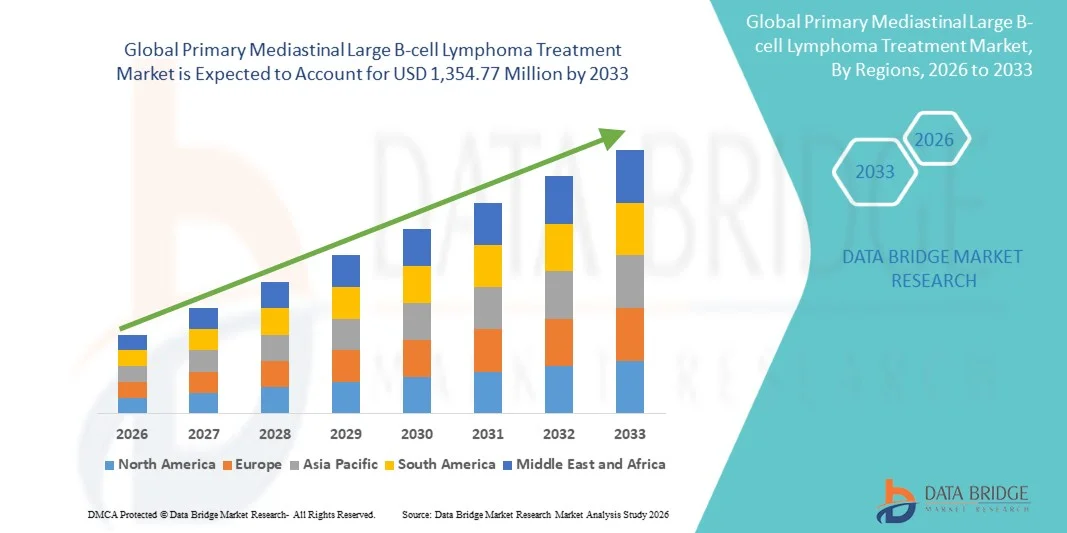
- The global primary mediastinal large B-cell lymphoma treatment market size was valued at USD 850.00 million in 2025 and is expected to reach USD 1,354.77 million by 2033, at a CAGR of 6.00% during the forecast period
- The market growth is largely fueled by the rising prevalence of lymphoma cases and continuous advancements in oncology therapeutics, including targeted therapies and immunotherapy, which are improving treatment outcomes for patients with this rare subtype of non-Hodgkin lymphoma
- Furthermore, increasing investments in cancer research, expanding clinical trials for innovative biologics, and growing awareness of early diagnosis and specialized treatment options are establishing advanced therapeutic approaches as the preferred strategy for disease management. These converging factors are accelerating the adoption of novel treatment solutions, thereby significantly boosting the industry's growth
Market Size & Forecast
- Global Market Value (2025): 850.00 million USD
- Expected Market Value (2033): 1,354.77 million USD
- Forecast CAGR (2026–2033): 6.00%
What are the Major Takeaways of Primary Mediastinal Large B-cell Lymphoma Treatment Market ?
- Primary mediastinal large B-cell lymphoma (PMBCL) treatment involves a combination of chemotherapy and targeted oncology drugs such as pembrolizumab, cyclophosphamide, doxorubicin hydrochloride, etoposide phosphate, and vincristine sulfate, which are commonly administered as part of multi-drug regimens to improve survival outcomes for patients diagnosed with this aggressive subtype of non-Hodgkin lymphoma. These therapies are widely used across hospitals and specialty oncology centers as part of modern lymphoma management protocols
- The escalating demand for PMBCL treatment is primarily fueled by the rising global incidence of lymphoma, increasing adoption of targeted immunotherapies, and expanding clinical research activities focused on improving treatment efficacy and reducing relapse rates among patients with rare hematologic cancers
- North America dominated the primary mediastinal large B-cell lymphoma treatment market with the largest revenue share of 38.40% in 2025, characterized by advanced healthcare infrastructure, strong presence of leading pharmaceutical companies, and high adoption of innovative oncology drugs, with the U.S. experiencing substantial growth in lymphoma treatment due to ongoing clinical trials and favorable reimbursement policies for advanced therapies
- Asia-Pacific is expected to be the fastest growing region in the primary mediastinal large B-cell lymphoma treatment market during the forecast period due to increasing cancer prevalence, improving healthcare infrastructure, and rising healthcare expenditure in emerging economies across the region
- The cyclophosphamide segment dominated the primary mediastinal large B-cell lymphoma treatment market with a market share of 35.70% in 2025, driven by its extensive use in combination chemotherapy regimens for lymphoma treatment and its established clinical effectiveness in managing aggressive B-cell malignancies
Report Scope and Primary Mediastinal Large B-cell Lymphoma Treatment Market Segmentation
|
Attributes |
Primary Mediastinal Large B-cell Lymphoma Treatment Key Market Insights |
|
Segments Covered |
|
|
Countries Covered |
North America
Europe
Asia-Pacific
Middle East and Africa
South America
|
|
Key Market Players |
|
|
Market Opportunities |
|
|
Value Added Data Infosets |
In addition to the insights on market scenarios such as market value, growth rate, segmentation, geographical coverage, and major players, the market reports curated by the Data Bridge Market Research also include in-depth expert analysis, patient epidemiology, pipeline analysis, pricing analysis, and regulatory framework |
What is the Key Trend in the Primary Mediastinal Large B-cell Lymphoma Treatment Market ?
“Advancements in Immunotherapy and Targeted Oncology Treatments”
- A significant and accelerating trend in the global primary mediastinal large B-cell lymphoma (PMBCL) treatment market is the increasing integration of immunotherapy and targeted oncology drugs designed to improve treatment response and long-term survival outcomes for patients diagnosed with this aggressive lymphoma subtype. This advancement in therapeutic strategies is significantly enhancing treatment effectiveness and patient management
- For instance, immune checkpoint inhibitors such as pembrolizumab are increasingly being evaluated and used for patients with relapsed or refractory PMBCL, while combination chemotherapy regimens involving cyclophosphamide, doxorubicin hydrochloride, etoposide phosphate, and vincristine sulfate continue to serve as core treatment approaches in clinical oncology practice
- The integration of targeted therapies and biologic drugs in PMBCL treatment enables more precise disease management by focusing on specific molecular pathways involved in lymphoma progression and immune system response. These advancements also support improved treatment tolerability and reduced relapse risk for patients undergoing therapy
- Furthermore, advancements in diagnostic technologies, including molecular profiling and biomarker identification, allow oncologists to select the most effective therapeutic combinations and personalize treatment strategies for individual patients based on disease characteristics and treatment response
- This shift toward more advanced and personalized oncology therapies is fundamentally reshaping clinical treatment strategies for aggressive lymphomas and driving innovation in pharmaceutical research and development. Consequently, companies such as Bristol Myers Squibb and F. Hoffmann-La Roche Ltd are focusing on developing targeted drugs and immunotherapy treatments aimed at improving survival rates and treatment outcomes for lymphoma patients
- The demand for innovative PMBCL treatment solutions that incorporate targeted therapy and immunotherapy approaches is increasing steadily across healthcare systems, as clinicians and patients prioritize therapies that provide improved efficacy, safety, and long-term disease control
- In addition, the rising use of advanced diagnostic imaging and biomarker-based testing is enabling earlier detection and more accurate classification of lymphoma subtypes, further supporting the adoption of specialized PMBCL treatment strategies
Primary Mediastinal Large B-cell Lymphoma Treatment Market Dynamics
Driver
“Rising Incidence of Lymphoma and Expansion of Advanced Oncology Therapeutics”
- The increasing prevalence of lymphoma cases worldwide, coupled with expanding research and development in oncology therapeutics, is a significant driver for the heightened demand for advanced treatment options for primary mediastinal large B-cell lymphoma
- For instance, in recent years several pharmaceutical companies have intensified clinical research efforts focused on targeted therapies and immune-based treatments aimed at improving clinical outcomes for patients with aggressive non-Hodgkin lymphoma subtypes such as PMBCL
- As healthcare systems continue to prioritize early cancer diagnosis and effective treatment strategies, the demand for advanced therapies including immunotherapy, targeted biologics, and combination chemotherapy regimens is steadily increasing
- Furthermore, increasing investments in cancer research and clinical trials are contributing to the development of novel treatment options that offer improved therapeutic effectiveness and better patient outcomes compared to conventional therapies
- The growing adoption of precision medicine and biomarker-based treatment approaches allows oncologists to personalize therapy for lymphoma patients, enhancing treatment success rates and reducing the likelihood of disease relapse. The expansion of specialized oncology centers and improved access to advanced cancer treatments further contribute to market growth
- Expanding government initiatives and funding programs aimed at improving cancer diagnosis and treatment infrastructure are also encouraging the adoption of advanced lymphoma therapies across developed and emerging healthcare markets
- The increasing availability of innovative oncology drugs through regulatory approvals and expanded indications for existing therapies is further accelerating treatment adoption and market expansion globally
Restraint/Challenge
“High Treatment Costs and Complex Clinical Management”
- Concerns surrounding the high cost of advanced oncology drugs and complex treatment protocols present a significant challenge to the broader adoption of innovative therapies for primary mediastinal large B-cell lymphoma across several healthcare systems
- For instance, biologic drugs and immune checkpoint inhibitors used in lymphoma treatment often involve high development and manufacturing costs, which can result in expensive treatment regimens for patients and healthcare providers
- Managing aggressive lymphomas such as PMBCL frequently requires combination therapies, prolonged treatment cycles, and intensive monitoring, which can increase overall healthcare costs and place a burden on medical infrastructure in certain regions
- In addition, limited awareness of rare lymphoma subtypes and delays in accurate diagnosis may hinder timely treatment initiation, potentially affecting patient outcomes and slowing the adoption of advanced therapies in some healthcare markets
- Addressing these challenges through improved access to oncology care, development of cost-effective treatment options, and expansion of global clinical research initiatives will be essential for supporting sustained growth in the PMBCL treatment market and improving patient access to life-saving therapies
- Regulatory complexities associated with the approval of new oncology drugs and biologics can also delay the availability of innovative treatments in several markets, limiting patient access to advanced therapies
- Furthermore, disparities in healthcare infrastructure and oncology treatment accessibility between developed and developing regions can restrict the widespread adoption of advanced PMBCL therapies globally
How is the Primary Mediastinal Large B-cell Lymphoma Treatment Market Segmented?
The market is segmented on the basis of drugs, route of administration, end users, and distribution channel.
- By Drugs
On the basis of drugs, the primary mediastinal large B-cell lymphoma treatment market is segmented into pembrolizumab, cyclophosphamide, doxorubicin hydrochloride, etoposide phosphate, vincristine sulfate, and others. The cyclophosphamide segment dominated the market with the largest market revenue share of 35.70% in 2025, primarily due to its widespread use in combination chemotherapy regimens for aggressive lymphomas. Cyclophosphamide is a core component of standard treatment protocols such as multi-drug chemotherapy combinations commonly used in non-Hodgkin lymphoma management. Its long history of clinical effectiveness and broad availability across oncology centers contribute to its strong adoption among healthcare providers. In addition, its compatibility with other chemotherapy agents improves overall treatment response in PMBCL patients. The drug is also widely included in hospital treatment guidelines due to its proven efficacy in suppressing rapidly dividing cancer cells. As a result, the continued reliance on combination chemotherapy regimens ensures the sustained dominance of this segment in the market.
The pembrolizumab segment is anticipated to witness the fastest growth rate from 2026 to 2033, driven by the increasing adoption of immunotherapy in lymphoma treatment. Pembrolizumab, an immune checkpoint inhibitor targeting the PD-1 pathway, has demonstrated promising clinical outcomes in patients with relapsed or refractory PMBCL. Growing interest in targeted and immune-based therapies is encouraging oncologists to integrate such drugs into treatment protocols. In addition, ongoing clinical trials evaluating pembrolizumab and other immunotherapies for aggressive lymphomas are expected to expand their therapeutic indications. These therapies offer improved disease control and survival outcomes compared to traditional chemotherapy in certain patient groups. Consequently, the increasing emphasis on precision oncology and targeted therapies is expected to accelerate the growth of this segment.
- By Route of Administration
On the basis of route of administration, the primary mediastinal large B-cell lymphoma treatment market is segmented into oral and parenteral. The parenteral segment dominated the market with the largest revenue share in 2025, as most chemotherapy and biologic drugs used for lymphoma treatment are administered intravenously in controlled clinical settings. Parenteral administration allows rapid delivery of drugs directly into the bloodstream, ensuring higher bioavailability and immediate therapeutic effects. Many of the standard lymphoma treatment regimens, including combinations involving cyclophosphamide and doxorubicin hydrochloride, require intravenous infusion under medical supervision. Hospitals and oncology centers typically prefer parenteral administration to closely monitor patient responses and manage potential side effects. This route also enables precise dosage adjustments during treatment cycles. As a result, the strong reliance on intravenous chemotherapy regimens continues to drive the dominance of this segment.
The oral segment is expected to witness the fastest CAGR from 2026 to 2033, driven by the increasing development of convenient oral oncology medications. Oral drugs offer improved patient comfort and flexibility compared to injectable therapies, allowing certain treatments to be administered outside hospital settings. This approach helps reduce hospital visits and overall treatment burden for patients undergoing long-term cancer therapy. In addition, advancements in oral targeted therapies are improving treatment outcomes and expanding therapeutic options for lymphoma patients. Growing patient preference for convenient treatment methods and improved medication adherence further contribute to the expansion of oral administration therapies. Consequently, pharmaceutical innovation in oral oncology drugs is expected to accelerate the growth of this segment.
- By End Users
On the basis of end users, the primary mediastinal large B-cell lymphoma treatment market is segmented into hospitals, homecare, specialty clinics, and others. The hospitals segment dominated the market with the largest revenue share in 2025, as hospitals remain the primary centers for diagnosing and treating aggressive lymphomas such as PMBCL. These facilities provide access to advanced oncology infrastructure, including specialized diagnostic tools, chemotherapy infusion units, and experienced oncology professionals. Hospitals also serve as the main sites for administering complex chemotherapy regimens and immunotherapy treatments that require close patient monitoring. In addition, many hospitals are involved in clinical trials and research programs focused on developing innovative cancer therapies. The availability of multidisciplinary oncology teams further enhances treatment effectiveness and patient management. As a result, hospitals continue to account for the majority of lymphoma treatment procedures worldwide.
The specialty clinics segment is expected to witness the fastest growth rate from 2026 to 2033, driven by the increasing establishment of dedicated oncology and hematology clinics. These facilities focus on providing specialized cancer treatment services, often offering personalized care for patients with specific lymphoma subtypes. Specialty clinics frequently adopt advanced treatment approaches and targeted therapies to improve clinical outcomes. The growing demand for outpatient cancer care and personalized treatment strategies is encouraging patients to seek treatment at specialized oncology centers. In addition, shorter waiting times and focused expertise make specialty clinics an attractive option for patients requiring ongoing cancer management. Consequently, the rising number of specialized cancer treatment facilities is expected to support rapid growth in this segment.
- By Distribution Channel
On the basis of distribution channel, the primary mediastinal large B-cell lymphoma treatment market is segmented into hospital pharmacies, online pharmacies, and retail pharmacies. The hospital pharmacies segment dominated the market with the largest revenue share in 2025, largely because most oncology medications are dispensed directly within hospital settings where patients receive treatment. Hospital pharmacies manage the storage, preparation, and distribution of specialized chemotherapy and biologic drugs required for lymphoma therapy. These facilities ensure strict quality control and proper handling of sensitive oncology medications. In addition, pharmacists in hospital settings work closely with oncologists to monitor drug interactions and ensure accurate dosage administration. Since many lymphoma treatments require infusion or supervised administration, hospital pharmacies play a crucial role in supporting treatment delivery. Consequently, their integral role in oncology care contributes to the dominance of this segment.
The online pharmacies segment is anticipated to witness the fastest growth rate from 2026 to 2033, driven by the increasing digitalization of healthcare services and pharmaceutical distribution. Online platforms are expanding access to prescription medications, especially for supportive drugs used in cancer treatment. Patients and caregivers are increasingly using digital pharmacy services for convenient ordering and home delivery of prescribed medications. In addition, telemedicine adoption is supporting the growth of online pharmacy channels by enabling remote consultations and prescriptions. Improved logistics infrastructure and digital health platforms are further facilitating the expansion of online pharmaceutical services. As a result, the growing adoption of digital healthcare solutions is expected to drive rapid growth in this distribution channel segment.
Which Region Holds the Largest Share of the Primary Mediastinal Large B-cell Lymphoma Treatment Market?
- North America dominated the primary mediastinal large B-cell lymphoma treatment market with the largest revenue share of 38.40% in 2025, characterized by advanced healthcare infrastructure, strong presence of leading pharmaceutical companies, and high adoption of innovative oncology drugs
- Healthcare providers in the region place strong emphasis on early diagnosis, innovative immunotherapies, and targeted oncology treatments, which significantly improve survival outcomes for patients diagnosed with aggressive lymphoma subtypes such as PMBCL
- This widespread adoption is further supported by advanced healthcare infrastructure, high healthcare expenditure, strong presence of leading pharmaceutical companies, and increasing participation in clinical trials, establishing advanced lymphoma therapies as a preferred treatment approach across hospitals and specialized oncology centers
U.S. Primary Mediastinal Large B-cell Lymphoma Treatment Market Insight
The U.S. primary mediastinal large B-cell lymphoma treatment market captured the largest revenue share within North America in 2025, fueled by the strong presence of advanced oncology research programs and the rapid adoption of innovative lymphoma therapies. Healthcare providers in the country are increasingly focusing on early diagnosis and the use of targeted treatments and immunotherapies to improve patient survival outcomes. The growing number of clinical trials evaluating novel lymphoma drugs and biologics is further supporting treatment advancements. Moreover, the presence of major pharmaceutical companies and well-established cancer treatment centers is significantly contributing to the market’s expansion.
Europe Primary Mediastinal Large B-Cell Lymphoma Treatment Market Insight
The Europe primary mediastinal large B-cell lymphoma treatment market is projected to expand at a substantial CAGR throughout the forecast period, primarily driven by strong government healthcare systems and growing investments in cancer research and treatment programs. Increasing awareness of rare lymphoma subtypes and improved access to advanced oncology therapies are supporting market growth. European healthcare systems are also emphasizing early cancer screening and specialized treatment approaches for hematologic malignancies. The region is experiencing notable growth in hospital-based cancer treatment services and the adoption of advanced targeted therapies across several countries.
U.K. Primary Mediastinal Large B-Cell Lymphoma Treatment Market Insight
The U.K. primary mediastinal large B-cell lymphoma treatment market is anticipated to grow at a noteworthy CAGR during the forecast period, driven by the country’s strong focus on cancer research and improvements in oncology care infrastructure. Increasing investments in clinical research and collaboration between academic institutions and pharmaceutical companies are accelerating the development of new treatment approaches for aggressive lymphoma subtypes. In addition, growing awareness of early lymphoma diagnosis and improved patient access to specialized oncology services are encouraging the adoption of advanced treatment options. The U.K.’s expanding network of cancer treatment centers is expected to continue supporting market growth.
Germany Primary Mediastinal Large B-Cell Lymphoma Treatment Market Insight
The Germany primary mediastinal large B-cell lymphoma treatment market is expected to expand at a considerable CAGR during the forecast period, fueled by increasing healthcare expenditure and a strong emphasis on advanced cancer treatment technologies. Germany’s well-developed healthcare infrastructure and focus on medical innovation support the adoption of modern oncology therapies. The country also benefits from strong research institutions and pharmaceutical companies engaged in lymphoma drug development. In addition, increasing availability of specialized hematology and oncology treatment centers is supporting improved patient access to advanced therapies and personalized treatment approaches.
Asia-Pacific Primary Mediastinal Large B-Cell Lymphoma Treatment Market Insight
The Asia-Pacific primary mediastinal large B-cell lymphoma treatment market is poised to grow at the fastest CAGR during the forecast period of 2026 to 2033, driven by increasing cancer incidence, expanding healthcare infrastructure, and rising healthcare expenditure in countries such as China, Japan, and India. The region’s growing focus on strengthening oncology treatment facilities and improving access to advanced cancer therapies is accelerating market development. Furthermore, government initiatives aimed at improving cancer diagnosis and treatment are supporting the adoption of modern oncology drugs. As pharmaceutical companies expand their presence in APAC markets, the availability of innovative lymphoma therapies is increasing across the region.
Japan Primary Mediastinal Large B-Cell Lymphoma Treatment Market Insight
The Japan primary mediastinal large B-cell lymphoma treatment market is gaining momentum due to the country’s advanced healthcare system, strong research capabilities, and high adoption of innovative cancer therapies. Japan places significant emphasis on early disease detection and the use of advanced oncology treatment protocols. The integration of targeted therapies and immunotherapies in lymphoma treatment is supporting improved clinical outcomes for patients. Moreover, Japan’s aging population is expected to contribute to increased demand for effective cancer treatment solutions in the coming years, further supporting market growth.
India Primary Mediastinal Large B-Cell Lymphoma Treatment Market Insight
The India primary mediastinal large B-cell lymphoma treatment market accounted for the largest market revenue share in Asia Pacific in 2025, attributed to the country’s large patient population and growing awareness of cancer diagnosis and treatment. India has emerged as an important market for oncology therapies due to the expansion of healthcare infrastructure and increasing access to specialized cancer hospitals. The availability of both domestic and international pharmaceutical products is improving treatment accessibility for lymphoma patients. In addition, government initiatives aimed at strengthening cancer care services and expanding oncology treatment facilities are key factors supporting market growth in India.
What are Latest Developments in Primary Mediastinal Large B-cell Lymphoma Treatment Market?
The Primary Mediastinal Large B-cell Lymphoma Treatment industry is primarily led by well-established companies, including:
- Bristol Myers Squibb Company (U.S.)
- Merck & Co., Inc. (U.S.)
- F. Hoffmann-La Roche Ltd (Switzerland)
- Novartis AG (Switzerland)
- Pfizer Inc. (U.S.)
- AstraZeneca (U.K.)
- Gilead Sciences, Inc. (U.S.)
- Johnson & Johnson Services, Inc. (U.S.)
- AbbVie Inc. (U.S.)
- Amgen Inc. (U.S.)
- Eli Lilly and Company (U.S.)
- Regeneron Pharmaceuticals, Inc. (U.S.)
- BeiGene, Ltd. (China)
- Incyte Corporation (U.S.)
- ADC Therapeutics SA (Switzerland)
- Seagen Inc. (U.S.)
- Kite Pharma, Inc. (U.S.)
- Genmab A/S (Denmark)
- TG Therapeutics, Inc. (U.S.)
- Cellectis S.A. (France)
What are the Recent Developments in Global Primary Mediastinal Large B-cell Lymphoma Treatment Market?
- In August 2025, researchers reported encouraging outcomes from studies evaluating CD19 CAR-T cell therapy for patients with relapsed or refractory primary mediastinal large B-cell lymphoma. The therapy demonstrated high rates of durable responses with relatively low severe toxicities, highlighting the growing role of cellular immunotherapies in treating aggressive B-cell lymphomas
- In December 2024, the KEYNOTE-B68 Phase II clinical trial evaluated a modified dosing schedule of pembrolizumab for patients with relapsed or refractory classical Hodgkin lymphoma and PMBCL. Results showed durable antitumor activity and no new safety concerns, supporting the continued development of PD-1 checkpoint inhibitors for treating aggressive lymphomas. The study also demonstrated that extended dosing schedules could maintain clinical benefits while improving treatment convenience for patients
- In April 2023, researchers published final long-term results from the KEYNOTE-170 clinical trial evaluating pembrolizumab for relapsed or refractory PMBCL. The study showed that pembrolizumab produced sustained antitumor activity and durable responses after approximately four years of follow-up, confirming the long-term effectiveness of immune checkpoint inhibitors for this rare lymphoma subtype
- In July 2022, a clinical study investigated the use of pembrolizumab following CD19-directed CAR-T cell therapy in patients with relapsed B-cell lymphomas, including PMBCL. Researchers found that PD-1 blockade may help reverse T-cell exhaustion and produce clinical responses in some patients who relapse after CAR-T therapy. This development highlighted a promising strategy to improve outcomes for patients who do not respond to cellular immunotherapy alone
- In September 2021, oncology researchers explored combination immunotherapy approaches involving PD-1 inhibitors and other immune-modulating agents for B-cell lymphomas. Early studies demonstrated that combining checkpoint inhibitors with additional therapies could enhance immune response against lymphoma cells and potentially improve remission rates in aggressive lymphoma subtypes such as PMBCL

- Interactive Data Analysis Dashboard
- Company Analysis Dashboard for high growth potential opportunities
- Research Analyst Access for customization & queries
- Competitor Analysis with Interactive dashboard
- Latest News, Updates & Trend analysis
- Harness the Power of Benchmark Analysis for Comprehensive Competitor Tracking
Data collection and base year analysis are done using data collection modules with large sample sizes. The stage includes obtaining market information or related data through various sources and strategies. It includes examining and planning all the data acquired from the past in advance. It likewise envelops the examination of information inconsistencies seen across different information sources. The market data is analysed and estimated using market statistical and coherent models. Also, market share analysis and key trend analysis are the major success factors in the market report. To know more, please request an analyst call or drop down your inquiry.
The key research methodology used by DBMR research team is data triangulation which involves data mining, analysis of the impact of data variables on the market and primary (industry expert) validation. Data models include Vendor Positioning Grid, Market Time Line Analysis, Market Overview and Guide, Company Positioning Grid, Patent Analysis, Pricing Analysis, Company Market Share Analysis, Standards of Measurement, Global versus Regional and Vendor Share Analysis. To know more about the research methodology, drop in an inquiry to speak to our industry experts.
Data Bridge Market Research is a leader in advanced formative research. We take pride in servicing our existing and new customers with data and analysis that match and suits their goal. The report can be customized to include price trend analysis of target brands understanding the market for additional countries (ask for the list of countries), clinical trial results data, literature review, refurbished market and product base analysis. Market analysis of target competitors can be analyzed from technology-based analysis to market portfolio strategies. We can add as many competitors that you require data about in the format and data style you are looking for. Our team of analysts can also provide you data in crude raw excel files pivot tables (Fact book) or can assist you in creating presentations from the data sets available in the report.












