


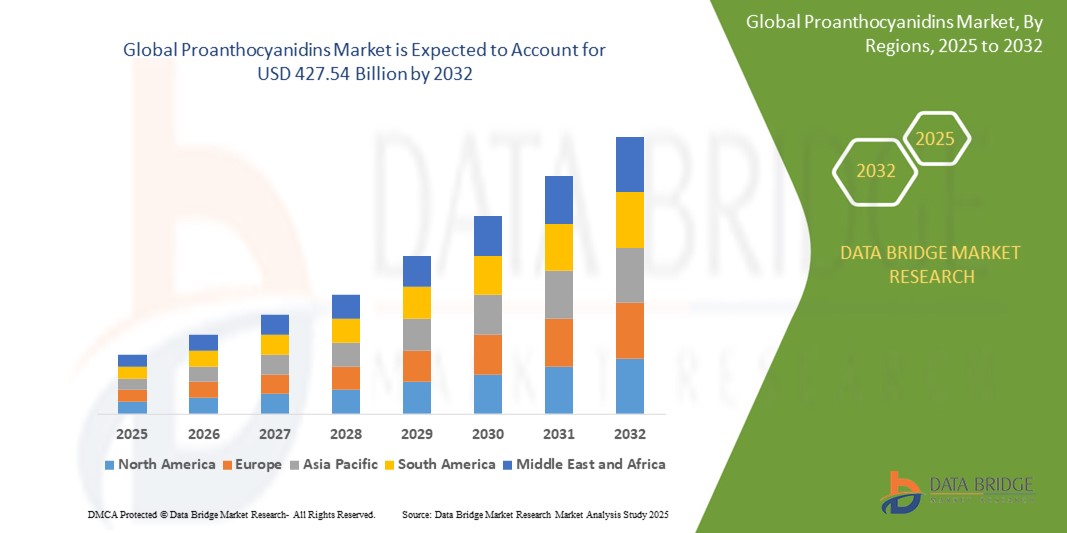
Proanthocyanidins Market Size
- The global proanthocyanidins market size was valued at USD 266.23 billion in 2024 and is expected to reach USD 427.54 billion by 2032, at a CAGR of 6.1% during the forecast period
- The Market growth is primarily driven by increasing consumer awareness of the health benefits of proanthocyanidins, including their antioxidant properties, cardiovascular health support, and anti-inflammatory effects
- Rising demand for natural and plant-based ingredients in dietary supplements, cosmetics, and functional foods is further propelling market expansion across both OEM and aftermarket channels
Proanthocyanidins Market Analysis
- The Proanthocyanidins, naturally occurring polyphenols found in various plant-based foods, are increasingly crucial in the health and wellness industry due to their potent antioxidant properties and diverse therapeutic
- The escalating demand for proanthocyanidins is primarily fueled by growing consumer awareness regarding natural and plant-based ingredients, a rising focus on preventive healthcare
- North America dominates the proanthocyanidins market with the largest revenue share of 35.2% in 2024, attributed to a well-established health and wellness industry and high consumer awareness of nutraceuticals
- Asia-Pacific is projected to be the fastest-growing region during the forecast period, fueled by rapid urbanization, increasing disposable incomes, and growing demand for functional foods and dietary supplements in countries such as China, India, and Japan
- The cranberry segment held the largest market revenue share of approximately 40% in 2024, driven by its high content of Type A proanthocyanidins, which are particularly valued for their anti-adhesion properties that prevent bacterial infections, such as urinary tract infections (UTIs)
Report Scope and Proanthocyanidins Market Segmentation
|
Attributes |
Proanthocyanidins Key Market Insights |
|
Segments Covered |
|
|
Countries Covered |
North America
Europe
Asia-Pacific
Middle East and Africa
South America
|
|
Key Market Players |
|
|
Market Opportunities |
|
|
Value Added Data Infosets |
In addition to the insights on market scenarios such as market value, growth rate, segmentation, geographical coverage, and major players, the market reports curated by the Data Bridge Market Research also include in-depth expert analysis, geographically represented company-wise production and capacity, network layouts of distributors and partners, detailed and updated price trend analysis and deficit analysis of supply chain and demand. |
Proanthocyanidins Market Trends
“Rising Preference for Natural and Plant-Based Proanthocyanidins”
- Proanthocyanidins, derived from natural sources such as cranberry, grape seed, and pine bark, are gaining traction due to their potent antioxidant properties and health benefits, aligning with the global shift toward natural and organic products
- Type A proanthocyanidins, primarily sourced from cranberries, are favored for their unique anti-adhesion properties, particularly in preventing urinary tract infections (UTIs), driving their use in pharmaceuticals and dietary supplements
- Grape seed proanthocyanidins, rich in antioxidants, are increasingly incorporated into anti-aging skincare products and dietary supplements due to their ability to protect skin cells and improve overall health
- Pine bark-derived proanthocyanidins, such as Pycnogenol, are popular in the Asia-Pacific region for their benefits in cognitive function, skin health, and joint support, fueling market growth in nutraceuticals
- Manufacturers are fortifying snacks, energy bars, and beverages with proanthocyanidins to cater to health-conscious consumers seeking functional foods with added health benefits such as cardiovascular support and anti-aging properties
- The market is seeing a rise in demand for organic and non-GMO proanthocyanidin products, particularly in North America and Europe, as consumers prioritize sustainable and clean-label ingredients
Proanthocyanidins Market Dynamics
Driver
“Growing Consumer Awareness of Health and Therapeutic Benefits”
- Increased consumer awareness of proanthocyanidins’ benefits, such as cardiovascular health, anti-aging, and cancer prevention, is driving demand in dietary supplements, functional foods, and pharmaceuticals
- The global shift toward preventive healthcare has boosted the adoption of proanthocyanidins in nutraceuticals, particularly in regions such as Asia-Pacific, where disposable incomes and access to health information are rising
- Proanthocyanidins’ antioxidant and anti-inflammatory properties make them a sought-after ingredient in cosmetics, especially for anti-aging and skin-protective products, appealing to an aging population
- Similar to trends in the automotive industry, where thermal management is critical for electric vehicles, proanthocyanidins are being explored for their potential in health-focused applications, such as improving energy efficiency through reduced oxidative stress
- North America dominates revenue growth due to high consumption of dietary supplements and an aging population, while Asia-Pacific is the fastest-growing region, driven by rising demand in China, Japan, and India for natural health products
Restraint/Challenge
“Regulatory Restrictions and High Production Costs”
- Varying global regulations on health claims and ingredient standards for proanthocyanidins in dietary supplements and functional foods complicate market expansion, particularly in Europe, where the European Food Safety Authority imposes strict guidelines
- The complex extraction processes for proanthocyanidins, especially from sources such as pine bark and cranberries, result in high production costs, limiting affordability and market penetration in price-sensitive regions
- The presence of alternative antioxidants, such as vitamin C and E, poses a challenge to proanthocyanidin market growth, as consumers may opt for more cost-effective or widely available options
- Despite growing demand, restricted consumer awareness in some developing regions hinders market penetration, particularly for premium proanthocyanidin-based product
Proanthocyanidins Market Scope
The market is segmented on the basis of source, application, and type.
- By Source
On the basis of source, the market is segmented into cranberry, grape seed, pine bark, and others. The cranberry segment held the largest market revenue share of approximately 40% in 2024, driven by its high content of Type A proanthocyanidins, which are particularly valued for their anti-adhesion properties that prevent bacterial infections, such as urinary tract infections (UTIs). Cranberries are widely used in pharmaceuticals, dietary supplements, and functional foods due to their versatile health benefits, including natural food coloring and antioxidant properties.
The pine bark segment is expected to witness the fastest growth rate from 2025 to 2032, with a projected CAGR of around 5.5%. This growth is attributed to the increasing demand for pine bark extracts, such as Pycnogenol, in nutraceuticals and cosmetics for their potent antioxidant and anti-inflammatory properties, which support skin health, cognitive function, and joint support. The rising consumer preference for natural ingredients in anti-aging products further accelerates the adoption of pine bark-derived proanthocyanidins.
- By Application
On the basis of application, the market is segmented into pharmaceuticals and dietary supplements, personal care and cosmetics, and functional food and beverages. The pharmaceuticals and dietary supplements segment dominated the market with a revenue share of approximately 45% in 2024, driven by the growing trend of preventive healthcare and the incorporation of proanthocyanidins in supplements for their antioxidant, anti-inflammatory, and cardiovascular health benefits. The increasing prevalence of lifestyle-related diseases, such as diabetes and heart conditions, further boosts demand in this segment.
The personal care and cosmetics segment is anticipated to experience the fastest growth from 2025 to 2032, with a projected CAGR of 6.2%. Proanthocyanidins are increasingly used in anti-aging creams, skincare products, and hair care formulations due to their ability to protect skin elastin and collagen, reduce inflammation, and combat oxidative stress. The rising consumer demand for natural and organic beauty products drives the adoption of proanthocyanidins in this sector.
- By Type
On the basis of type, the market is segmented into Type A and Type B. The Type A segment held the largest market revenue share of approximately 55% in 2024, primarily due to its unique anti-adhesion properties found in cranberries, which are highly effective in preventing UTIs and promoting urinary tract health. Type A proanthocyanidins are widely used in pharmaceutical and dietary supplement applications, particularly for women’s health products.
The Type B segment is expected to witness significant growth from 2025 to 2032, with a projected CAGR of 5.9%. Type B proanthocyanidins, found in grape seeds, pine bark, and other sources such as apples and cocoa, are valued for their broad antioxidant and anti-inflammatory benefits, making them popular in cosmetics, nutraceuticals, and functional foods. Their widespread availability and versatility drive their rapid adoption across multiple industries.
Proanthocyanidins Market Regional Analysis
- North America dominates the proanthocyanidins market with the largest revenue share of 35.2% in 2024, attributed to a well-established health and wellness industry and high consumer awareness of nutraceuticals
- Asia-Pacific is projected to be the fastest-growing region during the forecast period, fueled by rapid urbanization, increasing disposable incomes, and growing demand for functional foods and dietary supplements in countries such as China, India, and Japan
- Government initiatives promoting natural and functional ingredients, along with the expansion of the nutraceutical and cosmetics industries, further accelerate the adoption of proanthocyanidins in the region
U.S. Proanthocyanidins Market Insight
The U.S. holds the largest share of the North American proanthocyanidins market, driven by strong demand for dietary supplements and functional foods. The country’s health-conscious population and high per capita spending on wellness products contribute to market growth. In addition, the presence of major manufacturers and increasing regulatory support for natural ingredients boost the adoption of proanthocyanidins in pharmaceuticals and cosmetics.
Europe Proanthocyanidins Market Insight
The European market is expected to witness significant growth, supported by stringent regulations promoting natural and organic products, particularly in countries such as Germany, France, and Spain. The rising demand for anti-aging cosmetics and functional foods, coupled with health claim approvals from the European Food Safety Authority, drives market expansion. Companies such as Indena and Naturex are leading innovation in proanthocyanidin-based products.
U.K. Proanthocyanidins Market Insight
The U.K. market is anticipated to experience healthy growth, fueled by increasing consumer demand for dietary supplements and natural skincare products. The growing awareness of proanthocyanidins’ benefits, such as cardiovascular health and skin protection, encourages adoption. Regulatory support for functional foods and rising interest in preventive healthcare further enhance market penetration.
Germany Proanthocyanidins Market Insight
Germany is expected to see robust growth in the proanthocyanidins market, driven by its advanced nutraceutical and cosmetics industries. Consumers in Germany prioritize natural and organic products, boosting demand for proanthocyanidins in anti-aging skincare and dietary supplements. The presence of leading manufacturers and strong R&D activities further support market growth.
Asia-Pacific Proanthocyanidins Market Insight
The Asia-Pacific region holds the fastest-growing market share from 2025 to 2032, driven by expanding health and wellness industries in China, India, and Japan. Rising disposable incomes, increasing awareness of natural antioxidants, and government support for functional foods and nutraceuticals fuel demand. The region’s growing middle class and focus on preventive healthcare further enhance market growth.
Japan Proanthocyanidins Market Insight
Japan’s proanthocyanidins market is expected to witness strong growth, driven by consumer preference for high-quality, natural health products. The integration of proanthocyanidins in functional foods, beverages, and cosmetics, along with the presence of major manufacturers, accelerates market penetration. Rising demand for anti-aging and wellness products further supports growth.
China Proanthocyanidins Market Insight
China dominates the Asia-Pacific proanthocyanidins market, driven by rapid urbanization, increasing vehicle ownership, and a growing middle class. The demand for proanthocyanidins in dietary supplements, functional foods, and premium cosmetics is rising due to consumer focus on health and wellness. Strong domestic manufacturing and competitive pricing further enhance market accessibility.
Proanthocyanidins Market Share
The proanthocyanidins industry is primarily led by well-established companies, including:
- Xian Yuensun Biological Technology Co.,Ltd (China)
- EEVIA HEALTH PLC (Finland)
- Botanix SB Inc. (U.S.)
- Artemis International (U.S.)
- ETHICAL NATURALS, INC. (U.S.)
- Naturex (France)
- Bacca (Finland)
- Indena S.p.A. (Italy)
- Bio Botanica Inc. (U.S.)
- Berkem (France)
- SEPPIC (France)
- Nexira (France)
- Sabinsa (U.S.)
Latest Developments in Global Proanthocyanidins Market
- In January 2024, Botaniex, Inc. partnered with a major pharmaceutical company to enhance the global distribution of proanthocyanidin-based dietary supplements. This collaboration leverages Botaniex’s expertise in botanical extracts to expand the availability of antioxidant-rich products, catering to health-conscious consumers in emerging markets. The partnership strengthens Botaniex’s supply chain and market reach, particularly in regions with increasing demand for nutraceuticals. By integrating advanced research and distribution strategies, Botaniex aims to drive innovation in the health supplement industry
- In March 2023, Nexira, a global leader in natural ingredients and botanical extracts, acquired Polyphenolics, a supplier of proanthocyanidins derived from grape seeds. This strategic move expands Nexira’s product portfolio and strengthens its presence in the dietary supplement and functional food markets. The acquisition positions Nexira to meet rising consumer demand for high-purity proanthocyanidin products in North America and beyond, reinforcing its commitment to innovation and sustainability in natural health solutions
- In February 2023, Naturex S.A. introduced Pycnogenol, a proanthocyanidin-based product derived from pine bark. This botanical extract is designed for applications in dietary supplements, functional foods, and cosmetics, offering potent antioxidant benefits for cardiovascular health and skin protection. The launch aligns with increasing consumer demand for natural, plant-based ingredients, reinforcing Naturex’s competitive position in the global market. Pycnogenol’s formulation supports wellness and skincare innovations, catering to health-conscious consumers
- In April 2023, Indena S.p.A., a leader in plant-derived active ingredients, introduced a new range of proanthocyanidin products for dietary supplements, functional foods, and cosmetics. Developed using advanced extraction techniques, these products meet the growing demand for high-quality, bioavailable antioxidants. The launch strengthens Indena’s portfolio, catering to health-conscious consumers and reinforcing its innovation-driven market presence. Indena continues to expand its expertise in botanical derivatives, ensuring excellence in natural health solutions
- In September 2022, Eevia Health Oy partnered with a leading university to research the efficacy of Type A proanthocyanidin extracts, particularly from cranberries. This collaboration aims to validate health benefits, such as urinary tract infection prevention, supporting product development. The partnership strengthens Eevia’s position in the nutraceutical market by enhancing scientific credibility and consumer trust. The study focuses on the antioxidant and anti-inflammatory properties of proanthocyanidins, contributing to advancements in natural health solutions

- Interactive Data Analysis Dashboard
- Company Analysis Dashboard for high growth potential opportunities
- Research Analyst Access for customization & queries
- Competitor Analysis with Interactive dashboard
- Latest News, Updates & Trend analysis
- Harness the Power of Benchmark Analysis for Comprehensive Competitor Tracking
Global Proanthocyanidins Market, Supply Chain Analysis and Ecosystem Framework
To support market growth and help clients navigate the impact of geopolitical shifts, DBMR has integrated in-depth supply chain analysis into its Global Proanthocyanidins Market research reports. This addition empowers clients to respond effectively to global changes affecting their industries. The supply chain analysis section includes detailed insights such as Global Proanthocyanidins Market consumption and production by country, price trend analysis, the impact of tariffs and geopolitical developments, and import and export trends by country and HSN code. It also highlights major suppliers with data on production capacity and company profiles, as well as key importers and exporters. In addition to research, DBMR offers specialized supply chain consulting services backed by over a decade of experience, providing solutions like supplier discovery, supplier risk assessment, price trend analysis, impact evaluation of inflation and trade route changes, and comprehensive market trend analysis.
Data collection and base year analysis are done using data collection modules with large sample sizes. The stage includes obtaining market information or related data through various sources and strategies. It includes examining and planning all the data acquired from the past in advance. It likewise envelops the examination of information inconsistencies seen across different information sources. The market data is analysed and estimated using market statistical and coherent models. Also, market share analysis and key trend analysis are the major success factors in the market report. To know more, please request an analyst call or drop down your inquiry.
The key research methodology used by DBMR research team is data triangulation which involves data mining, analysis of the impact of data variables on the market and primary (industry expert) validation. Data models include Vendor Positioning Grid, Market Time Line Analysis, Market Overview and Guide, Company Positioning Grid, Patent Analysis, Pricing Analysis, Company Market Share Analysis, Standards of Measurement, Global versus Regional and Vendor Share Analysis. To know more about the research methodology, drop in an inquiry to speak to our industry experts.
Data Bridge Market Research is a leader in advanced formative research. We take pride in servicing our existing and new customers with data and analysis that match and suits their goal. The report can be customized to include price trend analysis of target brands understanding the market for additional countries (ask for the list of countries), clinical trial results data, literature review, refurbished market and product base analysis. Market analysis of target competitors can be analyzed from technology-based analysis to market portfolio strategies. We can add as many competitors that you require data about in the format and data style you are looking for. Our team of analysts can also provide you data in crude raw excel files pivot tables (Fact book) or can assist you in creating presentations from the data sets available in the report.













