


Pulmonary Arterial Hypertension (PAH) Market Size
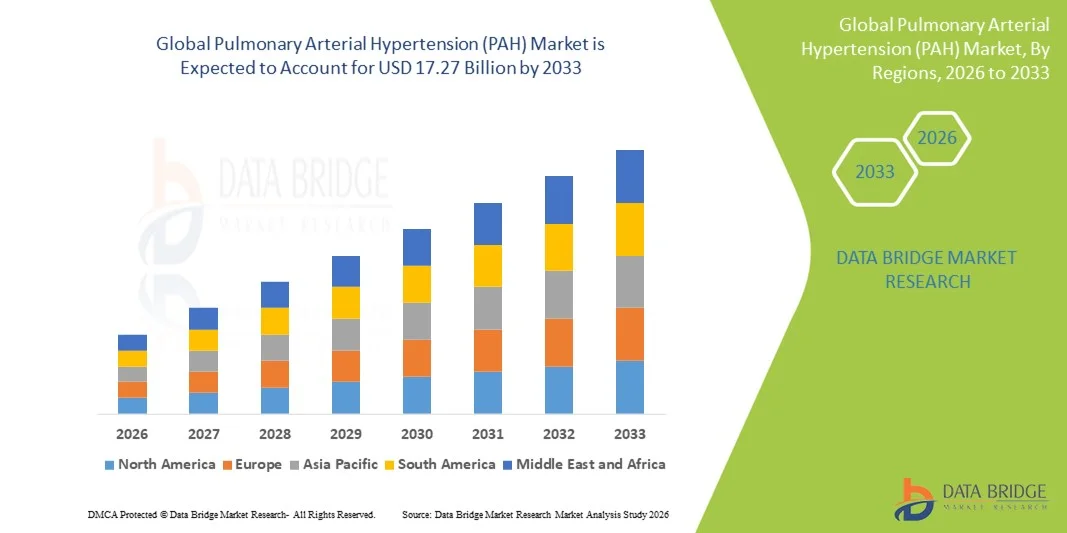
- The global Pulmonary Arterial Hypertension (PAH) market size was valued at USD 8.73 billion in 2025 and is expected to reach USD 17.27 billion by 2033, at a CAGR of 8.9% during the forecast period
- The market growth is largely driven by rising prevalence of PAH, increasing geriatric populations, advances in targeted therapies and improved diagnostics and awareness expanding the treatable patient base
- Furthermore, growing demand for effective, patient‑friendly therapies is establishing PAH treatment solutions as a key part of the rare cardiovascular‑pulmonary disease portfolio. These converging factors are accelerating uptake of PAH therapies, thereby significantly boosting the industry’s growth
Pulmonary Arterial Hypertension (PAH) Market Analysis
- Pulmonary Arterial Hypertension (PAH) therapies, offering targeted treatment for elevated pulmonary arterial pressure and right heart strain, are increasingly vital components of rare cardiovascular‑pulmonary disease management due to their ability to improve patient survival, quality of life, and long‑term outcomes
- The escalating demand for PAH treatments is primarily fueled by rising prevalence of PAH, increased disease awareness, growing healthcare infrastructure, and a rising preference for convenient, patient‑friendly therapies that simplify long‑term management
- North America dominated the PAH market with the largest revenue share of 52.9% in 2025, driven by early adoption of advanced therapies, supportive reimbursement policies, and a strong presence of major pharmaceutical players introducing novel drugs and innovative treatment regimens
- Asia‑Pacific is expected to be the fastest-growing region in the PAH market during the forecast period due to increasing diagnosis rates, expanding healthcare access, and rising investment in specialty treatments for rare diseases
- Endothelin Receptor Antagonists (ERAs) segment dominated the PAH market in 2025 with a share of 36.9%, owing to their proven efficacy in improving exercise capacity and reducing disease progression
Report Scope and Pulmonary Arterial Hypertension (PAH) Market Segmentation
|
Attributes |
Pulmonary Arterial Hypertension (PAH) Key Market Insights |
|
Segments Covered |
|
|
Countries Covered |
North America
Europe
Asia-Pacific
Middle East and Africa
South America
|
|
Key Market Players |
|
|
Market Opportunities |
|
|
Value Added Data Infosets |
In addition to the insights on market scenarios such as market value, growth rate, segmentation, geographical coverage, and major players, the market reports curated by the Data Bridge Market Research also include in-depth expert analysis, patient epidemiology, pipeline analysis, pricing analysis, and regulatory framework |
Pulmonary Arterial Hypertension (PAH) Market Trends
Rise of Precision & Combination Therapies
- A significant and accelerating trend in the global Pulmonary Arterial Hypertension (PAH) market is the increasing adoption of precision‑medicine approaches and combination therapy regimens that target multiple disease pathways, thereby enhancing patient outcomes and treatment differentiation
- For instance, novel treatments such as activin‑signaling modulators are being developed alongside established drug classes such as endothelin receptor antagonists (ERAs) and PDE‑5 inhibitors, enabling tailored therapeutic strategies for distinct patient sub‑populations
- Precision diagnostics using genetic markers and biomarkers are becoming more integrated within PAH management allowing clinicians to personalise therapy choice and optimise dosing based on patient‑specific disease mechanisms
- The growing preference for combination regimens also reflects patient and physician demand for improved tolerability, reduced progression, and better quality of life in a condition historically marked by high unmet need
- Integration of digital health tools, such as remote monitoring devices and mobile applications, is enabling continuous tracking of patient vitals and therapy adherence, improving clinical outcomes
- Increased focus on patient-centric care, including development of oral and inhaled formulations, is enhancing convenience and accessibility, making long-term management more feasible and improving quality of life
- This trend towards more intelligent, targeted, and multi‑modal treatment strategies is fundamentally reshaping treatment paradigms in the PAH market, raising expectations for next‑generation therapies and more efficient outcomes
Pulmonary Arterial Hypertension (PAH) Market Dynamics
Driver
Growing Prevalence & Diagnosis Rates Fueling Market Expansion
- The increasing prevalence of PAH driven by factors such as advancing age, connective tissue and cardiopulmonary comorbidities is a significant driver for the heightened demand for PAH treatments
- For instance, improved awareness, screening, and diagnostic tools are uncovering more PAH cases that previously went undetected, thereby expanding the eligible patient pool for therapeutic interventions
- As healthcare infrastructure improves globally, especially in emerging regions, access to advanced therapies and specialist care is increasing enabling more patients to seek treatment and thus boosting market size
- The convergence of epidemiological trends with improved therapeutic options creates a compelling growth environment for PAH market
- Increasing investment by pharmaceutical companies in R&D for orphan drugs and novel mechanisms is driving innovation and expanding the therapeutic pipeline
- Growing patient support programs and awareness campaigns are enhancing early diagnosis and treatment adherence, further fueling market growth
- This driver underpins the market’s growth momentum and accentuates the importance of early diagnosis and uptake of newer treatment options in PAH management
Restraint/Challenge
High Treatment Costs & Access Barriers Impeding Uptake
- A significant challenge for the PAH market is the high cost of therapies and the financial burden on patients and payers, which can hamper broader access and uptake of advanced treatments
- For instance, even though novel therapies are entering the market, the expense of chronic treatment and combination regimens may limit adoption in cost‑sensitive regions or among under‑insured patient populations
- Regulatory approval and reimbursement pathways remain complex, especially in emerging markets, which slows market entry of newer agents despite strong clinical need
- In addition, patient adherence and long‑term management remain challenging given the chronic and progressive nature of PAH, plus the necessity of frequent monitoring and specialist care
- Limited availability of specialist centers and trained healthcare professionals in certain regions constrains timely access to PAH treatment and monitoring
- Potential side effects and long-term safety concerns associated with advanced therapies may cause hesitation among patients and physicians, impacting treatment uptake
- Overcoming these access, cost, and systemic barriers will be crucial for unlocking full market potential and ensuring equitable treatment availability for PAH patients worldwide
Pulmonary Arterial Hypertension (PAH) Market Scope
The market is segmented on the basis of drug type, route of administration, and distribution channel.
- By Drug Type
On the basis of drug type, the PAH market is segmented into Endothelin Receptor Antagonists (ERAs), Phosphodiesterase-5 (PDE-5) Inhibitors, soluble guanylate cyclase (sgc) stimulators, prostacyclin analogue, calcium channel blockers, and others. The Endothelin Receptor Antagonists (ERAs) segment dominated the market with the largest market revenue share of 36.9% in 2025. This dominance is attributed to their proven efficacy in improving exercise capacity, reducing disease progression, and enhancing overall survival in PAH patients. ERAs are widely prescribed as a first-line therapy and have a strong clinical track record, which boosts their adoption across North America and Europe. The segment also benefits from multiple approved drugs with established safety profiles, leading to higher physician confidence. In addition, pharmaceutical companies continue to invest in ERAs through combination therapy trials and long-term safety studies, further strengthening their market position. Patients and healthcare providers prefer ERAs due to their oral formulations, enabling convenient long-term therapy and better adherence.
The Prostacyclin Analogue segment is anticipated to witness the fastest growth from 2025 to 2033, driven by increasing development of novel analogues and improved delivery methods, including inhaled and subcutaneous options. Prostacyclin analogues are particularly effective for patients with advanced PAH or those not responding to first-line therapies, offering significant hemodynamic improvements. Expanding clinical evidence supporting their combination use with other PAH drugs also fuels adoption. The growing focus on patient-centric formulations, such as oral prostacyclins, enhances convenience and broadens the patient base. In addition, rising awareness of their efficacy in improving quality of life and survival rates is encouraging wider usage in emerging markets.
- By Route of Administration
On the basis of route of administration, the PAH market is segmented into oral, inhaled, intravenous, and subcutaneous. The Oral segment dominated the market with a share of 51% in 2025, owing to its convenience, ease of adherence, and suitability for long-term outpatient treatment. Oral PAH therapies, including ERAs and PDE-5 inhibitors, are widely preferred by both patients and clinicians due to their non-invasive nature. The segment benefits from established prescribing patterns, extensive clinical evidence, and patient familiarity with oral medication. Oral therapies allow better quality of life as patients can self-administer at home without frequent hospital visits. In addition, the growing number of combination oral therapies further drives adoption, providing synergistic benefits and reducing pill burden. This segment continues to expand due to high patient compliance and positive treatment outcomes documented in clinical studies.
The Inhaled segment is expected to witness the fastest growth during the forecast period, propelled by innovation in inhaled prostacyclin analogues and targeted delivery systems. Inhaled therapies provide rapid pulmonary vasodilation with minimal systemic side effects, making them attractive for moderate to severe PAH cases. This route also allows tailored dosing and flexibility in combination therapy regimens. The segment is gaining traction in both developed and emerging markets due to increasing physician awareness and patient preference for non-invasive yet effective delivery methods.
- By Distribution Channel
On the basis of distribution channel, the PAH market is segmented into hospital pharmacies, retail pharmacies, and online pharmacies. The Hospital Pharmacies segment dominated the market with the largest revenue share in 2025, as PAH is a complex and chronic condition requiring specialist consultation, monitoring, and management. Hospital pharmacies provide direct access to prescription-only advanced therapies, ensure proper dosing guidance, and facilitate combination therapy management. They also play a key role in patient education, adherence support, and monitoring for adverse effects. The presence of multidisciplinary care teams in hospitals strengthens patient confidence in therapy and ensures proper follow-up. In addition, hospital pharmacies are often the primary distribution point for newly approved drugs and combination therapies, giving them a competitive edge in the market.
The Online Pharmacies segment is anticipated to witness the fastest growth over the forecast period due to increasing adoption of e-commerce and digital healthcare platforms. Patients are turning to online pharmacies for the convenience of home delivery, competitive pricing, and improved access to specialty drugs in regions where hospital access may be limited. The COVID-19 pandemic and growing telemedicine adoption have further accelerated this trend. Online pharmacies are increasingly integrating patient support programs, subscription models, and counseling services to enhance adherence and ensure safe use of PAH therapies.
Pulmonary Arterial Hypertension (PAH) Market Regional Analysis
- North America dominated the PAH market with the largest revenue share of 52.9% in 2025, driven by early adoption of advanced therapies, supportive reimbursement policies, and a strong presence of major pharmaceutical players introducing novel drugs and innovative treatment regimens
- Patients and healthcare providers in the region highly value access to established drug classes, combination therapy options, and specialist centers offering comprehensive disease management, which supports higher treatment uptake
- This widespread adoption is further supported by robust reimbursement systems, a well-developed clinical trial ecosystem, and the presence of leading pharmaceutical companies, establishing North America as a key market for both established and innovative PAH therapies
U.S. Pulmonary Arterial Hypertension (PAH) Market Insight
The U.S. PAH market captured the largest revenue share of 52.9% in 2025 within North America, fueled by the widespread adoption of advanced therapies and early diagnosis programs. Patients and healthcare providers increasingly prioritize access to innovative treatment options, including combination therapies and oral formulations. The growing focus on patient-centric care, coupled with strong healthcare infrastructure and supportive reimbursement policies, further propels the PAH market. Moreover, the presence of leading pharmaceutical companies conducting clinical trials and launching novel drugs significantly contributes to the market's expansion.
Europe Pulmonary Arterial Hypertension (PAH) Market Insight
The Europe PAH market is projected to expand at a substantial CAGR throughout the forecast period, primarily driven by increasing awareness of rare cardiovascular diseases and the rising prevalence of PAH. Improved diagnostic capabilities, coupled with enhanced healthcare infrastructure, are fostering adoption of advanced therapies. European patients are also drawn to the efficacy and convenience offered by oral and combination treatments. The region is experiencing significant growth across specialist hospitals, clinics, and outpatient settings, with PAH management being increasingly incorporated into both new healthcare initiatives and ongoing disease awareness programs.
U.K. Pulmonary Arterial Hypertension (PAH) Market Insight
The U.K. PAH market is anticipated to grow at a noteworthy CAGR during the forecast period, driven by increasing diagnosis rates and a rising preference for advanced therapies that improve patient quality of life. In addition, heightened awareness about the progressive nature of PAH is encouraging timely intervention and treatment initiation. The U.K.’s robust healthcare system and strong emphasis on rare disease management, alongside growing telemedicine adoption, are expected to continue stimulating market growth.
Germany Pulmonary Arterial Hypertension (PAH) Market Insight
The Germany PAH market is expected to expand at a considerable CAGR during the forecast period, fueled by increasing awareness of cardiovascular health and growing demand for specialized therapies. Germany’s well-developed healthcare infrastructure, coupled with strong R&D investment in rare diseases, promotes adoption of innovative PAH treatments. The integration of patient support programs and clinical monitoring systems is also becoming increasingly prevalent, with a strong preference for therapies that improve long-term outcomes and adherence.
Asia-Pacific Pulmonary Arterial Hypertension (PAH) Market Insight
The Asia-Pacific PAH market is poised to grow at the fastest CAGR of 6.1% during the forecast period of 2025 to 2033, driven by increasing urbanization, rising healthcare expenditure, and improving access to specialty care in countries such as China, Japan, and India. The region's growing inclination towards early diagnosis and adoption of advanced therapies, supported by government initiatives promoting healthcare access, is driving market growth. Furthermore, expanding local manufacturing of PAH therapies and generic alternatives is improving affordability and accessibility to a wider patient base.
Japan Pulmonary Arterial Hypertension (PAH) Market Insight
The Japan PAH market is gaining momentum due to the country’s high awareness of rare diseases, advanced healthcare system, and growing focus on patient-centric therapy. Adoption is driven by increasing numbers of diagnosed cases and demand for effective combination therapies. The integration of telemedicine and patient support programs is enhancing disease management. Moreover, Japan’s aging population is such asly to spur demand for safer, easier-to-administer treatment options in both hospital and outpatient settings.
India Pulmonary Arterial Hypertension (PAH) Market Insight
The India PAH market accounted for the largest market revenue share in Asia-Pacific in 2025, attributed to the country’s expanding healthcare infrastructure, rising patient awareness, and improving access to specialty care. India stands as a growing market for rare disease therapies, and PAH treatments are becoming increasingly available across urban hospitals and clinics. Government initiatives promoting healthcare access, alongside the availability of affordable branded and generic therapies, are key factors propelling the market in India.
Pulmonary Arterial Hypertension (PAH) Market Share
The Pulmonary Arterial Hypertension (PAH) industry is primarily led by well-established companies, including:
- United Therapeutics Corporation (U.S.)
- Pfizer Inc. (U.S.)
- Merck & Co., Inc. (U.S.)
- Bayer AG (Germany)
- Gilead Sciences, Inc. (U.S.)
- GSK plc (U.K.)
- Novartis AG (Switzerland)
- Johnson & Johnson Services, Inc. (U.S.)
- Sun Pharmaceutical Industries Ltd. (India)
- Daiichi Sankyo Company, Limited (Japan)
- Liquidia Corporation (U.S.)
- Gossamer Bio, Inc. (U.S.)
- Arena Pharmaceuticals, Inc. (U.S.)
- PhaseBio Pharmaceuticals, Inc. (U.S.)
- Aerovate Therapeutics, Inc. (U.S.)
- Keros Therapeutics, Inc. (U.S.)
- CHIESI Farmaceutici S.p.A. (Italy)
- Dr. Reddy’s Laboratories Ltd. (India)
- MannKind Corporation (U.S.)
- Actelion Pharmaceuticals Ltd. (Switzerland)
What are the Recent Developments in Global Pulmonary Arterial Hypertension (PAH) Market?
- In May 2025, Liquidia Corporation announced that the FDA approved YUTREPIA™ (treprostinil inhalation powder) for adults with PAH and pulmonary hypertension associated with interstitial lung disease (PH‑ILD). This inhalation‑powder prostacyclin analogue is designed for deep‑lung delivery via a low‑effort device, offering a novel route of administration beyond traditional nebulizers, and thus potentially improving patient convenience and adherence
- In March 2025, Nippon Shinyaku Co., Ltd. announced the launch in Japan of Uptravi® Tablets 0.05 mg for paediatric patients with Pulmonary Arterial Hypertension (PAH), addressing a previously unmet need for an oral prostacyclin‑pathway drug formulation in children and offering finer dosing options for younger patients
- In August 2024, The FDA granted tentative approval to YUTREPIA for PAH and PH‑ILD, while noting that final approval was pending expiry of regulatory exclusivity for a competing treprostinil dry‑powder product. This development spotlighted the regulatory complexity around generics and formulation exclusivities in the PAH therapy space and underscored commercial and legal risks for emerging therapies
- In April 2024, Research institutions such as UC Health and the University of Cincinnati contributed to the clinical research that supported the FDA approval of Winrevair. The involvement of such major academic centres underlines the importance of rigorous trial data and multi‑centre collaboration in advancing PAH therapeutic innovation
- In March 2024, Merck & Co., Inc. announced that the WINREVAIR™ (sotatercept‑csrk) had been approved by the U.S. Food & Drug Administration (FDA) for adult patients with PAH. This marks the first‑in‑class activin‑signalling inhibitor therapy in PAH, representing a new mechanism beyond conventional vasodilators. The approval was based on clinical trial data showing significant improvements in exercise capacity and reduction in clinical worsening events

- Interactive Data Analysis Dashboard
- Company Analysis Dashboard for high growth potential opportunities
- Research Analyst Access for customization & queries
- Competitor Analysis with Interactive dashboard
- Latest News, Updates & Trend analysis
- Harness the Power of Benchmark Analysis for Comprehensive Competitor Tracking
Data collection and base year analysis are done using data collection modules with large sample sizes. The stage includes obtaining market information or related data through various sources and strategies. It includes examining and planning all the data acquired from the past in advance. It likewise envelops the examination of information inconsistencies seen across different information sources. The market data is analysed and estimated using market statistical and coherent models. Also, market share analysis and key trend analysis are the major success factors in the market report. To know more, please request an analyst call or drop down your inquiry.
The key research methodology used by DBMR research team is data triangulation which involves data mining, analysis of the impact of data variables on the market and primary (industry expert) validation. Data models include Vendor Positioning Grid, Market Time Line Analysis, Market Overview and Guide, Company Positioning Grid, Patent Analysis, Pricing Analysis, Company Market Share Analysis, Standards of Measurement, Global versus Regional and Vendor Share Analysis. To know more about the research methodology, drop in an inquiry to speak to our industry experts.
Data Bridge Market Research is a leader in advanced formative research. We take pride in servicing our existing and new customers with data and analysis that match and suits their goal. The report can be customized to include price trend analysis of target brands understanding the market for additional countries (ask for the list of countries), clinical trial results data, literature review, refurbished market and product base analysis. Market analysis of target competitors can be analyzed from technology-based analysis to market portfolio strategies. We can add as many competitors that you require data about in the format and data style you are looking for. Our team of analysts can also provide you data in crude raw excel files pivot tables (Fact book) or can assist you in creating presentations from the data sets available in the report.













