


Reactive Arthritis Treatment Market Size
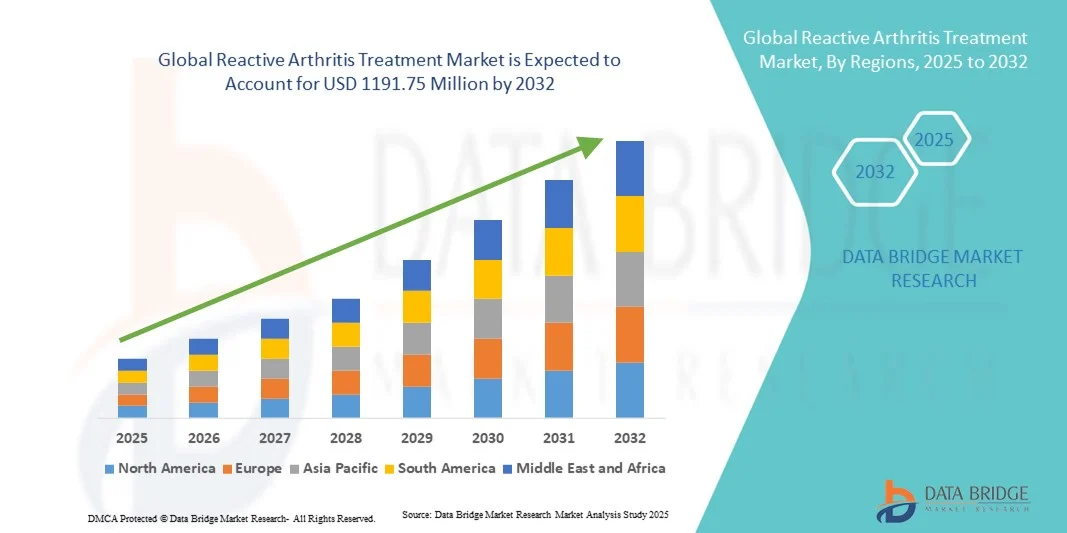
- The global reactive arthritis treatment market size was valued at USD 742.1 Million in 2024 and is expected to reach USD 1191.75 Million by 2032, at a CAGR of 6.10% during the forecast period
- The market growth is largely fueled by the increasing prevalence of reactive arthritis, rising awareness of autoimmune and inflammatory disorders, and advancements in diagnostic and therapeutic technologies, leading to enhanced patient management and treatment outcomes
- Furthermore, growing demand for effective, targeted, and patient-friendly treatment options is accelerating the uptake of Reactive Arthritis Treatment solutions, thereby significantly boosting the industry's growth
Reactive Arthritis Treatment Market Analysis
- Reactive arthritis treatment, encompassing pharmacological and non-pharmacological approaches, is becoming an essential area of focus in autoimmune and inflammatory disease management due to its role in alleviating symptoms, preventing recurrence, and improving patient quality of life
- The growing demand for effective treatment options is primarily driven by the rising incidence of bacterial infections leading to reactive arthritis, advancements in biologic and disease-modifying antirheumatic drugs (DMARDs), and improved diagnostic capabilities
- North America dominated the reactive arthritis treatment market with the largest revenue share of 38.7% in 2024, supported by advanced healthcare infrastructure, high awareness among patients and clinicians, and strong presence of major pharmaceutical companies developing innovative arthritis therapeutics
- Asia-Pacific is projected to be the fastest-growing region in the reactive arthritis treatment market during the forecast period, driven by improving healthcare access, growing incidence of infectious diseases, and increasing adoption of biologic therapies across emerging economies
- The oral segment dominated the largest market revenue share of 46.8% in 2024, driven by its non-invasive nature, ease of use, and cost-effectiveness across all patient demographics. Oral formulations remain the preferred route for most conventional therapies, including NSAIDs, corticosteroids, and DMARDs
Report Scope and Reactive Arthritis Treatment Market Segmentation
|
Attributes |
Reactive Arthritis Treatment Key Market Insights |
|
Segments Covered |
|
|
Countries Covered |
North America
Europe
Asia-Pacific
Middle East and Africa
South America
|
|
Key Market Players |
|
|
Market Opportunities |
|
|
Value Added Data Infosets |
In addition to the insights on market scenarios such as market value, growth rate, segmentation, geographical coverage, and major players, the market reports curated by the Data Bridge Market Research also include in-depth expert analysis, patient epidemiology, pipeline analysis, pricing analysis, and regulatory framework. |
Reactive Arthritis Treatment Market Trends
Advancements in Targeted Therapeutics and Early Diagnosis
- A significant and accelerating trend in the global reactive arthritis treatment market is the growing focus on developing targeted therapeutic approaches and improving early diagnostic capabilities. Pharmaceutical companies and research institutions are emphasizing the identification of specific biomarkers and genetic markers associated with reactive arthritis, allowing for more precise and personalized treatment strategies
- For instance, in March 2024, Pfizer announced new research collaborations aimed at identifying molecular targets that contribute to autoimmune inflammation in reactive arthritis, paving the way for the development of novel biologic therapies. Similarly, Eli Lilly is investing in expanding the use of monoclonal antibodies and JAK inhibitors that specifically modulate inflammatory pathways implicated in reactive arthritis
- The integration of advanced diagnostic technologies, such as molecular genetic testing and biomarker profiling, is enabling earlier and more accurate disease detection. For instance, diagnostic centers and hospitals are increasingly adopting rapid diagnostic assays and next-generation sequencing (NGS)-based methods to identify underlying infections and immune responses triggering reactive arthritis. This facilitates timely intervention and improved treatment outcomes
- Furthermore, advancements in biologic therapies and targeted small-molecule drugs are enhancing the efficacy of treatment while minimizing systemic side effects. Biologics that inhibit cytokines such as TNF-α, IL-17, and IL-23 are demonstrating promising results in clinical trials, particularly in patients unresponsive to traditional anti-inflammatory or immunosuppressive drugs
- The shift toward precision medicine and patient-specific care models is also fostering the adoption of multidisciplinary treatment approaches that combine pharmacological therapy with physiotherapy and immune-modulating interventions. This is significantly improving patient quality of life and long-term disease management outcomes
- Overall, the emphasis on innovation in therapeutic design, early diagnosis, and personalized treatment regimens is reshaping the Reactive Arthritis Treatment market, leading to more effective disease control and expanding opportunities for pharmaceutical and biotechnology companies in this space
Reactive Arthritis Treatment Market Dynamics
Driver
Rising Prevalence of Autoimmune and Post-Infectious Disorders
- The global increase in autoimmune and post-infectious inflammatory disorders is a major factor driving the demand for effective reactive arthritis treatment solutions. The rising incidence of bacterial and viral infections—particularly gastrointestinal and urogenital infections—has led to a growing number of patients developing reactive arthritis as a secondary complication
- For instance, in February 2024, a study published by the European Society of Rheumatology indicated a 17% increase in reactive arthritis cases linked to post-COVID-19 autoimmune responses and bacterial infections caused by Chlamydia trachomatis and Salmonella. This growing prevalence underscores the need for early detection and targeted therapy
- Furthermore, increased awareness among healthcare professionals and patients about early symptoms such as joint inflammation, pain, and stiffness is contributing to improved diagnosis and timely treatment initiation. Pharmaceutical advancements, including the availability of biologics and anti-inflammatory agents, are further strengthening market growth
- Continued government support for rare disease research and funding for autoimmune disease management programs are also fostering a robust therapeutic development pipeline. This supportive environment encourages innovation and accelerates drug approvals, enhancing treatment accessibility and effectiveness
Restraint/Challenge
High Cost of Biologic Therapies and Limited Access in Emerging Regions
- The high cost associated with biologic therapies and advanced immunomodulators remains a key challenge in the Reactive Arthritis Treatment market, particularly in developing countries. Many of the newly approved biologic drugs, while highly effective, come with substantial treatment expenses that limit patient access in lower-income regions
- For instance, biologic therapies such as adalimumab and etanercept can cost several thousand dollars annually per patient, creating affordability issues even in regions with partial reimbursement systems
- In addition, limited diagnostic infrastructure in low- and middle-income countries restricts early detection, often leading to delayed treatment and disease progression. The lack of awareness about reactive arthritis and its differentiation from other inflammatory joint disorders further exacerbates the challenge
- Addressing these constraints through government-led healthcare subsidies, expansion of insurance coverage, and promotion of biosimilar alternatives will be essential for enhancing treatment accessibility. Moreover, initiatives by global health organizations to improve diagnostic capabilities and support clinical trials in underserved regions are expected to gradually reduce the disparity in treatment access.
- Overcoming these challenges through the development of cost-effective biosimilars, patient education programs, and enhanced healthcare policies will play a crucial role in ensuring sustained growth and equitable access in the Reactive Arthritis Treatment market
Reactive Arthritis Treatment Market Scope
The market is segmented on the basis of drug type, route of administration, and distribution channels.
- By Drug Type
On the basis of drug type, the Reactive Arthritis Treatment market is segmented into antibiotics, corticosteroids, nonsteroidal anti-inflammatory drugs (NSAIDs), disease-modifying anti-rheumatic drugs (DMARDs), tumor necrosis factor (TNF) blockers, and immunosuppressant drugs. The nonsteroidal anti-inflammatory drugs (NSAIDs) segment dominated the largest market revenue share of 39.5% in 2024, driven by their established role as first-line therapy for pain relief and inflammation reduction in reactive arthritis patients. Their over-the-counter availability, affordability, and proven safety profile contribute to their widespread adoption. The global prevalence of mild-to-moderate arthritis symptoms and growing awareness regarding early treatment further boost NSAID usage. In addition, the broad range of formulations, including tablets, capsules, and sustained-release variants, enhances patient compliance. Strong physician recommendation, presence of multiple global brands, and minimal side effects also reinforce their dominance in the market.
The tumor necrosis factor (TNF) blockers segment is projected to register the fastest CAGR of 21.3% from 2025 to 2032, fueled by rising preference for targeted biologic treatments that effectively manage severe and chronic inflammatory cases. Increasing clinical evidence supporting TNF blockers’ long-term benefits has driven their acceptance among healthcare professionals. Moreover, patient demand for personalized, precision-based therapy and the availability of next-generation biosimilars at competitive pricing support rapid growth. Expanding healthcare infrastructure and rising adoption of parenteral therapies in both developed and emerging nations further propel market expansion. Continuous innovation in biologics manufacturing, along with improved accessibility through insurance coverage, strengthens this segment’s future growth prospects.
- By Route of Administration
On the basis of route of administration, the Reactive Arthritis Treatment market is segmented into oral, topical, and parenteral. The oral segment dominated the largest market revenue share of 46.8% in 2024, driven by its non-invasive nature, ease of use, and cost-effectiveness across all patient demographics. Oral formulations remain the preferred route for most conventional therapies, including NSAIDs, corticosteroids, and DMARDs. Their convenience for self-administration, combined with wide retail availability, enhances adherence and market penetration. The strong presence of oral generics and extensive physician preference for tablets and capsules due to predictable dosing and lower infection risk further contribute to segment leadership. In addition, ongoing innovation in extended-release oral formulations and fixed-dose combinations improves therapeutic outcomes and compliance.
The parenteral segment is expected to witness the fastest CAGR of 19.6% from 2025 to 2032, supported by increasing use of biologic therapies and TNF inhibitors that require injectable or infusion-based delivery. The high bioavailability and rapid onset of action associated with parenteral administration make it crucial for severe or refractory reactive arthritis cases. Rising adoption of hospital-based biologic therapy, growing preference for auto-injectors, and advancements in pre-filled syringe technologies are key growth drivers. Furthermore, pharmaceutical companies are focusing on patient-friendly devices and long-acting injectable formulations, improving convenience and safety. Expanding healthcare coverage for biologic therapies and rising specialist prescription rates further support this segment’s strong growth trajectory.
- By Distribution Channels
On the basis of distribution channels, the Reactive Arthritis Treatment market is segmented into hospital pharmacies, retail pharmacies, and online pharmacies. The hospital pharmacies segment held the largest market revenue share of 41.2% in 2024, primarily due to the high prevalence of complex and severe arthritis cases managed in hospital settings. Hospitals serve as key distribution centers for biologics and parenteral medications, which require professional supervision and administration. Growing collaborations between pharmaceutical manufacturers and healthcare institutions enhance drug availability and treatment monitoring. The rising number of hospital admissions and specialist consultations also supports high product consumption through this channel. In addition, patient trust in hospital-based dispensing and the integration of electronic health record systems ensure proper tracking of prescriptions and dosage management, reinforcing dominance.
The online pharmacies segment is anticipated to record the fastest CAGR of 22.5% from 2025 to 2032, driven by increasing adoption of digital healthcare platforms and growing consumer preference for convenient, contactless medication access. Expanding e-commerce penetration, government-backed telehealth programs, and availability of licensed online pharmacy services contribute to this strong growth. Enhanced logistics networks, subscription-based medication plans, and automated refill reminders improve adherence for chronic arthritis patients. Furthermore, online pharmacies offer competitive pricing, patient education, and 24/7 access to pharmaceutical consultations. The rise of digital prescription systems and increasing smartphone usage in both developed and emerging economies further position online pharmacies as a key growth driver in the global market.
Reactive Arthritis Treatment Market Regional Analysis
- North America dominated the reactive arthritis treatment market with the largest revenue share of 38.7% in 2024, supported by its advanced healthcare infrastructure, strong presence of major pharmaceutical companies, and high awareness levels among both patients and healthcare professionals
- The region’s focus on early diagnosis, coupled with ongoing clinical trials for biologic and immunomodulatory therapies, has further strengthened its market position. Increasing investments in autoimmune and inflammatory disease research, alongside the availability of advanced diagnostic tools, continue to drive the adoption of effective treatment options across hospitals and specialty clinics
- The presence of leading players such as Pfizer, Johnson & Johnson, and AbbVie, who are engaged in continuous product innovation and expansion of their rheumatology portfolios, has also played a significant role in market growth. Furthermore, supportive reimbursement policies and government initiatives promoting rare and autoimmune disease management are accelerating the adoption of novel biologics and biosimilars for reactive arthritis treatment in the region
U.S. Reactive Arthritis Treatment Market Insight
The U.S. reactive arthritis treatment market captured the largest revenue share of in 2024 within North America, driven by a robust healthcare system, advanced R&D capabilities, and early adoption of biologic and targeted therapies. The high prevalence of autoimmune and post-infectious inflammatory diseases, coupled with increasing awareness of early arthritis intervention, has significantly contributed to market expansion. Moreover, the U.S. continues to be a global leader in clinical research and FDA approvals for new biologic drugs targeting inflammation and joint damage. Rising healthcare expenditure, a strong biotechnology sector, and the availability of comprehensive patient support programs from major pharmaceutical firms have further bolstered market growth.
Europe Reactive Arthritis Treatment Market Insight
The Europe reactive arthritis treatment market is projected to expand at a substantial CAGR during the forecast period, supported by the rising prevalence of arthritis-related autoimmune conditions and the increasing accessibility of biologic therapies across the region. Several European nations are witnessing advancements in diagnostic accuracy and growing physician preference for biologics over conventional NSAIDs and corticosteroids. The region’s stringent healthcare quality regulations, along with significant funding for rheumatology research, are driving innovation in treatment protocols. In addition, the growing focus on early detection programs and patient education campaigns is improving diagnosis rates and treatment adherence, further propelling market growth.
U.K. Reactive Arthritis Treatment Market Insight
The U.K. Reactive Arthritis Treatment market is anticipated to grow at a notable CAGR during the forecast period, supported by a well-established healthcare infrastructure and government initiatives aimed at managing chronic and autoimmune disorders. Increasing collaborations between research institutions and pharmaceutical firms for developing advanced anti-inflammatory therapies are driving innovation in the market. Moreover, the integration of precision medicine approaches in arthritis care, combined with the use of electronic health records (EHRs) to identify high-risk patients, is fostering earlier and more effective treatment outcomes.
Germany Reactive Arthritis Treatment Market Insight
The Germany reactive arthritis treatment market is expected to expand at a considerable CAGR during the forecast period, driven by growing adoption of biologic and biosimilar therapies, advancements in diagnostic imaging technologies, and government support for clinical research. Germany’s well-structured healthcare system and emphasis on innovation make it a key European hub for rheumatology-focused pharmaceutical development.
The market is also benefiting from increasing patient participation in clinical trials and strong collaborations between academic research centers and biotech companies working on next-generation anti-inflammatory drugs.
Asia-Pacific Reactive Arthritis Treatment Market Insight
The Asia-Pacific reactive arthritis treatment market is projected to grow at the fastest CAGR of 23.9% during the forecast period (2025–2032), driven by improving healthcare access, rising disease awareness, and increasing adoption of biologic and immunosuppressive therapies. The region’s expanding patient base, particularly in China, India, and Japan, coupled with rapid advancements in healthcare infrastructure, is creating strong growth opportunities for global and regional pharmaceutical players. Government-led initiatives to improve rare and autoimmune disease management, along with rising investments in research on infection-triggered arthritis, are key contributors to market expansion. The growing number of local manufacturers offering cost-effective biosimilars is also enhancing treatment accessibility across emerging economies.
Japan Reactive Arthritis Treatment Market Insight
The Japan reactive arthritis treatment market is gaining momentum due to its advanced healthcare system, extensive R&D capabilities, and increasing focus on managing autoimmune diseases through precision therapies. The country’s aging population and growing prevalence of chronic inflammatory conditions are further stimulating demand for innovative biologic treatments.
Collaborations between academic research institutions and pharmaceutical firms to develop targeted immunotherapies and combination regimens are strengthening Japan’s position as a major hub for rheumatology innovation in Asia.
China Reactive Arthritis Treatment Market Insight
The China reactive arthritis treatment market accounted for the largest revenue share within the Asia-Pacific region in 2024, driven by rapid healthcare modernization, government-led initiatives to improve autoimmune disease management, and increased investments in pharmaceutical infrastructure. Expanding access to biologic therapies, rising adoption of biosimilars, and the establishment of national programs for early arthritis diagnosis are major factors propelling growth.
Furthermore, the increasing number of local biopharmaceutical companies developing cost-effective therapeutic solutions and the government’s emphasis on chronic disease awareness are contributing to a robust market outlook for reactive arthritis treatment in China.
Reactive Arthritis Treatment Market Share
The Reactive Arthritis Treatment industry is primarily led by well-established companies, including:
- Pfizer Inc. (U.S.)
- Johnson & Johnson and its affiliates (U.S.)
- Novartis AG (Switzerland)
- AbbVie Inc. (U.S.)
- Lilly (U.S.)
- GSK plc (U.K.)
- Roche Holding AG (Switzerland)
- Amgen Inc. (U.S.)
- Bristol Myers Squibb (U.S.)
- Sanofi (France)
- Merck & Co., Inc. (U.S.)
- AstraZeneca plc (U.K.)
- Takeda Pharmaceutical Company Limited (Japan)
- Bayer AG (Germany)
- Boehringer Ingelheim International GmbH (Germany)
Latest Developments in Global Reactive Arthritis Treatment Market
- In September 2025, AbbVie announced that its immunology drug Rinvoq would retain market exclusivity until 2037, extending protection from generic competition by four years. This extension, stemming from a settlement with certain generic drugmakers, is projected to protect revenues until at least April 2037. Analysts view this as a significant advantage, suggesting it could add up to USD 2 billion in peak-year sales. Rinvoq earned USD 5.97 billion in 2024, over 10% of AbbVie's revenue, and with Skyrizi, is forecasted to generate over USD 31 billion in 2027
- In January 2025, AbbVie projected higher-than-expected profits for 2025, driven by robust sales of its newer immunology drugs, Skyrizi and Rinvoq, which are compensating for a significant decline in sales of Humira, its former best-selling rheumatoid arthritis drug. Humira's quarterly sales fell 49% to USD 1.68 billion due to increased competition from cheaper biosimilars. In response, AbbVie is promoting Skyrizi and Rinvoq, anticipating combined revenues of over USD 31 billion by 2027. This strategic shift has positively influenced AbbVie's stock, which rose by 4.2% in premarket trading

- Interactive Data Analysis Dashboard
- Company Analysis Dashboard for high growth potential opportunities
- Research Analyst Access for customization & queries
- Competitor Analysis with Interactive dashboard
- Latest News, Updates & Trend analysis
- Harness the Power of Benchmark Analysis for Comprehensive Competitor Tracking
Data collection and base year analysis are done using data collection modules with large sample sizes. The stage includes obtaining market information or related data through various sources and strategies. It includes examining and planning all the data acquired from the past in advance. It likewise envelops the examination of information inconsistencies seen across different information sources. The market data is analysed and estimated using market statistical and coherent models. Also, market share analysis and key trend analysis are the major success factors in the market report. To know more, please request an analyst call or drop down your inquiry.
The key research methodology used by DBMR research team is data triangulation which involves data mining, analysis of the impact of data variables on the market and primary (industry expert) validation. Data models include Vendor Positioning Grid, Market Time Line Analysis, Market Overview and Guide, Company Positioning Grid, Patent Analysis, Pricing Analysis, Company Market Share Analysis, Standards of Measurement, Global versus Regional and Vendor Share Analysis. To know more about the research methodology, drop in an inquiry to speak to our industry experts.
Data Bridge Market Research is a leader in advanced formative research. We take pride in servicing our existing and new customers with data and analysis that match and suits their goal. The report can be customized to include price trend analysis of target brands understanding the market for additional countries (ask for the list of countries), clinical trial results data, literature review, refurbished market and product base analysis. Market analysis of target competitors can be analyzed from technology-based analysis to market portfolio strategies. We can add as many competitors that you require data about in the format and data style you are looking for. Our team of analysts can also provide you data in crude raw excel files pivot tables (Fact book) or can assist you in creating presentations from the data sets available in the report.












