


Rocky Mountain Spotted Fever Treatment Market Size
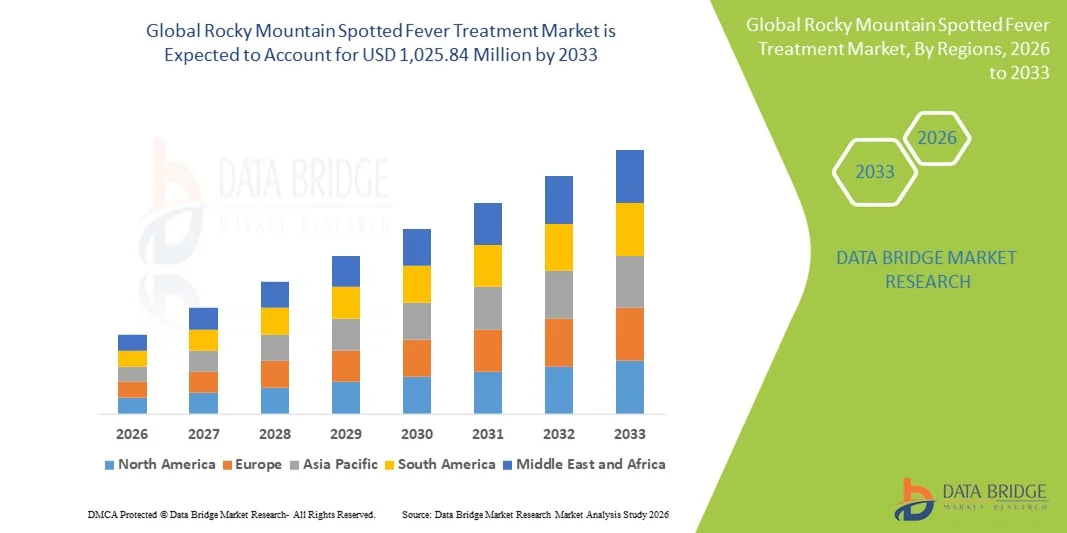
- The global Rocky Mountain Spotted Fever treatment market size was valued at USD 732.49 million in 2025 and is expected to reach USD 1,025.84 million by 2033, at a CAGR of 4.30% during the forecast period
- The market is primarily driven by the rising incidence of tick-borne infections, greater awareness among healthcare providers, and improving diagnostic capabilities that enable early intervention and treatment adoption
- In addition, expanding public health initiatives, increased availability of effective antibiotic therapies, and growing emphasis on rapid disease management are accelerating treatment uptake, thereby supporting the steady growth of the Rocky Mountain Spotted Fever treatment market
Rocky Mountain Spotted Fever Treatment Market Analysis
- Rocky Mountain Spotted Fever treatment market, driven by the need for rapid and effective management of this severe tick-borne infection, is increasingly centered on antibiotics such as tetracycline, doxycycline, and chloramphenicol, along with supportive anticonvulsants in complicated cases. Growing emphasis on early diagnosis and timely therapeutic intervention continues to strengthen treatment adoption across both developed and emerging regions
- The rising tick populations, broader geographic spread of RMSF, and increasing clinical awareness are major factors fueling demand within the Rocky Mountain Spotted Fever treatment market, with diagnostic tools such as renal and liver function tests, CBC, and skin biopsy supporting improved case detection and earlier treatment initiation
- North America dominated the Rocky Mountain Spotted Fever treatment market with the largest revenue share of 42.6% in 2025, driven by higher prevalence rates in the U.S., strong adherence to clinical guidelines recommending doxycycline, and well-established healthcare infrastructure ensuring widespread access to standard treatments across hospitals and clinics
- Asia-Pacific is expected to be the fastest-growing region in the Rocky Mountain Spotted Fever treatment market during the forecast period due to growing recognition of tick-borne illnesses, expanding diagnostic capabilities, and increasing treatment accessibility through hospital, retail, and online pharmacies
- The doxycycline segment dominated the Rocky Mountain Spotted Fever treatment market with a market share of 46.8% in 2025, supported by its status as the universally recommended first-line therapy for all age groups and its strong clinical effectiveness, rapid therapeutic action, and wide availability across oral and injectable dosage forms
Report Scope and Rocky Mountain Spotted Fever Treatment Market Segmentation
|
Attributes |
Rocky Mountain Spotted Fever Treatment Key Market Insights |
|
Segments Covered |
|
|
Countries Covered |
North America
Europe
Asia-Pacific
Middle East and Africa
South America
|
|
Key Market Players |
|
|
Market Opportunities |
|
|
Value Added Data Infosets |
In addition to the insights on market scenarios such as market value, growth rate, segmentation, geographical coverage, and major players, the market reports curated by the Data Bridge Market Research also include in-depth expert analysis, patient epidemiology, pipeline analysis, pricing analysis, and regulatory framework |
Rocky Mountain Spotted Fever Treatment Market Trends
Advancements in Rapid Diagnostic and Early Intervention Tools
- A significant and accelerating trend in the Rocky Mountain Spotted Fever treatment market is the growing adoption of rapid diagnostic technologies, including PCR-based assays and point-of-care testing, enabling faster identification and treatment initiation
- For instance, the BioFire FilmArray system allows clinicians to detect Rickettsia rickettsii in under an hour, supporting prompt doxycycline administration to reduce severe disease outcomes
- Integration of these diagnostics with hospital electronic health record systems facilitates better tracking of infection patterns, early alerts for high-risk patients, and data-driven therapeutic decisions
- The development of rapid diagnostic tools alongside antibiotic stewardship programs supports more effective treatment protocols, minimizing overtreatment and improving clinical outcomes
- For instance, Thermo Fisher Scientific has been developing multiplex PCR kits compatible with clinical labs to accelerate RMSF detection and optimize treatment pathways
- Increasing research on host-pathogen interactions and predictive biomarkers is helping design more targeted treatment strategies, potentially reducing complications and improving recovery timelines
- Adoption of telemedicine platforms for early RMSF symptom assessment and follow-up care is emerging as a trend to enhance treatment accessibility in rural and underserved regions
Rocky Mountain Spotted Fever Treatment Market Dynamics
Driver
Increasing Incidence of Tick-Borne Infections and Rising Awareness
- The rising prevalence of RMSF across North America and expanding tick habitats are major drivers fueling demand for effective treatment and rapid intervention in both hospital and clinic settings
- For instance, in 2025, the CDC reported increased RMSF cases in southern U.S. states, prompting higher adoption of doxycycline-based treatment protocols across healthcare facilities
- Heightened awareness among healthcare providers about early antibiotic therapy and clinical guidelines ensures timely treatment, reducing complications and mortality rates
- Expansion of public health initiatives and government awareness campaigns are increasing patient access to testing and therapy, further supporting market growth
- Improved access to doxycycline and other first-line treatments in hospitals, clinics, and online pharmacies is also driving uptake in both urban and rural regions
- Technological advances in diagnostic devices and mobile health reporting are enabling quicker identification of outbreaks, directly driving demand for RMSF treatments
- Increased training programs for healthcare professionals in endemic regions are promoting guideline-adherent treatment practices, ensuring higher market penetration and standardized care
Restraint/Challenge
Antibiotic Resistance Concerns and Limited Awareness in Emerging Regions
- The growing concerns over potential antibiotic resistance due to misuse or delayed treatment pose a challenge to market expansion, especially in regions with limited clinical oversight
- For instance, reports of suboptimal doxycycline dosing in remote clinics have raised caution among healthcare professionals regarding treatment efficacy and resistance development
- Limited awareness of RMSF symptoms among the general population in emerging regions can delay diagnosis, reducing timely treatment adoption and affecting overall market penetration
- The high dependency on specific antibiotics such as doxycycline and chloramphenicol restricts alternative treatment options in cases of allergy or contraindication, potentially limiting therapy accessibility
- Overcoming these challenges through clinician training, patient education, and development of alternative therapeutic options is essential to ensure sustainable growth in the RMSF treatment market
- Variability in healthcare infrastructure and drug availability across regions may delay treatment initiation, especially in rural areas with limited access to clinics and hospitals
- Regulatory hurdles for approval of novel treatment methods and diagnostic tools in certain countries can slow market expansion and adoption of innovative RMSF therapies
Rocky Mountain Spotted Fever Treatment Market Scope
The market is segmented on the basis of treatment, dosage, route of administration, diagnosis, end-users, and distribution channel.
- By Treatment
On the basis of treatment, the Rocky Mountain Spotted Fever treatment market is segmented into tetracycline, doxycycline, chloramphenicol, and anticonvulsants. The doxycycline segment dominated the market with the largest revenue share of 46.8% in 2025, driven by its clinical efficacy as the universally recommended first-line therapy for all age groups. Doxycycline is preferred for its rapid action, ability to reduce severe complications, and proven safety profile. Healthcare providers in endemic regions widely prescribe it for both adults and children, enhancing adoption rates. The drug is also available in multiple dosage forms and routes of administration, supporting flexibility in treatment protocols. In addition, extensive clinical guidelines and awareness campaigns emphasize doxycycline use, further consolidating its market dominance. The growing availability of doxycycline in hospital, retail, and online pharmacies ensures widespread accessibility, reinforcing its position as the most used treatment.
The tetracycline segment is expected to witness the fastest growth rate of 18.5% from 2026 to 2033, fueled by rising awareness in emerging regions and its role as an alternative therapy in cases of doxycycline contraindication. Tetracycline adoption is supported by expanding hospital and clinic availability, along with growing public health initiatives for tick-borne disease management. Increasing research on optimizing tetracycline dosing and its inclusion in combination therapy regimens contributes to anticipated growth. Rising physician awareness programs and expanding diagnostic capabilities in semi-urban and rural areas are expected to drive adoption. Tetracycline’s affordability compared to newer formulations also makes it an attractive choice for cost-sensitive regions.
- By Dosage
On the basis of dosage, the market is segmented into tablet, injection, and others. The tablet segment dominated the market in 2025, owing to its convenience, ease of administration, and suitability for both outpatient and hospital settings. Tablets allow flexible dosing schedules and adherence in children and adults, facilitating widespread adoption across clinics and hospitals. They are cost-effective, readily available, and form the backbone of first-line RMSF treatment protocols. Tablets can be combined with supportive care measures, such as hydration and monitoring, to improve patient outcomes. Healthcare professionals frequently prefer oral tablets for early-stage RMSF due to rapid absorption and proven efficacy. In addition, tablets are preferred for their portability, patient compliance, and suitability for long-term outpatient monitoring.
The injection segment is expected to witness the fastest growth from 2026 to 2033, driven by the need for rapid intervention in severe cases and hospitalized patients. Injectable forms allow direct systemic delivery, ensuring immediate therapeutic action in critically ill patients. Growing hospital adoption, especially in emergency and intensive care settings, supports segment growth. Increasing awareness about severe RMSF complications encourages the use of injectable formulations when oral administration is not feasible. Injectable dosage forms also provide flexibility for patients with swallowing difficulties or gastrointestinal issues. Rising hospital infrastructure development in endemic regions further boosts injectable therapy adoption.
- By Route of Administration
On the basis of route of administration, the market is segmented into intramuscular, intravenous, and oral. The oral route dominated the market in 2025, largely due to the prevalence of doxycycline tablets and the convenience of self-administration in outpatient care. Oral administration ensures patient compliance and supports early treatment in mild to moderate cases. It is widely preferred in endemic regions with high case numbers and limited hospital access. Clinicians rely on oral therapy for outpatient management while monitoring recovery and symptom progression. The established efficacy of oral doxycycline and tetracycline reinforces its dominance across hospitals, clinics, and pharmacies. Oral administration is also cost-effective and easily scalable for public health programs in affected regions.
The intravenous segment is expected to witness the fastest growth from 2026 to 2033, driven by its critical role in severe or complicated RMSF cases requiring rapid systemic drug delivery. IV administration is increasingly adopted in hospitals to manage high-risk patients and to prevent organ failure or severe complications. Technological advancements in infusion devices and improved IV formulation availability further drive growth. IV therapy is preferred in intensive care settings where rapid and controlled drug administration is required. Hospitals are investing in IV therapy infrastructure to improve patient outcomes and manage severe cases more effectively.
- By Diagnosis
On the basis of diagnosis, the market is segmented into renal function tests, liver function tests, complete blood count (CBC), skin biopsy, and others. The CBC segment dominated the market in 2025, owing to its utility as a primary and cost-effective diagnostic tool for early detection of RMSF-related hematological changes. CBC is routinely performed in clinics and hospitals for suspected cases, enabling rapid assessment of platelet counts, leukocyte levels, and overall infection severity. Its accessibility and simplicity contribute to widespread adoption in both urban and rural healthcare settings. CBC results often guide timely initiation of doxycycline therapy, supporting clinical decision-making and treatment success. In addition, CBC tests are often repeated to monitor therapy response and disease progression. The integration of CBC with digital patient records enhances early warning systems in hospitals, further strengthening its use.
The renal function tests segment is expected to witness the fastest growth from 2026 to 2033, driven by increasing awareness of RMSF-associated kidney complications and the need for early intervention. Growing adoption of comprehensive metabolic panels and automated laboratory diagnostics supports segment expansion. Advanced renal monitoring allows clinicians to adjust therapy and improve patient outcomes. Government and hospital-led awareness programs regarding renal complications in RMSF are encouraging regular testing. Technological advances in portable renal testing devices also support faster adoption in semi-urban clinics. Rising prevalence of comorbid conditions such as hypertension and diabetes further emphasizes renal monitoring in treatment protocols.
- By End-Users
On the basis of end-users, the market is segmented into clinic, hospital, and others. The hospital segment dominated the market in 2025, due to the high prevalence of severe RMSF cases requiring immediate diagnosis, intravenous therapy, and close monitoring. Hospitals provide comprehensive facilities for managing complications, making them the primary treatment setting. The presence of trained clinicians, advanced diagnostic tools, and hospital pharmacies ensures timely and effective treatment delivery. Hospitals in endemic regions often serve as referral centers for complicated RMSF cases, further strengthening their market dominance. In addition, hospitals offer integrated care including laboratory, pharmacy, and inpatient support, enhancing treatment success rates. The combination of specialized care and infrastructure makes hospitals the preferred choice for managing RMSF.
The clinic segment is expected to witness the fastest growth from 2026 to 2033, driven by increasing outpatient awareness programs, rapid diagnostic deployment, and early-stage treatment interventions. Clinics in rural and semi-urban areas are expanding services to improve access to doxycycline and other therapies. Growing public health initiatives and preventive care programs contribute to adoption in clinic settings. Clinics provide quick assessment and follow-up for mild cases, reducing hospital burden. Telemedicine-enabled clinics further increase accessibility for remote populations. Rising government and NGO programs to educate primary care physicians are also driving clinic adoption.
- By Distribution Channel
On the basis of distribution channel, the market is segmented into hospital pharmacy, retail pharmacy, and online pharmacy. The hospital pharmacy segment dominated the market in 2025, owing to the immediate availability of first-line treatments such as doxycycline and chloramphenicol in inpatient settings. Hospital pharmacies ensure timely dispensing of antibiotics for both oral and injectable administration, supporting acute patient care. Hospitals in endemic regions rely on pharmacy stock management and clinician-driven protocols to maintain treatment continuity. High patient footfall, critical case management, and integration with electronic prescribing systems enhance the segment’s dominance. The presence of trained pharmacists and regulated dispensing practices also contributes to patient safety and adherence. Hospitals’ partnerships with suppliers ensure uninterrupted treatment availability, reinforcing this segment’s leading position.
The online pharmacy segment is expected to witness the fastest growth from 2026 to 2033, fueled by rising digital adoption, increased patient awareness, and convenient home delivery of essential RMSF treatments. Telemedicine consultations and e-prescriptions allow patients in remote areas to access medication without traveling to hospitals. The segment benefits from expanding e-commerce penetration and improved logistics in both urban and rural markets. Online pharmacies also enhance privacy and reduce travel-related costs for patients. Growing mobile app-based ordering and integration with insurance reimbursements support market expansion. Partnerships between online pharmacies and diagnostic service providers further strengthen treatment accessibility.
Rocky Mountain Spotted Fever Treatment Market Regional Analysis
- North America dominated the Rocky Mountain Spotted Fever Treatment Market with the largest revenue share of 42.6% in 2025, driven by higher prevalence rates in the U.S., strong adherence to clinical guidelines recommending doxycycline, and well-established healthcare infrastructure ensuring widespread access to standard treatments across hospitals and clinics
- The region benefits from well-established healthcare infrastructure, early disease recognition, and widespread physician awareness, enabling fast treatment initiation and reducing complications associated with delayed diagnosis
- This strong market position is further supported by advanced laboratory capabilities, public health surveillance programs, and extensive availability of RMSF medications through hospital, retail, and online pharmacies, solidifying North America as the leading hub for effective RMSF management
U.S. Rocky Mountain Spotted Fever Treatment Market Insight
The U.S. Rocky Mountain Spotted Fever treatment market captured the largest revenue share of 82% in 2025 within North America, fueled by the high prevalence of RMSF and rapid adoption of first-line antibiotic therapies such as doxycycline. Clinicians and healthcare providers are increasingly prioritizing early diagnosis and treatment to reduce severe complications and mortality. The growing availability of rapid diagnostic tools, such as PCR-based assays, alongside widespread hospital, retail, and online pharmacy access, further propels the market. Moreover, government-led public health campaigns and awareness programs about tick-borne infections are significantly contributing to market expansion. The U.S. healthcare system’s emphasis on guideline-adherent treatment protocols ensures timely intervention and supports sustained market growth.
Europe Rocky Mountain Spotted Fever Treatment Market Insight
The Europe Rocky Mountain Spotted Fever treatment market is projected to expand at a steady CAGR throughout the forecast period, driven by growing awareness of tick-borne diseases and the increasing need for early and effective treatment in both urban and rural areas. The adoption of advanced diagnostic tools and the availability of doxycycline and other therapies through hospital and retail pharmacies support market growth. European healthcare providers are emphasizing preventive care and rapid treatment to reduce complications, which fosters market adoption. In addition, public health initiatives, awareness programs, and training for clinicians are promoting standardized treatment practices. Growth is observed across both hospital and clinic settings, with RMSF management being incorporated into broader infectious disease care programs.
U.K. Rocky Mountain Spotted Fever Treatment Market Insight
The U.K. Rocky Mountain Spotted Fever treatment market is anticipated to grow at a noteworthy CAGR during the forecast period, driven by increasing awareness of tick-borne diseases and the importance of timely antibiotic therapy. Healthcare providers and patients are increasingly prioritizing early diagnosis and intervention to prevent severe complications. The U.K.’s strong healthcare infrastructure, coupled with well-established hospital and clinic networks, supports effective RMSF treatment delivery. Public health campaigns focusing on tick bite prevention and symptom recognition are also encouraging patients to seek treatment early. The availability of doxycycline and other first-line therapies through hospital, retail, and online pharmacies facilitates timely therapy. In addition, the U.K.’s emphasis on evidence-based treatment protocols ensures guideline-adherent RMSF management.
Germany Rocky Mountain Spotted Fever Treatment Market Insight
The Germany Rocky Mountain Spotted Fever treatment market is expected to expand at a considerable CAGR during the forecast period, fueled by rising awareness of tick-borne infections and early intervention benefits. Germany’s advanced healthcare infrastructure and strong clinical guidelines for RMSF management support widespread adoption of doxycycline and other first-line therapies. Hospitals and clinics are equipped with modern diagnostic tools, including renal and liver function testing, CBC, and PCR assays, enabling timely treatment. Public health initiatives and educational campaigns targeting both clinicians and patients further encourage prompt diagnosis and therapy. The integration of standardized treatment protocols across healthcare settings enhances patient outcomes. In addition, Germany’s emphasis on preventive healthcare and robust monitoring systems contributes to market growth.
Asia-Pacific Rocky Mountain Spotted Fever Treatment Market Insight
The Asia-Pacific Rocky Mountain Spotted Fever treatment market is poised to grow at the fastest CAGR of 23% during the forecast period of 2026 to 2033, driven by increasing awareness of tick-borne diseases, improving healthcare infrastructure, and expanding diagnostic and treatment facilities in countries such as China, Japan, and India. Growing public health programs and government-led initiatives promoting early detection and treatment are accelerating market adoption. The region’s rising urbanization, coupled with improving access to hospital, clinic, and online pharmacy channels, is increasing the availability of doxycycline and other first-line therapies. Moreover, as APAC invests in infectious disease monitoring systems, the speed and accuracy of RMSF diagnosis are improving. Telemedicine adoption is also supporting remote patient consultation and early treatment initiation.
Japan Rocky Mountain Spotted Fever Treatment Market Insight
The Japan Rocky Mountain Spotted Fever treatment market is gaining momentum due to the country’s high healthcare standards, advanced diagnostic facilities, and growing awareness of tick-borne infections. The market is driven by increasing patient preference for early detection and effective treatment through hospital and clinic services. Integration of rapid diagnostics such as PCR-based testing with guideline-adherent antibiotic therapy ensures timely intervention and improved outcomes. Japan’s emphasis on preventive care and public health campaigns is raising awareness about RMSF risks and treatment availability. In addition, government support for rural healthcare infrastructure is expanding access to doxycycline and other treatments. The growing elderly population further increases demand for easy-to-administer, effective therapies.
India Rocky Mountain Spotted Fever Treatment Market Insight
The India Rocky Mountain Spotted Fever treatment market accounted for the largest revenue share in Asia-Pacific in 2025, attributed to increasing awareness of tick-borne diseases, expanding healthcare infrastructure, and rising accessibility to hospitals, clinics, and online pharmacies. Public health campaigns and preventive initiatives are promoting early diagnosis and timely treatment, particularly in semi-urban and rural areas. India’s growing population and rising incidence of tick exposure in endemic regions are driving demand for doxycycline and other first-line therapies. The availability of affordable treatment options and government-supported awareness programs further support market growth. In addition, telemedicine platforms and mobile health initiatives are facilitating early consultation and prescription, improving patient outcomes. The expansion of private and public healthcare networks continues to enhance RMSF treatment penetration across the country.
Rocky Mountain Spotted Fever Treatment Market Share
The Rocky Mountain Spotted Fever Treatment industry is primarily led by well-established companies, including:
- Pfizer Inc. (U.S.)
- Teva Pharmaceutical Industries Ltd. (Israel)
- Sun Pharmaceutical Industries Ltd. (India)
- Dr. Reddy’s Laboratories Ltd. (India)
- Lupin (India)
- Amneal Pharmaceuticals LLC. (U.S.)
- Hikma Pharmaceuticals Plc (U.K.)
- Merck & Co., Inc. (U.S.)
- AbbVie Inc. (U.S.)
- Novartis AG (Switzerland)
- F. Hoffmann-La Roche Ltd (Switzerland)
- GSK plc (U.K.)
- Sanofi. (France)
- Bayer AG (Germany)
- Aurobindo Pharma Ltd. (India)
- Alembic Pharmaceuticals Limited (India)
- Sandoz International GmbH (Germany)
- Paratek Pharmaceuticals, Inc. (U.S.)
What are the Recent Developments in Global Rocky Mountain Spotted Fever Treatment Market?
- In April 2025, Researchers at UMass Amherst discovered a new strain of Rickettsia, named Rickettsia sp. ME2023, in rabbit ticks (Haemaphysalis leporispalustris) collected from backyards in Maine. This is significant because ME2023 is genetically related to pathogens that cause spotted fever rickettsioses in humans, raising concerns about a previously unrecognized reservoir of disease
- In November 2024, The CDC’s Emerging Infectious Diseases journal published a One Health conceptual framework for preventing brown dog tick–associated RMSF. The framework suggests that interdisciplinary teams (public health, veterinary, vector control) in high-risk communities should assess their RMSF risk and implement control strategies before fatal human cases occur
- In July 2024, A clinical dispatch in Emerging Infectious Diseases described five children in Sonora, Mexico who had RMSF but were initially misdiagnosed with Multisystem Inflammatory Syndrome in Children (MIS-C). The children presented with fever, rash, abdominal pain, edema, and lab markers (inflammation, thrombocytopenia) that strongly mimicked MIS-C, complicating diagnosis
- In January 2024, A U.S.–Mexico epidemiologic investigation reported in the MMWR (CDC) detailed six RMSF cases, including three deaths, associated with exposure in Tecate, Mexico. This work confirmed Tecate, Baja California, as a high-risk area for RMSF exposure, especially via brown dog tick populations, which had not been clearly recognized as a hot spot previously
- In December 2023, The U.S. Centers for Disease Control and Prevention (CDC) issued a Health Alert (HAN) after confirming five cases of RMSF, three of which were fatal, among people who had recently traveled to or lived in Tecate, Baja California, Mexico. The alert emphasized that doxycycline should be started presumptively, without waiting for lab confirmation, because early treatment is lifesaving and delays are dangerous

- Interactive Data Analysis Dashboard
- Company Analysis Dashboard for high growth potential opportunities
- Research Analyst Access for customization & queries
- Competitor Analysis with Interactive dashboard
- Latest News, Updates & Trend analysis
- Harness the Power of Benchmark Analysis for Comprehensive Competitor Tracking
Data collection and base year analysis are done using data collection modules with large sample sizes. The stage includes obtaining market information or related data through various sources and strategies. It includes examining and planning all the data acquired from the past in advance. It likewise envelops the examination of information inconsistencies seen across different information sources. The market data is analysed and estimated using market statistical and coherent models. Also, market share analysis and key trend analysis are the major success factors in the market report. To know more, please request an analyst call or drop down your inquiry.
The key research methodology used by DBMR research team is data triangulation which involves data mining, analysis of the impact of data variables on the market and primary (industry expert) validation. Data models include Vendor Positioning Grid, Market Time Line Analysis, Market Overview and Guide, Company Positioning Grid, Patent Analysis, Pricing Analysis, Company Market Share Analysis, Standards of Measurement, Global versus Regional and Vendor Share Analysis. To know more about the research methodology, drop in an inquiry to speak to our industry experts.
Data Bridge Market Research is a leader in advanced formative research. We take pride in servicing our existing and new customers with data and analysis that match and suits their goal. The report can be customized to include price trend analysis of target brands understanding the market for additional countries (ask for the list of countries), clinical trial results data, literature review, refurbished market and product base analysis. Market analysis of target competitors can be analyzed from technology-based analysis to market portfolio strategies. We can add as many competitors that you require data about in the format and data style you are looking for. Our team of analysts can also provide you data in crude raw excel files pivot tables (Fact book) or can assist you in creating presentations from the data sets available in the report.












