


Skeletal Complications Treatment Market Analysis
The skeletal complications treatment market has been experiencing significant growth in recent years, driven by an increasing prevalence of conditions affecting the bones and joints, such as osteoporosis, arthritis, and fractures. The demand for effective treatments is also being influenced by the growing aging population, as older individuals are more susceptible to skeletal disorders. The market is characterized by a wide range of treatment options, including pharmaceutical therapies, surgical interventions, and physiotherapy. Pharmaceutical treatments, including pain relievers, anti-inflammatory drugs, and biologics, are commonly prescribed to manage symptoms and improve quality of life for patients with skeletal complications. In addition, surgical treatments such as joint replacements and spinal surgeries are essential for addressing more severe cases.
Technological advancements in surgical techniques and diagnostic tools are improving the effectiveness and precision of treatments, thereby enhancing patient outcomes. Furthermore, the rise of personalized medicine is expected to transform the market, offering more tailored treatment options based on individual needs.
Skeletal Complications Treatment Market Size
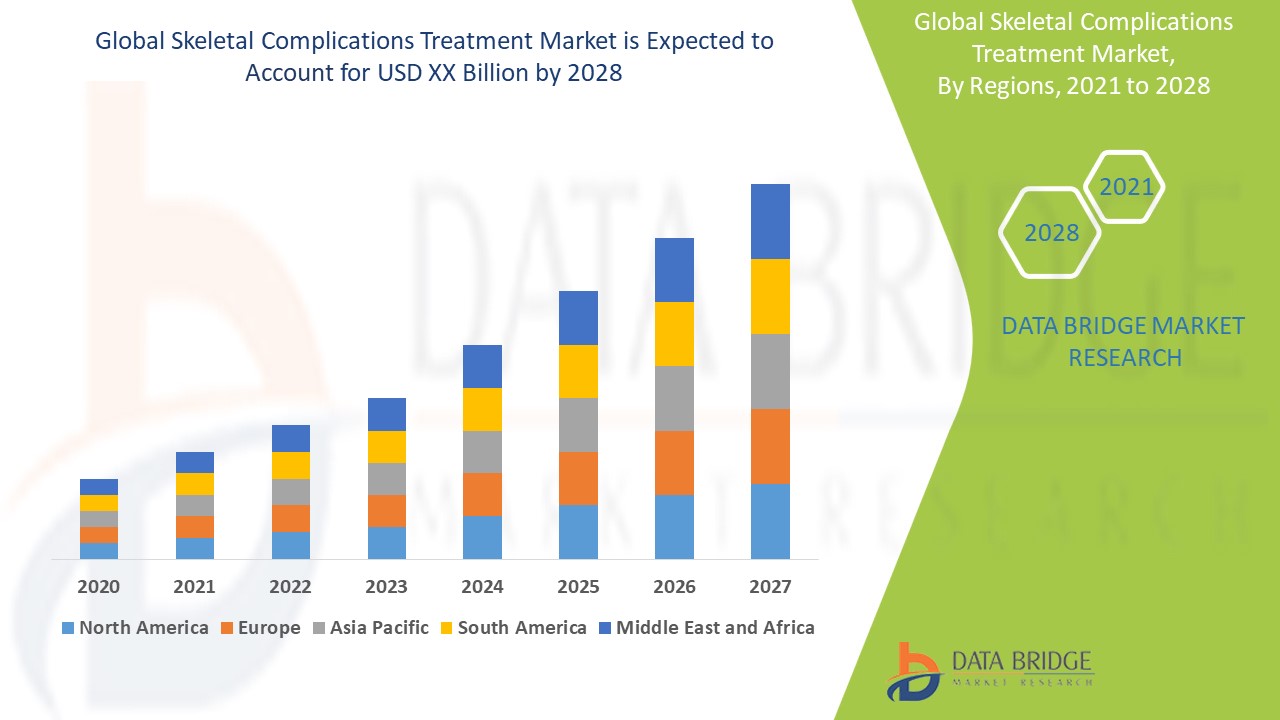
The global skeletal complications treatment market size was valued at USD 9.65 billion in 2024 and is projected to reach USD 14.80 billion by 2032, with a CAGR of 5.50% during the forecast period of 2025 to 2032. In addition to the insights on market scenarios such as market value, growth rate, segmentation, geographical coverage, and major players, the market reports curated by the Data Bridge Market Research also include depth expert analysis, patient epidemiology, pipeline analysis, pricing analysis, and regulatory framework.
Skeletal Complications Treatment Trends
“Increasing Prevalence of Conditions Affecting the Bones and Joints”
The increasing prevalence of conditions affecting the bones and joints is a significant driver in the growth of the skeletal complication’s treatment market. As the global population continues to age, more individuals are being diagnosed with skeletal-related disorders, such as osteoporosis, osteoarthritis, and fractures. These conditions are more commonly seen in older adults, who experience a natural decline in bone density and joint function as they age. Osteoporosis, characterized by weakened bones, and osteoarthritis, which involves the breakdown of cartilage in the joints, are among the most common skeletal disorders impacting millions worldwide.
Moreover, factors such as poor nutrition, sedentary lifestyles, and increasing obesity rates are contributing to the rise in skeletal complications. People with excess body weight put additional stress on their joints, leading to an increased risk of conditions such as osteoarthritis. In addition, the growing awareness of these skeletal conditions has led to earlier diagnoses and more proactive treatment options, further driving demand for effective treatments. The growing need for therapies to address these conditions is shaping the future of the skeletal complication’s treatment market, with continuous innovations aimed at improving patient outcomes and quality of life.
Report Scope and Skeletal Complications Treatment Market Segmentation
|
Attributes |
Skeletal Complications Treatment Key Market Insights |
|
Segments Covered |
|
|
Countries Covered |
U.S., Canada and Mexico in North America, Germany, France, U.K., Netherlands, Switzerland, Belgium, Russia, Italy, Spain, Turkey, Rest of Europe in Europe, China, Japan, India, South Korea, Singapore, Malaysia, Australia, Thailand, Indonesia, Philippines, Rest of Asia-Pacific (APAC) in the Asia-Pacific (APAC), Saudi Arabia, U.A.E, South Africa, Egypt, Israel, Rest of Middle East and Africa (MEA) as a part of Middle East and Africa (MEA), Brazil, Argentina and Rest of South America as part of South America |
|
Key Market Players |
Cipla (India), Regeneron Pharmaceuticals Inc (U.S.), BioMarin (U.S.), Teva Pharmaceutical Industries Ltd. (Israel), Dr. Reddy’s Laboratories Ltd. (India), F. Hoffmann-La Roche Ltd (Switzerland), Merck KGaA (Germany), Abbott (U.S.), Eli Lilly and Company (U.S.), Novartis AG (Switzerland), Clementia Pharmaceuticals Pvt. Ltd. (Canada), Pfizer Inc. (U.S.), Amgen Inc. (U.S.), Merck & Co., Inc. (U.S.), Takeda Pharmaceutical Company Limited. (Japan), Stryker (U.S.), GSK plc. (U.K.), Sanofi (France), and AbbVie Inc. (U.S.) |
|
Market Opportunities |
|
|
Value Added Data Infosets |
In addition to the insights on market scenarios such as market value, growth rate, segmentation, geographical coverage, and major players, the market reports curated by the Data Bridge Market Research also include depth expert analysis, patient epidemiology, pipeline analysis, pricing analysis, and regulatory framework. |
Skeletal Complications Treatment Market Definition
Skeletal complications treatment refers to the medical interventions and therapies aimed at managing and addressing various disorders and injuries affecting the bones, joints, and spine. These conditions can range from fractures and dislocations to degenerative diseases such as osteoarthritis, osteoporosis, and rheumatoid arthritis. Treatment methods can include pharmaceutical options (such as pain relievers, anti-inflammatory drugs, and biologics), surgical procedures (such as joint replacements, spinal surgeries, and fracture fixation), and non-surgical approaches (including physical therapy and lifestyle modifications).
Skeletal Complications Treatment Market Dynamics
Drivers
- Aging Population and Its Impact on Skeletal Health
One of the primary drivers of the skeletal complication’s treatment market is the global increase in the aging population. As people age, they become more susceptible to skeletal conditions such as osteoporosis, osteoarthritis, and fractures. These conditions are associated with the natural degeneration of bones and joints, which are more common in older adults. The rise in life expectancy worldwide is resulting in a larger population of older individuals, thereby increasing the demand for treatments and therapies tailored to age-related skeletal issues. This demographic shift is fuelling growth in the skeletal complications treatment market, as healthcare systems adapt to cater to the specific needs of elderly patients.
- Increased Prevalence of Lifestyle-Related Disorders
Sedentary lifestyles, poor diets, and rising obesity rates are contributing to an increase in skeletal conditions, particularly joint disorders such as osteoarthritis. The prevalence of these lifestyle-related disorders has surged in recent years, pushing individuals to seek medical treatments for joint pain, fractures, and bone density loss. With more people being diagnosed with these conditions, the need for effective treatment solutions—ranging from pharmaceuticals to surgeries—is also growing. This rising demand presents a significant opportunity for expansion in the skeletal complication’s treatment market.
Opportunities
- Technological Advancements in Treatment Techniques
The development of minimally invasive surgical procedures and technological advancements in robotic-assisted surgery offer significant opportunities in the skeletal complication’s treatment market. These innovations improve the precision of surgical interventions, reduce recovery times, and minimize complications compared to traditional open surgeries. In addition, advanced imaging technologies, such as 3D diagnostics and augmented reality, are enhancing surgical planning and patient outcomes. As these technologies continue to evolve, they present an opportunity to make treatments safer, more effective, and less invasive, attracting a broader patient base.
- Growth in Regenerative Medicine
Regenerative medicine, which includes stem cell therapy, platelet-rich plasma (PRP) injections, and gene therapies, is rapidly gaining ground in treating skeletal complications. These therapies focus on healing and regenerating tissues, particularly in joint and bone conditions such as osteoarthritis and fractures. As research in regenerative medicine progresses, these treatments are expected to become more effective, offering a promising alternative to traditional surgical methods. With the potential to reduce the need for invasive surgeries and promote faster healing, regenerative medicine holds great promise for the future of the skeletal complication’s treatment market.
Restraints/Challenges
- High Treatment Costs
One of the major restraints in the skeletal complication’s treatment market is the high cost associated with advanced treatments, especially surgical procedures and biologic therapies. For example, joint replacement surgeries and spinal surgeries can be expensive, and regenerative treatments such as stem cell therapy or PRP injections often have limited insurance coverage, making them unaffordable for some patients. High treatment costs pose a significant barrier to access, especially in low- and middle-income countries where healthcare budgets are constrained. This can limit the widespread adoption of advanced treatments, thus hindering market growth.
- Post-Treatment Rehabilitation and Recovery
A significant challenge in the skeletal complication’s treatment market is the prolonged rehabilitation and recovery process that follows many treatments, particularly surgeries. While surgical techniques have improved, the recovery time for procedures such as joint replacements or spinal surgeries can be long and physically demanding, requiring extensive physical therapy. Patients may also face complications during recovery, such as infections or improper healing. This extended recovery phase can negatively impact patient satisfaction and increase the overall burden on healthcare systems. The challenge lies in improving recovery times and ensuring that post-treatment rehabilitation is more efficient and accessible.
This market report provides details of new recent developments, trade regulations, import-export analysis, production analysis, value chain optimization, market share, impact of domestic and localized market players, analyses opportunities in terms of emerging revenue pockets, changes in market regulations, strategic market growth analysis, market size, category market growths, application niches and dominance, product approvals, product launches, geographic expansions, technological innovations in the market. To gain more info on the market contact Data Bridge Market Research for an Analyst Brief, our team will help you take an informed market decision to achieve market growth.
Skeletal Complications Treatment Market Scope
The market is segmented on the basis of complication type, treatment, end users, distribution channel, route of administration, and patient age group growth amongst these segments will help you analyze meagre growth segments in the industries and provide the users with a valuable market overview and market insights to help them make strategic decisions for identifying core market applications.
Complication Type
- Bone Pain
- Skeletal Dysplasia
- Osteoporosis
- Osteomyelitis
- Osteonecrosis
- Osteopenia and Others
Treatment
- Medication
- Surgery and Others
End-Users
- Clinics
- Hospitals
- Orthopedic Hospitals and Others
Distribution Channel
- Direct Tender
- Hospital Pharmacies
- Retail Pharmacies
- Online Pharmacies
- Drug Stores
Route of Administration
- Intravenous
- Oral
- Topical
Patient Age Group
- Pediatric
- Adult
- Geriatric
Skeletal Complications Treatment Market Regional Analysis
The market is analysed and market size insights and trends are provided by country, complication type, treatment, end users, distribution channel, route of administration, and patient age group as referenced above.
The countries covered in the market report are U.S., Canada, Mexico in North America, Germany, Sweden, Poland, Denmark, Italy, U.K., France, Spain, Netherland, Belgium, Switzerland, Turkey, Russia, Rest of Europe in Europe, Japan, China, India, South Korea, New Zealand, Vietnam, Australia, Singapore, Malaysia, Thailand, Indonesia, Philippines, Rest of Asia-Pacific (APAC) in Asia-Pacific (APAC), Brazil, Argentina, Rest of South America as a part of South America, U.A.E, Saudi Arabia, Oman, Qatar, Kuwait, South Africa, Rest of Middle East and Africa (MEA) as a part of Middle East and Africa (MEA).
North America is expected to dominate the market due to the high prevalence of skeletal conditions such as osteoarthritis, osteoporosis, and fractures, particularly among the aging population. The region benefits from advanced healthcare infrastructure, high healthcare spending, and greater access to cutting-edge medical treatments. The strong presence of major pharmaceutical companies and orthopedic device manufacturers in countries such as the U.S. and Canada further boosts market growth. Moreover, rising awareness about skeletal health and the increasing adoption of minimally invasive surgical procedures are contributing to the region's dominance.
Asia-Pacific region is expected to be the fastest growth in the skeletal complication’s treatment market. This is attributed to the rapidly aging population in countries such as Japan, China, and India, where there is a rising incidence of bone-related disorders. Economic growth in the region has led to improved healthcare access, increasing the demand for advanced treatment options. In addition, the growing focus on healthcare improvements and the rising number of people seeking effective therapies for skeletal complications are fuelling the rapid market expansion in the APAC region. As healthcare systems evolve and more people gain access to specialized treatments, the APAC region is expected to continue its strong growth trajectory.
The country section of the report also provides individual market impacting factors and changes in regulation in the market domestically that impacts the current and future trends of the market. Data points such as down-stream and upstream value chain analysis, technical trends and porter's five forces analysis, case studies are some of the pointers used to forecast the market scenario for individual countries. Also, the presence and availability of global brands and their challenges faced due to large or scarce competition from local and domestic brands, impact of domestic tariffs and trade routes are considered while providing forecast analysis of the country data.
Skeletal Complications Treatment Market Share
The market competitive landscape provides details by competitor. Details included are company overview, company financials, revenue generated, market potential, investment in research and development, new market initiatives, global presence, production sites and facilities, production capacities, company strengths and weaknesses, product launch, product width and breadth, application dominance. The above data points provided are only related to the companies' focus related to market.
Skeletal Complications Treatment Market Leaders Operating in the Market Are:
- Cipla (India)
- Regeneron Pharmaceuticals Inc (U.S.)
- BioMarin (U.S.)
- Teva Pharmaceutical Industries Ltd. (Israel)
- Dr. Reddy’s Laboratories Ltd. (India)
- F. Hoffmann-La Roche Ltd (Switzerland)
- Merck KGaA (Germany)
- Abbott (U.S.)
- Eli Lilly and Company (U.S.)
- Novartis AG (Switzerland)
- Clementia Pharmaceuticals Pvt. Ltd. (Canada)
- Pfizer Inc. (U.S.)
- Amgen Inc. (U.S.)
- Merck & Co., Inc. (U.S.)
- Takeda Pharmaceutical Company Limited. (Japan)
- Stryker (U.S.)
- GSK plc. (U.K.)
- Sanofi (France)
- AbbVie Inc. (U.S.)
Latest Developments in Skeletal Complications Treatment Market
- In January 2025, GSK’s B7-H3-targeted antibody-drug conjugate (GSK227) has received FDA Breakthrough Therapy Designation for the treatment of late-line relapsed or refractory osteosarcoma. This designation will expedite the development and regulatory review process, allowing the treatment to reach the market faster. GSK227 is designed to specifically target cancer cells, providing a more precise and potentially effective approach to treating this aggressive bone cancer. The benefit lies in offering a new treatment option for patients with few alternatives, potentially improving survival rates and quality of life for those suffering from advanced osteosarcoma
- In September 2024, Eli Lilly and Eva Pharma have announced a collaboration to expand access to Baricitinib for low- and middle-income countries. This partnership aims to improve the availability of Baricitinib, an important treatment for autoimmune diseases such as rheumatoid arthritis, in underserved regions. The collaboration will focus on providing more affordable access to the medication, which has shown effectiveness in managing chronic inflammatory conditions. This initiative will benefit patients by ensuring that they have access to a proven treatment, potentially improving their health outcomes and quality of life in areas with limited healthcare resources
- In June 2022, Sirona Biochem and Pfizer have partnered to develop a new treatment for bone diseases. The collaboration focuses on advancing a potential drug designed to address conditions such as osteoporosis and other skeletal disorders. The partnership aims to enhance the development and commercialization of this therapy, leveraging Pfizer's expertise and Sirona's innovative approach. The benefit of this collaboration lies in the creation of more effective treatments for bone diseases, improving patient outcomes by offering alternatives to current therapies. This development could lead to better management of bone health, particularly for aging populations at risk for skeletal complications

- Interactive Data Analysis Dashboard
- Company Analysis Dashboard for high growth potential opportunities
- Research Analyst Access for customization & queries
- Competitor Analysis with Interactive dashboard
- Latest News, Updates & Trend analysis
- Harness the Power of Benchmark Analysis for Comprehensive Competitor Tracking
Data collection and base year analysis are done using data collection modules with large sample sizes. The stage includes obtaining market information or related data through various sources and strategies. It includes examining and planning all the data acquired from the past in advance. It likewise envelops the examination of information inconsistencies seen across different information sources. The market data is analysed and estimated using market statistical and coherent models. Also, market share analysis and key trend analysis are the major success factors in the market report. To know more, please request an analyst call or drop down your inquiry.
The key research methodology used by DBMR research team is data triangulation which involves data mining, analysis of the impact of data variables on the market and primary (industry expert) validation. Data models include Vendor Positioning Grid, Market Time Line Analysis, Market Overview and Guide, Company Positioning Grid, Patent Analysis, Pricing Analysis, Company Market Share Analysis, Standards of Measurement, Global versus Regional and Vendor Share Analysis. To know more about the research methodology, drop in an inquiry to speak to our industry experts.
Data Bridge Market Research is a leader in advanced formative research. We take pride in servicing our existing and new customers with data and analysis that match and suits their goal. The report can be customized to include price trend analysis of target brands understanding the market for additional countries (ask for the list of countries), clinical trial results data, literature review, refurbished market and product base analysis. Market analysis of target competitors can be analyzed from technology-based analysis to market portfolio strategies. We can add as many competitors that you require data about in the format and data style you are looking for. Our team of analysts can also provide you data in crude raw excel files pivot tables (Fact book) or can assist you in creating presentations from the data sets available in the report.












