


What is the Slip Disc Market Size and Growth Rate?
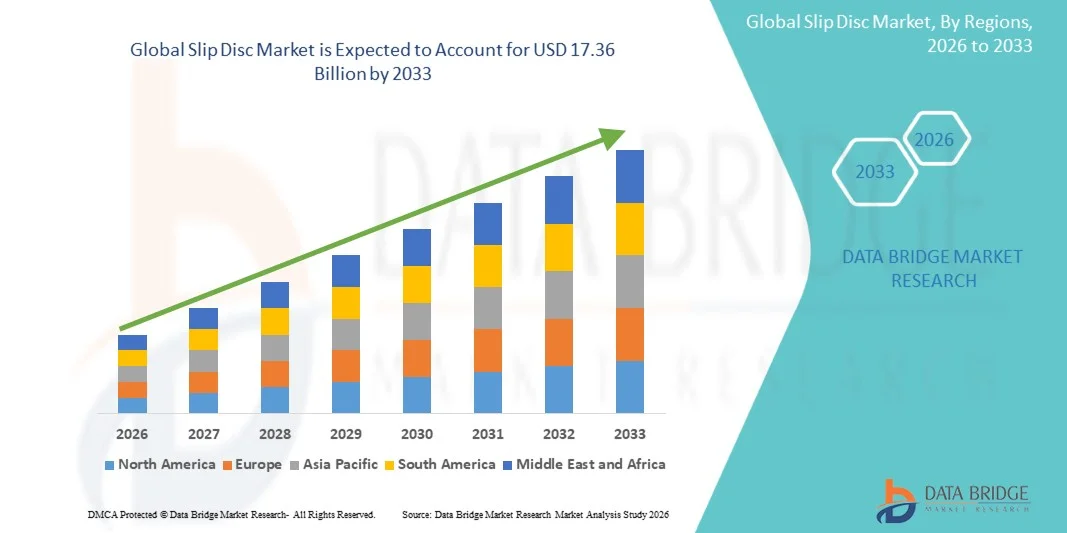
- As per Data Bridge Market Research Analysis the global slip disc market size was valued at USD 11.64 billion in 2025 and is expected to reach USD 17.36 billion by 2033, at a CAGR of 5.13% during the forecast period
- The market growth is primarily driven by the rising prevalence of spinal disorders, increasing aging population, and growing incidence of sedentary lifestyles and occupational back injuries across both developed and developing regions
- Furthermore, increasing awareness regarding early diagnosis and treatment, along with advancements in minimally invasive spine surgeries and non-surgical pain management solutions, is positioning slip disc treatment options as a preferred approach, thereby significantly supporting overall market expansion
Market Size & Forecast
- Global Market Value (2025): USD 11.64 Billion
- Expected Market Value (2033): USD 17.36 Billion
- Forecast CAGR (2026–2033): 5.13%
Slip Disc Market Analysis
- Slip disc, clinically referred to as herniated intervertebral disc, is a common spinal disorder affecting the cervical, thoracic, and lumbar regions, and represents a significant share of the global musculoskeletal disorders market, with management spanning diagnosis, medication, therapy, and surgical interventions across hospitals and specialty spine centers
- The growing demand for slip disc treatment is primarily driven by the rising incidence of lower back pain, sedentary lifestyles, obesity, occupational strain, and an expanding geriatric population, along with increased awareness of early diagnosis and timely clinical management
- North America dominated the slip disc market with the largest revenue share of 38.6% in 2025, supported by advanced diagnostic infrastructure, high adoption of surgical and non-surgical interventions, strong reimbursement frameworks, and widespread availability of specialized spine care facilities, particularly in the U.S.
- Asia-Pacific is expected to be the fastest growing region in the slip disc market during the forecast period due to increasing healthcare expenditure, improving access to diagnostic imaging and spine treatment services, and a growing patient pool in countries such as China and India
- Lumbar Herniated Disc segment dominated the slip disc market with a market share of 56.4% in 2025, driven by its significantly higher prevalence compared to thoracic herniated discs and greater demand for both conservative therapy and surgical intervention
Report Scope and Slip Disc Market Segmentation
|
Attributes |
Slip Disc Key Market Insights |
|
Segments Covered |
|
|
Countries Covered |
North America
Europe
Asia-Pacific
Middle East and Africa
South America
|
|
Key Market Players |
|
|
Market Opportunities |
|
|
Value Added Data Infosets |
In addition to the insights on market scenarios such as market value, growth rate, segmentation, geographical coverage, and major players, the market reports curated by the Data Bridge Market Research also include in-depth expert analysis, patient epidemiology, pipeline analysis, pricing analysis, and regulatory framework |
What is the Key Trend in the Slip Disc Market?
“Advancement of Minimally Invasive and Image-Guided Spine Treatments”
- A significant and accelerating trend in the global slip disc market is the increasing adoption of minimally invasive and image-guided treatment techniques, including endoscopic discectomy, percutaneous spinal procedures, and advanced physiotherapy solutions, which are improving patient outcomes while reducing recovery time
- For instance, minimally invasive lumbar discectomy procedures are increasingly replacing traditional open surgeries in hospitals and specialty spine centers due to reduced blood loss, shorter hospital stays, and faster return to daily activities
- Technological advancements in imaging modalities such as MRI, CT scans, and fluoroscopy are enabling more precise diagnosis and targeted interventions, allowing clinicians to tailor treatment strategies based on disc location, severity, and nerve involvement
- The integration of digital health tools, including AI-assisted imaging analysis and wearable rehabilitation devices, is further enhancing treatment planning, post-procedure monitoring, and long-term recovery management for slip disc patients
- This trend toward precision-based, patient-centric spine care is reshaping clinical practice patterns, prompting healthcare providers to invest in advanced diagnostic systems and minimally invasive surgical infrastructure to meet evolving patient expectations
- The growing preference for less invasive, cost-effective, and outcome-driven treatments is accelerating adoption across both developed and emerging healthcare markets, thereby supporting sustained growth of the slip disc market
- Ongoing clinical research and innovation in biologics and regenerative therapies, such as stem cell–based disc repair, are emerging as potential future treatment alternatives
Slip Disc Market Dynamics
Driver
“Rising Prevalence of Spinal Disorders and Aging Population”
- The increasing prevalence of spinal disorders, combined with a rapidly aging global population, is a major driver fueling demand for slip disc diagnosis and treatment solutions
- For instance, healthcare systems worldwide are reporting a steady rise in lumbar herniated disc cases linked to age-related disc degeneration, prolonged sitting, obesity, and physically demanding occupations
- As life expectancy increases, age-associated wear and tear of intervertebral discs is becoming more common, leading to higher demand for medical interventions ranging from physical therapy to surgical treatment
- In addition, greater awareness of spinal health, improved access to diagnostic imaging, and growing emphasis on early clinical intervention are contributing to increased diagnosis rates of slip disc conditions
- The expansion of specialty spine clinics and the availability of advanced treatment options are further encouraging patients to seek timely care rather than relying solely on pain management
- Together, these factors are significantly driving the uptake of slip disc diagnostic and treatment services across hospitals, orthopedic centers, and rehabilitation facilities
- Rising participation in sports and fitness activities is contributing to higher incidence of spinal injuries, further supporting market demand
- Growth in employer-sponsored healthcare and occupational health programs is also increasing access to early diagnosis and treatment of slip disc conditions
Restraint/Challenge
“High Treatment Costs and Limited Access in Emerging Regions”
- The high cost associated with advanced diagnostic imaging, long-term therapy, and surgical interventions poses a key challenge to the growth of the global slip disc market, particularly in price-sensitive regions
- For instance, minimally invasive spine surgeries and advanced imaging procedures may remain financially inaccessible for a large segment of patients in low- and middle-income countries
- Limited availability of specialized spine surgeons, rehabilitation centers, and advanced medical infrastructure further restricts timely diagnosis and treatment in rural and underserved areas
- Variability in reimbursement policies and lack of comprehensive insurance coverage for non-surgical therapies or elective spine procedures also contribute to delayed treatment adoption
- In addition, patient hesitation due to fear of surgery, prolonged recovery concerns, and inconsistent treatment outcomes can negatively impact procedure volumes
- Overcoming these challenges through cost-effective treatment pathways, improved healthcare infrastructure, expanded insurance coverage, and patient education will be critical for ensuring long-term market expansion
- Long waiting times for specialist consultations and surgical procedures in public healthcare systems can delay treatment initiation
- Inconsistent clinical guidelines and variability in treatment approaches across regions may lead to uneven patient outcomes and restrained market growth
Slip Disc Market Scope
The market is segmented on the basis of type, diagnosis, and medications.
- By Type
On the basis of type, the global slip disc market is segmented into thoracic herniated discs, lumbar herniated disc, and others. The lumbar herniated disc segment dominated the market with the largest revenue share of 56.4% in 2025, driven by its significantly higher prevalence compared to thoracic cases. The lumbar spine bears most of the body’s weight and is highly susceptible to degeneration, poor posture, heavy lifting, and sedentary lifestyles. Patients with lumbar herniation frequently experience severe lower back pain and nerve compression symptoms, leading to higher diagnosis and treatment rates. In addition, the availability of both conservative therapy and surgical interventions for lumbar cases further supports this segment’s dominance. High awareness among patients and clinicians regarding lumbar disc disorders also contributes to early medical consultation and sustained market demand.
The thoracic herniated discs segment is expected to witness the fastest growth during the forecast period, supported by improved diagnostic accuracy and growing awareness of mid-back pain conditions. Although historically underdiagnosed, advancements in MRI and CT imaging are enabling better detection of thoracic disc herniation. Increasing referrals to spine specialists and growing adoption of minimally invasive surgical techniques are further accelerating growth. Moreover, rising incidence of trauma-related spinal injuries and occupational strain is contributing to expanding patient volumes in this segment.
- By Diagnosis
On the basis of diagnosis, the market is segmented into physical examination, nerve conduction test, and others. The physical examination segment dominated the market in 2025, as it serves as the first-line diagnostic approach for suspected slip disc cases. Clinicians rely heavily on patient history, reflex testing, muscle strength assessment, and pain localization during initial evaluation. Physical examination is cost-effective, widely accessible, and essential for determining the need for advanced imaging or further tests. Its routine use in both primary care and orthopedic settings supports its strong market share.
The nerve conduction test segment is anticipated to grow at the fastest rate during the forecast period, driven by increasing demand for precise nerve damage assessment. These tests help differentiate slip disc–related nerve compression from other neurological disorders, improving diagnostic accuracy. Growing adoption in specialized spine and neurology centers, along with rising emphasis on evidence-based treatment planning, is supporting segment growth. Technological advancements are also making nerve conduction studies faster and more patient-friendly.
- By Medications
On the basis of medications, the slip disc market is segmented into therapy and surgery. The therapy segment dominated the market with the largest revenue share in 2025, driven by its role as the preferred first-line treatment option. Conservative approaches such as physiotherapy, pain management medications, and lifestyle modification are widely recommended before considering surgery. Therapy offers lower risk, reduced costs, and favorable outcomes for mild to moderate cases, leading to strong patient acceptance. The increasing availability of outpatient rehabilitation services further strengthens this segment’s dominance.
The surgery segment is expected to register the fastest growth rate during the forecast period, supported by rising adoption of minimally invasive spine surgeries. Advances in endoscopic and laser-assisted discectomy procedures are improving surgical outcomes while reducing recovery time and complications. Growing patient willingness to opt for definitive treatment in severe or recurrent cases is also contributing to growth. In addition, expanding access to specialized spine centers and improved surgical success rates are accelerating the uptake of surgical interventions globally.
Slip Disc Market Regional Analysis
- North America dominated the slip disc market with the largest revenue share of 38.6% in 2025, supported by advanced diagnostic infrastructure, high adoption of surgical and non-surgical interventions, strong reimbursement frameworks, and widespread availability of specialized spine care facilities, particularly in the U.S.
- Patients in the region highly value early diagnosis, effective pain management, and access to minimally invasive surgical options, supported by strong reimbursement frameworks and well-established healthcare infrastructure
- This strong market position is further reinforced by an aging population, high awareness of spinal health, and increasing adoption of advanced imaging and treatment technologies, establishing North America as a leading region for slip disc diagnosis and management
U.S. Slip Disc Market Insight
The U.S. slip disc market captured the largest revenue share within North America in 2025, driven by a high prevalence of lower back disorders, advanced diagnostic infrastructure, and widespread access to specialized spine care. Patients increasingly prioritize early diagnosis and effective pain management solutions, supported by strong insurance coverage and reimbursement policies. The growing adoption of minimally invasive spine surgeries, combined with high awareness of spinal health and availability of skilled orthopedic and neurosurgeons, continues to propel market growth. Moreover, the presence of leading medical device manufacturers and continuous technological innovation significantly contribute to market expansion.
Europe Slip Disc Market Insight
The Europe slip disc market is projected to expand at a steady CAGR during the forecast period, primarily driven by an aging population and increasing burden of musculoskeletal disorders. Rising awareness of early intervention, coupled with strong public healthcare systems, is fostering timely diagnosis and treatment across the region. European countries are witnessing growing adoption of minimally invasive spine procedures and structured rehabilitation programs. The market is also supported by favorable clinical guidelines and increasing investments in orthopedic and spinal care infrastructure across hospitals and specialty clinics.
U.K. Slip Disc Market Insight
The U.K. slip disc market is anticipated to grow at a notable CAGR during the forecast period, driven by increasing incidence of back pain linked to sedentary lifestyles and aging demographics. Strong emphasis on early diagnosis through primary care referrals and access to advanced imaging technologies supports market growth. The National Health Service (NHS) plays a key role in facilitating access to both conservative therapy and surgical treatment options. In addition, rising patient awareness regarding physiotherapy and non-surgical interventions is contributing to sustained demand.
Germany Slip Disc Market Insight
The Germany slip disc market is expected to expand at a considerable CAGR during the forecast period, fueled by a well-established healthcare system and high adoption of advanced medical technologies. Germany’s strong focus on precision medicine and minimally invasive surgical techniques supports effective slip disc management. High availability of specialized spine centers and rehabilitation facilities further enhances patient outcomes. In addition, increasing investments in orthopedic research and emphasis on evidence-based treatment approaches are strengthening market growth in the country.
Asia-Pacific Slip Disc Market Insight
The Asia-Pacific slip disc market is poised to grow at the fastest CAGR during the forecast period, driven by rising healthcare expenditure, increasing urbanization, and a rapidly expanding patient population. Growing awareness of spinal disorders, improving access to diagnostic imaging, and expansion of private healthcare facilities are accelerating market growth across the region. Countries such as China, Japan, and India are witnessing higher diagnosis rates due to improved healthcare access. Furthermore, cost-effective treatment options and increasing availability of skilled spine specialists are broadening market penetration.
Japan Slip Disc Market Insight
The Japan slip disc market is gaining momentum due to the country’s rapidly aging population and high prevalence of age-related spinal degeneration. Strong emphasis on early diagnosis, preventive care, and rehabilitation supports consistent demand for slip disc treatments. Advanced healthcare infrastructure and widespread adoption of minimally invasive surgical techniques are improving patient outcomes. In addition, Japan’s focus on technological innovation and precision diagnostics continues to drive market growth in both hospital and specialty clinic settings.
India Slip Disc Market Insight
The India slip disc market accounted for a significant share of the Asia-Pacific market in 2025, attributed to rising incidence of lower back pain, increasing urbanization, and growing awareness of spinal health. Expanding middle-class population and improving access to diagnostic and treatment facilities are driving demand across urban and semi-urban areas. The growth of private hospitals, spine clinics, and physiotherapy centers is enhancing treatment availability. Moreover, government initiatives to strengthen healthcare infrastructure and rising adoption of minimally invasive procedures are key factors supporting market expansion in India.
Which are the Top Companies in Slip Disc Market?
The Slip Disc industry is primarily led by well-established companies, including:
- Medtronic (Ireland)
- Stryker (U.S.)
- Globus Medical, Inc. (U.S.)
- NuVasive, Inc. (U.S.)
- Zimmer Biomet (U.S.)
- Orthofix Medical Inc. (U.S.)
- TEVA Pharmaceutical Industries Ltd (Israel)
- Captiva Spine, Inc. (U.S.)
- Smith & Nephew (U.K.)
- B. Braun SE (Germany)
- RTI Surgical, Inc. (U.S.)
- Centinel Spine, LLC (U.S.)
- Spineart SA (Switzerland)
- Alphatec Spine, Inc. (U.S.)
- AxioMed LLC (U.S.)
- Alevio Spine (U.S.)
- 3Spine (U.S.)
- Accelus Inc. (U.S.)
- Aurora Spine, Inc. (U.S.)
What are the Recent Developments in Global Slip Disc Market?
- In March 2025, Northwestern Medicine highlighted how augmented reality (AR) technologies are increasingly being integrated into spine surgery, offering enhanced visualization and reducing surgeon cognitive load helping precision in procedures that treat herniated discs and other spinal conditions
- In August 2024, Henry Ford Health reported completing its first complex spinal surgery using the OnPoint AR technology. This system overlays virtual surgical guides into the surgeon’s field of view, improving precision and reducing tissue disruption—an important milestone in applying AR navigation to spine surgery
- In May 2024, a surgical case series detailed the use of intraoperative computed tomography (iCT) combined with microscope-based augmented reality (AR) to improve precision in resecting calcified thoracic herniated discs. The technology helped enhance surgical orientation and safety, marking a notable clinical application of AR in spine procedures
- In February 2024, Dallah Al Nakheel Hospital in Riyadh successfully performed a large herniated disc removal using monopolar endoscopy, marking a significant clinical milestone in minimally invasive spine surgery. This procedure utilized advanced monopolar endoscopic techniques to excise a severely herniated lumbar disc (L5–S1), demonstrating expanded surgical capabilities and improved patient outcomes with less tissue disruption and faster recovery compared to traditional open surgeries
- In November 2023, researchers at the University of Pennsylvania’s Perelman School of Medicine and the CMC VA Medical Center introduced tension-activated repair patches (TARPs) designed to leverage natural body motion to help fix herniated discs. These biologic patches aim to re-cushion damaged discs and restore tension to halt degeneration and pain potentially shifting treatment from symptomatic relief toward true structural repair

- Interactive Data Analysis Dashboard
- Company Analysis Dashboard for high growth potential opportunities
- Research Analyst Access for customization & queries
- Competitor Analysis with Interactive dashboard
- Latest News, Updates & Trend analysis
- Harness the Power of Benchmark Analysis for Comprehensive Competitor Tracking
Data collection and base year analysis are done using data collection modules with large sample sizes. The stage includes obtaining market information or related data through various sources and strategies. It includes examining and planning all the data acquired from the past in advance. It likewise envelops the examination of information inconsistencies seen across different information sources. The market data is analysed and estimated using market statistical and coherent models. Also, market share analysis and key trend analysis are the major success factors in the market report. To know more, please request an analyst call or drop down your inquiry.
The key research methodology used by DBMR research team is data triangulation which involves data mining, analysis of the impact of data variables on the market and primary (industry expert) validation. Data models include Vendor Positioning Grid, Market Time Line Analysis, Market Overview and Guide, Company Positioning Grid, Patent Analysis, Pricing Analysis, Company Market Share Analysis, Standards of Measurement, Global versus Regional and Vendor Share Analysis. To know more about the research methodology, drop in an inquiry to speak to our industry experts.
Data Bridge Market Research is a leader in advanced formative research. We take pride in servicing our existing and new customers with data and analysis that match and suits their goal. The report can be customized to include price trend analysis of target brands understanding the market for additional countries (ask for the list of countries), clinical trial results data, literature review, refurbished market and product base analysis. Market analysis of target competitors can be analyzed from technology-based analysis to market portfolio strategies. We can add as many competitors that you require data about in the format and data style you are looking for. Our team of analysts can also provide you data in crude raw excel files pivot tables (Fact book) or can assist you in creating presentations from the data sets available in the report.













