


What is the Global Stretch Marks Market Size and Growth Rate?
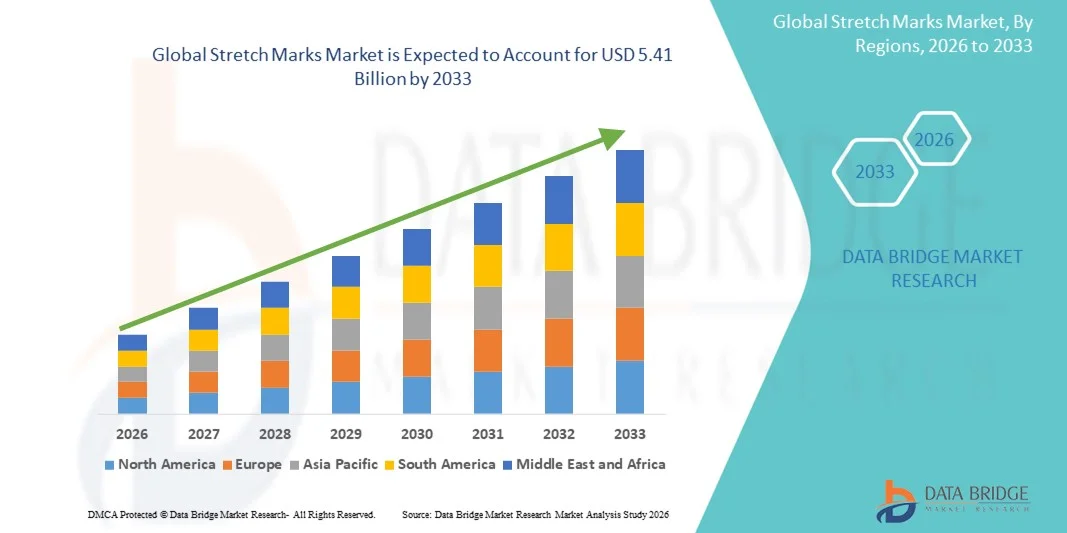
- The global stretch marks market size was valued at USD 3.00 billion in 2025 and is expected to reach USD 5.41 billion by 2033, at a CAGR of 7.65% during the forecast period
- The market growth is largely fueled by increasing awareness of skincare, rising demand for cosmetic and dermatological treatments, and the growing influence of social media on beauty and personal care trends
- Furthermore, the surge in consumer preference for advanced, non-invasive, and clinically proven treatment solutions for stretch mark reduction is driving the adoption of specialized creams, lasers, and therapies. These converging factors are accelerating the uptake of stretch mark solutions, thereby significantly boosting the industry's growth
Market Size & Forecast
Global Market Value (2025): USD 3.00 Billion
Expected Market Value (2033): USD 5.41 Billion
Forecast CAGR (2026–2033): 7.65%
Stretch Marks Market Analysis
- Stretch mark treatments, including topical products, light and laser therapies, microdermabrasion, and plastic surgery, are increasingly vital components of dermatology and cosmetic care due to their effectiveness in improving skin appearance, boosting consumer confidence, and offering both non-invasive and clinical solutions
- The escalating demand for stretch mark solutions is primarily fueled by growing awareness of skincare, rising influence of social media and beauty standards, and increasing preference for clinically proven, minimally invasive treatments
- North America dominated the stretch marks market with the largest revenue share of 38.9% in 2025, characterized by high consumer awareness, advanced healthcare infrastructure, and a strong presence of key dermatology and cosmetic care companies, with the U.S. experiencing substantial adoption of laser therapies and microdermabrasion, particularly in hospitals, clinics, and specialty dermatology centers
- Asia-Pacific is expected to be the fastest growing region in the stretch marks market during the forecast period due to increasing urbanization, rising disposable incomes, and growing interest in cosmetic and wellness solutions, particularly in countries such as China, India, and Japan
- Topical products dominated the stretch marks market with a 45.6% share in 2025, driven by their affordability, ease of use, and widespread availability across both online and retail pharmacy channels
Report Scope and Stretch Marks Market Segmentation
|
Attributes |
Stretch Marks Key Market Insights |
|
Segments Covered |
|
|
Countries Covered |
North America
Europe
Asia-Pacific
Middle East and Africa
South America
|
|
Key Market Players |
|
|
Market Opportunities |
|
|
Value Added Data Infosets |
In addition to the insights on market scenarios such as market value, growth rate, segmentation, geographical coverage, and major players, the market reports curated by the Data Bridge Market Research also include in-depth expert analysis, patient epidemiology, pipeline analysis, pricing analysis, and regulatory framework |
Stretch Marks Market Trends
Rising Demand for Non-Invasive and At-Home Treatments
- A significant and accelerating trend in the global stretch marks market is the increasing adoption of non-invasive and at-home treatment solutions such as advanced topical creams, home-use microneedling devices, and laser-based kits. This shift is enhancing convenience, privacy, and accessibility for consumers
- For instance, brands such as Mederma and Bio-Oil offer clinically formulated creams that can be applied at home, providing an effective alternative to clinic-based therapies while allowing personalized skincare routines
- The integration of technology with topical treatments, including apps that track application schedules and skin progress, is improving user engagement and treatment adherence. For instance, some apps provide reminders and progress visualizations to maximize treatment outcomes
- These intelligent, easy-to-use, and home-focused solutions are reshaping consumer expectations for stretch mark management, creating opportunities for cosmetic and skincare companies to develop more personalized offerings
- Companies such as Skinception and Dermalmd are developing multifunctional home treatments combining topical formulations with microneedling or light therapy, catering to consumers’ demand for convenience and efficacy
- The trend towards combining clinical-grade efficacy with at-home usability is gaining traction across both developed and emerging markets, as consumers increasingly prefer treatments that integrate seamlessly into their daily routines
- Social media influence and beauty blogging platforms are increasingly driving awareness and adoption of stretch mark treatments, as users share reviews, tutorials, and before-and-after results
- Growing collaborations between dermatologists and skincare brands to promote evidence-based treatment protocols are further enhancing consumer confidence and expanding market reach
Stretch Marks Market Dynamics
Driver
Increasing Skincare Awareness and Cosmetic Demand
- The growing awareness of skincare, beauty standards, and the importance of dermatological treatments is a significant driver for the heightened demand for stretch mark solutions
- For instance, in April 2025, Bio-Oil launched a social media campaign targeting postpartum women, emphasizing prevention and treatment of stretch marks, boosting consumer engagement and product adoption
- As consumers become more conscious of skin aesthetics and personal care, demand for effective treatments such as laser therapies, microdermabrasion, and topical products continues to rise
- Furthermore, rising disposable incomes and increased access to dermatology clinics and online retail platforms are facilitating greater penetration of advanced stretch mark treatments
- Convenience, affordability, and the ability to combine home care with clinic treatments are key factors propelling adoption in both residential and clinical settings, with growing interest in personalized skincare routines and DIY treatment options
- Increasing postpartum populations and rising awareness among young adults about preventive and corrective skincare measures are creating additional demand for stretch mark treatments
- Expansion of online and direct-to-consumer channels enables easier access to specialized products, creating opportunities for skincare brands to reach a wider audience and increase sales
Restraint/Challenge
Skin Sensitivity and Regulatory Compliance Hurdles
- Concerns surrounding potential skin irritation, allergic reactions, and improper use of treatments pose a significant challenge to broader market adoption. Consumers may be hesitant to adopt new products due to adverse skin reactions
- For instance, high-profile reports of adverse reactions to certain laser or chemical treatments have made some consumers cautious about using stretch mark solutions without professional guidance
- Ensuring product safety through clinical testing, dermatological approvals, and clear usage instructions is crucial for building consumer trust. Companies such as Mederma and Bio-Oil emphasize safety, hypoallergenic formulations, and regulatory compliance in their marketing
- The relatively high cost of some advanced clinical treatments, compared to over-the-counter creams, can be a barrier to adoption for price-sensitive consumers, particularly in emerging markets
- While affordable topical solutions are widely available, premium treatments combining lasers or microneedling often come with higher costs, which can hinder widespread adoption among certain consumer segments
- Overcoming these challenges through product education, robust safety standards, and development of cost-effective solutions will be vital for sustained growth in the stretch marks market
- Variability in treatment efficacy due to differences in skin type, severity of stretch marks, and adherence to treatment protocols can limit consumer satisfaction and repeat purchases
- Strict regulatory frameworks in different regions may slow down the introduction of new treatment products, requiring additional testing and compliance efforts by manufacturers
Stretch Marks Market Scope
The market is segmented on the basis of treatment, end user, and distribution channel.
- By Treatment
On the basis of treatment, the stretch marks market is segmented into topical products, light and laser therapies, microdermabrasion, plastic surgery, and others. The topical products segment dominated the market with the largest revenue share of 45.6% in 2025, driven by its affordability, ease of use, and wide availability through retail and online pharmacies. Consumers often prioritize topical creams for their convenience and ability to incorporate them into daily skincare routines. The segment also benefits from strong brand recognition, clinical validations, and extensive marketing efforts by companies such as Mederma and Bio-Oil. Topical products are highly preferred among home users and young adults seeking preventive and corrective care for stretch marks. Their non-invasive nature and compatibility with other treatments such as laser therapy further enhance adoption. The growing popularity of multifunctional formulations targeting skin elasticity and hydration supports continued market dominance.
The light and laser therapies segment is expected to witness the fastest growth at a CAGR of 9.2% from 2026 to 2033, fueled by increasing consumer preference for clinically proven, non-invasive treatments. Laser and light therapies provide faster results compared to topical products and are widely used in dermatology clinics and specialty centers. Rising awareness of advanced cosmetic procedures and the willingness to invest in effective treatments are driving adoption. Technological advancements in low-pain, home-use, and portable laser devices are further expanding the market. Cosmetic clinics increasingly promote these treatments, highlighting safety and efficacy, which appeals to urban consumers. The growing number of dermatologists and aesthetic centers offering specialized stretch mark removal procedures is also a key growth driver.
- By End User
On the basis of end user, the stretch marks market is segmented into hospitals, clinics, specialty dermatology centers, home care, and others. The clinics segment dominated the market with a revenue share of 40% in 2025, driven by the accessibility of dermatological treatments and the growing number of private skincare clinics. Clinics provide a combination of topical, laser, and microdermabrasion treatments, offering personalized treatment plans tailored to individual skin types. Consumers often prefer clinics due to professional supervision, advanced equipment, and higher perceived safety. Clinics also serve as educational hubs where consumers learn about preventive care and post-treatment maintenance. Marketing initiatives and partnerships with product manufacturers further increase clinic adoption. The convenience of multiple treatment options under one roof reinforces the segment’s leadership in revenue contribution.
The home care segment is expected to witness the fastest growth at a CAGR of 10.1% from 2026 to 2033, driven by the rising adoption of DIY treatments and online availability of topical products and home-use microneedling devices. Increasing awareness of at-home treatments, coupled with growing e-commerce penetration, allows consumers to access professional-grade solutions without clinic visits. Rising interest in privacy, convenience, and cost-effective alternatives is fueling growth. Social media influence, tutorials, and reviews are significantly boosting consumer confidence in home-based treatments. Companies are developing innovative formulations and devices specifically for home use, creating new revenue streams. The ability to combine home care with clinic-based interventions further drives market adoption.
- By Distribution Channel
On the basis of distribution channel, the stretch marks market is segmented into online pharmacy, retail pharmacy, and others. The retail pharmacy segment dominated the market with a share of 50% in 2025, driven by the widespread presence of dermatology and cosmetic care products in both large-chain and independent pharmacies. Consumers often prefer retail pharmacies for their immediate availability, ease of purchase, and expert guidance from pharmacists. The segment benefits from strong brand visibility, in-store promotions, and established trust in recognized products. Retail pharmacies also facilitate multi-channel campaigns, integrating physical stores with online ordering and home delivery. Established partnerships with product manufacturers ensure consistent supply and product variety. Ease of access and professional advice make retail pharmacies a primary channel for stretch mark treatments.
The online pharmacy segment is expected to witness the fastest growth at a CAGR of 11.3% from 2026 to 2033, fueled by increasing e-commerce adoption, smartphone penetration, and growing consumer comfort with digital shopping. Online platforms provide convenience, discreet purchase options, competitive pricing, and home delivery. Subscription models and targeted promotions are attracting repeat buyers. The segment is particularly appealing to younger, tech-savvy consumers seeking advanced topical products or home-use devices. Companies are increasingly leveraging online platforms to provide detailed product information, tutorials, and customer reviews to enhance trust and adoption. Rapid expansion of online healthcare marketplaces further supports segment growth.
Stretch Marks Market Regional Analysis
- North America dominated the stretch marks market with the largest revenue share of 38.9% in 2025, characterized by high consumer awareness, advanced healthcare infrastructure, and a strong presence of key dermatology and cosmetic care companies
- Consumers in the region highly value clinically proven treatments, professional guidance from dermatologists, and the convenience of combining at-home topical products with clinic-based procedures
- This widespread adoption is further supported by high disposable incomes, well-established healthcare infrastructure, and the growing preference for preventive and corrective skincare, establishing stretch mark treatments as a favored solution for both residential users and medical facilities
U.S. Stretch Marks Market Insight
The U.S. stretch marks market captured the largest revenue share of 82% in 2025 within North America, driven by rising awareness of skincare, postpartum care, and cosmetic dermatology treatments. Consumers are increasingly prioritizing the use of clinically proven solutions, combining topical products with advanced therapies such as laser and microdermabrasion. The growing preference for at-home treatments alongside professional care, supported by strong e-commerce penetration, further propels the market. Moreover, the integration of digital platforms providing treatment guidance, tutorials, and progress tracking is significantly contributing to the market's expansion.
Europe Stretch Marks Market Insight
The Europe stretch marks market is projected to expand at a substantial CAGR throughout the forecast period, primarily driven by increasing cosmetic awareness and the rising demand for dermatologically approved treatments. Growing urbanization and disposable incomes are fostering the adoption of both clinic-based and at-home solutions. European consumers are drawn to convenience, efficacy, and non-invasive treatment options. The region is experiencing growth across hospitals, clinics, and specialty dermatology centers, with stretch mark treatments being incorporated into both preventive and corrective skincare routines.
U.K. Stretch Marks Market Insight
The U.K. stretch marks market is anticipated to grow at a noteworthy CAGR during the forecast period, driven by heightened awareness of skincare, home-use treatment options, and professional dermatological solutions. Rising concerns about post-pregnancy skin changes and cosmetic appearance are encouraging both individuals and clinics to adopt effective treatments. The U.K.’s robust healthcare infrastructure, widespread availability of topical products, and strong e-commerce channels are expected to continue stimulating market growth.
Germany Stretch Marks Market Insight
The Germany stretch marks market is expected to expand at a considerable CAGR during the forecast period, fueled by increasing awareness of dermatological care, non-invasive treatment options, and preventive skincare. Germany’s well-developed healthcare and cosmetic sectors, combined with emphasis on efficacy and safety, promote the adoption of both home-based and clinic-based stretch mark treatments. Integration of evidence-based therapies and advanced laser or microdermabrasion procedures is becoming increasingly prevalent, aligning with local consumer expectations.
Asia-Pacific Stretch Marks Market Insight
The Asia-Pacific stretch marks market is poised to grow at the fastest CAGR of 25% during 2026–2033, driven by increasing urbanization, rising disposable incomes, and growing awareness of cosmetic and preventive skincare in countries such as China, India, and Japan. The region’s increasing inclination towards home-based and professional dermatology solutions is driving adoption. Moreover, the expansion of e-commerce, social media influence, and rising middle-class population are further supporting market growth.
Japan Stretch Marks Market Insight
The Japan stretch marks market is gaining momentum due to the country’s high cosmetic awareness, aging population, and preference for technologically advanced, user-friendly solutions. The Japanese market emphasizes non-invasive treatments, with strong adoption of topical products, laser therapy, and home-use devices. Integration of treatment guidance through apps and digital platforms is fueling growth, while rising interest in preventive skincare and aesthetic maintenance supports sustained adoption in both residential and clinical sectors.
India Stretch Marks Market Insight
The India stretch marks market accounted for the largest market revenue share in Asia-Pacific in 2025, attributed to rapid urbanization, rising disposable incomes, and increased awareness of cosmetic and dermatological care. India represents one of the fastest-growing markets for home-use and clinic-based treatments. Growing postpartum population, expanding middle-class consumer base, and availability of affordable topical and laser-based treatments are key factors propelling market growth. The surge in e-commerce and tele-dermatology services further accelerates adoption.
Which are the Top Companies in Stretch Marks Market?
The Stretch Marks industry is primarily led by well-established companies, including:
- Alliance Pharma PLC (U.K.)
- basq NYC (U.S.)
- Clarins (France)
- Candela Corporation (U.S.)
- Dermaclara (U.S.)
- E.T. Browne Drug Co., Inc. (U.S.)
- Helix BioMedix, Inc. (U.S.)
- Perrigo Company plc (Ireland)
- Laboratoires Expanscience (France)
- Union Swiss Private Limited (South Africa)
- Weleda (Switzerland)
- Merz Pharma (Germany)
- Cynosure LLC (U.S.)
- Lumenis Be Ltd. (Israel)
- Bio-Oil (U.K.)
- Bayer AG (Germany)
- Mama Mio (U.S.)
- Syneron Medical Ltd. (Israel)
- The Boppy Company LLC (U.S.)
- Concord Medisys (India)
What are the Recent Developments in Global Stretch Marks Market?
- In June 2025, Mederma announced a strategic partnership with a major dermatology‑clinic network to co‑brand and distribute its “Stretch Marks Therapy” product line across the U.S., aiming to combine home‑use topical treatment with clinic‑led follow‑up care reflecting growing demand for integrated treatment solutions
- In December 2024, Dove launched its new “Cream Serum Collection”, a body‑skincare line developed with dermatologists that uses face‑grade active ingredients and explicitly targets stretch marks, skin elasticity, uneven tone and dark‑spot concerns across body skin reflecting increased demand for more effective, everyday stretch‑mark care
- In January 2024, Bio-Oil launched a new “Natural” version of its classic skincare oil: reformulated with 100% plant‑derived oils and extracts (soybean, sunflower, jojoba, pomegranate, chia seed etc.), free from synthetic additives, targeting stretch marks, scars and skin hydration a move that reflects growing consumer demand for “clean beauty” solutions
- In May 2023, a clinical study was published showing that a novel treatment combining topical β‑glucan formulations with nanofractional radiofrequency significantly reduced the appearance of stretch marks (in women > 6 months postpartum), demonstrating that combining topical therapy with advanced device‑based intervention may improve treatment outcomes
- In April 2023, Reviva Labs launched a new organic stretch‑mark cream targeting expecting and new mothers a move signaling heightened interest in “clean ingredient” formulations tailored for sensitive skin and pregnancy‑related dermatological needs

- Interactive Data Analysis Dashboard
- Company Analysis Dashboard for high growth potential opportunities
- Research Analyst Access for customization & queries
- Competitor Analysis with Interactive dashboard
- Latest News, Updates & Trend analysis
- Harness the Power of Benchmark Analysis for Comprehensive Competitor Tracking
Data collection and base year analysis are done using data collection modules with large sample sizes. The stage includes obtaining market information or related data through various sources and strategies. It includes examining and planning all the data acquired from the past in advance. It likewise envelops the examination of information inconsistencies seen across different information sources. The market data is analysed and estimated using market statistical and coherent models. Also, market share analysis and key trend analysis are the major success factors in the market report. To know more, please request an analyst call or drop down your inquiry.
The key research methodology used by DBMR research team is data triangulation which involves data mining, analysis of the impact of data variables on the market and primary (industry expert) validation. Data models include Vendor Positioning Grid, Market Time Line Analysis, Market Overview and Guide, Company Positioning Grid, Patent Analysis, Pricing Analysis, Company Market Share Analysis, Standards of Measurement, Global versus Regional and Vendor Share Analysis. To know more about the research methodology, drop in an inquiry to speak to our industry experts.
Data Bridge Market Research is a leader in advanced formative research. We take pride in servicing our existing and new customers with data and analysis that match and suits their goal. The report can be customized to include price trend analysis of target brands understanding the market for additional countries (ask for the list of countries), clinical trial results data, literature review, refurbished market and product base analysis. Market analysis of target competitors can be analyzed from technology-based analysis to market portfolio strategies. We can add as many competitors that you require data about in the format and data style you are looking for. Our team of analysts can also provide you data in crude raw excel files pivot tables (Fact book) or can assist you in creating presentations from the data sets available in the report.













