


What is the Tubulointerstitial Nephritis Treatment Market Size and Growth Rate?
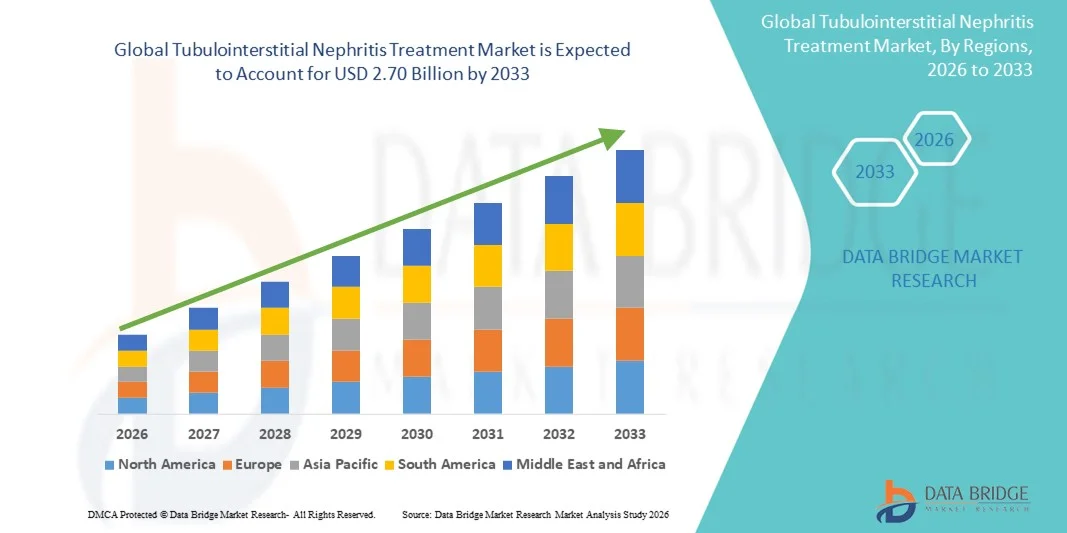
- As per Data Bridge Market Research Analysis the global tubulointerstitial nephritis treatment market size was valued at USD 1.79 billion in 2025 and is expected to reach USD 2.70 billion by 2033, at a CAGR of 5.30% during the forecast period
- The market growth is largely fueled by the increasing prevalence of kidney-related disorders, particularly acute and chronic tubulointerstitial nephritis (TIN), driven by rising incidences of autoimmune diseases, prolonged use of nephrotoxic drugs, and infections. Advancements in diagnostic imaging, biomarkers, and histopathological techniques are improving the early detection and accurate classification of TIN, leading to more effective and targeted treatment strategies
- Furthermore, the rising demand for personalized medicine and immunomodulatory therapies is accelerating the adoption of novel treatment approaches for tubulointerstitial nephritis. Pharmaceutical companies are actively investing in research and development of corticosteroids, immunosuppressive agents, and biologics that address the underlying inflammation and immune dysfunction associated with the condition
Market Size & Forecast
- Global Market Value (2025): USD 1.79 billion
- Expected Market Value (2033): USD 2.70 billion
- Forecast CAGR (2026–2033): 5.30%
What are the Major Takeaways of Tubulointerstitial Nephritis Treatment Market?
- Tubulointerstitial nephritis treatment, encompassing a wide range of therapeutic and supportive care approaches, is becoming increasingly vital in nephrology due to the rising global burden of kidney inflammation and drug-induced renal injuries. The market’s growth is strongly driven by the increasing prevalence of autoimmune disorders, chronic kidney disease (CKD), and prolonged use of antibiotics and NSAIDs, which can lead to both acute and chronic forms of tubulointerstitial nephritis. Advancements in diagnostic techniques, such as renal biopsies, urinalysis, and molecular biomarker profiling, are enabling more accurate disease identification and targeted intervention
- The escalating demand for corticosteroids, immunosuppressants, and biologic therapies is further fueling market expansion. In addition, the introduction of novel anti-inflammatory and renal-protective drugs is enhancing patient outcomes, while the growing focus on personalized treatment plans and early disease detection continues to strengthen clinical management strategies worldwide
- North America dominated the tubulointerstitial nephritis treatment market with the largest revenue share of 41.6% in 2025, attributed to the presence of advanced healthcare infrastructure, high diagnosis rates, and significant awareness about renal disorders. The U.S. leads the region, driven by strong investment in clinical research, government support for kidney disease prevention programs, and the availability of a broad range of therapeutic options. The rise in autoimmune-related nephritis and widespread access to nephrology specialists are also contributing to this dominance
- Asia-Pacific is expected to be the fastest-growing region in the tubulointerstitial nephritis treatment market during the forecast period, projected to grow at a CAGR of 22.8% from 2026 to 2033, driven by the increasing prevalence of kidney inflammation, growing healthcare expenditure, and expanding access to diagnostic facilities. Countries such as India, China, and Japan are witnessing higher treatment adoption due to improved healthcare infrastructure, rising awareness about renal health, and government initiatives promoting chronic disease management
- The corticosteroid segment dominated the largest market revenue share of 63.8% in 2025, primarily due to their well-established role as first-line therapy in managing renal inflammation and immune-mediated nephritis
Report Scope and Tubulointerstitial Nephritis Treatment Market Segmentation
|
Attributes |
Tubulointerstitial Nephritis Treatment Key Market Insights |
|
Segments Covered |
|
|
Countries Covered |
North America
Europe
Asia-Pacific
Middle East and Africa
South America
|
|
Key Market Players |
|
|
Market Opportunities |
|
|
Value Added Data Infosets |
|
What is the Key Trend in the Tubulointerstitial Nephritis Treatment Market?
Advancements in Personalized and Targeted Therapeutics
- A significant and accelerating trend in the global tubulointerstitial nephritis (TIN) treatment market is the growing shift toward personalized and targeted therapeutic approaches, enabled by advancements in immunology, genomics, and biomarker discovery. This transition is enhancing the precision of treatment selection for patients based on disease subtype, immune response, and drug-induced etiology
- For instance, in June 2024, researchers at the National Institute of Diabetes and Digestive and Kidney Diseases (NIDDK) announced promising outcomes from trials evaluating biologic agents targeting specific cytokines involved in autoimmune-mediated interstitial nephritis, aiming to minimize corticosteroid dependency. Similarly, multiple pharmaceutical companies are investing in novel immunomodulators and anti-inflammatory biologics that target specific inflammatory pathways, improving patient outcomes with fewer systemic side effects
- The integration of digital health technologies, such as AI-powered diagnostic tools, telemedicine platforms, and electronic health record (EHR)-based predictive algorithms, is transforming early detection and treatment monitoring for TIN. For example, AI algorithms are being utilized to detect subtle kidney inflammation patterns in imaging and biopsy reports, assisting nephrologists in identifying disease progression earlier and optimizing therapy plans
- Furthermore, the adoption of telehealth and remote patient management systems is improving accessibility to nephrology care, especially in remote and underserved regions. Patients can now receive medication counseling, adherence support, and follow-up consultations virtually, improving compliance and long-term management outcomes
- Pharmaceutical leaders are also introducing extended-release corticosteroid formulations and combination therapies designed to reduce relapse risk and enhance renal recovery rates. These innovations, coupled with clinical trials evaluating the role of monoclonal antibodies in refractory TIN, underscore the market’s dynamic progression toward precision-based interventions
- This ongoing trend toward targeted, technology-enabled, and patient-centric care is redefining the TIN treatment landscape, paving the way for faster diagnosis, improved efficacy, and enhanced patient safety. As innovation continues, manufacturers are focusing on reducing treatment-associated toxicity while improving long-term kidney function recovery through precision therapeutics
Tubulointerstitial Nephritis Treatment Market Dynamics
Driver
Rising Prevalence of Kidney Disorders and Growing Diagnostic Awareness
- The increasing global prevalence of kidney-related conditions such as autoimmune nephritis, lupus nephritis, and drug-induced renal inflammation is a major driver fueling the growth of the Tubulointerstitial Nephritis Treatment Market. Rising incidences of chronic diseases like diabetes, hypertension, and infections contribute to higher susceptibility to interstitial kidney damage, driving the need for effective therapeutic solutions
- For instance, in March 2025, AstraZeneca announced clinical expansion of its renal drug development program to include novel anti-inflammatory compounds targeting renal tubulointerstitial fibrosis, aimed at addressing unmet needs in chronic inflammatory nephropathies. Such developments highlight growing pharmaceutical investment in the nephrology segment
- Moreover, greater diagnostic awareness among healthcare professionals and patients—supported by educational campaigns from nephrology associations—is promoting early detection of TIN through blood and urine biomarker testing, imaging, and kidney biopsies. Early diagnosis enables more effective treatment and better management outcomes, further accelerating market expansion
- Government initiatives to strengthen kidney health programs, coupled with an increasing number of specialized nephrology clinics and research institutions, are also contributing significantly to market growth. Rising adoption of corticosteroids, immunosuppressants, and supportive care therapies such as ACE inhibitors and diuretics is expanding treatment accessibility globally
- In addition, the growing availability of affordable generics and supportive reimbursement frameworks in developed economies are encouraging patients to seek timely medical intervention, thus positively influencing the overall market trajectory
Restraint/Challenge
Limited Awareness, Adverse Drug Reactions, and High Treatment Costs
- Despite positive growth prospects, the tubulointerstitial nephritis treatment Market faces challenges related to limited disease awareness, adverse drug effects, and high treatment costs. Many patients, especially in low- and middle-income countries, remain undiagnosed due to lack of access to nephrology specialists and advanced diagnostic infrastructure
- For instance, in October 2024, a study published by the American Society of Nephrology (ASN) highlighted that nearly 40% of interstitial nephritis cases are diagnosed at advanced stages due to misinterpretation of early symptoms such as mild fatigue and proteinuria. This diagnostic delay limits treatment efficacy and increases the risk of irreversible kidney damage
- Another major challenge is the side effects associated with corticosteroids and immunosuppressive therapies, which can lead to complications such as infections, metabolic imbalances, and bone density loss, reducing patient adherence and long-term compliance
- The high cost of biologics and advanced therapeutics also restricts access for economically constrained populations. Although generic corticosteroids and NSAIDs are affordable, advanced biologics, targeted immunotherapies, and continuous monitoring requirements make overall treatment expensive
- Furthermore, the absence of standardized treatment protocols across regions and varying reimbursement policies present obstacles for consistent care delivery. Strengthening clinical guidelines, improving physician education, and promoting cost-effective therapeutic development are essential to overcoming these barriers
- Addressing these challenges through expanded clinical research, awareness programs, and cost-optimization strategies will be critical for sustaining growth in the Tubulointerstitial Nephritis Treatment Market over the coming years
How is the Tubulointerstitial Nephritis Treatment Market Segmented?
The market is segmented on the basis of drug type, mode of administration, distribution channel, and end user.
- By Drug Type
On the basis of drug type, the Tubulointerstitial Nephritis Treatment market is segmented into corticosteroids and others. The corticosteroid segment dominated the largest market revenue share of 63.8% in 2025, primarily due to their well-established role as first-line therapy in managing renal inflammation and immune-mediated nephritis. Widely prescribed drugs such as prednisone and methylprednisolone are highly effective in suppressing inflammatory responses and preserving kidney function. The dominance of this segment is further supported by their availability in generic forms, cost-effectiveness, and inclusion in multiple clinical guidelines for nephritis treatment. In addition, growing adoption in both hospital and outpatient settings reinforces their market leadership across developed and emerging economies.
The others segment is projected to witness the fastest CAGR of 18.7% from 2026 to 2033, driven by rising adoption of biologics, immunosuppressants, and targeted therapies that offer steroid-sparing benefits. Increasing research into monoclonal antibodies, anti-fibrotic agents, and cytokine inhibitors is expanding treatment options for patients unresponsive to steroids. Furthermore, ongoing clinical trials evaluating novel biologics and advancements in precision medicine are expected to fuel rapid growth, especially as demand increases for safer and more durable treatment outcomes.
- By Mode of Administration
On the basis of mode of administration, the Tubulointerstitial Nephritis Treatment market is segmented into injectable, oral, and others. The oral segment accounted for the largest market revenue share of 57.6% in 2025, owing to its convenience, patient compliance, and affordability in managing long-term therapy. Oral corticosteroids and immunosuppressants remain the preferred choice among clinicians for outpatient treatment due to ease of dosing and well-documented clinical efficacy. The widespread availability of oral dosage forms in both branded and generic options further contributes to their dominance. Growing awareness of early-stage TIN and the shift toward oral maintenance therapy to minimize hospital visits have also reinforced segment growth across global markets.
The injectable segment is expected to register the fastest CAGR of 20.5% from 2026 to 2033, propelled by the increasing use of intravenous biologics and advanced immunotherapies for severe or resistant cases. Injectable formulations provide rapid onset of action and precise dosing, making them ideal for hospitalized patients requiring immediate anti-inflammatory control. Furthermore, the growing number of hospital-based infusion centers and the introduction of long-acting injectables with enhanced bioavailability are boosting adoption. Rising demand for biologic therapies and expansion of specialty clinics equipped for intravenous administration are also key growth contributors.
- By Distribution Channel
On the basis of distribution channel, the Tubulointerstitial Nephritis Treatment market is segmented into hospital pharmacies, retail pharmacies, and online pharmacies. The hospital pharmacies segment dominated the largest revenue share of 48.9% in 2025, attributed to the high concentration of inpatient treatments requiring corticosteroids and biologics administered under medical supervision. Hospitals remain the central point of care for acute nephritis management, enabling immediate access to prescribed medications and ensuring proper dosage control. The integration of hospital-based pharmacies within nephrology departments and the availability of advanced intravenous formulations further strengthens this segment’s leading position in the global market.
The online pharmacies segment is projected to grow at the fastest CAGR of 22.1% from 2026 to 2033, driven by increasing digital health adoption, improved internet accessibility, and growing patient preference for home delivery of maintenance medications. Rising use of e-pharmacy platforms for ordering long-term prescriptions such as oral corticosteroids and immunosuppressants is fueling this growth. In addition, government support for online healthcare services and discounts offered by digital pharmacies are attracting patients toward remote purchasing options, particularly in Asia-Pacific and North America.
- By End User
On the basis of end user, the Tubulointerstitial Nephritis Treatment market is segmented into hospitals, homecare, specialty clinics, and others. The hospitals segment dominated the largest market revenue share of 56.4% in 2025, driven by the increasing number of patients requiring inpatient diagnosis, renal biopsies, and intravenous therapy administration. Hospitals remain the primary treatment centers for severe and acute nephritis cases, supported by availability of multidisciplinary nephrology care and advanced diagnostic infrastructure. High patient admission rates for corticosteroid infusions and biologic treatments contribute to the segment’s strong market position. Moreover, government initiatives to expand renal care units in public hospitals continue to reinforce dominance in this category.
The homecare segment is anticipated to witness the fastest CAGR of 19.2% from 2026 to 2033, fueled by the growing preference for at-home management of chronic kidney inflammation and advancements in telemedicine-based supervision. Increasing availability of oral therapies, remote monitoring devices, and digital health consultations has made homecare a cost-effective and convenient option for patients. Furthermore, supportive government policies promoting outpatient care, coupled with the rising geriatric population seeking home-based treatment comfort, are accelerating segment expansion across both developed and emerging economies.
Which Region Holds the Largest Share of the Tubulointerstitial Nephritis Treatment Market?
- North America dominated the tubulointerstitial nephritis treatment market with the largest revenue share of 41.6% in 2025, attributed to the presence of advanced healthcare infrastructure, high diagnosis rates, and significant awareness about renal disorders
- The region’s robust healthcare system, along with strong reimbursement support for autoimmune and inflammatory kidney conditions, has accelerated treatment adoption. In addition, the increasing prevalence of drug-induced nephritis and autoimmune diseases such as lupus and sarcoidosis is driving therapeutic demand
- A surge in clinical trials, strong regulatory backing from the FDA, and the presence of major pharmaceutical companies investing in corticosteroids and novel biologic therapies continue to support regional growth
U.S. Tubulointerstitial Nephritis Treatment Market Insight
The U.S. tubulointerstitial nephritis treatment market captured the largest revenue share of 82% within North America in 2025, driven by the nation’s high awareness of kidney-related disorders, strong nephrology infrastructure, and the presence of leading pharmaceutical players. The rise in autoimmune and drug-induced nephritis cases, coupled with a growing aging population, has significantly boosted demand for corticosteroids, immunosuppressants, and supportive renal care therapies. Moreover, initiatives by the National Kidney Foundation (NKF) and NIH-backed clinical research programs focusing on early diagnosis and improved treatment outcomes are strengthening the country’s market position.
Europe Tubulointerstitial Nephritis Treatment Market Insight
The Europe tubulointerstitial nephritis treatment market is expected to witness steady growth throughout the forecast period, supported by rising incidences of chronic kidney inflammation and increased access to specialized nephrology services. The European Medicines Agency’s (EMA) emphasis on approving safe and effective corticosteroid alternatives is also spurring innovation. Countries like Germany, France, and the U.K. are driving the market through active participation in clinical research and early adoption of biologic-based therapies. In addition, growing collaborations between hospitals and research institutions are enhancing diagnostic capabilities and treatment precision.
U.K. Tubulointerstitial Nephritis Treatment Market Insight
The U.K. tubulointerstitial nephritis treatment market is projected to expand at a noteworthy CAGR during the forecast period, fueled by a growing emphasis on chronic kidney disease (CKD) management and increased healthcare funding for renal disorders. National Health Service (NHS) initiatives to improve diagnostic pathways and enhance patient access to corticosteroid and immunomodulatory treatments are further supporting growth. Moreover, the U.K.’s clinical research network continues to play a crucial role in evaluating the safety and efficacy of novel drug regimens for nephritis management.
Germany Tubulointerstitial Nephritis Treatment Market Insight
The Germany tubulointerstitial nephritis treatment market is expected to expand at a significant CAGR during the forecast period, driven by high healthcare spending, a strong focus on precision medicine, and increasing adoption of biologic therapies. The country’s advanced diagnostic infrastructure and government-backed health programs targeting autoimmune and inflammatory diseases are promoting early intervention. German pharmaceutical firms are also investing heavily in R&D for next-generation corticosteroids and steroid-sparing drugs, supporting long-term market expansion.
Asia-Pacific Tubulointerstitial Nephritis Treatment Market Insight
The Asia-Pacific tubulointerstitial nephritis treatment market is poised to grow at the fastest CAGR of 22.8% from 2026 to 2033, owing to the rising prevalence of kidney inflammation, growing healthcare awareness, and improved access to medical services. Rapid urbanization and lifestyle changes leading to higher autoimmune disorder rates are creating substantial therapeutic demand. Furthermore, governments in India, China, and Japan are increasingly prioritizing kidney disease prevention programs, while expanding diagnostic capabilities and public health insurance coverage are facilitating early treatment adoption.
Japan Tubulointerstitial Nephritis Treatment Market Insight
The Japan tubulointerstitial nephritis treatment market is gaining traction due to the nation’s advanced medical research ecosystem and high healthcare expenditure. Increasing incidences of drug-induced nephritis, particularly among the elderly population, have spurred the need for effective corticosteroid and immunosuppressive regimens. Furthermore, government initiatives to strengthen nephrology departments and continuous innovation in biologic-based therapies are supporting market growth. Collaborations between universities and pharmaceutical firms are also accelerating clinical trials focused on autoimmune kidney inflammation.
China Tubulointerstitial Nephritis Treatment Market Insight
The China tubulointerstitial nephritis treatment market accounted for the largest market revenue share in Asia-Pacific in 2025, driven by rising awareness of kidney diseases, an expanding middle class, and increased government investment in chronic disease management. The market is further strengthened by the growing availability of affordable corticosteroid therapies and generic drugs, alongside rapid advancements in diagnostic technologies. In addition, China’s ongoing healthcare reforms and focus on research related to inflammation and nephrology are enabling local pharmaceutical companies to expand their treatment portfolios and reach.
Which are the Top Companies in Tubulointerstitial Nephritis Treatment Market?
The Tubulointerstitial Nephritis Treatment industry is primarily led by well-established companies, including:
• F. Hoffmann-La Roche Ltd. (Switzerland)
• Novartis AG (Switzerland)
• Pfizer Inc. (U.S.)
• GlaxoSmithKline plc (U.K.)
• Johnson & Johnson Services, Inc. (U.S.)
• AstraZeneca plc (U.K.)
• Sanofi S.A. (France)
• Merck & Co., Inc. (U.S.)
• Bayer AG (Germany)
• Amgen Inc. (U.S.)
• Bristol Myers Squibb Company (U.S.)
• Eli Lilly and Company (U.S.)
• Takeda Pharmaceutical Company Limited (Japan)
• Biogen Inc. (U.S.)
• Otsuka Pharmaceutical Co., Ltd. (Japan)
• Hansa Biopharma AB (Sweden)
• Vifor Pharma (Switzerland)
• Astellas Pharma Inc. (Japan)
• Teva Pharmaceutical Industries Ltd. (Israel)
What are Latest Developments in Tubulointerstitial Nephritis Treatment Market?
- In March 2024, Medscape released an updated clinical treatment overview for acute tubulointerstitial nephritis (TIN), reaffirming corticosteroids as the primary line of therapy. The report emphasized the growing interest in steroid-sparing agents such as mycophenolate mofetil and rituximab for IgG4-related and drug-induced TIN cases. This update has influenced treatment protocols across hospitals and research institutions worldwide
- In March 2024, the Kidney Disease: Improving Global Outcomes (KDIGO) organization updated its clinical guidance documents, refining global best practices for diagnosing and managing TIN. The update placed a stronger focus on early detection, individualized immunosuppressive therapy, and renal recovery monitoring, aligning clinical care standards across nephrology centers
- In September 2024, multiple clinical publications highlighted the rising incidence of immune checkpoint inhibitor (ICI)-induced TIN in oncology patients. This recognition prompted pharmaceutical companies and healthcare providers to establish new monitoring frameworks and risk management plans for patients undergoing immunotherapy, significantly shaping the market demand for targeted renal protective treatments
- In November 2024, a peer-reviewed case study reported acute tubulointerstitial nephritis following infliximab therapy, a TNF inhibitor commonly used in autoimmune diseases. This case increased regulatory focus on biologic drug safety and led to heightened pharmacovigilance regarding renal adverse reactions in the global therapeutic landscape
- In 2024, the U.S. Food and Drug Administration (FDA) listed acute tubulointerstitial nephritis as an adverse event of special interest (AESI) in its new drug safety review. This regulatory development strengthened global post-marketing surveillance systems and required pharmaceutical companies to implement updated risk assessment and labeling measures for potential nephrotoxicity

- Interactive Data Analysis Dashboard
- Company Analysis Dashboard for high growth potential opportunities
- Research Analyst Access for customization & queries
- Competitor Analysis with Interactive dashboard
- Latest News, Updates & Trend analysis
- Harness the Power of Benchmark Analysis for Comprehensive Competitor Tracking
Data collection and base year analysis are done using data collection modules with large sample sizes. The stage includes obtaining market information or related data through various sources and strategies. It includes examining and planning all the data acquired from the past in advance. It likewise envelops the examination of information inconsistencies seen across different information sources. The market data is analysed and estimated using market statistical and coherent models. Also, market share analysis and key trend analysis are the major success factors in the market report. To know more, please request an analyst call or drop down your inquiry.
The key research methodology used by DBMR research team is data triangulation which involves data mining, analysis of the impact of data variables on the market and primary (industry expert) validation. Data models include Vendor Positioning Grid, Market Time Line Analysis, Market Overview and Guide, Company Positioning Grid, Patent Analysis, Pricing Analysis, Company Market Share Analysis, Standards of Measurement, Global versus Regional and Vendor Share Analysis. To know more about the research methodology, drop in an inquiry to speak to our industry experts.
Data Bridge Market Research is a leader in advanced formative research. We take pride in servicing our existing and new customers with data and analysis that match and suits their goal. The report can be customized to include price trend analysis of target brands understanding the market for additional countries (ask for the list of countries), clinical trial results data, literature review, refurbished market and product base analysis. Market analysis of target competitors can be analyzed from technology-based analysis to market portfolio strategies. We can add as many competitors that you require data about in the format and data style you are looking for. Our team of analysts can also provide you data in crude raw excel files pivot tables (Fact book) or can assist you in creating presentations from the data sets available in the report.












