


What is the Ultrasound Stimulator Market Size and Growth Rate ?
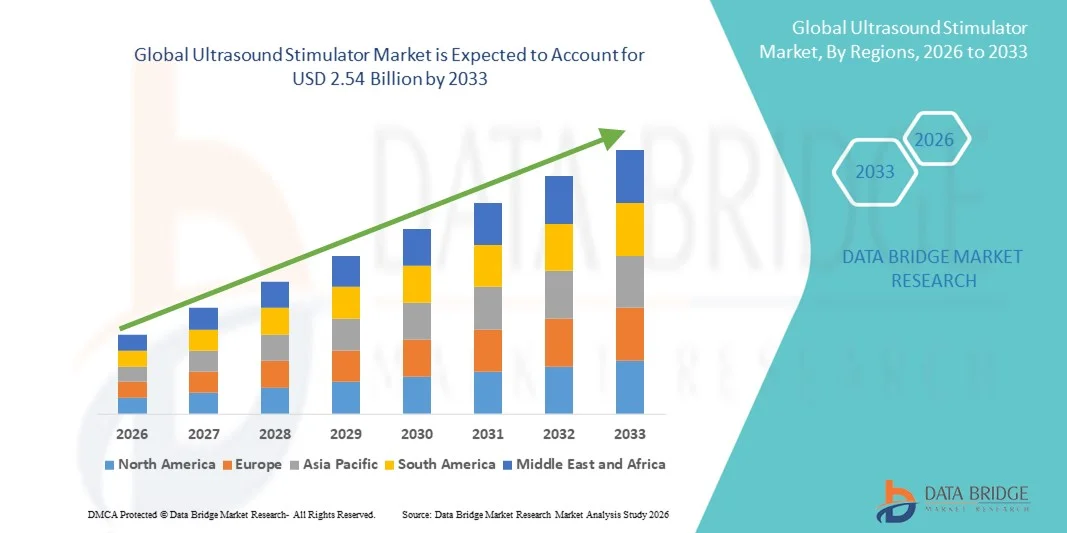
- As per Data Bridge Market Research Analysis the global ultrasound stimulator market size was valued at USD 1.60 billion in 2025 and is expected to reach USD 2.54 billion by 2033, at a CAGR of 5.98% during the forecast period
- The market growth of the Ultrasound Stimulator Market is largely fueled by the growing adoption and technological progress within connected healthcare devices and advanced therapeutic solutions, leading to increased digitalization in both clinical and homecare settings
- Furthermore, rising demand from healthcare providers and patients for safe, effective, and user-friendly therapeutic devices is establishing ultrasound stimulators as a preferred solution for pain management, rehabilitation, and physiotherapy. These converging factors are accelerating the uptake of Ultrasound Stimulator solutions, thereby significantly boosting the industry's growth
Market Size & Forecast
- Global Market Value (2025): USD 1.60 billion
- Expected Market Value (2033): USD 2.54 billion
- Forecast CAGR (2026–2033): 5.98%
What are the Major Takeaways of Ultrasound Stimulator Market ?
- Ultrasound stimulators, offering non-invasive therapeutic solutions for pain management, rehabilitation, and physiotherapy, are increasingly vital components of modern healthcare and homecare settings due to their enhanced convenience, ease of use, portability, and effectiveness in improving patient outcomes
- The escalating demand for ultrasound stimulators is primarily fueled by growing awareness of non-invasive therapies, increasing adoption of advanced healthcare technologies, and a rising preference for safe, user-friendly, and effective treatment options
- North America dominated the Ultrasound Stimulator market with the largest revenue share of 35.5% in 2025 due to advanced healthcare infrastructure, high healthcare spending, established reimbursement frameworks, and strong presence of key industry players driving innovation and adoption
- Asia-Pacific is expected to be the fastest-growing region in the Ultrasound Stimulator market during the forecast period, propelled by rising healthcare investments, increasing patient awareness of non-invasive therapies, expanding healthcare infrastructure, and growing demand in emerging markets such as China, India, and Japan
- The Medical Use segment dominated the market with a revenue share of 62.1% in 2025, fueled by growing adoption in hospitals and specialty clinics for tumor ablation, cancer therapy, and other non-invasive medical procedures
Report Scope and Ultrasound Stimulator Market Segmentation
|
Attributes |
Ultrasound Stimulator Key Market Insights |
|
Segments Covered |
|
|
Countries Covered |
North America
Europe
Asia-Pacific
Middle East and Africa
South America
|
|
Key Market Players |
|
|
Market Opportunities |
|
|
Value Added Data Infosets |
In addition to the insights on market scenarios such as market value, growth rate, segmentation, geographical coverage, and major players, the market reports curated by the Data Bridge Market Research also include in-depth expert analysis, patient epidemiology, pipeline analysis, pricing analysis, and regulatory framework. |
What is the Key Trend in the Ultrasound Stimulator Market ?
Increasing Clinical Adoption and Integration with Digital Health Platforms
- A major global trend shaping the ultrasound stimulator market is the steady integration of these devices with digital health ecosystems, cloud‑based diagnostics, and patient‑centric care models
- Clinicians and rehabilitation specialists increasingly favor ultrasound stimulators that connect with electronic health records (EHRs) and telehealth platforms, enabling remote monitoring of therapy adherence and outcomes
- For instance, modern ultrasound stimulators are being developed with wireless connectivity and companion mobile apps, allowing therapists to adjust treatment protocols in real time based on patient‑reported feedback. This digital linkage enhances the continuity of care, especially for patients undergoing long‑term physical rehabilitation outside of traditional clinical settings
- At the same time, manufacturers are integrating user‑friendly interfaces and automated treatment programs that simplify device operation for both professionals and patients
- These advancements help reduce setup times, improve reproducibility of treatment sessions, and broaden acceptance among clinicians who may have been hesitant to adopt more complex therapeutic technologies previously
- This evolution toward smarter, connected ultrasound stimulation systems reflects broader healthcare trends — including personalized medicine, data‑driven outcomes, and hybrid care delivery — which are collectively reshaping expectations for therapeutic device performance and patient experience
Ultrasound Stimulator Market Dynamics
Driver
Rising Incidence of Musculoskeletal Disorders and Demand for Non‑Invasive Therapies
- A key driver of ultrasound stimulator market growth is the growing global burden of musculoskeletal conditions, such as tendonitis, osteoarthritis, soft tissue injuries, and chronic pain syndrome
- Aging populations in developed regions and lifestyle‑related risk factors in emerging economies are contributing to increased demand for non‑invasive pain management and rehabilitation solutions
- For instance, the widespread use of SonoStim therapeutic ultrasound in physical therapy clinics for conditions such as tendonitis and lower back pain — and devices like the Enraf‑Nonius Sonopuls 490 being adopted in sports medicine clinics — illustrate how practitioners are relying more on ultrasound stimulation to accelerate rehabilitation
- Ultrasound stimulators are widely used in physical therapy settings to accelerate tissue healing, stimulate blood flow, reduce inflammation, and manage pain without the need for medication or surgical intervention
- Their effectiveness in promoting recovery — especially when combined with therapeutic exercise — positions them as attractive options for clinicians and patients alike
- In addition, greater awareness among healthcare providers and patients about the benefits of therapeutic ultrasound versus pharmacologic pain control is supporting more frequent adoption
- Hospitals, outpatient therapy centers, and sports medicine clinics are incorporating ultrasound stimulation into standard treatment protocols, recognizing its potential to improve functional outcomes and reduce overall healthcare costs related to chronic injury management
- This growing clinical confidence, along with ongoing professional training initiatives, is expanding the base of practitioners who recommend and utilize ultrasound stimulators — driving overall market demand
Restraint/Challenge
Limited Reimbursement Policies and Need for Clinical Evidence
- A significant challenge for broader adoption is the lack of consistent reimbursement coverage in major healthcare systems and the ongoing need for robust clinical evidence demonstrating long‑term benefits compared with alternative therapies
- For instance, in many regions therapeutic ultrasound treatment with devices like the ZetrOZ Plus may not be fully reimbursed under standard physical therapy plans, and clinicians often point to a need for larger multicenter trials to validate outcomes — factors that slow procurement decisions by clinics and hospitals
- Moreover, although numerous studies support the utility of ultrasound stimulation for specific applications, demand for robust, large‑scale clinical evidence persists
- Payers, regulatory bodies, and some clinicians continue to seek higher‑quality data demonstrating definitive long‑term outcomes compared with standard care or alternative therapies
- This need for more conclusive evidence can slow the rate at which ultrasound stimulators are accepted into mainstream therapeutic guidelines and reimbursement schedules
- Cost of advanced systems — particularly those with enhanced digital integration, multi‑mode treatment capabilities, or wireless connectivity — may also pose barriers for smaller clinics or individual practitioners. While basic units are accessible, premium features often come at a higher price point, which can limit acquisition by budget‑conscious buyers
- Overcoming these restraints will require continued clinical research, harmonization of reimbursement policies, and education efforts that articulate clear value propositions for ultrasound stimulation in rehabilitation and pain management. As evidence grows and coverage expands, the market is expected to strengthen further
How is the Ultrasound Stimulator Market Segmented ?
The market is segmented on the basis of product type, indication, and end user.
- By Product Type
On the basis of product type, the Global Ultrasound Stimulator market is segmented into High-Intensity Focused Ultrasound (HIFU) and Low-Intensity Pulsed Ultrasound (LIPUS). The High-Intensity Focused Ultrasound (HIFU) segment dominated the market with a revenue share of 57.3% in 2025, driven by its increasing adoption in oncology treatments and non-invasive surgical procedures. HIFU enables precise targeting of tumors and tissue, reducing recovery times and minimizing complications. Hospitals and specialty clinics favor HIFU devices for their high accuracy, efficacy, and ability to integrate with imaging systems such as MRI and ultrasound guidance. The segment benefits from technological advancements like real-time monitoring and automated targeting software. Rising prevalence of cancers and growing awareness of non-invasive treatment options further drive demand. Expansion in emerging markets and government funding for cancer treatment programs support adoption. High patient preference for non-surgical treatments enhances growth. Research institutions and hospitals adopt HIFU for clinical trials and innovative therapies. Integration with hospital workflow and electronic health record systems improves efficiency. Continuous product innovation, miniaturization, and improved energy delivery systems maintain dominance. Increasing collaborations between manufacturers and healthcare providers strengthen market penetration.
The Low-Intensity Pulsed Ultrasound (LIPUS) segment is expected to witness the fastest CAGR of 21.5% from 2026 to 2033, driven by rising adoption in physiotherapy, rehabilitation, and bone healing applications. LIPUS promotes tissue regeneration and accelerates fracture healing without invasive procedures. Physiotherapy centers, hospitals, and ambulatory surgical centers increasingly use LIPUS devices for post-operative recovery and musculoskeletal therapies. Growth is supported by increasing geriatric populations and rising incidence of sports injuries and bone fractures globally. Technological improvements, including portable and wearable LIPUS devices, enhance usability and patient compliance. Rising awareness of non-invasive rehabilitation therapies and home-use devices boosts adoption. Manufacturers are focusing on smart, user-friendly designs integrated with mobile apps for patient monitoring. Reimbursement policies and government initiatives promoting physiotherapy and rehabilitation treatments further encourage growth. Expansion in emerging markets provides untapped revenue opportunities. Clinical studies demonstrating efficacy drive trust among healthcare professionals. Recurring demand from physiotherapy programs and rehabilitation centers ensures sustainable revenue. The segment’s versatility across multiple therapeutic applications reinforces its fastest-growing status.
- By Indication
On the basis of indication, the Global Ultrasound Stimulator market is segmented into Medical Use and Physical Therapy. The Medical Use segment dominated the market with a revenue share of 62.1% in 2025, fueled by growing adoption in hospitals and specialty clinics for tumor ablation, cancer therapy, and other non-invasive medical procedures. Medical applications benefit from technological advancements like MRI-guided HIFU, allowing precise targeting of tissue and minimizing side effects. Rising prevalence of cancers and chronic diseases globally drives demand. Hospitals and ambulatory surgical centers prefer ultrasound stimulators for patient safety, accuracy, and reduced recovery times. Government programs supporting non-invasive therapies and clinical trials further accelerate adoption. Integration with hospital workflow systems and electronic health records improves operational efficiency. Research institutions use medical ultrasound stimulators for innovative therapies and clinical studies. Expanding healthcare infrastructure in emerging markets strengthens market penetration. Patient preference for non-invasive treatments enhances growth. Collaborations between manufacturers and medical institutions increase product adoption. Continuous innovation, improved imaging integration, and enhanced energy delivery maintain dominance. Increasing awareness among healthcare providers of therapeutic benefits ensures ongoing demand.
The Physical Therapy segment is expected to witness the fastest CAGR of 20.8% from 2026 to 2033, driven by rising demand for rehabilitation, musculoskeletal injury recovery, and sports medicine applications. Physiotherapy centers and hospitals increasingly adopt LIPUS and portable HIFU devices to accelerate tissue regeneration and bone healing. The segment benefits from increasing geriatric populations, rising incidence of sports injuries, and greater awareness of non-invasive rehabilitation therapies. Technological advancements, including wearable and home-use devices, improve patient compliance and monitoring. Government initiatives promoting physiotherapy and insurance coverage for rehabilitation enhance adoption. Research studies demonstrating efficacy in bone healing and soft tissue recovery strengthen trust among healthcare providers. Expansion of ambulatory surgical centers and specialty physiotherapy clinics globally drives growth. Recurring use in therapy programs ensures consistent demand. Integration with digital apps for therapy tracking improves treatment outcomes. Partnerships between manufacturers and physiotherapy networks support market penetration. Continuous innovation and portable designs reinforce the segment’s fastest-growing position.
- By End User
On the basis of end user, the Global Ultrasound Stimulator market is segmented into Hospitals, Ambulatory Surgical Centers, Specialty Clinics, and Physiotherapy Centers. The Hospitals segment dominated the market with a revenue share of 55.4% in 2025, driven by the rising adoption of HIFU and LIPUS devices for surgical, oncology, and rehabilitation applications. Hospitals prefer these devices for high throughput, reliability, and integration with imaging systems. Government funding and hospital initiatives promoting non-invasive treatments further support growth. Expansion in emerging markets and increasing hospital infrastructure enhance market penetration. Hospitals use devices for clinical studies, patient monitoring, and therapy optimization. Rising prevalence of cancer, musculoskeletal disorders, and chronic conditions fuels adoption. Technological advancements like MRI-guided HIFU and portable LIPUS improve treatment precision and patient outcomes. Training programs and collaborations with manufacturers increase adoption in hospitals. Integration with hospital workflow systems and electronic health records enhances efficiency. High patient preference for non-invasive procedures strengthens dominance. Continuous product innovation maintains segment leadership.
The Physiotherapy Centers segment is expected to witness the fastest CAGR of 22.1% from 2026 to 2033, driven by increasing demand for rehabilitation, sports injury recovery, and musculoskeletal therapy. LIPUS and portable HIFU devices are widely adopted in physiotherapy centers for tissue regeneration and bone healing. Growth is supported by the rising geriatric population, increasing sports activities, and higher awareness of non-invasive therapy benefits. Home-use and wearable devices allow therapy monitoring and patient compliance. Government initiatives and insurance coverage promoting rehabilitation services further accelerate growth. Technological improvements, including smart and connected devices, enhance usability. Physiotherapy centers benefit from recurring therapy programs, ensuring steady revenue streams. Training programs for physiotherapists increase device adoption. Clinical studies demonstrating efficacy boost trust among practitioners. Expansion in urban and emerging markets provides additional opportunities. Integration with mobile apps for patient tracking supports better treatment outcomes. Continuous innovation and improved ergonomics reinforce the segment’s fastest-growing position.
Which Region Holds the Largest Share of the Ultrasound Stimulator Market ?
- North America dominated the ultrasound stimulator market with the largest revenue share of 35.5% in 2025, driven by advanced healthcare infrastructure, high healthcare spending, established reimbursement frameworks, and a strong presence of key industry players actively driving innovation and adoption. Hospitals, specialty clinics, and physiotherapy centers in the region increasingly adopt ultrasound stimulators for pain management, rehabilitation, and non-invasive therapeutic applications
- The growing prevalence of chronic musculoskeletal disorders and post-operative recovery programs further fuels market demand. High disposable incomes, a technologically inclined population, and preference for advanced therapeutic devices support rapid adoption. Integration of ultrasound stimulators with modern healthcare technologies, including digital patient monitoring systems and electronic health records, enhances operational efficiency and patient outcomes. Collaborative initiatives between manufacturers and hospitals to train medical personnel also accelerate uptake
- Consumer awareness of non-invasive and convenient therapy options contributes to sustained growth. Regulatory support for innovative medical devices ensures smooth market entry. North America’s mature market and established distribution networks make it a dominant force in the global ultrasound stimulator industry
U.S. Ultrasound Stimulator Market Insight
The U.S. ultrasound stimulator market captured the largest revenue share in North America in 2025, fueled by the rapid adoption of advanced healthcare technologies and the expanding trend of non-invasive therapies. Medical institutions increasingly prioritize ultrasound stimulators for rehabilitation, pain management, and orthopedic treatments. The growing preference for outpatient care and home-based therapeutic solutions enhances demand. Integration with digital monitoring platforms and mobile applications enables better patient compliance and therapy tracking. High healthcare expenditure and well-developed reimbursement policies encourage hospitals and clinics to invest in innovative ultrasound stimulation devices. The U.S. market is also benefiting from continuous product innovation, including portable and wearable ultrasound stimulators. Collaboration between device manufacturers and research institutions accelerates clinical adoption. Rising awareness among healthcare professionals about the therapeutic efficacy of ultrasound stimulators further supports market growth. The market expansion is reinforced by training programs, conferences, and awareness campaigns targeting physiotherapists and clinicians.
Europe Ultrasound Stimulator Market Insight
The Europe ultrasound stimulator market is projected to expand at a substantial CAGR throughout the forecast period, primarily driven by increasing investments in healthcare infrastructure, stringent medical device regulations, and rising patient awareness about non-invasive therapies. The demand for ultrasound stimulators is growing across hospitals, specialty clinics, and rehabilitation centers, particularly in countries such as Germany, France, and Italy. European consumers and medical institutions favor devices that are energy-efficient, technologically advanced, and compatible with integrated healthcare systems. Urbanization, rising geriatric populations, and an emphasis on preventive care boost adoption. The market growth is supported by ongoing collaborations between European manufacturers and healthcare providers to enhance device availability. Multi-family healthcare facilities and rehabilitation centers are increasingly incorporating ultrasound stimulators into therapeutic protocols. Government healthcare initiatives and reimbursement frameworks further facilitate adoption. Research institutions are also actively involved in clinical trials leveraging ultrasound stimulation technology, reinforcing market growth.
U.K. Ultrasound Stimulator Market Insight
The U.K. ultrasound stimulator market is anticipated to grow at a noteworthy CAGR during the forecast period, driven by the increasing trend of non-invasive therapies and rising patient demand for convenient rehabilitation options. Hospitals, physiotherapy centers, and specialty clinics are adopting ultrasound stimulators for pain management and musculoskeletal treatment programs. Awareness of safer and more effective therapeutic solutions is encouraging both public and private healthcare institutions to integrate these devices into treatment plans. Expansion of telehealth and home-based physiotherapy programs is further contributing to growth. The U.K.’s robust e-commerce and healthcare distribution infrastructure enhances accessibility to portable and advanced devices. Government policies supporting rehabilitation therapies, coupled with clinical validation studies, bolster adoption. Manufacturers are investing in training programs for clinicians to ensure effective device utilization. The rising geriatric population and increasing prevalence of chronic conditions are further fueling market expansion.
Germany Ultrasound Stimulator Market Insight
The Germany ultrasound stimulator market is expected to expand at a considerable CAGR during the forecast period, supported by strong healthcare infrastructure, high medical technology adoption, and emphasis on sustainable, energy-efficient medical devices. Hospitals and rehabilitation centers are increasingly incorporating ultrasound stimulators into therapy protocols for orthopedic and pain management treatments. The well-developed healthcare system ensures smooth integration of advanced devices, while government regulations support the adoption of clinically validated medical technologies. Rising awareness about non-invasive therapeutic options among patients and clinicians is contributing to demand. Manufacturers are actively collaborating with hospitals and research institutions to improve device availability. The market benefits from ongoing R&D activities, clinical trials, and training programs targeting physiotherapists and medical practitioners. Increasing demand for patient-friendly, portable devices is also a key driver.
Asia-Pacific Ultrasound Stimulator Market Insight
The Asia-Pacific ultrasound stimulator market is poised to grow at the fastest CAGR during 2026–2033, propelled by rising healthcare investments, increasing patient awareness of non-invasive therapies, expanding healthcare infrastructure, and growing demand in emerging markets such as China, India, and Japan. Hospitals, physiotherapy centers, and specialty clinics are adopting ultrasound stimulators for rehabilitation, orthopedic, and pain management treatments. Government initiatives promoting digital healthcare and non-invasive therapy adoption are boosting market growth. The increasing middle-class population and higher disposable incomes in countries like China and India drive device accessibility. Technological advancements, including portable and wearable stimulators, are enhancing usability and patient compliance. Manufacturers are expanding local production to meet growing demand. Research institutions and hospitals in APAC are actively participating in clinical studies using ultrasound stimulators. Increasing urbanization and modern healthcare facility expansion further accelerate adoption. Partnerships between device manufacturers and medical training institutions are supporting market penetration.
Japan Ultrasound Stimulator Market Insight
The Japan ultrasound stimulator market is gaining momentum due to the country’s high-tech healthcare culture, rapid urbanization, and focus on non-invasive rehabilitation solutions. Hospitals and clinics prioritize patient-friendly and technologically advanced devices. Integration with other medical devices, such as physiotherapy monitoring systems, is boosting adoption. An aging population drives demand for safer, easier-to-use devices suitable for home and clinical use. Government support for medical innovation and reimbursement policies further promote adoption. Clinical validation studies and hospital partnerships encourage utilization. Patients and clinicians increasingly prefer portable and wearable stimulators for convenience and better therapy compliance. Japan’s technologically adept population and high healthcare expenditure sustain market expansion.
China Ultrasound Stimulator Market Insight
The China ultrasound stimulator market accounted for the largest share in Asia-Pacific in 2025, attributed to rapid urbanization, expanding middle-class population, high healthcare spending, and strong government support for advanced medical technologies. Hospitals, specialty clinics, and physiotherapy centers are rapidly adopting ultrasound stimulators for pain management, rehabilitation, and orthopedic applications. The push for smart hospitals and digital healthcare integration is increasing demand for technologically advanced, portable devices. Affordable local manufacturing and domestic production of stimulators improve accessibility. Government policies promoting non-invasive therapy adoption and clinical research support market growth. Increasing patient awareness, rising healthcare infrastructure, and expansion of hospital networks further boost adoption. Collaboration between local manufacturers and hospitals accelerates device penetration.
Which are the Top Companies in Ultrasound Stimulator Market ?
The Ultrasound Stimulator industry is primarily led by well-established companies, including:
• Zimmer MedizinSysteme (Germany)
• Mettler Electronics (U.S.)
• BioElectronics Corporation (U.S.)
• GymnaUniphy (Belgium)
• ZetrOZ Systems (U.S.)
• Chattanooga (U.S.)
• Richmar (U.S.)
• Exogen (U.S.)
• SonaCare Medical (U.S.)
• Sanuwave Health (U.S.)
• Medisound (China)
• Intelect (U.S.)
• ITO Co., Ltd. (Japan)
• BTL Industries (Czech Republic)
• Enraf-Nonius (Netherlands)
• Orthosonics (U.K.)
• I-Tech Medical Division (Italy)
• Zimmer Biomet (U.S.)
What are Latest Developments in Ultrasound Stimulator Market ?
- In March 2024, EDAP TMS SA announced that its Focal One® high‑intensity focused ultrasound (HIFU) platform received Breakthrough Device designation from the U.S. Food and Drug Administration for the treatment of deep infiltrating rectal endometriosis, aimed at expanding therapeutic applications beyond prostate disease
- In February 2025, Theraclion announced the treatment of the first patients with its SONOVEIN® ‘SpeedPulse’ feature — an enhanced high‑intensity focused ultrasound capability designed to shorten treatment times in non‑invasive varicose vein therapy — as part of ongoing clinical evaluations ahead of commercialization
- In May 2025, GE HealthCare announced that the U.S. FDA approved a pediatric indication for its Optison ultrasound enhancing agent, enabling the contrast‑enhancing ultrasound agent to be used safely in pediatric echocardiography to improve diagnostic clarity
- In July 2025, Insightec announced that the U.S. Food and Drug Administration approved an expanded indication for its Exablate Neuro focused ultrasound platform, allowing staged bilateral pallidothalamic tractotomy treatment in advanced Parkinson’s disease
- focused ultrasound neurosurgery
- In September 2025, Theraclion reported successful top‑line results from its U.S. FDA pivotal VEINRESET clinical trial for Sonovein varicose vein treatment, showing a 96.8% occlusion rate at 12 months with strong safety and efficacy outcomes

- Interactive Data Analysis Dashboard
- Company Analysis Dashboard for high growth potential opportunities
- Research Analyst Access for customization & queries
- Competitor Analysis with Interactive dashboard
- Latest News, Updates & Trend analysis
- Harness the Power of Benchmark Analysis for Comprehensive Competitor Tracking
Data collection and base year analysis are done using data collection modules with large sample sizes. The stage includes obtaining market information or related data through various sources and strategies. It includes examining and planning all the data acquired from the past in advance. It likewise envelops the examination of information inconsistencies seen across different information sources. The market data is analysed and estimated using market statistical and coherent models. Also, market share analysis and key trend analysis are the major success factors in the market report. To know more, please request an analyst call or drop down your inquiry.
The key research methodology used by DBMR research team is data triangulation which involves data mining, analysis of the impact of data variables on the market and primary (industry expert) validation. Data models include Vendor Positioning Grid, Market Time Line Analysis, Market Overview and Guide, Company Positioning Grid, Patent Analysis, Pricing Analysis, Company Market Share Analysis, Standards of Measurement, Global versus Regional and Vendor Share Analysis. To know more about the research methodology, drop in an inquiry to speak to our industry experts.
Data Bridge Market Research is a leader in advanced formative research. We take pride in servicing our existing and new customers with data and analysis that match and suits their goal. The report can be customized to include price trend analysis of target brands understanding the market for additional countries (ask for the list of countries), clinical trial results data, literature review, refurbished market and product base analysis. Market analysis of target competitors can be analyzed from technology-based analysis to market portfolio strategies. We can add as many competitors that you require data about in the format and data style you are looking for. Our team of analysts can also provide you data in crude raw excel files pivot tables (Fact book) or can assist you in creating presentations from the data sets available in the report.













