


Urban Farming Market Analysis
The urban farming market is rapidly expanding as cities seek sustainable solutions for food production amidst growing concerns over climate change, food security, and urbanization. This market is being driven by advancements in technology, such as hydroponics, aeroponics, and vertical farming, which allow for efficient food production in limited spaces. Innovations such as LED lighting systems, automation, and IoT sensors are improving crop yields and reducing resource consumption, making urban farming more viable and profitable. Key players in the market, including AeroFarms, BrightFarms, and Urban Crop Solutions, are pioneering techniques that optimize plant growth while minimizing environmental impact. In addition, governments and private investors are increasingly supporting urban farming initiatives through funding, research, and incentives. Urban farming's benefits, including reduced transportation costs, fresher produce, and a smaller carbon footprint, are gaining attention from consumers and businesses alike. As cities continue to grow, urban farming presents a promising solution for producing food locally, fostering environmental sustainability, and contributing to urban resilience. The market is expected to see continued growth as technology evolves and urban farming practices become more mainstream.
Urban Farming Market Size
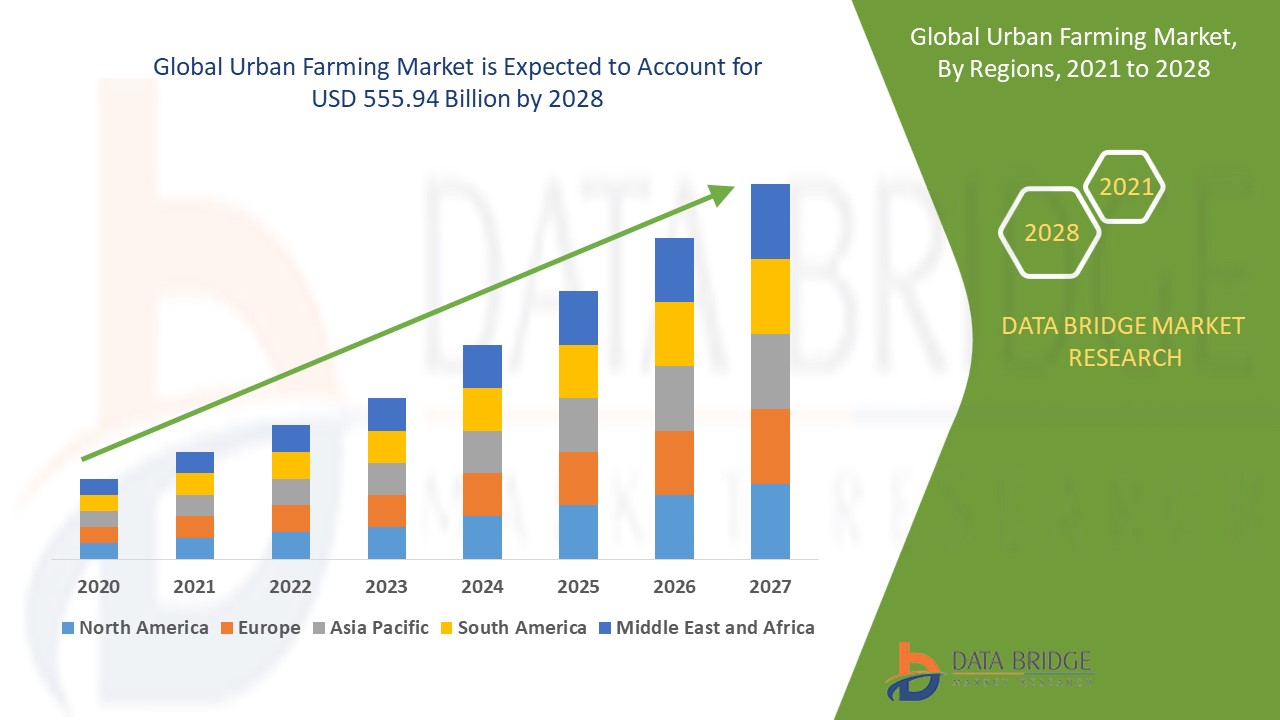
The global urban farming market size was valued at USD 260.24 Billion in 2024 and is projected to reach USD 680.91 Billion by 2032, with a CAGR of 5.20 % during the forecast period of 2025 to 2032. In addition to the insights on market scenarios such as market value, growth rate, segmentation, geographical coverage, and major players, the market reports curated by the Data Bridge Market Research also include in-depth expert analysis, pricing analysis, brand share analysis, consumer survey, demography analysis, supply chain analysis, value chain analysis, raw material/consumables overview, vendor selection criteria, PESTLE Analysis, Porter Analysis, and regulatory framework.
Urban Farming Market Trends
“Growing Adoption of Vertical Farming Technologies”
A notable trend in the urban farming market is the growing adoption of vertical farming technologies. Vertical farming involves stacking crops in layers to maximize space efficiency, using controlled environments that integrate hydroponics, aeroponics, and LED lighting to optimize plant growth. This method is increasingly popular in cities with limited land availability, allowing food production to occur in high-density urban areas. Companies such as AeroFarms and BrightFarms are leading the charge, implementing vertical farming systems that deliver high yields while minimizing water and land use. This trend is driven by the rising demand for fresh, locally grown produce, especially in cities where access to fresh food can be limited. In addition, vertical farming reduces the need for pesticides and transportation costs, making it an attractive sustainable solution. As urban populations grow, the expansion of vertical farming is expected to play a critical role in providing nutritious food while reducing environmental impact.
Report Scope and Urban Farming Market Segmentation
|
Attributes |
Urban Farming Key Market Insights |
|
Segments Covered |
|
|
Countries Covered |
U.S., Canada and Mexico in North America, Germany, France, U.K., Netherlands, Switzerland, Belgium, Russia, Italy, Spain, Turkey, Rest of Europe in Europe, China, Japan, India, South Korea, Singapore, Malaysia, Australia, Thailand, Indonesia, Philippines, Rest of Asia-Pacific (APAC) in the Asia-Pacific (APAC), Saudi Arabia, U.A.E, South Africa, Egypt, Israel, Rest of Middle East and Africa (MEA) as a part of Middle East and Africa (MEA), Brazil, Argentina and Rest of South America as part of South America |
|
Key Market Players |
Urban Farmers (Switzerland), Urban Crop Solutions (Belgium), Sky Greens (Singapore), Koninklijke Philips N.V. (Netherlands), Illumitex (U.S.), GrowUp Farms Ltd. (U.K.), Green Sense Farms Holdings, Inc. (U.S.), Gotham Greens (U.S.), Garden Fresh Farms, Inc (U.S.), EVERLIGHT ELECTRONICS CO., LTD. (Taiwan), Upward Farms (U.S.), BROOKLYN GRANGE LLC (U.S.), BrightFarms (U.S.), AmHydro (U.S.), Agrilution (Germany), Freight Farms, Inc. (U.S.), AeroFarms (U.S.), and Altius Farms (Canada) |
|
Market Opportunities |
|
|
Value Added Data Infosets |
In addition to the insights on market scenarios such as market value, growth rate, segmentation, geographical coverage, and major players, the market reports curated by the Data Bridge Market Research also include in-depth expert analysis, pricing analysis, brand share analysis, consumer survey, demography analysis, supply chain analysis, value chain analysis, raw material/consumables overview, vendor selection criteria, PESTLE Analysis, Porter Analysis, and regulatory framework |
Urban Farming Market Definition
Urban farming refers to the practice of cultivating, processing, and distributing food in urban areas, typically using limited space for growing crops and raising livestock. This method includes a variety of techniques, such as vertical farming, hydroponics, aeroponics, and rooftop gardens, designed to maximize the use of urban environments.
Urban Farming Market Dynamics
Drivers
- Rising Urbanization
The rapid growth of urban populations is putting immense pressure on traditional agricultural methods and supply chains. As cities expand, finding space for traditional farming becomes increasingly difficult. Urban farming is a crucial solution to this challenge, allowing for food production within city limits. It enables local residents to have access to fresh, nutritious food without the need for long transportation routes. For instance, companies such as AeroFarms and Gotham Greens are capitalizing on urban environments by utilizing rooftops and vacant buildings to grow crops using vertical farming techniques. This trend is particularly important in major metropolitan areas, where the demand for local produce is rising as a way to ensure food security and reduce reliance on external food sources. Urban farming meets the growing demand and contributes to a city's self-sufficiency, making it a significant driver in the urban farming market.
- Increasing Sustainability Concerns
As environmental issues such as climate change, water scarcity, and carbon emissions become more pressing, urban farming offers a sustainable solution for food production. Methods such as hydroponics, aquaponics, and vertical farming use fewer resources, such as water and land, while reducing environmental footprints. For instance, vertical farming systems employed by companies such as Infarm and BrightFarms use minimal water and energy while maximizing crop yield in smaller spaces. These sustainable practices resonate with the growing consumer demand for eco-friendly and organic products. As urban farming methods continue to improve in efficiency and sustainability, they attract both eco-conscious consumers and investors looking to support green technologies. By providing a sustainable alternative to traditional agriculture, urban farming addresses both environmental challenges and the rising demand for sustainable food sources, making it a significant driver in the market.
Opportunities
- Increasing Technological Advancements
Innovations in farming technology have revolutionized urban farming, enhancing its efficiency and scalability. For instance, advancements in LED lighting technology enable crops to thrive in controlled indoor environments by providing the precise spectrum of light required for photosynthesis, regardless of natural light availability. Automation systems, such as robotic harvesters and automated irrigation, reduce labor costs and increase productivity. Furthermore, IoT-driven monitoring systems allow farmers to track variables such as soil moisture, temperature, and nutrient levels in real time, ensuring optimal growing conditions. Companies such as Freight Farms and Urban Crop Solutions are utilizing these technologies to boost yields while reducing resource consumption, making urban farming more cost-effective and sustainable. As these technologies continue to evolve, they present significant market opportunities by making urban farming more efficient and more accessible to both large-scale operators and smaller urban farmers looking to integrate advanced systems into their farms.
- Increasing Government Support and Funding
Governments around the world are increasingly recognizing the value of urban farming as a tool for enhancing food security, supporting sustainability goals, and promoting local economic development. To foster this growth, many governments provide subsidies, grants, and policy incentives to encourage urban farming projects. For instance, in the United States, several cities have implemented policies that support the development of community gardens and vertical farms, while the European Union provides funding for urban agriculture initiatives under its Green Deal. In Singapore, the government has actively invested in urban farming as part of its "30 by 30" initiative, which aims to produce 30% of its nutritional needs locally by 2030. These government-led initiatives present a substantial market opportunity by creating financial and policy frameworks that support the growth of urban farming businesses. This support enables farmers to adopt innovative solutions and fosters the growth of the industry, driving further investment and expansion.
Restraints/Challenges
- High Initial Investment Costs
Urban farming technologies, especially vertical farming and hydroponics, require significant capital investment upfront, which can be a challenge for entrepreneurs and small businesses. For instance, setting up a vertical farm in a metropolitan area often involves costs related to specialized infrastructure, climate-controlled systems, automated lighting, and water management systems. An instance of this is the setup of an advanced hydroponic system, where the cost of purchasing and installing nutrient delivery systems, automated irrigation, and LED lighting can reach hundreds of thousands of dollars. These high initial costs can make it difficult for smaller players to enter the market or for community-based projects to scale effectively. In addition, these systems often require ongoing maintenance and operational costs, such as electricity for climate control or water systems, which can further burden the financial sustainability of urban farms. This high capital requirement is a key barrier in the market, limiting the widespread adoption of urban farming and hindering growth, especially in cities with limited access to funding or investment.
- Regulatory Challenges
Urban farming faces significant regulatory hurdles that vary by location and can complicate operations. These regulations often include zoning laws that dictate where farming can take place, health and safety standards for food production, and rules governing water use, which can vary greatly from city to city. For instance, in certain urban areas, zoning laws may not allow agricultural use of land or may require a special permit, creating additional bureaucratic hurdles for urban farming businesses. A real-world instance of this can be seen in cities such as New York, where despite the growing trend of rooftop farming, businesses still encounter challenges due to zoning restrictions and difficulty navigating the permitting process. Moreover, health and safety regulations may require expensive certification processes for food safety, adding to operational costs. These regulatory challenges often restrict the scalability of urban farms and make it difficult for farmers to expand or even start operations, particularly in more highly regulated cities. As such, navigating these legal complexities is a significant challenge for the market, slowing down the growth of urban farming initiatives.
This market report provides details of new recent developments, trade regulations, import-export analysis, production analysis, value chain optimization, market share, impact of domestic and localized market players, analyses opportunities in terms of emerging revenue pockets, changes in market regulations, strategic market growth analysis, market size, category market growths, application niches and dominance, product approvals, product launches, geographic expansions, technological innovations in the market. To gain more info on the market contact Data Bridge Market Research for an Analyst Brief, our team will help you take an informed market decision to achieve market growth.
Impact and Current Market Scenario of Raw Material Shortage and Shipping Delays
Data Bridge Market Research offers a high-level analysis of the market and delivers information by keeping in account the impact and current market environment of raw material shortage and shipping delays. This translates into assessing strategic possibilities, creating effective action plans, and assisting businesses in making important decisions.
Apart from the standard report, we also offer in-depth analysis of the procurement level from forecasted shipping delays, distributor mapping by region, commodity analysis, production analysis, price mapping trends, sourcing, category performance analysis, supply chain risk management solutions, advanced benchmarking, and other services for procurement and strategic support.
Expected Impact of Economic Slowdown on the Pricing and Availability of Products
When economic activity slows, industries begin to suffer. The forecasted effects of the economic downturn on the pricing and accessibility of the products are taken into account in the market insight reports and intelligence services provided by DBMR. With this, our clients can typically keep one step ahead of their competitors, project their sales and revenue, and estimate their profit and loss expenditures.
Urban Farming Market Scope
The market is segmented on the basis of farm type, growing medium, farming, and crop type. The growth amongst these segments will help you analyze meagre growth segments in the industries and provide the users with a valuable market overview and market insights to help them make strategic decisions for identifying core market applications.
Farm Type
- Commercial
- Community
- Home Gardens
- Corporate
- Others
Growing Medium
- Hydroponics
- Aquaponics
- Aeroponics
Farming
- Indoor Farming
- Outdoor Farming
Crop Type
- Food Crops
- Non-Food Crops
Urban Farming Market Regional Analysis
The market is analysed and market size insights and trends are provided by country, farm type, growing medium, farming, and crop type as referenced above.
The countries covered in the market report are U.S., Canada, Mexico in North America, Germany, Sweden, Poland, Denmark, Italy, U.K., France, Spain, Netherland, Belgium, Switzerland, Turkey, Russia, Rest of Europe in Europe, Japan, China, India, South Korea, New Zealand, Vietnam, Australia, Singapore, Malaysia, Thailand, Indonesia, Philippines, Rest of Asia-Pacific (APAC) in Asia-Pacific (APAC), Brazil, Argentina, Rest of South America as a part of South America, U.A.E, Saudi Arabia, Oman, Qatar, Kuwait, South Africa, Rest of Middle East and Africa (MEA) as a part of Middle East and Africa (MEA)
Asia-Pacific dominating the urban farming market due to increasing awareness of the advantages of alternative farming methods, such as reduced space requirements and lower environmental impact. As urbanization accelerates in developing nations, more people are turning to urban farming as a viable solution to food security and sustainability. The region's growing focus on sustainable agriculture practices is also contributing to the market's growth. With a higher demand for locally grown produce and limited space for traditional farming, urban farming is becoming an attractive alternative in many cities across Asia-Pacific.
Europe is anticipated to experience fastest growth during the forecast period of 2025-2032, driven by the increasing adoption of cutting-edge technologies such as nanotechnology and robotics in agriculture. The region is also seeing advancements in genetically modified crop technology, which is enhancing crop yields and sustainability. As European countries focus on boosting agricultural efficiency and reducing environmental impact, these innovations are becoming more integral to farming practices. This trend is expected to accelerate the region's urban farming market, positioning it for significant growth in the coming years.
The country section of the report also provides individual market impacting factors and changes in regulation in the market domestically that impacts the current and future trends of the market. Data points such as down-stream and upstream value chain analysis, technical trends and porter's five forces analysis, case studies are some of the pointers used to forecast the market scenario for individual countries. Also, the presence and availability of global brands and their challenges faced due to large or scarce competition from local and domestic brands, impact of domestic tariffs and trade routes are considered while providing forecast analysis of the country data.
Urban Farming Market Share
The market competitive landscape provides details by competitor. Details included are company overview, company financials, revenue generated, market potential, investment in research and development, new market initiatives, global presence, production sites and facilities, production capacities, company strengths and weaknesses, product launch, product width and breadth, application dominance. The above data points provided are only related to the companies' focus related to market.
Urban Farming Market Leaders Operating in the Market Are:
- Urban Farmers (Switzerland)
- Urban Crop Solutions (Belgium)
- Sky Greens (Singapore)
- Koninklijke Philips N.V. (Netherlands)
- Illumitex (U.S.)
- GrowUp Farms Ltd. (U.K.)
- Green Sense Farms Holdings, Inc. (U.S.)
- Gotham Greens (U.S.)
- Garden Fresh Farms, Inc (U.S.)
- EVERLIGHT ELECTRONICS CO., LTD. (Taiwan)
- Upward Farms (U.S.)
- BROOKLYN GRANGE LLC (U.S.)
- BrightFarms (U.S.)
- AmHydro (U.S.)
- Agrilution (Germany)
- Freight Farms, Inc. (U.S.)
- AeroFarms (U.S.)
- Altius Farms (Canada)
Latest Developments in Urban Farming Market
- In March 2023, BrightFarms, a leader in the indoor farming industry, is expanding by setting up four additional regional greenhouse centers to introduce sustainably farmed leafy greens to more consumers in the Eastern and Central United States. These new centers aim to meet the growing demand for organic food and will begin distribution to retailers by 2024, with the company projecting a 10x revenue growth by then
- In February 2023, AeroFarms and the Public Investment Fund (PIF), the wealth funding body of Saudi Arabia, announced a joint venture to build indoor vertical farms in the Middle East, particularly in Saudi Arabia, as part of efforts to enhance regional food security
- In October 2022, AeroFarms decided to expand its reach nationwide from its Northeast region base to all Whole Foods Markets, driven by the increasing demand for their specialty greens. AeroFarms became the first indoor farming company to be included in the Whole Foods Market Global Planogram
- In October 2022, Singrow, a Singapore-headquartered agtech company, planned to broaden its presence across Asia and beyond, launching its consumer concept brand Blooom. The company intends to expand its partner farm footprint to countries such as the Philippines, Thailand, Hong Kong, and the Middle East, in addition to its existing operations in China, Indonesia, and Singapore
- In February 2022, Infarm announced its plans to expand within the U.S. by constructing a second growing center in Kyle, Texas

- Interactive Data Analysis Dashboard
- Company Analysis Dashboard for high growth potential opportunities
- Research Analyst Access for customization & queries
- Competitor Analysis with Interactive dashboard
- Latest News, Updates & Trend analysis
- Harness the Power of Benchmark Analysis for Comprehensive Competitor Tracking
Global Urban Farming Market, Supply Chain Analysis and Ecosystem Framework
To support market growth and help clients navigate the impact of geopolitical shifts, DBMR has integrated in-depth supply chain analysis into its Global Urban Farming Market research reports. This addition empowers clients to respond effectively to global changes affecting their industries. The supply chain analysis section includes detailed insights such as Global Urban Farming Market consumption and production by country, price trend analysis, the impact of tariffs and geopolitical developments, and import and export trends by country and HSN code. It also highlights major suppliers with data on production capacity and company profiles, as well as key importers and exporters. In addition to research, DBMR offers specialized supply chain consulting services backed by over a decade of experience, providing solutions like supplier discovery, supplier risk assessment, price trend analysis, impact evaluation of inflation and trade route changes, and comprehensive market trend analysis.
Data collection and base year analysis are done using data collection modules with large sample sizes. The stage includes obtaining market information or related data through various sources and strategies. It includes examining and planning all the data acquired from the past in advance. It likewise envelops the examination of information inconsistencies seen across different information sources. The market data is analysed and estimated using market statistical and coherent models. Also, market share analysis and key trend analysis are the major success factors in the market report. To know more, please request an analyst call or drop down your inquiry.
The key research methodology used by DBMR research team is data triangulation which involves data mining, analysis of the impact of data variables on the market and primary (industry expert) validation. Data models include Vendor Positioning Grid, Market Time Line Analysis, Market Overview and Guide, Company Positioning Grid, Patent Analysis, Pricing Analysis, Company Market Share Analysis, Standards of Measurement, Global versus Regional and Vendor Share Analysis. To know more about the research methodology, drop in an inquiry to speak to our industry experts.
Data Bridge Market Research is a leader in advanced formative research. We take pride in servicing our existing and new customers with data and analysis that match and suits their goal. The report can be customized to include price trend analysis of target brands understanding the market for additional countries (ask for the list of countries), clinical trial results data, literature review, refurbished market and product base analysis. Market analysis of target competitors can be analyzed from technology-based analysis to market portfolio strategies. We can add as many competitors that you require data about in the format and data style you are looking for. Our team of analysts can also provide you data in crude raw excel files pivot tables (Fact book) or can assist you in creating presentations from the data sets available in the report.













