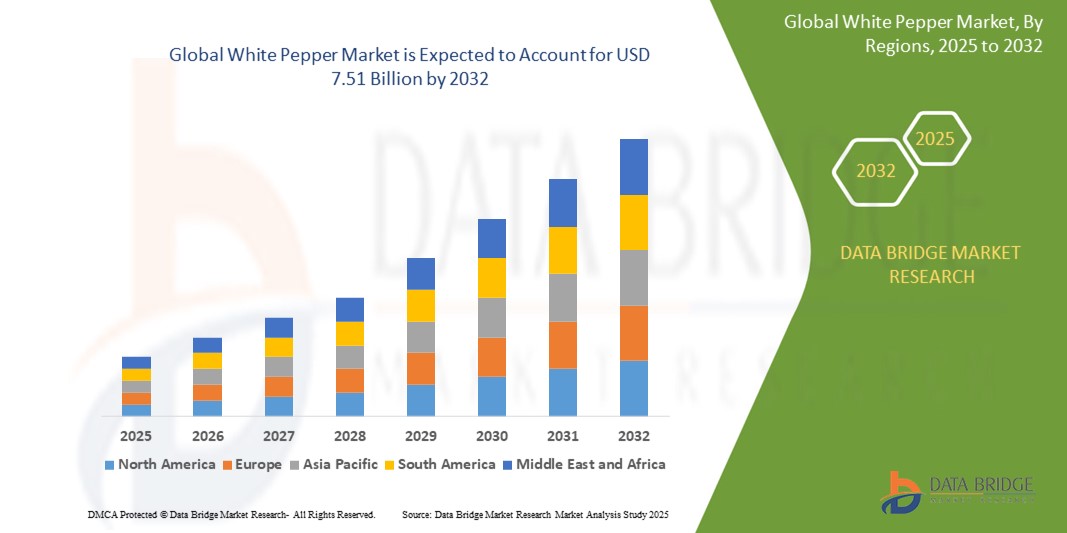
What is the Global White Pepper Market Size and Growth Rate?
- The global white pepper market size was valued at USD 5.04 billion in 2024 and is expected to reach USD 7.51 billion by 2032, at a CAGR of 5.10% during the forecast period
- The white pepper market is experiencing steady growth, driven by its distinctive flavor profile and culinary applications across various cuisines. White pepper, known for its milder and more nuanced taste compared to black pepper, is increasingly sought after for its ability to enhance the flavor of dishes without adding visual specks. This characteristic makes it particularly popular in light-colored sauces, soups, and Asian cuisines where its subtle heat is preferred
- The growing demand for white pepper is supported by its wide use in food processing, including the production of ready-to-eat meals, sauces, and condiments. In addition, the rising trend towards gourmet cooking and the increasing popularity of international cuisines are contributing to the market's expansion. The demand is also being driven by the growing awareness of the health benefits associated with white pepper, such as its antioxidant properties and potential to aid digestion
What are the Major Takeaways of White Pepper Market?
- The growing interest in gourmet cooking and international cuisines is significantly driving the market for white pepper. As culinary enthusiasts and food professionals seek to create diverse and refined flavor profiles, white pepper is increasingly favored for its subtle and sophisticated taste. Its ability to enhance the flavor of various dishes without overpowering them makes it a preferred choice in high-end dining establishments and gourmet recipe
- This trend reflects a broader consumer shift towards exploring and appreciating global flavors, which is propelling the demand for white pepper across different culinary applications. As more chefs and home cooks incorporate white pepper and white pepper seasoning into their cooking, the market is experiencing notable growth driven by this expanding interest in gourmet and international cuisines
- North America dominated the white pepper market with the largest revenue share of 41.62% in 2024, driven by high demand for premium, multifunctional, and clinically backed ingredients across the skincare, healthcare, and personal wellness industries
- Asia-Pacific is projected to grow at the fastest CAGR of 11.45% from 2025 to 2032, fueled by increasing awareness of natural skincare, the rise of hybrid beauty regimens, and rapid e-commerce penetration across emerging economies
- The Conventional segment dominated the market with the largest revenue share of 63.5% in 2024, driven by its widespread availability, lower production costs, and extensive use in bulk food processing and spice blends
Report Scope and White Pepper Market Segmentation
|
Attributes |
White Pepper Key Market Insights |
|
Segments Covered |
|
|
Countries Covered |
North America
Europe
Asia-Pacific
Middle East and Africa
South America
|
|
Key Market Players |
|
|
Market Opportunities |
|
|
Value Added Data Infosets |
In addition to the insights on market scenarios such as market value, growth rate, segmentation, geographical coverage, and major players, the market reports curated by the Data Bridge Market Research also include in-depth expert analysis, pricing analysis, brand share analysis, consumer survey, demography analysis, supply chain analysis, value chain analysis, raw material/consumables overview, vendor selection criteria, PESTLE Analysis, Porter Analysis, and regulatory framework. |
What is the Key Trend in the White Pepper Market?
“Surge in Bio-Based and Multifunctional Ingredient Applications”
- A major trend reshaping the global white pepper market is the increasing use of bio-based and multifunctional ingredients in both personal care and pharmaceutical products. White Pepper is gaining prominence for its anti-inflammatory, antioxidant, and digestive-enhancing properties
- For instance, in 2024, Firmenich introduced a sustainably sourced White Pepper extract into its functional fragrance line, aimed at brands targeting wellness-conscious consumers
- In the food & beverage sector, White Pepper is being formulated into nutraceutical beverages, functional teas, and dietary supplements, driven by demand for clean-label, immune-supportive, and gut-health-boosting ingredients
- Brands are also incorporating White Pepper in spice blends and fortified condiments that deliver both flavor and health benefits, appealing to consumers looking for taste with therapeutic value
- Companies such as Kalsec and Olam Food Ingredients (OFI) are investing in traceable, organic-certified White Pepper, using cold-extraction and CO₂ processing techniques to preserve bioactivity
- This alignment with natural wellness, clean-label demand, and multifunctional health benefits is accelerating White Pepper’s role across mainstream and specialty product categories globally
What are the Key Drivers of White Pepper Market?
- Growing awareness of functional spices and their role in preventive health is a major demand driver. White Pepper’s effectiveness in improving digestion, stimulating metabolism, and reducing inflammation is driving its uptake in both traditional and modern wellness products
- In March 2024, Unilever introduced white pepper-based formulations under its Knorr Professional range, aimed at health-focused menus in institutional catering and restaurant
- The rise of clean-label and organic food consumption, especially in North America and Europe, is pushing demand for high-grade, chemical-free white pepper with standardized active content
- Increasing popularity of ethnic cuisines, particularly Southeast Asian and Indian, is also driving white pepper adoption in processed foods and meal kits where it offers nuanced flavor profiles with health appeal
- Its role in traditional medicine systems, such as Ayurveda and Traditional Chinese Medicine (TCM), is expanding into functional foods and herbal formulations, as consumers embrace natural healing practices
- E-commerce platforms and gourmet food channels are further boosting visibility and accessibility, especially among millennials and health-conscious buyers seeking authenticity and nutritional value
Which Factor is challenging the Growth of the White Pepper Market?
- One of the main challenges in the white pepper market is volatile pricing and supply chain disruptions, largely due to climatic factors, labor shortages, and geopolitical instability in key producing regions such as India, Indonesia, and Vietnam
- For instance, erratic monsoons and export restrictions in 2023 caused a 15–20% spike in global white pepper prices, impacting profitability across mid-sized food and nutraceutical manufacturers
- Quality inconsistency is another concern, with adulteration, inadequate drying, and improper storage reducing bioactive potency and market value
- Regulatory scrutiny over pesticide residues, microbial load, and origin labelling is tightening globally, requiring suppliers to invest in rigorous traceability and testing protocols
- In addition, the flavor volatility of white pepper compared to black pepper limits its adoption in certain food applications where consistent taste profiles are critical
- To overcome these barriers, leading exporters are turning to climate-smart agriculture, vertical integration, and AI-powered sorting and grading systems to enhance quality, consistency, and traceable supply chains
How is the White Pepper Market Segmented?
The market is segmented on the basis of product type, form type, application, and distribution channel.
- By Product Type
On the basis of product type, the market is segmented into Organic and Conventional. The Conventional segment dominated the market with the largest revenue share of 63.5% in 2024, driven by its widespread availability, lower production costs, and extensive use in bulk food processing and spice blends. Consumers, particularly in developing markets, continue to prefer conventional variants due to cost-efficiency and accessibility.
The Organic segment is projected to witness robust growth through 2032, owing to increasing consumer inclination toward chemical-free, traceable, and eco-conscious spice options. Regulatory support and certification standards are also promoting organic white pepper adoption.
- By Form Type
On the basis of form type, the market is categorized into Ground White Pepper, Rough Cracked White Pepper, and Whole White Pepper. Ground White Pepper held the largest revenue share of 48.7% in 2024, primarily due to its high usage in culinary applications, ready-to-cook meal kits, and seasoning blends. Its fine texture allows easy integration in sauces, soups, and processed food products.
Rough Cracked White Pepper is gaining traction in gourmet and premium food segments, especially in Western cuisines and specialty food outlets.
- By Application
On the basis of application, the market is segmented into Food & Beverage, Healthcare, Personal Care, Commercial, and Retail. Food & Beverage remained the dominant application segment, accounting for 54.2% of the market share in 2024, supported by the spice’s widespread usage in global cuisine, packaged foods, and culinary innovations.
The Healthcare and Personal Care segments are expected to grow rapidly, driven by white pepper’s antioxidant, anti-inflammatory, and detoxifying properties. These attributes are gaining interest from nutraceutical developers and cosmeceutical brands.
- By Distribution Channel
On the basis of distribution channel, the market is segmented into Modern Trade, Departmental Store, Grocery Store, Online, and Other Retail Format. Modern Trade led the market with a revenue share of 33.9% in 2024, attributed to its strong presence in urban areas, attractive merchandising, and reliable inventory of branded spice products.
The Online segment is projected to expand at the fastest CAGR through 2032, propelled by digital shopping convenience, expanding e-commerce infrastructure, and the rising popularity of gourmet cooking at home.
Which Region Holds the Largest Share of the White Pepper Market?
- North America dominated the white pepper market with the largest revenue share of 41.62% in 2024, driven by high demand for premium, multifunctional, and clinically backed ingredients across the skincare, healthcare, and personal wellness industries
- The region’s dominance is anchored in the presence of major beauty conglomerates, advanced R&D facilities, and a surge in consumer preference for sensitive-skin-friendly formulations infused with White Pepper, known for its soothing and anti-inflammatory properties
- High disposable incomes, strong retail and e-commerce networks, and widespread awareness of ingredient transparency trends continue to shape consumer choices across segments such as cosmeceuticals, nutraceuticals, and therapeutic personal care products
U.S. White Pepper Market Insight
The U.S. white pepper market held the largest share within North America in 2024, supported by growing interest in dermatologically tested, plant-derived actives used in both OTC and prescription skincare solutions. From tattoo aftercare balms to baby moisturizers and scalp serums, white pepper is gaining momentum due to its calming, moisturizing, and skin-repairing benefits. Influencer-driven campaigns, clean-label product launches, and a booming DIY beauty community further fuel the U.S. market’s leadership position.
Canada White Pepper Market Insight
The Canada white pepper market is witnessing steady growth as consumers increasingly prioritize sustainability, efficacy, and eco-certifications. White Pepper’s versatility in hybrid wellness products, aromatherapy lines, and dermatologist-formulated solutions is attracting attention from green beauty brands and minimalist consumers. Government regulations promoting safe and transparent labeling also boost consumer trust in plant-based ingredients such as white pepper.
Which Region is the Fastest Growing in the White Pepper Market?
Asia-Pacific is projected to grow at the fastest CAGR of 11.45% from 2025 to 2032, fueled by increasing awareness of natural skincare, the rise of hybrid beauty regimens, and rapid e-commerce penetration across emerging economies. Consumers across the region, particularly millennials and Gen Z, are shifting toward multifunctional, natural ingredients such as white pepper that offer therapeutic, anti-aging, and anti-inflammatory properties in a single formulation. The region’s strong cosmetic manufacturing ecosystem, abundant availability of raw materials, and rising export opportunities position Asia-Pacific as a key growth frontier for white pepper applications across wellness and beauty sectors.
China White Pepper Market Insight
The China white pepper market captured the highest revenue share of 44.7% within Asia-Pacific in 2024, driven by its thriving domestic beauty industry, increased consumer awareness about ingredient efficacy, and regulatory support for locally sourced ingredients. White Pepper is increasingly being used in cleansing balms, soothing mists, and anti-pollution skincare. Social commerce and KOL-led promotions have accelerated product discovery and trust among urban and suburban consumers.
Japan White Pepper Market Insight
The Japan white pepper market is expanding steadily due to growing interest in mild, minimalist skincare that emphasizes natural, effective ingredients. With an aging population and a culture that values functional wellness, white pepper is being adopted in anti-aging serums, aromatherapy oils, and bath rituals. Japanese consumers prefer ingredients backed by tradition and modern science, making white pepper a natural fit for cross-generational usage.
India White Pepper Market Insight
The India white pepper market is set to grow significantly, supported by increasing adoption of herbal and ayurvedic skincare routines, as well as rising male grooming trends. Local brands are formulating White Pepper with botanicals such as neem, tulsi, and sandalwood to offer natural remedies for acne, pigmentation, and scalp care. Rising internet penetration and awareness of ingredient-based beauty are further boosting the adoption of white pepper in personal care and wellness formats.
Which are the Top Companies in White Pepper Market?
The white pepper industry is primarily led by well-established companies, including:
- McCormick & Company, Inc. (U.S.)
- The British Pepper & Spice Company Limited (U.K.)
- Hexa Food Sdn. Bhd. (Malaysia)
- UNISPICE (India)
- MDH Spices (India)
- MAXROTTH Global Foods Pvt Ltd (India)
- Akay (India)
- Vitagreen Products Pvt. Ltd. (India)
What are the Recent Developments in Global White Pepper Market?
- In February 2023, LATAM Airlines Group S.A., a Chile-based aviation company, unveiled a refreshed business class menu featuring regional ingredients, including white pepper sourced from Latin American countries such as Chile, Brazil, Peru, and Ecuador. This culinary enhancement is designed to elevate the in-flight dining experience, appeal to discerning travelers, and stimulate regional demand for white pepper as a premium ingredient
- In January 2023, Xin Ming Yuen, a renowned hotel in China, introduced a festive menu to celebrate the Year of the Rabbit, which includes a pepper prawn casserole and various meat dishes topped with white pepper. This flavorful innovation is expected to boost white pepper consumption in China and neighboring Asia-Pacific markets, reinforcing its culinary value in seasonal and luxury dining experiences

- Interactive Data Analysis Dashboard
- Company Analysis Dashboard for high growth potential opportunities
- Research Analyst Access for customization & queries
- Competitor Analysis with Interactive dashboard
- Latest News, Updates & Trend analysis
- Harness the Power of Benchmark Analysis for Comprehensive Competitor Tracking
Global White Pepper Market, Supply Chain Analysis and Ecosystem Framework
To support market growth and help clients navigate the impact of geopolitical shifts, DBMR has integrated in-depth supply chain analysis into its Global White Pepper Market research reports. This addition empowers clients to respond effectively to global changes affecting their industries. The supply chain analysis section includes detailed insights such as Global White Pepper Market consumption and production by country, price trend analysis, the impact of tariffs and geopolitical developments, and import and export trends by country and HSN code. It also highlights major suppliers with data on production capacity and company profiles, as well as key importers and exporters. In addition to research, DBMR offers specialized supply chain consulting services backed by over a decade of experience, providing solutions like supplier discovery, supplier risk assessment, price trend analysis, impact evaluation of inflation and trade route changes, and comprehensive market trend analysis.
Data collection and base year analysis are done using data collection modules with large sample sizes. The stage includes obtaining market information or related data through various sources and strategies. It includes examining and planning all the data acquired from the past in advance. It likewise envelops the examination of information inconsistencies seen across different information sources. The market data is analysed and estimated using market statistical and coherent models. Also, market share analysis and key trend analysis are the major success factors in the market report. To know more, please request an analyst call or drop down your inquiry.
The key research methodology used by DBMR research team is data triangulation which involves data mining, analysis of the impact of data variables on the market and primary (industry expert) validation. Data models include Vendor Positioning Grid, Market Time Line Analysis, Market Overview and Guide, Company Positioning Grid, Patent Analysis, Pricing Analysis, Company Market Share Analysis, Standards of Measurement, Global versus Regional and Vendor Share Analysis. To know more about the research methodology, drop in an inquiry to speak to our industry experts.
Data Bridge Market Research is a leader in advanced formative research. We take pride in servicing our existing and new customers with data and analysis that match and suits their goal. The report can be customized to include price trend analysis of target brands understanding the market for additional countries (ask for the list of countries), clinical trial results data, literature review, refurbished market and product base analysis. Market analysis of target competitors can be analyzed from technology-based analysis to market portfolio strategies. We can add as many competitors that you require data about in the format and data style you are looking for. Our team of analysts can also provide you data in crude raw excel files pivot tables (Fact book) or can assist you in creating presentations from the data sets available in the report.