


Energy Drinks Market Size
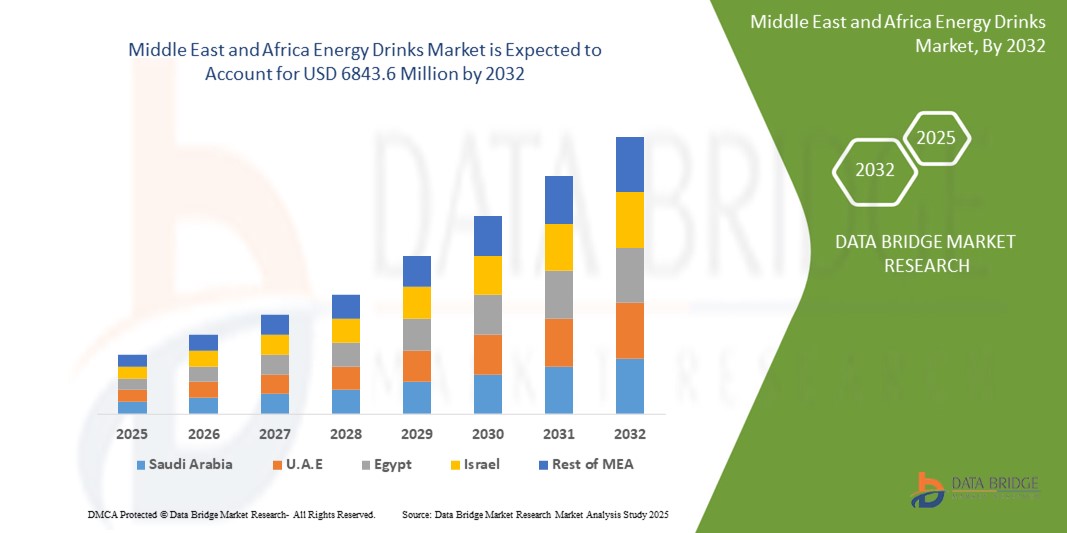
- The Middle East and Africa Energy Drinks Market size was valued at USD 3,968.3 Million in 2024 and is expected to reach USD 6,843.6 Million by 2032, at a CAGR of4.40% during the forecast period
- This growth is driven by factors such as Growing demand for greater functionality in drinks and new product launch energy drinks
Energy Drinks Market Analysis
- Energy Drinks are beverages that typically contain ingredients like caffeine, taurine, B-vitamins, sugar, and sometimes herbal extracts, designed to increase energy, alertness, and physical performance. These drinks are increasingly popular among young adults and athletes for their energizing effects and convenience
- The demand for Energy Drinks is significantly driven by the rising consumer preference for on-the-go energy boosts, growing health-consciousness about functional beverages, and increasing popularity of sports and fitness activities. Additionally, the trend towards natural and low-sugar formulations in energy drinks is expanding the market further
- U.A.E. is expected to dominate the Energy Drinks market in 2025 due to high per capita income, increasing consumer spending on lifestyle products, and strong retail and distribution infrastructure. Government initiatives promoting health and wellness are also encouraging the consumption of healthier, low-sugar beverage options
- The Non-Alcoholic segment is expected to dominate the market with a market share of 40.56% in 2025, driven by the increasing consumer shift toward healthier, low-calorie, and non-alcoholic alternatives. The rising awareness about the health risks of alcohol, along with the growing popularity of non-alcoholic beverages in social settings and among health-conscious individuals, is significantly contributing to the growth of this segment
Report Scope and Energy Drinks Market Segmentation
|
Attributes |
Energy Drinks Key Market Insights |
|
Segments Covered |
|
|
Countries Covered |
|
|
Key Market Players |
|
|
Market Opportunities |
|
|
Value Added Data Infosets |
In addition to the insights on market scenarios such as market value, growth rate, segmentation, geographical coverage, and major players, the market reports curated by the Data Bridge Market Research also include import export analysis, production capacity overview, production consumption analysis, price trend analysis, climate change scenario, supply chain analysis, value chain analysis, raw material/consumables overview, vendor selection criteria, PESTLE Analysis, Porter Analysis, and regulatory framework. |
Energy Drinks Market Trends
“Rising Demand for Clean Label and Natural Ingredients”
- One of the prominent trends in the Middle East and Africa Energy Drinks Market is the growing preference for clean-label and natural ingredients, driven by consumer awareness about health, sustainability, and ingredient transparency
- Manufacturers in Middle East and Africa are focusing on offering energy drinks made with natural stimulants like green tea extract, ginseng, and caffeine derived from natural sources, aligning with global health-conscious trends
- For instance, in 2024, Middle East and Africa startup Nosh Drinks Co. launched a naturally caffeinated energy drink using pomegranate juice, green tea, and stevia to target health-conscious urban consumers.
- Clean-label beverages with minimal ingredients and no artificial preservatives are gaining shelf space in major urban centers like Tehran, Isfahan, and Mashhad
Energy Drinks Market Dynamics
Driver
“Growing Youth Population and Active Lifestyles”
- Middle East and Africa’s youthful demographic—with over 60% of the population under the age of 35—creates strong demand for energy-boosting functional beverages
- Energy drinks are particularly popular among students, gym-goers, drivers, and shift workers, seeking alertness and performance enhancement
- The rise in digital and gaming culture has also spurred late-night consumption habits, further driving demand
For instance,
- According to a 2024 survey by Middle East and Africa Consumer Trends Watch, over 45% of young adults in Tehran consume energy drinks at least once a week, primarily for mental focus and stamina during study or work
- The youthful population and rise in active lifestyles are key forces driving sustained demand for energy-boosting beverages in Middle East and Africa.
Opportunity
“Expanding Demand for Premium and Functional Energy Drinks”
- As Middle East and Africa’s middle class grows and consumers become more health-focused, there is a growing market for premium, functional energy drinks.
- Products enriched with B-vitamins, electrolytes, adaptogens, and nootropics are emerging as high-value offerings.
- The growing appetite for premium, health-enhancing formulations presents a lucrative opportunity for innovation in Middle East and Africa’s functional energy drinks market.
For instance,
- In 2025, the Middle East and African brand ZestCharge introduced an energy drink fortified with magnesium, B12, and ginseng, targeting gym-goers and professionals through e-commerce and fitness centers
- This presents an opportunity for food companies to diversify their portfolios while addressing consumer preferences for sustainability and nutrition.
Restraint/Challenge
“Price Sensitivity and Regulatory Constraints”
- Economic volatility, currency fluctuations, and import restrictions have increased the cost of ingredients and packaging, affecting product affordability
- Regulatory approvals for functional ingredients and mandatory label transparency impose hurdles for both domestic and imported energy drinks
For instance,
- In 2023, Middle East and Africa’s Food and Drug Administration temporarily banned imports of five global energy drink brands due to non-compliance with caffeine content standards and unclear labeling
- Price-sensitive consumers often opt for local, low-cost brands, limiting the market share for premium and international players.
Energy Drinks Market Scope
The market is segmented on the basis of product type, type, application, consumption type, ingredients and distribution channel.
|
Segmentation |
Sub-Segmentation |
|
By Product Type |
|
|
By Type |
|
|
By Application |
|
|
By Consumption Time |
|
|
By Ingredients |
|
|
By Distribution Channel |
|
In 2025, the non-alcoholic is projected to dominate the market with a largest share in type segment
The non-alcoholic segment is expected to dominate the energy drinks market with the largest share of 28.6% in 2025 due to the rising health consciousness among consumers, increasing demand for functional beverages that provide energy without alcohol, and a growing preference for healthier lifestyle choices, especially among young adults and working professionals.
The organic is expected to account for the largest share during the forecast period in category market
In 2025, the organic segment is expected to dominate the market with the largest market share of 51.31% due to increasing consumer preference for clean-label and chemical-free beverages, rising awareness about the health benefits of organic ingredients, and growing demand for sustainably sourced and environmentally friendly energy drink options.
Energy Drinks Market Share
The market competitive landscape provides details by competitor. Details included are company overview, company financials, revenue generated, market potential, investment in research and development, new market initiatives, global presence, production sites and facilities, production capacities, company strengths and weaknesses, product launch, product width and breadth, application dominance. The above data points provided are only related to the companies' focus related to market.
The Major Market Leaders Operating in the Market Are:
- Red Bull GmbH (Austria)
- PepsiCo (Rockstar Energy) (United States)
- Monster Beverage Corporation (United States)
- The Coca-Cola Company (Powerade) (United States)
- Suntory Beverage & Food Ltd. (Japan)
- Hype Energy Drinks (United Arab Emirates)
- Oshee (Poland)
- MP Energy (by PepsiCo) (United States)
- Hell Energy (Hungary)
- XL Energy Drink (Poland)
- Dark Dog Energy Drink (Austria)
- Tornado Energy (Russia)
- Shark Energy (Osotspa Co., Ltd.) (Thailand
- Carabao Energy Drink (Thailand)
- Middle East and Africai brands (Middle East and Africa)
Latest Developments in Middle East and Africa Energy Drinks Market
- In February 2025, Ingredion Incorporated launched a new range of clean-label Energy Drinks derived from chickpeas and lentils, aimed at enhancing the texture and protein content in gluten-free bakery and snack applications. This launch supports the company’s strategy to meet rising demand for plant-based, allergen-free ingredients in processed foods.
- In November 2024, AGT Food and Ingredients expanded its pulse milling facility in Saskatchewan, Canada, to increase production capacity for pea and faba bean flours. The investment aims to support growing domestic and international demand for high-protein, sustainable ingredients used in plant-based meat alternatives and fortified food products.
- In October 2024, Batory Foods partnered with Nutriati, Inc. to distribute a proprietary chickpea flour blend known for its enhanced emulsification and water-binding properties. This innovation targets the growing market for clean-label and high-functionality ingredients in bakery and snack formulations.
- In September 2024, Archer Daniels Midland (ADM) announced the commercial launch of a new pulse flour line enriched with micronutrients and optimized for meat analogs and dairy alternatives. The move aligns with ADM’s sustainability goals and growing consumer interest in plant-based nutrition.
- In July 2024, Diefenbaker Spice & Pulse (DSP) introduced an organic-certified yellow pea flour aimed at the North American and European markets. The product is marketed for its traceability, clean-label compliance, and suitability in high-protein snack and bakery applications.

- Interactive Data Analysis Dashboard
- Company Analysis Dashboard for high growth potential opportunities
- Research Analyst Access for customization & queries
- Competitor Analysis with Interactive dashboard
- Latest News, Updates & Trend analysis
- Harness the Power of Benchmark Analysis for Comprehensive Competitor Tracking
Middle East Africa Energy Drinks Market, Supply Chain Analysis and Ecosystem Framework
To support market growth and help clients navigate the impact of geopolitical shifts, DBMR has integrated in-depth supply chain analysis into its Middle East Africa Energy Drinks Market research reports. This addition empowers clients to respond effectively to global changes affecting their industries. The supply chain analysis section includes detailed insights such as Middle East Africa Energy Drinks Market consumption and production by country, price trend analysis, the impact of tariffs and geopolitical developments, and import and export trends by country and HSN code. It also highlights major suppliers with data on production capacity and company profiles, as well as key importers and exporters. In addition to research, DBMR offers specialized supply chain consulting services backed by over a decade of experience, providing solutions like supplier discovery, supplier risk assessment, price trend analysis, impact evaluation of inflation and trade route changes, and comprehensive market trend analysis.
Data collection and base year analysis are done using data collection modules with large sample sizes. The stage includes obtaining market information or related data through various sources and strategies. It includes examining and planning all the data acquired from the past in advance. It likewise envelops the examination of information inconsistencies seen across different information sources. The market data is analysed and estimated using market statistical and coherent models. Also, market share analysis and key trend analysis are the major success factors in the market report. To know more, please request an analyst call or drop down your inquiry.
The key research methodology used by DBMR research team is data triangulation which involves data mining, analysis of the impact of data variables on the market and primary (industry expert) validation. Data models include Vendor Positioning Grid, Market Time Line Analysis, Market Overview and Guide, Company Positioning Grid, Patent Analysis, Pricing Analysis, Company Market Share Analysis, Standards of Measurement, Global versus Regional and Vendor Share Analysis. To know more about the research methodology, drop in an inquiry to speak to our industry experts.
Data Bridge Market Research is a leader in advanced formative research. We take pride in servicing our existing and new customers with data and analysis that match and suits their goal. The report can be customized to include price trend analysis of target brands understanding the market for additional countries (ask for the list of countries), clinical trial results data, literature review, refurbished market and product base analysis. Market analysis of target competitors can be analyzed from technology-based analysis to market portfolio strategies. We can add as many competitors that you require data about in the format and data style you are looking for. Our team of analysts can also provide you data in crude raw excel files pivot tables (Fact book) or can assist you in creating presentations from the data sets available in the report.













