


Middle East and Africa Advanced Wound Care Market Size
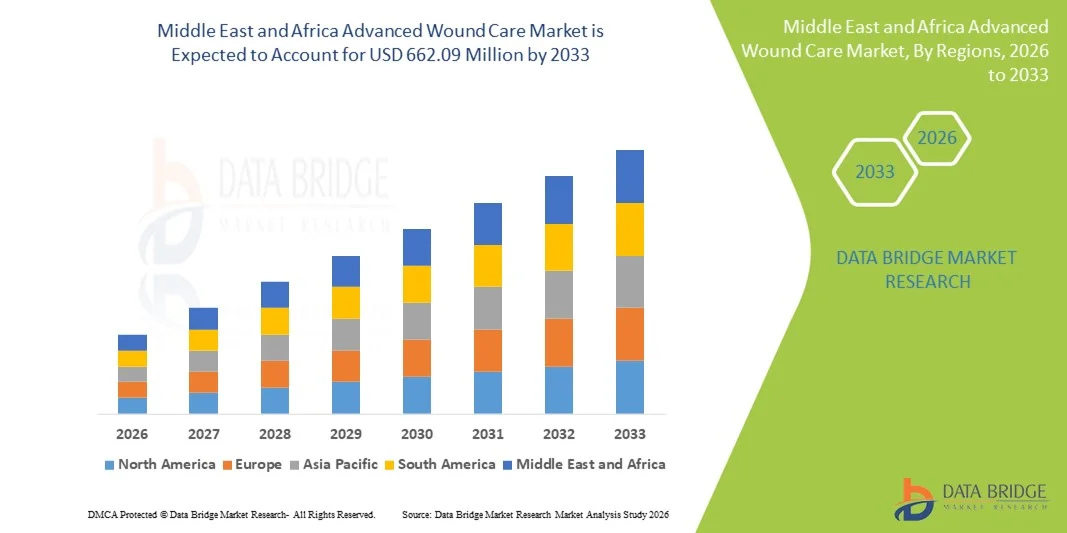
- The Middle East and Africa advanced wound care market size was valued at USD 451.56 million in 2025 and is expected to reach USD 662.09 million by 2033, at a CAGR of 4.9% during the forecast period
- The market growth is largely fueled by the rising prevalence of chronic conditions such as diabetes and associated chronic wounds, increasing healthcare infrastructure investments, and expanding adoption of advanced wound care products across hospitals and clinics in the region
- Furthermore, growing awareness of effective wound management, improvements in clinical care practices, and supportive public health initiatives are driving demand for advanced solutions that promote faster healing and better outcomes, establishing these products as essential components in modern wound care treatment across the Middle East and Africa
Middle East and Africa Advanced Wound Care Market Analysis
- Advanced wound care products, including specialized dressings, biological therapies, and negative pressure wound therapy devices, are increasingly vital components of modern healthcare systems in both hospitals and homecare settings due to their ability to accelerate healing, reduce infection risk, and improve patient outcomes
- The escalating demand for advanced wound care is primarily fueled by the rising prevalence of chronic wounds associated with diabetes, pressure ulcers, and an aging population, alongside growing awareness among healthcare providers and patients about effective wound management practices
- Saudi Arabia dominated the Middle East and Africa advanced wound care market with the largest revenue share of 30.2% in 2025, characterized by expanding healthcare infrastructure, government initiatives to improve clinical care standards, and increasing adoption of advanced wound care products in hospitals and specialized clinics
- South Africa is expected to be the fastest growing country in the market during the forecast period due to rising healthcare expenditure, modernization of medical facilities, and growing adoption of innovative wound care technologies across hospitals and clinics
- Dressings segment dominated the Middle East and Africa advanced wound care market with a market share of 46.2% in 2025, driven by their proven efficacy, ease of use, and adaptability for both acute and chronic wound management in diverse clinical settings
Report Scope and Middle East and Africa Advanced Wound Care Market Segmentation
|
Attributes |
Middle East and Africa Advanced Wound Care Key Market Insights |
|
Segments Covered |
|
|
Countries Covered |
Middle East and Africa
|
|
Key Market Players |
|
|
Market Opportunities |
|
|
Value Added Data Infosets |
In addition to the insights on market scenarios such as market value, growth rate, segmentation, geographical coverage, and major players, the market reports curated by the Data Bridge Market Research also include in-depth expert analysis, patient epidemiology, pipeline analysis, pricing analysis, and regulatory framework |
Middle East and Africa Advanced Wound Care Market Trends
Integration of Digital Health and Telemedicine for Wound Management
- A significant and accelerating trend in the MEA advanced wound care market is the integration of digital health platforms and telemedicine for monitoring chronic and acute wounds, improving patient adherence to treatment plans and clinical outcomes
- For instance, telehealth platforms in Saudi Arabia allow clinicians to remotely assess diabetic foot ulcers and guide dressing changes, reducing hospital visits and enhancing patient convenience
- Digital wound assessment tools enable real-time tracking of healing progress, generating data-driven insights to optimize treatment plans and minimize complications, while mobile apps facilitate patient engagement and adherence
- The integration of wearable sensors with wound care products provides clinicians with continuous monitoring of pressure, moisture, and infection indicators, allowing proactive interventions before complications arise
- This trend toward digitized, remote, and data-driven wound care is reshaping treatment protocols and patient expectations, leading companies such as Mölnlycke and Smith & Nephew to develop connected wound care solutions
- The demand for advanced wound care products that support telemedicine and digital monitoring is growing rapidly across hospitals, clinics, and homecare services as healthcare providers focus on efficient, patient-centered treatment models
- Increased collaboration between hospitals, tech providers, and start-ups is driving innovation in AI-powered wound analysis tools, enabling predictive insights for better clinical decisions. Growing patient preference for home-based care is encouraging manufacturers to design user-friendly advanced dressings suitable for self-application with remote supervision
Middle East and Africa Advanced Wound Care Market Dynamics
Driver
Rising Prevalence of Chronic Wounds and Aging Population
- The increasing prevalence of chronic conditions such as diabetes, obesity, and vascular disorders, coupled with the growing elderly population, is a significant driver for the heightened demand for advanced wound care products
- For instance, in 2025, Saudi Arabia reported a surge in diabetic foot ulcers, prompting hospitals to adopt advanced dressings, negative pressure therapy, and bioengineered skin substitutes for effective wound management
- As patients and healthcare providers seek faster healing and reduced complications, advanced wound care products offer superior efficacy compared to traditional dressings and promote better clinical outcomes
- Furthermore, growing awareness among clinicians regarding evidence-based wound care and guidelines for chronic wound management is increasing adoption of advanced products in hospitals and homecare settings
- The rising availability of specialized wound care clinics, reimbursement support, and government initiatives to improve healthcare infrastructure in countries such as the UAE and South Africa further fuel market growth
- Expansion of medical tourism in the UAE and other GCC countries is boosting demand for advanced wound care products in premium hospitals catering to international patients
- Increasing partnerships between global wound care companies and regional distributors are enhancing product availability and market penetration across underserved areas
Restraint/Challenge
High Product Costs and Limited Access in Rural Areas
- The relatively high cost of advanced wound care products compared to conventional dressings, along with limited availability in rural and underserved areas, poses a significant challenge to market expansion
- For instance, reports from rural clinics in South Africa indicate difficulties in accessing negative pressure wound therapy devices and bioengineered dressings, limiting their utilization despite clinical benefits
- Addressing cost barriers through insurance coverage, government subsidies, and more affordable product alternatives is crucial to increase adoption among price-sensitive healthcare providers and patients
- In addition, insufficient trained medical personnel in remote areas to properly apply advanced wound care products may affect treatment outcomes and hinder market penetration
- Overcoming these challenges through wider distribution networks, clinician training programs, and cost-effective solutions will be vital for sustained growth in the MEA advanced wound care market
- Regulatory challenges, including product approvals and compliance with local medical device standards, can delay market entry and adoption of innovative wound care technologies
- Cultural and educational barriers affecting patient compliance in certain regions may limit the effectiveness of home-based advanced wound care treatments
Middle East and Africa Advanced Wound Care Market Scope
The market is segmented on the basis of product type, wound type, wound class, end user, and distribution channel.
- By Product Type
On the basis of product type, the MEA advanced wound care market is segmented into dressings, therapy devices, biologics, and others. The dressings segment dominated the market with the largest market revenue share of 46.2% in 2025, driven by widespread use in acute and chronic wound care across hospitals, clinics, and homecare. Dressings are preferred for their proven efficacy, ease of application, and compatibility with multiple wound types, making them indispensable in modern healthcare. Advanced dressings such as hydrocolloids, alginates, and foam dressings provide infection control and faster healing, further strengthening their market position. Healthcare providers favor dressings for versatility, low complication risk, and cost-effectiveness. The rising diabetic and geriatric population in Saudi Arabia, UAE, and South Africa continues to sustain strong demand.
The therapy devices segment is expected to witness the fastest growth at a CAGR of 10.5% from 2026 to 2033, fueled by increasing adoption of negative pressure wound therapy (NPWT), bioelectrical stimulation, and other therapeutic devices. Therapy devices accelerate healing of complex and chronic wounds, often reducing hospital stays and improving clinical outcomes. Hospitals and specialized wound care centers are increasingly investing in NPWT due to its proven efficacy and clinical benefits. Rising awareness of advanced wound healing technologies and supportive reimbursement policies in GCC countries and South Africa contribute to growth. Their use in postoperative care, diabetic foot ulcers, and pressure ulcers positions therapy devices as a high-value segment. Innovative device designs and training programs for clinicians further enhance adoption.
- By Wound Type
On the basis of wound type, the market is segmented into primary wound care and secondary wound care. The primary wound care segment dominated with a market share of 52% in 2025, covering first-line treatment for acute injuries in hospitals, clinics, and homecare settings. Primary wound care products include dressings, topical agents, and cleaning solutions that prevent infection and support healing. High incidence of minor surgical wounds, cuts, and burns drives consistent demand for primary wound care. Providers prioritize primary wound care for cost-effectiveness and ease of application. Increasing awareness among patients and caregivers also supports this segment.
The secondary wound care segment is projected to witness the fastest growth at a CAGR of 9.8% from 2026 to 2033, driven by chronic wound management including diabetic ulcers, venous leg ulcers, and pressure sores. Secondary wound care uses advanced interventions such as NPWT, biologics, and specialized dressings requiring prolonged monitoring. The rising prevalence of diabetes and vascular diseases across the Middle East and Africa accelerates demand. Improved availability of advanced products and patient education on chronic wound care further support growth. Hospitals and wound care centers increasingly rely on these solutions for complex wound management.
- By Wound Class
On the basis of wound class, the market is segmented into Class I, Class II, Class III, and Class IV. The Class II wound segment dominated with a 41% share in 2025, covering moderate wounds requiring professional monitoring and advanced dressings or therapy devices. Hospitals and clinics prefer Class II products for infection prevention, faster healing, and reduced complications. High prevalence of chronic but manageable wounds, such as diabetic foot ulcers, underpins dominance. Class II solutions are widely adopted in government and private hospitals. Providers value their balance of effectiveness and cost-efficiency. Consistent training for clinicians also ensures proper use and preference over other classes.
The Class III wound segment is projected to grow the fastest at a CAGR of 10.2%, driven by complex and severe wounds requiring intensive care, advanced therapeutics, and biologics. This includes deep burns, surgical wounds, and high-risk pressure ulcers. Hospitals increasingly adopt bioengineered skin substitutes, NPWT, and advanced therapeutic protocols. Rising healthcare investments in GCC countries and South Africa enhance access to sophisticated wound care solutions. The increasing number of specialized wound care centers also supports this segment’s expansion. Class III solutions offer high clinical value and improved patient outcomes, making them a preferred choice for critical care.
- By End User
On the basis of end user, the market is segmented into hospitals, wound care centers, ambulatory centers, home healthcare, clinics, and others. The hospitals segment dominated with a revenue share of 49% in 2025, due to large patient volumes, availability of skilled professionals, and preference for standardized wound care protocols. Hospitals invest in both dressings and therapy devices for acute and chronic wounds. Adoption is driven by clinical evidence and cost-efficiency. Hospitals often procure bulk advanced wound care products, further reinforcing dominance. Rising prevalence of chronic wounds in urban areas also contributes. Training programs for hospital staff increase confidence in using advanced solutions.
The home healthcare segment is expected to witness the fastest growth at a CAGR of 11%, fueled by home-based chronic wound management and telemedicine-enabled wound monitoring. Patients and caregivers increasingly use advanced dressings and portable therapy devices at home, reducing hospital visits and healthcare costs. Telehealth services support remote monitoring and adherence to treatment plans. Government initiatives and private healthcare programs promoting homecare accelerate segment growth. Home healthcare adoption is also supported by patient preference for convenience and privacy. The segment encourages innovation in user-friendly products for self-care.
- By Distribution Channel
On the basis of distribution channel, the market is segmented into direct tenders and retail. The direct tenders segment dominated with a market share of 55% in 2025, as hospitals and government institutions procure directly from manufacturers or authorized distributors for bulk supply, cost-effectiveness, and product quality assurance. Direct procurement ensures reliable supply for large healthcare facilities. Bulk purchasing agreements and long-term contracts drive adoption. Hospitals prefer verified distributors for regulatory compliance. Strategic partnerships with manufacturers enhance availability. This channel also allows early access to new product launches.
The retail segment is expected to witness the fastest growth at a CAGR of 10.8%, driven by increasing availability of wound care products through pharmacies, e-commerce platforms, and medical supply stores. Rising awareness among patients and caregivers about self-management of chronic wounds accelerates adoption. Online sales platforms improve access to advanced dressings and portable devices. Retail availability also supports urban and semi-urban consumers. Convenience, accessibility, and product variety contribute to growth. Educational campaigns by retailers enhance product knowledge and encourage purchase.
Middle East and Africa Advanced Wound Care Market Regional Analysis
- Saudi Arabia dominated the Middle East and Africa advanced wound care market with the largest revenue share of 30.2% in 2025, characterized by expanding healthcare infrastructure, government initiatives to improve clinical care standards, and increasing adoption of advanced wound care products in hospitals and specialized clinics
- Patients and healthcare providers in the region increasingly prioritize advanced wound care solutions due to their effectiveness in promoting faster healing, preventing infections, and managing chronic conditions such as diabetic foot ulcers and pressure sores
- This widespread adoption is further supported by growing awareness of evidence-based wound care practices, rising healthcare expenditure, and the presence of specialized hospitals and wound care centers, establishing advanced wound care products as essential solutions for both hospitals and homecare settings
The Saudi Arabia Advanced Wound Care Market Insight
The Saudi Arabia advanced wound care market captured the largest revenue share of 30.2% in 2025, driven by rising prevalence of chronic wounds, expanding hospital infrastructure, and government initiatives to improve healthcare quality. Patients and clinicians increasingly prioritize advanced dressings, therapy devices, and biologics due to their effectiveness in accelerating healing and reducing infection risks. The growing adoption of telemedicine and homecare monitoring further propels market growth. Moreover, awareness campaigns on diabetic foot ulcers and pressure injuries are encouraging hospitals and specialized clinics to integrate advanced wound care solutions into standard treatment protocols. The strong presence of multinational wound care companies and strategic partnerships with local distributors is enhancing accessibility and product availability.
United Arab Emirates Advanced Wound Care Market Insight
The UAE advanced wound care market is expected to grow at a substantial CAGR during the forecast period, primarily fueled by increasing healthcare expenditure, modernization of medical facilities, and rising demand for quality chronic wound management. Government investment in smart hospitals and advanced clinical technologies is encouraging the adoption of NPWT, bioengineered skin substitutes, and advanced dressings. The UAE’s urban population demonstrates high awareness and preference for premium wound care solutions. Hospitals and specialized clinics are increasingly incorporating advanced wound care products into post-surgical and chronic wound protocols. Strategic collaborations between global manufacturers and local healthcare providers are further driving market penetration. The growing focus on medical tourism is also expanding the demand for advanced wound care in premium healthcare facilities.
South Africa Advanced Wound Care Market Insight
The South Africa advanced wound care market is anticipated to witness notable growth due to increasing prevalence of diabetes, pressure ulcers, and chronic wounds among the aging population. Hospitals, clinics, and homecare providers are adopting advanced dressings, therapy devices, and biologics to improve healing outcomes and reduce complications. Telemedicine integration and remote wound monitoring are driving the adoption of home-based advanced wound care. For instance, chronic wound management programs supported by private healthcare initiatives are helping expand market reach. In addition, rising awareness among patients and caregivers regarding effective wound care practices supports market expansion. Strategic partnerships with global distributors improve accessibility in urban and semi-urban regions.
Egypt Advanced Wound Care Market Insight
The Egypt advanced wound care market is projected to grow steadily due to rising incidence of chronic diseases, expanding healthcare infrastructure, and increasing government support for modern wound care programs. Hospitals and wound care centers are prioritizing advanced dressings and therapy devices to manage diabetic foot ulcers, burns, and surgical wounds. Patient education initiatives and professional training programs are enhancing proper utilization of advanced wound care solutions. For instance, hospitals in Cairo and Alexandria are increasingly adopting NPWT systems to improve clinical outcomes. The availability of imported and locally manufactured wound care products further fuels adoption. In addition, collaborations between international manufacturers and local distributors enhance product availability across urban and semi-urban healthcare facilities.
Middle East and Africa Advanced Wound Care Market Share
The Middle East and Africa Advanced Wound Care industry is primarily led by well-established companies, including:
- Smith+Nephew (U.K.)
- 3M (U.S.)
- ConvaTec Group plc (U.K.)
- Coloplast A/S (Denmark)
- Mölnlycke Health Care AB (Sweden)
- Medline Industries, Inc. (U.S.)
- Paul Hartmann AG (Germany)
- B. Braun SE (Germany)
- Integra LifeSciences Corporation (U.S.)
- Hollister Incorporated (U.S.)
- Cardinal Health (U.S.)
- Urgo Medical (France)
- Medtronic (Ireland)
- Lohmann & Rauscher GmbH & Co. KG (Germany)
- Organogenesis. (U.S.)
- DeRoyal Industries, Inc. (U.S.)
- MiMedx Group, Inc. (U.S.)
- BSN Medical (Sweden)
- DermaRite Industries, LLC (U.S.)
- Baxter (U.S.)
What are the Recent Developments in Middle East and Africa Advanced Wound Care Market?
- In November 2025, researchers reported that extracorporeal shock wave therapy (ESWT) significantly improves healing outcomes in diabetic foot ulcers a common chronic wound issue globally and highly relevant to the Middle East & Africa due to high diabetes prevalence. This widely covered breakthrough is influencing treatment protocols and investment interest in advanced wound therapies across regions including MEA
- In February 2025, Mölnlycke Health Care inaugurated Tamer Mölnlycke Care in Jeddah, Saudi Arabia a local manufacturing and distribution facility for advanced medical products, including wound care solutions, marking a significant step in regional production and access to high‑quality wound care products. The facility was officially opened by the Saudi Minister of Health and will produce customised surgical trays, drapes, gowns, and selected wound care products to meet local and regional demand
- In November 2022, Magle Group’s hydrogel wound care product AXXO® Woundgel received regulatory approval in Kuwait for the prevention and treatment of wound infections, marking a significant expansion of advanced wound care options in the region. This regulatory nod enables local distribution and commercial launch of an antimicrobial wound gel that supports healing and infection control for chronic and acute wounds
- In June 2022, Mölnlycke Health Care expanded availability of its single‑patient‑use Negative Pressure Wound Therapy (NPWT) system, Avance Solo, across Middle Eastern markets, enhancing therapeutic options for complex and chronic wounds. The launch strengthened access to advanced wound therapy devices in clinics and hospitals, supporting improved healing outcomes, including for diabetic foot ulcers and surgical wounds
- In May 2022, RLS Global expanded distribution of its debriding agent ChloraSolv across major Middle East countries (Qatar, Saudi Arabia, Egypt, and Oman), broadening advanced wound care product reach in the region. Strengthened distribution channels helped make a modern debridement agent more accessible to healthcare providers treating chronic and complex wounds

- Interactive Data Analysis Dashboard
- Company Analysis Dashboard for high growth potential opportunities
- Research Analyst Access for customization & queries
- Competitor Analysis with Interactive dashboard
- Latest News, Updates & Trend analysis
- Harness the Power of Benchmark Analysis for Comprehensive Competitor Tracking
Data collection and base year analysis are done using data collection modules with large sample sizes. The stage includes obtaining market information or related data through various sources and strategies. It includes examining and planning all the data acquired from the past in advance. It likewise envelops the examination of information inconsistencies seen across different information sources. The market data is analysed and estimated using market statistical and coherent models. Also, market share analysis and key trend analysis are the major success factors in the market report. To know more, please request an analyst call or drop down your inquiry.
The key research methodology used by DBMR research team is data triangulation which involves data mining, analysis of the impact of data variables on the market and primary (industry expert) validation. Data models include Vendor Positioning Grid, Market Time Line Analysis, Market Overview and Guide, Company Positioning Grid, Patent Analysis, Pricing Analysis, Company Market Share Analysis, Standards of Measurement, Global versus Regional and Vendor Share Analysis. To know more about the research methodology, drop in an inquiry to speak to our industry experts.
Data Bridge Market Research is a leader in advanced formative research. We take pride in servicing our existing and new customers with data and analysis that match and suits their goal. The report can be customized to include price trend analysis of target brands understanding the market for additional countries (ask for the list of countries), clinical trial results data, literature review, refurbished market and product base analysis. Market analysis of target competitors can be analyzed from technology-based analysis to market portfolio strategies. We can add as many competitors that you require data about in the format and data style you are looking for. Our team of analysts can also provide you data in crude raw excel files pivot tables (Fact book) or can assist you in creating presentations from the data sets available in the report.













