


North America Bronchiectasis Market Size
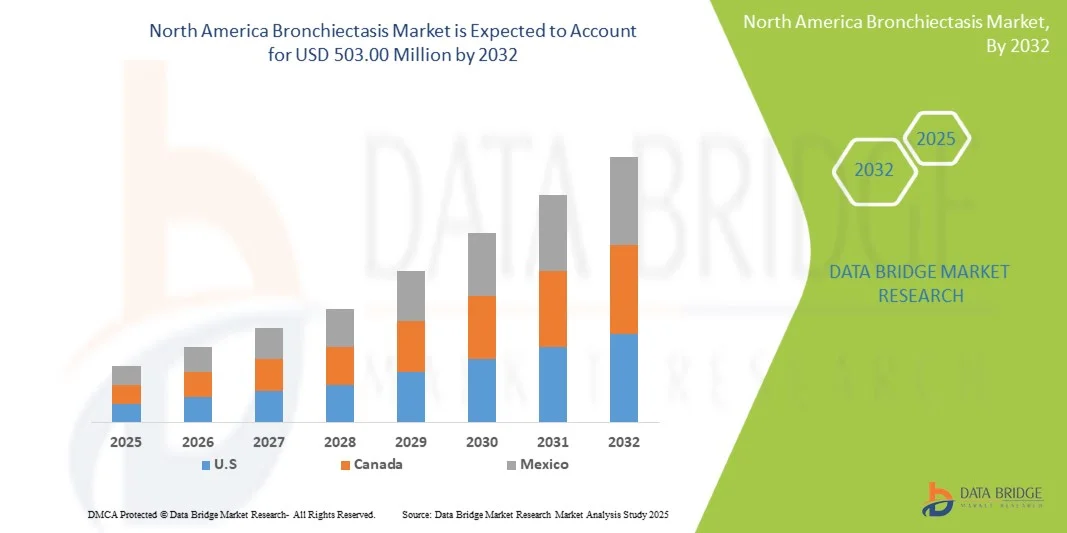
- The North America bronchiectasis market size was valued at USD 313.22 million in 2024 and is expected to reach USD 503.00 million by 2032, at a CAGR of 6.1% during the forecast period
- The market growth is largely driven by the increasing prevalence of chronic respiratory diseases, rising awareness about early diagnosis and management, and advancements in diagnostic and therapeutic interventions for bronchiectasis
- Furthermore, growing adoption of personalized treatment approaches, coupled with the expansion of healthcare infrastructure and supportive government initiatives, is establishing effective bronchiectasis management as a key focus area in the region. These converging factors are accelerating the demand for innovative therapies and care solutions, thereby significantly boosting the market's growth
North America Bronchiectasis Market Analysis
- Bronchiectasis, characterized by permanent dilation of the bronchi and chronic respiratory infections, is becoming an increasingly significant focus within respiratory healthcare in both clinical and research settings due to its rising prevalence, impact on quality of life, and the growing need for effective management strategies
- The escalating demand for bronchiectasis treatments is primarily driven by increased awareness of early diagnosis, advancements in diagnostic imaging and therapeutic interventions, and a rising emphasis on personalized and targeted care approaches
- U.S. dominated the North America bronchiectasis market with the largest revenue share of 87.9% in 2024, characterized by well-established healthcare infrastructure, high healthcare expenditure, and a strong presence of key industry players. The country experienced substantial growth in bronchiectasis treatment adoption, particularly in specialized respiratory care centers and hospitals, driven by innovations in both diagnosis and treatment solutions
- Canada is expected to be the fastest growing country in the North America bronchiectasis market during the forecast period due to increasing prevalence, supportive healthcare initiatives, and enhanced diagnostic capabilities
- Non-CF Bronchiectasis segment dominated the North America bronchiectasis market with a market share of 44.8% in 2024, driven by its higher prevalence and increasing clinical focus on managing non-cystic fibrosis-related cases
Report Scope and North America Bronchiectasis Market Segmentation
|
Attributes |
North America Bronchiectasis Key Market Insights |
|
Segments Covered |
|
|
Countries Covered |
North America
|
|
Key Market Players |
|
|
Market Opportunities |
|
|
Value Added Data Infosets |
In addition to the insights on market scenarios such as market value, growth rate, segmentation, geographical coverage, and major players, the market reports curated by the Data Bridge Market Research also include in-depth expert analysis, pricing analysis, brand share analysis, consumer survey, demography analysis, supply chain analysis, value chain analysis, raw material/consumables overview, vendor selection criteria, PESTLE Analysis, Porter Analysis, and regulatory framework. |
North America Bronchiectasis Market Trends
“Advancements Through Digital Health and AI-Enabled Diagnostics”
- A significant and accelerating trend in the North America bronchiectasis market is the adoption of digital health platforms and AI-enabled diagnostic tools, which are improving early detection, patient monitoring, and personalized care management
- For instance, AI-driven imaging software can analyze high-resolution CT scans to detect bronchial abnormalities more accurately and quickly than traditional manual methods, facilitating timely treatment decisions
- AI integration in patient management enables predictive modeling of disease exacerbations, helping clinicians optimize therapy regimens and anticipate complications. For instance, platforms such as RespiDx utilize AI to track patient symptoms, medication adherence, and exacerbation patterns, providing actionable insights for care teams
- The seamless integration of digital health platforms with electronic health records (EHRs) and telemedicine services allows centralized monitoring and remote consultations, improving accessibility for patients with limited mobility or in rural areas
- This trend towards intelligent, data-driven, and interconnected care solutions is fundamentally reshaping patient and clinician expectations for bronchiectasis management. Consequently, companies and healthcare providers are increasingly adopting AI-based diagnostics and remote monitoring tools to enhance clinical outcomes
- The demand for innovative digital and AI-enabled diagnostic solutions is growing rapidly across both hospitals and specialized respiratory clinics, as clinicians seek precision, efficiency, and better patient engagement
North America Bronchiectasis Market Dynamics
Driver
“Increasing Prevalence and Awareness of Bronchiectasis”
- The rising prevalence of bronchiectasis, coupled with greater awareness among patients and healthcare professionals, is a significant driver for market growth in North America
- For instance, initiatives to educate clinicians and patients on early detection and management protocols have improved diagnosis rates and treatment adherence, fueling market demand
- As more patients are diagnosed with both CF and non-CF bronchiectasis, there is increased demand for specialized therapies and comprehensive care approaches. For instance, hospitals and respiratory centers are implementing multidisciplinary care programs that integrate pharmacological and non-pharmacological interventions
- Furthermore, government programs and healthcare policies promoting respiratory disease management and funding for rare disease research are supporting the adoption of advanced treatments
- Improved access to diagnostic facilities, coupled with technological innovations in imaging and telehealth, has enhanced patient outcomes, further driving demand for bronchiectasis care solutions
- Rising patient advocacy and support programs are increasing awareness and facilitating early diagnosis. For instance, non-profit organizations are providing educational resources and screening initiatives to improve patient engagement and adherence
Restraint/Challenge
“High Treatment Costs and Limited Disease Awareness”
- The high costs of advanced therapies and diagnostic interventions pose a significant challenge to broader adoption of bronchiectasis treatments in North America
- For instance, the price of biologics and long-term antibiotic therapies can be prohibitive, limiting patient access and adherence to treatment regimens
- Limited awareness among general practitioners and patients about non-CF bronchiectasis often results in delayed diagnosis and suboptimal care. For instance, studies report that misdiagnosis or underdiagnosis is common, especially in mild-to-moderate cases, affecting timely intervention
- While insurance coverage mitigates some costs, out-of-pocket expenses for specialized treatments and diagnostic tests remain high, deterring certain patient segments from seeking care
- Overcoming these challenges through patient education programs, clinician training, and broader insurance coverage will be essential for sustaining market growth in North America
- Lack of standardized treatment protocols and regional differences in healthcare access further hinder uniform adoption of therapies. For instance, variations in hospital resources and specialist availability can delay initiation of guideline-recommended treatments
North America Bronchiectasis Market Scope
The market is segmented on the basis of disease type, severity, type, drugs type, route of administration, end user, and distribution channel.
- By Disease Type
On the basis of disease type, the North America bronchiectasis market is segmented into CF Bronchiectasis and Non-CF Bronchiectasis. The Non-CF Bronchiectasis segment dominated the market with the largest revenue share of 44.8% in 2024, driven by its higher prevalence among the adult population and increasing clinical focus on managing non-cystic fibrosis-related cases. Non-CF bronchiectasis patients often require long-term antibiotic therapy and airway clearance treatments, which fuels the adoption of specialized management solutions. Hospitals and specialized respiratory clinics prioritize this segment due to the substantial patient base and recurring treatment needs. Advanced diagnostic tools and personalized care programs further support the dominance of Non-CF bronchiectasis in the region. The segment also benefits from increased awareness campaigns and healthcare provider education aimed at early detection and effective management.
The CF Bronchiectasis segment is anticipated to witness the fastest growth rate of 19.8% from 2025 to 2032, fueled by advances in genetic testing, newborn screening, and targeted therapies that improve patient outcomes. Cystic fibrosis-related bronchiectasis requires specialized multidisciplinary care, often involving biologics and inhaled antibiotics, driving demand in hospitals and specialized clinics. Early diagnosis and innovative treatment approaches are increasing the adoption of CF bronchiectasis management solutions. Patient advocacy programs and government support initiatives for rare disease management are further contributing to the growth. The development of new CFTR modulators and other novel therapies is expected to expand treatment options and market potential for CF bronchiectasis.
- By Severity
On the basis of severity, the North America bronchiectasis market is segmented into mild to moderate and moderate-to-severe. The Moderate-to-Severe segment dominated the market with the largest revenue share of 46.1% in 2024, owing to the higher treatment costs, frequent hospitalizations, and intensive management needs of severe patients. These patients often require combination therapies including long-term antibiotics, inhaled medications, and physiotherapy interventions, resulting in higher healthcare expenditure and market demand. Hospitals and specialized care centers play a key role in managing moderate-to-severe cases due to the complexity of treatment. The severity segment also benefits from ongoing clinical trials aimed at reducing exacerbations and improving patient quality of life. Awareness campaigns about early intervention for severe bronchiectasis further enhance treatment adoption.
The Mild to Moderate segment is expected to witness the fastest CAGR of 18.9% from 2025 to 2032, driven by increased screening, early detection, and proactive management strategies. Mild cases are increasingly being treated with preventive measures and maintenance therapies, which reduce progression to severe stages. Telehealth solutions and mobile monitoring tools are enhancing patient adherence and outcomes in this segment. The growth is also supported by primary care providers incorporating standardized diagnostic protocols and referring patients to specialized care earlier. Rising awareness among patients about symptom monitoring and early treatment contributes to faster adoption in mild-to-moderate cases.
- By Type
On the basis of type, the North America bronchiectasis market is segmented into diagnosis and treatment. The Treatment segment dominated the North America bronchiectasis market with the largest revenue share of 52.4% in 2024, driven by the continuous need for pharmacological interventions, airway clearance devices, and hospital-based therapies. Treatment solutions are in high demand due to recurrent infections and long-term disease management requirements. Hospitals and specialized clinics form the primary end-users for treatment therapies. Advanced inhaled antibiotics, biologics, and combination therapies are increasingly being adopted to reduce exacerbations and improve patient outcomes. Treatment solutions also benefit from insurance coverage and reimbursement policies that encourage sustained therapy adherence. The growing prevalence of non-CF bronchiectasis is further supporting market dominance of the treatment segment.
The Diagnosis segment is expected to witness the fastest growth rate of 20.5% from 2025 to 2032, fueled by advancements in high-resolution CT imaging, AI-enabled diagnostic tools, and early screening programs. Accurate and timely diagnosis allows personalized treatment plans, improving patient outcomes and quality of life. Increased adoption of digital health platforms and tele-radiology solutions is driving faster and more accessible diagnostics. Rising awareness among clinicians about non-CF bronchiectasis is also boosting demand for diagnostic tools. Hospitals and outpatient clinics are increasingly investing in modern imaging technologies. Government initiatives and insurance support for early disease detection further accelerate growth in the diagnostic segment.
- By Drugs Type
On the basis of drugs type, the North America bronchiectasis market is segmented into Branded and Generics. The Branded segment dominated the market with the largest revenue share of 57.2% in 2024, due to higher efficacy, clinical validation, and strong physician preference for established therapies. Branded inhaled antibiotics and biologics are widely prescribed in specialized respiratory centers, contributing to sustained market dominance. Pharmaceutical companies invest heavily in R&D and marketing of branded drugs, reinforcing their market position. Insurance coverage often favors branded therapies for severe and complex cases. Continuous clinical trials and new drug approvals also enhance physician confidence in branded medications. Patient adherence and repeat prescriptions for chronic management further drive revenue for branded drugs.
The Generics segment is expected to witness the fastest CAGR of 21.3% from 2025 to 2032, driven by growing cost-consciousness among patients and healthcare institutions. Generic alternatives provide similar therapeutic benefits at a lower price, increasing accessibility and adoption. Rising patent expirations of key branded drugs and the entry of new generic manufacturers are fueling market growth. Hospitals, clinics, and home healthcare providers increasingly adopt generics for long-term management. Government incentives and healthcare policies promoting generics also support faster adoption. The segment benefits from increasing awareness about affordability without compromising clinical outcomes.
- By Route of Administration
On the basis of route of administration, the North America bronchiectasis market is segmented into oral, parenteral, and inhalation. The Inhalation segment dominated the North America bronchiectasis market with the largest revenue share of 49.6% in 2024, due to direct delivery of drugs to the lungs, faster therapeutic effects, and reduced systemic side effects. Inhaled antibiotics and bronchodilators are widely preferred for long-term management of chronic infections and airway clearance. Hospitals and specialized respiratory clinics drive high demand for inhalation therapies. Advanced nebulizer systems and dry powder inhalers enhance patient convenience and adherence. Clinical guidelines recommending inhaled therapy for bronchiectasis patients further reinforce dominance. The segment also benefits from growing awareness among patients about self-administered inhalation options.
The Oral segment is expected to witness the fastest CAGR of 19.7% from 2025 to 2032, fueled by ease of administration, patient compliance, and lower cost compared to parenteral therapy. Oral antibiotics and anti-inflammatory medications are widely used in mild-to-moderate cases. Primary care physicians increasingly prescribe oral therapy as part of early intervention strategies. Growing adoption of combination oral therapies enhances treatment effectiveness. Hospitals, clinics, and home healthcare settings contribute to rising demand. Digital adherence tools and patient education programs also support the growth of oral drug administration.
- By End User
On the basis of end user, the North America bronchiectasis market is segmented into hospitals, clinics, home health care, and others. The Hospitals segment dominated the North America bronchiectasis market with the largest revenue share of 54.1% in 2024, driven by the high volume of severe and moderate-to-severe cases requiring inpatient care, advanced diagnostics, and specialized treatment facilities. Hospitals provide multidisciplinary care involving pulmonologists, respiratory therapists, and infectious disease specialists, making them key contributors to market revenue. Recurrent hospitalizations due to exacerbations also increase treatment demand. The segment benefits from advanced infrastructure, access to latest therapies, and insurance reimbursement policies. Hospitals are also central to clinical trials, drug adoption, and implementation of AI-enabled diagnostic tools.
The Home Health Care segment is expected to witness the fastest CAGR of 22.4% from 2025 to 2032, fueled by increasing preference for home-based treatment, remote monitoring, and telehealth services. Patients with mild-to-moderate bronchiectasis increasingly receive airway clearance therapy and inhalation treatments at home. Home healthcare reduces hospital visits and improves quality of life. Integration with digital health platforms allows remote monitoring of symptoms and treatment adherence. Rising awareness among patients and caregivers is boosting adoption. Insurance coverage for home-based respiratory care further accelerates growth.
- By Distribution Channel
On the basis of distribution channel, the North America bronchiectasis market is segmented into Hospital Pharmacy, Retail Pharmacy, Online Pharmacy, and Others. The Hospital Pharmacy segment dominated the North America bronchiectasis market with the largest revenue share of 51.3% in 2024, driven by the centralized supply of prescription therapies for inpatient and outpatient care. Hospital pharmacies ensure consistent availability of branded and specialty drugs for severe bronchiectasis patients. Collaboration with clinicians and specialist departments supports seamless treatment delivery. Bulk procurement and insurance coverage make hospital pharmacies the preferred channel for high-cost therapies. Hospitals also distribute inhalation devices and supportive treatments, enhancing market share. The segment benefits from repeat prescriptions and adherence monitoring programs.
The Online Pharmacy segment is expected to witness the fastest CAGR of 24.1% from 2025 to 2032, fueled by rising e-commerce adoption, convenience, and increasing patient preference for doorstep delivery of medications. Patients, especially in remote areas, rely on online platforms for timely access to branded and generic drugs. Integration with telemedicine and digital health solutions enhances prescription fulfillment. Online pharmacies provide competitive pricing and subscription models, encouraging repeat purchases. Growing awareness about online medication safety and regulatory compliance supports market growth. Home healthcare patients and tech-savvy consumers are key drivers of online pharmacy adoption.
North America Bronchiectasis Market Regional Analysis
- The U.S. dominated the North America bronchiectasis market with the largest revenue share of 87.9% in 2024, characterized by well-established healthcare infrastructure, high healthcare expenditure, and a strong presence of key industry players
- Patients and healthcare providers in the region highly prioritize advanced diagnostic tools, personalized treatment plans, and integrated care solutions for bronchiectasis, contributing to strong adoption of both pharmacological and non-pharmacological interventions
- This widespread adoption is further supported by well-established healthcare infrastructure, high healthcare expenditure, and the presence of key industry players, establishing the U.S. as a leading market for bronchiectasis care in both hospital and outpatient settings
U.S. Bronchiectasis Market Insight
The U.S. bronchiectasis market captured the largest revenue share of 87.9% in 2024 within North America, fueled by the increasing prevalence of chronic respiratory diseases and growing awareness about early diagnosis and treatment. Patients and healthcare providers are increasingly prioritizing advanced diagnostic tools, personalized therapies, and integrated care solutions. The growing trend of multidisciplinary care programs, combined with robust adoption of inhaled antibiotics and biologics, further propels the bronchiectasis market. Moreover, the presence of key industry players and well-established healthcare infrastructure is significantly contributing to the market’s expansion.
Canada Bronchiectasis Market Insight
The Canada bronchiectasis market is projected to expand at a substantial CAGR throughout the forecast period, primarily driven by rising prevalence of non-CF bronchiectasis and supportive government healthcare initiatives. Increasing awareness among patients and physicians about early detection and management is fostering adoption of advanced diagnostic and treatment solutions. Canadian consumers and hospitals are also drawn to personalized therapies and telehealth-enabled monitoring systems. The region is experiencing significant growth across hospital, clinic, and home healthcare applications, with bronchiectasis management being integrated into both new care programs and existing chronic disease management frameworks.
Mexico Bronchiectasis Market Insight
The Mexico bronchiectasis market is anticipated to grow at a noteworthy CAGR during the forecast period, driven by increasing urbanization and a rising focus on respiratory healthcare infrastructure. In addition, the growing burden of chronic respiratory infections is encouraging hospitals and clinics to adopt advanced diagnostic and therapeutic interventions. Mexico’s expansion of healthcare coverage and accessibility to treatment options is expected to continue to stimulate market growth. The country is witnessing gradual adoption of inhaled therapies, airway clearance devices, and digital monitoring tools, particularly in major urban centers.
North America Bronchiectasis Market Share
The North America Bronchiectasis industry is primarily led by well-established companies, including:
- Insmed Incorporated (U.S.)
- Boehringer Ingelheim International GmbH (U.S.)
- Sanofi (U.S.)
- AstraZeneca (U.K.)
- Fisher & Paykel Healthcare Limited (New Zealand)
- Zambon S.p.A. (Italy)
- National Jewish Health (U.S.)
- Cleveland Clinic (U.S.)
- Trudell Medical International (Canada)
- Medline Industries, Inc. (U.S.)
- Inogen, Inc. (U.S.)
- Abbott (U.S.)
- Johnson & Johnson Services, Inc. (U.S.)
- GSK plc (U.K.)
- Pfizer Inc. (U.S.)
- Merck & Co., Inc. (U.S.)
What are the Recent Developments in North America Bronchiectasis Market?
- In August 2025, the U.S. Food and Drug Administration (FDA) approved Brinsupri (brensocatib) as the first and only treatment for non-cystic fibrosis bronchiectasis (NCFB), a serious chronic lung disease affecting approximately 500,000 U.S. patients. This approval marks a significant milestone, as Brinsupri is the first non-antibiotic, anti-inflammatory treatment for NCFB, offering a more targeted approach to managing the disease
- In July 2025, the inaugural World Bronchiectasis Day was observed, aiming to raise global awareness about bronchiectasis and its increasing prevalence. The day emphasized the importance of early detection and improved management strategies for this chronic lung condition
- In March 2025, the Bronchiectasis and NTM Association announced the inclusion of 33 centers into its newly established Bronchiectasis and NTM Care Center Network (CCN). This network spans 23 states and the District of Columbia, aiming to enhance access to specialized care for patients with bronchiectasis and nontuberculous mycobacterial (NTM) lung disease
- In February 2025, the FDA granted Priority Review to Insmed's New Drug Application for brensocatib, setting a target action date of August 12, 2025. This designation expedited the review process, recognizing the potential of brensocatib to address an unmet medical need in the treatment of bronchiectasis
- In December 2024, NYU Langone Health's Bronchiectasis and NTM Program collaborated with Insmed to advance research and clinical care for patients with bronchiectasis and nontuberculous mycobacterial (NTM) lung disease. This partnership aims to enhance patient education, improve disease management, and foster clinical trials to develop new treatment options

- Interactive Data Analysis Dashboard
- Company Analysis Dashboard for high growth potential opportunities
- Research Analyst Access for customization & queries
- Competitor Analysis with Interactive dashboard
- Latest News, Updates & Trend analysis
- Harness the Power of Benchmark Analysis for Comprehensive Competitor Tracking
Data collection and base year analysis are done using data collection modules with large sample sizes. The stage includes obtaining market information or related data through various sources and strategies. It includes examining and planning all the data acquired from the past in advance. It likewise envelops the examination of information inconsistencies seen across different information sources. The market data is analysed and estimated using market statistical and coherent models. Also, market share analysis and key trend analysis are the major success factors in the market report. To know more, please request an analyst call or drop down your inquiry.
The key research methodology used by DBMR research team is data triangulation which involves data mining, analysis of the impact of data variables on the market and primary (industry expert) validation. Data models include Vendor Positioning Grid, Market Time Line Analysis, Market Overview and Guide, Company Positioning Grid, Patent Analysis, Pricing Analysis, Company Market Share Analysis, Standards of Measurement, Global versus Regional and Vendor Share Analysis. To know more about the research methodology, drop in an inquiry to speak to our industry experts.
Data Bridge Market Research is a leader in advanced formative research. We take pride in servicing our existing and new customers with data and analysis that match and suits their goal. The report can be customized to include price trend analysis of target brands understanding the market for additional countries (ask for the list of countries), clinical trial results data, literature review, refurbished market and product base analysis. Market analysis of target competitors can be analyzed from technology-based analysis to market portfolio strategies. We can add as many competitors that you require data about in the format and data style you are looking for. Our team of analysts can also provide you data in crude raw excel files pivot tables (Fact book) or can assist you in creating presentations from the data sets available in the report.












