


Asia-Pacific Nuts and Snacks Bar Market Size
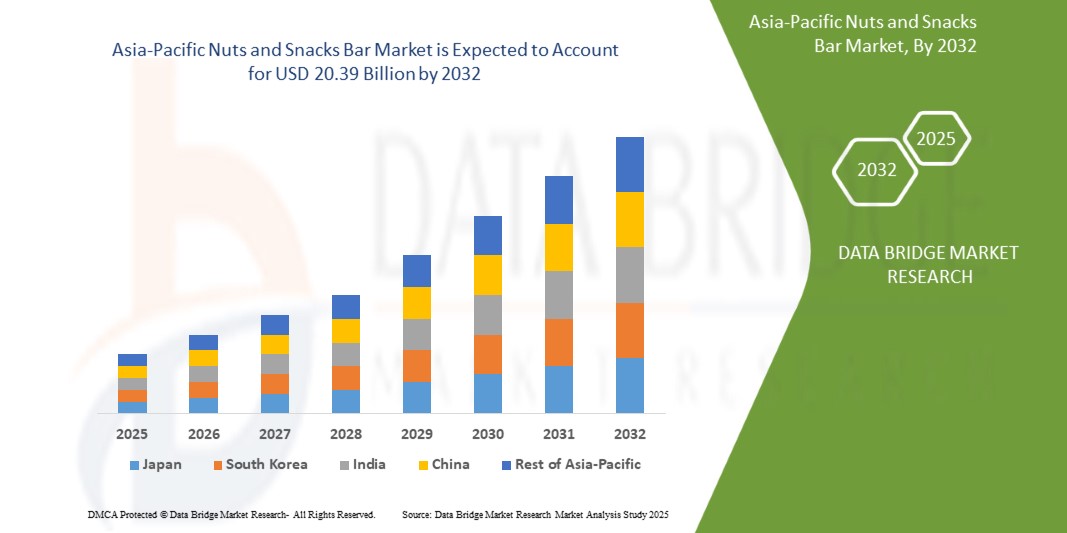
- The Asia-Pacific nuts and snacks bar market size was valued at USD 12.46 billion in 2024 and is expected to reach USD 20.39 billion by 2032, at a CAGR of 6.35% during the forecast period
- The market growth is largely fuelled by the rising demand for convenient and nutritious on-the-go food options among busy consumers across urban centers, particularly in countries such as China, India, Japan, and South Korea
- Increasing health awareness, changing dietary habits, and growing interest in plant-based and protein-rich snacks are significantly contributing to the popularity of nut and snack bars among millennials and fitness-focused consumers
Asia-Pacific Nuts and Snacks Bar Market Analysis
- Growing disposable incomes and westernized eating habits are encouraging the consumption of healthier packaged food formats, including energy and granola bars
- The expansion of organized retail and e-commerce platforms across the region is facilitating easier access and availability of a wide variety of nut and snack bar products
- China nuts and snacks bar market accounted for the largest revenue share in Asia-Pacific in 2024, supported by rapid urbanization, changing dietary preferences, and increased consumer focus on functional food
- Japan is expected to witness the highest compound annual growth rate (CAGR) in the Asia-Pacific nuts and snacks bar market due to shifting consumer preferences toward protein-rich, low-calorie, and on-the-go nutritional products
- The nuts bars segment held the largest revenue share in 2024, primarily due to their perceived health benefits, natural ingredients, and growing popularity among health-conscious consumers. Nuts bars are widely accepted as on-the-go snacks and are rich in fiber, protein, and healthy fats, making them a preferred choice across countries such as India, Japan, and Australia
Report Scope and Asia-Pacific Nuts and Snacks Bar Market Segmentation
|
Attributes |
Asia-Pacific Nuts and Snacks Bar Key Market Insights |
|
Segments Covered |
|
|
Countries Covered |
Asia-Pacific
|
|
Key Market Players |
|
|
Market Opportunities |
|
|
Value Added Data Infosets |
In addition to the insights on market scenarios such as market value, growth rate, segmentation, geographical coverage, and major players, the market reports curated by the Data Bridge Market Research also include in-depth expert analysis, pricing analysis, brand share analysis, consumer survey, demography analysis, supply chain analysis, value chain analysis, raw material/consumables overview, vendor selection criteria, PESTLE Analysis, Porter Analysis, and regulatory framework. |
Asia-Pacific Nuts and Snacks Bar Market Trends
“Growing Preference For On-The-Go Functional Nutrition”
- Urban consumers are increasingly seeking portable, nutritious snack options to match fast-paced lifestyles
- Functional ingredients such as chia seeds, quinoa, and flaxseeds are gaining popularity in snack bar formulations
- There is a noticeable increase in clean-label demand, with more consumers reading ingredient lists for health benefits
- Snack bars are being positioned as a meal-replacement or energy-boosting product for fitness-conscious individuals
- For instance, brands like Eat Anytime and Yogabar have launched protein-rich, fiber-packed snack bars targeting office-goers and gym users across metro cities in India
Asia-Pacific Nuts and Snacks Bar Market Dynamics
Driver
“Increasing Health Awareness Among Urban Consumers”
- The rising incidence of obesity, diabetes, and other lifestyle diseases is encouraging consumers to opt for nutritious snack alternatives
- Young professionals and millennials are driving demand for low-sugar, high-protein snack bars as part of balanced diets
- Media campaigns and health influencers are promoting nuts and snack bars as part of active, mindful eating habits
- Product labeling transparency and claims such as “no added sugar” and “gluten-free” are influencing purchase decisions
- For instance, in countries like Japan and South Korea, functional snack bars fortified with vitamins and minerals have gained strong traction among the working population
Restraint/Challenge
“Price Sensitivity and Limited Awareness in Rural Areas”
- Premium snack bars made with almonds, dates, and protein isolates are priced higher than conventional snacks, limiting mass adoption
- Rural consumers often lack awareness of the health benefits offered by functional bars, slowing demand in non-metro areas
- Traditional snacks dominate in local markets due to cost-effectiveness and familiarity, especially in smaller towns and villages
- Lack of targeted marketing campaigns and poor distribution networks hinder product availability outside urban centers
- For instance, in many rural regions of Southeast Asia, low-cost local snacks such as banana chips or rice cakes remain more popular than packaged snack bars
Asia-Pacific Nuts and Snacks Bar Market Scope
The market is segmented on the basis of bar type, calorie content, flavor, product type, size, manufacturing process, and distribution channel.
• By Bar Type
On the basis of bar type, the Asia-Pacific nuts and snacks bar market is segmented into energy bars, protein bars, cereal bars, and nuts bars. The nuts bars segment held the largest revenue share in 2024, primarily due to their perceived health benefits, natural ingredients, and growing popularity among health-conscious consumers. Nuts bars are widely accepted as on-the-go snacks and are rich in fiber, protein, and healthy fats, making them a preferred choice across countries such as India, Japan, and Australia.
The protein bars segment is expected to witness the fastest growth rate from 2025 to 2032, driven by increasing demand from gym-goers, athletes, and fitness-oriented consumers. Protein bars are gaining traction due to their functionality in muscle recovery, weight management, and as a convenient source of nutrition post-workout.
• By Calorie Content
On the basis of calorie content, the market is categorized into regular, low calorie, and sugar free. The regular segment dominated the market in 2024, attributed to the extensive availability of products and their wide consumer acceptance. Regular bars are often favored for their taste, variety of flavors, and satisfying texture.
The sugar-free segment is expected to witness the fastest growth rate from 2025 to 2032, fuelled by rising diabetic populations and increased awareness of sugar intake moderation. Sugar-free bars are especially popular among older adults and health-focused millennials in urban centers.
• By Flavor
On the basis of flavor, the market is segmented into regular and flavored. The flavored segment captured the dominant market share in 2024, owing to the rising demand for variety and innovation in taste profiles. Flavored options such as chocolate almond, berry mix, and tropical fruits enhance consumer experience and promote repeat purchases.
The regular flavor segment is expected to witness the fastest growth rate from 2025 to 2032 demand among those who prefer minimal processing and natural taste.
• By Product Type
On the basis of product type, the market is divided into organic and conventional. The conventional segment led the market in 2024 due to its widespread availability and lower price points.
The organic segment is expected to witness the fastest growth rate from 2025 to 2032, supported by the increasing preference for clean-label products, sustainable sourcing, and health consciousness. Organic nuts and snack bars are particularly gaining popularity in countries such as Australia and South Korea.
• By Size
On the basis of size, the market is segmented into 1.5 to 2.5 oz, 2.6 to 3.5 oz, 3.6 to 5.5 oz, and 5.5 oz and above. The 1.5 to 2.5 oz segment held the largest share in 2024, as it represents the most preferred and portable snack bar size for consumption at work, school, or while traveling.
The 2.6 to 3.5 oz segment is expected to witness the fastest growth rate from 2025 to 2032, driven by increased consumer interest in meal-replacement bars and larger portion sizes for post-exercise nutrition.
• By Manufacturing Process
On the basis of manufacturing process, the market is classified into extrusion, co-extrusion, and others. The extrusion segment accounted for the largest revenue share in 2024, owing to its cost efficiency, scalability, and widespread adoption in bar production. Extrusion allows for consistency and shelf stability, which are critical for mass-market products.
Co-extrusion is expected to witness the fastest growth rate from 2025 to 2032 due to its application in dual-layer and filled snack bars that cater to evolving taste and texture preferences.
• By Distribution Channel
On the basis of distribution channel, the market is segmented into store-based retailing and non-store retailing. The store-based retailing segment remained dominant in 2024, led by supermarkets, convenience stores, and specialty health shops where consumers can physically examine a variety of snack bars.
The non-store retailing segment is expected to witness the fastest growth rate from 2025 to 2032, driven by increasing internet penetration, consumer preference for doorstep delivery, and broader product assortment online.
Asia-Pacific Nuts and Snacks Bar Market Regional Analysis
- China nuts and snacks bar market accounted for the largest revenue share in Asia-Pacific in 2024, supported by rapid urbanization, changing dietary preferences, and increased consumer focus on functional food
- The rising middle-class population, coupled with a growing appetite for Western-style convenience foods, has significantly driven demand. Snack bars with added nutritional benefits such as protein and fiber are becoming increasingly popular among office workers and students
- Furthermore, the presence of both international and domestic brands offering region-specific flavors and customized formulations is boosting consumer adoption. China's robust e-commerce infrastructure and the popularity of health-related influencers on social media platforms are also playing a vital role in shaping market trends
Japan Nuts and Snacks Bar Market Insight
The Japan nuts and snacks bar market is expected to witness the fastest growth rate from 2025 to 2032, driven by the increasing demand for health-conscious and functional food options among its aging and health-aware population. Japanese consumers value portion control, natural ingredients, and convenience, which aligns well with the offerings of nuts and snack bars. The market is also benefiting from a rising interest in fitness and wellness, particularly among younger demographics in urban areas. Snack bars fortified with added vitamins, protein, or dietary fiber are gaining popularity in convenience stores and supermarkets. Additionally, the focus on premiumization and local ingredient sourcing by domestic manufacturers has enhanced product appeal. As consumers continue to prioritize balanced diets and on-the-go nutrition, the market is likely to see further innovation in flavors, packaging, and nutritional profiles tailored to evolving lifestyle needs.
Asia-Pacific Nuts and Snacks Bar Market Share
The Asia-Pacific Nuts and Snacks Bar industry is primarily led by well-established companies, including:
- Calbee, Inc. (Japan)
- Asahi Group Holdings, Ltd. (Japan)
- Nestlé S.A. (Switzerland)
- Mondelez International, Inc. (U.S.)
- General Mills Inc. (U.S.)
- Kellogg Company (U.S.)
- ITC Limited (India)
- Freedom Foods Group Limited (Australia)
- Dali Foods Group Co., Ltd. (China)
- Orion Corporation (South Korea)
Latest Developments in Asia-Pacific Nuts and Snacks Bar Market
- In July 2023, Emirates Snack Foods (ESF) partnered with Hershey to expand and diversify Hershey’s product portfolio in the Asia-Pacific region. This strategic development aims to enhance market penetration, broaden product availability, and improve customer satisfaction across key retail segments, thereby strengthening Hershey's regional presence
- In May 2023, Nestlé launched its popular Milo brand into the protein snack bar segment in Australia. This product development introduces bars containing 6g of protein and fiber, targeting the increasing demand for nutritious and convenient snacking options among health-conscious consumers, thus boosting Nestlé’s footprint in the functional snacks category
- In May 2023, Uncle Tobys entered the protein muesli bar segment with a new range of bars priced at AUD 6.70. This product launch aligns with rising consumer interest in healthier snacking, offering a mix of taste and nutrition across various flavors, which supports the growing trend of protein-based snack consumption in the regional market

- Interactive Data Analysis Dashboard
- Company Analysis Dashboard for high growth potential opportunities
- Research Analyst Access for customization & queries
- Competitor Analysis with Interactive dashboard
- Latest News, Updates & Trend analysis
- Harness the Power of Benchmark Analysis for Comprehensive Competitor Tracking
Asia Pacific Nuts And Snacks Bar Market, Supply Chain Analysis and Ecosystem Framework
To support market growth and help clients navigate the impact of geopolitical shifts, DBMR has integrated in-depth supply chain analysis into its Asia Pacific Nuts And Snacks Bar Market research reports. This addition empowers clients to respond effectively to global changes affecting their industries. The supply chain analysis section includes detailed insights such as Asia Pacific Nuts And Snacks Bar Market consumption and production by country, price trend analysis, the impact of tariffs and geopolitical developments, and import and export trends by country and HSN code. It also highlights major suppliers with data on production capacity and company profiles, as well as key importers and exporters. In addition to research, DBMR offers specialized supply chain consulting services backed by over a decade of experience, providing solutions like supplier discovery, supplier risk assessment, price trend analysis, impact evaluation of inflation and trade route changes, and comprehensive market trend analysis.
Data collection and base year analysis are done using data collection modules with large sample sizes. The stage includes obtaining market information or related data through various sources and strategies. It includes examining and planning all the data acquired from the past in advance. It likewise envelops the examination of information inconsistencies seen across different information sources. The market data is analysed and estimated using market statistical and coherent models. Also, market share analysis and key trend analysis are the major success factors in the market report. To know more, please request an analyst call or drop down your inquiry.
The key research methodology used by DBMR research team is data triangulation which involves data mining, analysis of the impact of data variables on the market and primary (industry expert) validation. Data models include Vendor Positioning Grid, Market Time Line Analysis, Market Overview and Guide, Company Positioning Grid, Patent Analysis, Pricing Analysis, Company Market Share Analysis, Standards of Measurement, Global versus Regional and Vendor Share Analysis. To know more about the research methodology, drop in an inquiry to speak to our industry experts.
Data Bridge Market Research is a leader in advanced formative research. We take pride in servicing our existing and new customers with data and analysis that match and suits their goal. The report can be customized to include price trend analysis of target brands understanding the market for additional countries (ask for the list of countries), clinical trial results data, literature review, refurbished market and product base analysis. Market analysis of target competitors can be analyzed from technology-based analysis to market portfolio strategies. We can add as many competitors that you require data about in the format and data style you are looking for. Our team of analysts can also provide you data in crude raw excel files pivot tables (Fact book) or can assist you in creating presentations from the data sets available in the report.













