


Autacoids and Related Drugs Market Size
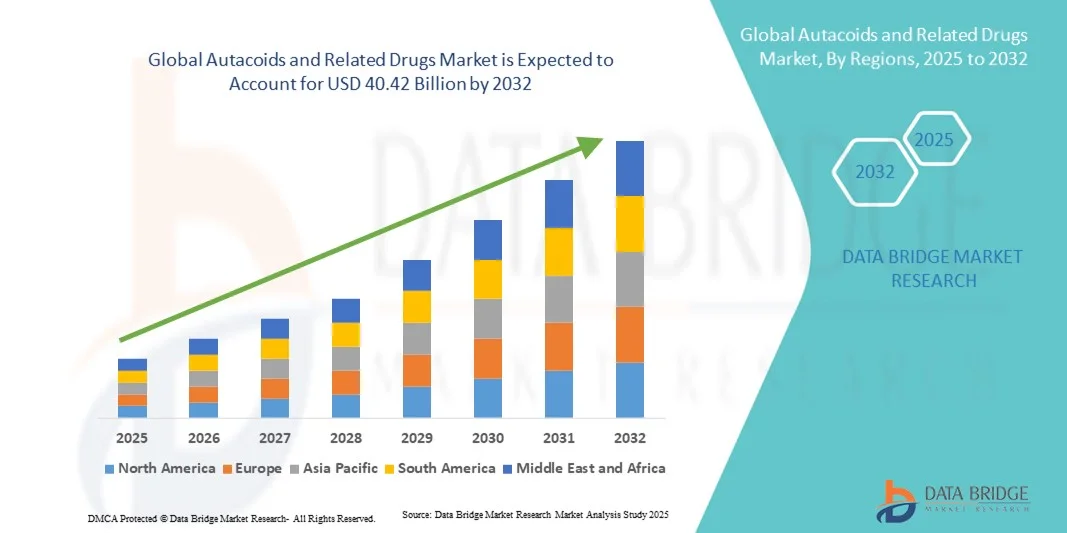
- The global autacoids and related drugs market size was valued at USD 30.00 billion in 2024 and is expected to reach USD 40.42 billion by 2032, at a CAGR of 3.80% during the forecast period
- The market growth is largely fueled by the increasing prevalence of chronic diseases such as cardiovascular disorders, allergies, and gastrointestinal issues, along with advancements in pharmaceutical research and development, leading to the introduction of novel therapies targeting specific autacoid pathways
- Furthermore, the growing aging population, rising healthcare expenditures, and increasing patient awareness about effective treatments are driving demand for autacoids and related drugs, establishing this segment as a key focus within the pharmaceutical industry and significantly boosting the market's growth
Autacoids and Related Drugs Market Analysis
- Autacoids and related drugs, encompassing a range of bioactive compounds such as amines (histamines), serotonin, prostaglandins, and kinins, are increasingly vital components of modern therapeutic strategies for managing chronic diseases, allergies, cardiovascular disorders, and gastrointestinal conditions due to their targeted action, improved efficacy, and integration with personalized medicine approaches
- The escalating demand for autacoids and related drugs is primarily fueled by the rising prevalence of chronic diseases, growing awareness among patients and healthcare providers, and continuous advancements in pharmaceutical research and development introducing novel therapies with improved safety and effectiveness
- North America dominated the autacoids and related drugs market with the largest revenue share of 39% in 2024, characterized by advanced healthcare infrastructure, high healthcare expenditure, and a strong presence of leading pharmaceutical companies, with the U.S. experiencing substantial growth in autacoid-based therapies, particularly in cardiovascular and allergy treatments, driven by innovations from both established pharma companies and biotech startups focusing on targeted drug delivery and precision medicine
- Asia-Pacific is expected to be the fastest growing region in the autacoids and related drugs market during the forecast period due to increasing healthcare access, rising patient populations, and growing investments in pharmaceutical research and development
- Amines -histamines dominated the autacoids and related drugs market with a market share of 42.6% in 2024, driven by their established efficacy in treating allergies, gastric disorders, and other histamine-related conditions, as well as ongoing development of novel formulations enhancing patient compliance and therapeutic outcomes
Report Scope and Autacoids and Related Drugs Market Segmentation
|
Attributes |
Autacoids and Related Drugs Key Market Insights |
|
Segments Covered |
|
|
Countries Covered |
North America
Europe
Asia-Pacific
Middle East and Africa
South America
|
|
Key Market Players |
|
|
Market Opportunities |
|
|
Value Added Data Infosets |
In addition to the insights on market scenarios such as market value, growth rate, segmentation, geographical coverage, and major players, the market reports curated by the Data Bridge Market Research also include in-depth expert analysis, pricing analysis, brand share analysis, consumer survey, demography analysis, supply chain analysis, value chain analysis, raw material/consumables overview, vendor selection criteria, PESTLE Analysis, Porter Analysis, and regulatory framework. |
Autacoids and Related Drugs Market Trends
Targeted Therapies and Personalized Medicine Integration
- A significant and accelerating trend in the global autacoids and related drugs market is the integration of therapies into personalized medicine approaches, enabling treatments tailored to individual patient profiles for improved efficacy and reduced side effects
- For instance, histamine receptor modulators are being customized based on patient genotypes to optimize treatment of allergic and gastric conditions, enhancing therapeutic outcomes
- Advancements in drug delivery systems, including controlled-release formulations, allow autacoids to act more precisely within the body, reducing systemic side effects and improving patient compliance
- The integration of diagnostic tools with autacoid therapies facilitates real-time monitoring of treatment response, enabling clinicians to adjust dosing regimens dynamically
- This trend toward precision-targeted autacoid therapies is reshaping clinical expectations for chronic disease management, with companies such as Novartis developing personalized autacoid-based treatments targeting specific patient subgroups
- The demand for therapies aligned with personalized medicine and targeted drug delivery is growing rapidly across both chronic and acute care settings, as healthcare providers increasingly prioritize efficacy and patient-specific treatment plans
Autacoids and Related Drugs Market Dynamics
Driver
Increasing Prevalence of Chronic Diseases and Allergies
- The rising prevalence of chronic diseases such as cardiovascular disorders, gastrointestinal conditions, and allergies is a significant driver for the heightened demand for autacoids and related drugs
- For instance, Pfizer launched expanded histamine H2 receptor antagonist therapies in 2024 to address the growing incidence of gastric acid disorders, enhancing market penetration
- Increasing patient awareness and routine diagnosis of allergic and cardiovascular conditions contribute to higher prescription rates of autacoid-targeting therapies
- The growing aging population globally leads to a higher incidence of autacoid-mediated conditions, further driving demand in both preventive and therapeutic contexts
- Continuous advancements in pharmaceutical research and development introduce novel autacoid-based compounds and combination therapies, enhancing treatment effectiveness and expanding the market
- The convenience and efficacy of targeted autacoid therapies, coupled with rising healthcare access, are key factors propelling market growth across both developed and emerging regions
Restraint/Challenge
High Cost of Therapy and Regulatory Hurdles
- The relatively high cost of autacoids and related drugs, particularly newer targeted therapies, poses a significant challenge to widespread adoption, especially in price-sensitive markets
- For instance, novel biologic autacoid therapies for allergy and inflammatory conditions often come with premium pricing, limiting access in developing regions
- Strict regulatory requirements and lengthy approval processes for new autacoid compounds can delay market entry, reducing the speed of commercialization
- Potential side effects or adverse reactions associated with some autacoid therapies require careful monitoring, which can limit their prescription in certain patient populations
- Insurance coverage limitations and reimbursement challenges in various regions can hinder patient access to advanced autacoid treatments
- Overcoming these challenges through cost-effective formulations, streamlined regulatory approvals, and patient assistance programs will be vital for sustained market growth
Autacoids and Related Drugs Market Scope
The market is segmented on the basis of type, drug type, polypeptides, decarboxylated amino acids, route of administration, and distribution channel.
- By Type
On the basis of type, the autacoids and related drugs market is segmented into Amines (Histamines and 5-Hydroxytryptamine), Lipids (Prostaglandins), and Peptides (Angiotensin). The Amines segment dominated the market with the largest revenue share of 42.6% in 2024, driven by the widespread use of histamine and serotonin modulators in allergy, gastrointestinal, and cardiovascular therapies. Amines offer targeted action, high efficacy, and well-established safety profiles, making them the preferred choice among clinicians. Hospitals and specialty clinics increasingly rely on amine-based therapies for acute and chronic conditions, boosting prescription rates. Furthermore, ongoing R&D in histamine receptor modulators is introducing novel formulations that improve patient compliance. The segment also benefits from extensive market awareness and adoption across both developed and emerging regions, ensuring steady revenue growth.
The Peptides segment is anticipated to witness the fastest growth rate of 6.5% from 2025 to 2033, fueled by increasing clinical applications of angiotensin and vasoactive intestinal polypeptides. Peptide-based autacoids are gaining traction due to their role in cardiovascular regulation, kidney function, and metabolic disorders. Advances in peptide synthesis and drug delivery technologies are improving stability and bioavailability, enhancing therapeutic outcomes. Rising investments from biotech startups in peptide drug development, along with expanding healthcare access in Asia-Pacific, further contribute to rapid adoption. The growing focus on personalized therapies and combination treatments also drives the expansion of the peptide segment.
- By Drug Type
On the basis of drug type, the autacoids and related drugs market is segmented into lipid-derived autacoids, polypeptide autacoids, endothelium-derived autacoids, and biogenic amines. The Biogenic Amines segment dominated the market in 2024 due to their extensive therapeutic applications in allergies, gastric disorders, and central nervous system-related conditions. Biogenic amines such as histamine and serotonin are well-studied, widely prescribed, and have numerous generic options available, enhancing affordability and accessibility. Hospitals and outpatient clinics frequently stock these drugs for rapid intervention. Furthermore, ongoing research is expanding indications for amine-based drugs, reinforcing their dominance. Pharmaceutical companies continue to invest in marketing and educational campaigns to increase adoption among healthcare providers.
The Polypeptide Autacoids segment is expected to grow the fastest at a CAGR of 6.2% from 2025 to 2033, supported by innovations in vasopressin, vasoactive intestinal polypeptide, and plasma kinin therapies. Polypeptides are increasingly applied in cardiovascular, renal, and inflammatory disorders. Improved drug delivery technologies, such as long-acting injectables and controlled-release formulations, enhance efficacy and patient compliance. Expansion in emerging markets and rising awareness of peptide benefits contribute to rapid growth. Strategic collaborations between pharmaceutical companies and research institutes are further accelerating the introduction of novel polypeptide therapies.
- By Polypeptides
On the basis of polypeptides, the autacoids and related drugs market is segmented into vasopressin, vasoactive intestinal polypeptide, and plasma kinin. The Vasopressin segment dominated the market in 2024, attributed to its critical role in treating diabetes insipidus, hypotension, and certain cardiovascular conditions. Hospitals and specialty clinics heavily rely on vasopressin due to its fast-acting therapeutic effects in acute care. Its widespread clinical acceptance, coupled with well-established safety data, ensures stable market demand. Research into analogs with improved pharmacokinetics is further boosting adoption. In addition, vasopressin is commonly included in treatment protocols for ICU patients, increasing hospital consumption.
The Vasoactive Intestinal Polypeptide segment is expected to witness the fastest growth at 6.8% CAGR from 2025 to 2033, driven by emerging applications in gastrointestinal, respiratory, and metabolic disorders. Innovations in peptide synthesis and delivery methods improve stability and bioavailability, making VIP therapies more viable. Increasing awareness of gastrointestinal disorders in Asia-Pacific and Europe supports rapid market expansion. Pharmaceutical companies are exploring combination therapies involving VIP to enhance treatment outcomes. Rising investments in biotech research focused on polypeptide therapeutics also propel growth.
- By Decarboxylated Amino Acids
On the basis of decarboxylated amino acids, the autacoids and related drugs market is segmented into serotonin and histamine. The Histamine segment dominated with the largest share in 2024 due to its widespread application in treating allergies, acid reflux, and anaphylactic conditions. Histamine H1 and H2 receptor modulators are standard prescriptions in hospitals and retail pharmacies. The segment benefits from generic availability and high patient familiarity, ensuring steady growth. Continuous R&D in receptor-specific drugs and combination therapies strengthens its market presence. Histamine drugs are also integrated into emergency care protocols, further increasing utilization.
The Serotonin segment is expected to grow the fastest at a CAGR of 5.9% from 2025 to 2033, driven by increasing prevalence of depression, anxiety, and gastrointestinal disorders. Novel selective serotonin receptor modulators are being developed to reduce side effects and improve therapeutic outcomes. Expanding healthcare coverage and mental health awareness, particularly in Asia-Pacific, fuel adoption. The integration of serotonin-targeted therapies in combination treatments enhances growth opportunities.
- By Route of Administration
On the basis of route of administration, the autacoids and related drugs market is segmented into oral and parenteral. The Oral segment dominated the market in 2024 due to its convenience, high patient compliance, and suitability for chronic therapy management. Oral formulations are widely preferred in outpatient settings and retail pharmacies. They also offer cost advantages compared to parenteral therapies. Continuous development of fast-acting and controlled-release oral formulations enhances adoption. Pharmaceutical companies actively promote oral autacoid drugs due to ease of distribution and prescription.
The Parenteral segment is expected to witness the fastest growth at 6.3% CAGR from 2025 to 2033, driven by hospital-based acute care needs and increasing use in critical care for rapid onset of action. Parenteral formulations of peptides, amines, and prostaglandins are essential in ICU and emergency settings. Advances in injection technologies, including prefilled syringes and infusion pumps, enhance safety and ease of administration. Rising prevalence of acute cardiovascular and allergic conditions supports market growth.
- By Distribution Channel
On the basis of distribution channel, the autacoids and related drugs market is segmented into hospital pharmacies, retail pharmacies, and online pharmacies. The Hospital Pharmacies segment dominated in 2024 due to the high usage of autacoids in acute care, inpatient treatments, and specialist therapy protocols. Hospitals maintain steady procurement for emergency and chronic care applications. Hospital pharmacies also drive clinical adoption through physician recommendations. The segment benefits from bulk procurement and long-term contracts with suppliers. Continuous training programs in hospitals ensure correct prescription and usage, strengthening dominance.
The Online Pharmacies segment is expected to grow the fastest at a CAGR of 12.1% from 2025 to 2033, fueled by increasing e-commerce adoption, patient preference for home delivery, and rising digital healthcare penetration. Online platforms improve access to chronic medications, including autacoids, in remote or underserved regions. Patient convenience, subscription services, and discreet delivery models drive rapid adoption. Regulatory frameworks in developed regions supporting telemedicine also contribute to growth.
Autacoids and Related Drugs Market Regional Analysis
- North America dominated the autacoids and related drugs market with the largest revenue share of 39% in 2024, characterized by advanced healthcare infrastructure, high healthcare expenditure, and a strong presence of leading pharmaceutical companies
- Patients and healthcare providers in the region highly value the efficacy, safety, and targeted action of autacoids such as histamines, serotonin modulators, and peptide-based therapies for treating allergies, cardiovascular, and gastrointestinal disorders
- This widespread adoption is further supported by strong healthcare expenditure, well-established hospital and retail pharmacy networks, and increasing patient awareness, establishing autacoids and related drugs as a preferred therapeutic solution across both acute and chronic care settings
U.S. Autacoids and Related Drugs Market Insight
The U.S. autacoids and related drugs market captured the largest revenue share of 41% in 2024 within North America, fueled by the high prevalence of chronic diseases, increasing awareness of allergy and gastrointestinal treatments, and robust healthcare infrastructure. Patients and healthcare providers are prioritizing targeted therapies such as histamines, serotonin modulators, and peptide-based drugs for effective management of acute and chronic conditions. The growing emphasis on personalized medicine, combined with widespread adoption of outpatient and retail pharmacy services, further propels market growth. Moreover, ongoing pharmaceutical R&D and the integration of novel autacoid formulations are significantly contributing to the expansion of the market.
Europe Autacoids and Related Drugs Market Insight
The Europe autacoids and related drugs market is projected to expand at a substantial CAGR throughout the forecast period, primarily driven by the rising prevalence of allergies, cardiovascular disorders, and gastrointestinal conditions. Increasing healthcare awareness, coupled with government initiatives to improve chronic disease management, is fostering the adoption of autacoid-based therapies. European patients and clinicians are also drawn to the efficacy, safety, and targeted action offered by these drugs. The region is experiencing significant growth across hospital, retail, and specialty pharmacy channels, with autacoids being incorporated into both standard treatment protocols and innovative therapy combinations.
U.K. Autacoids and Related Drugs Market Insight
The U.K. autacoids and related drugs market is anticipated to grow at a noteworthy CAGR during the forecast period, driven by increasing patient awareness of allergies, gastrointestinal disorders, and cardiovascular conditions. Concerns regarding adverse reactions and effective management of chronic diseases are encouraging healthcare providers to prescribe targeted autacoid therapies. The UK’s well-established healthcare infrastructure, robust pharmaceutical distribution network, and growing adoption of specialty therapies are expected to continue stimulating market growth. In addition, the rise of online pharmacies and telemedicine services is supporting greater accessibility of autacoid drugs to patients.
Germany Autacoids and Related Drugs Market Insight
The Germany autacoids and related drugs market is expected to expand at a considerable CAGR during the forecast period, fueled by rising awareness of chronic disease management and demand for high-quality, effective therapeutics. Germany’s advanced healthcare infrastructure, emphasis on pharmaceutical innovation, and well-regulated distribution system promote the adoption of autacoids, particularly histamines, serotonin modulators, and peptide-based therapies. The integration of these drugs into hospital protocols, outpatient care, and specialty treatments is becoming increasingly prevalent, with strong demand for safe and reliable therapies aligning with local patient expectations.
Asia-Pacific Autacoids and Related Drugs Market Insight
The Asia-Pacific autacoids and related drugs market is poised to grow at the fastest CAGR of 7.5% during the forecast period of 2025 to 2033, driven by rising prevalence of chronic diseases, increasing healthcare access, and growing awareness of effective therapies in countries such as China, Japan, and India. The region’s expanding healthcare infrastructure and government initiatives promoting chronic disease management are driving adoption. Furthermore, as APAC emerges as a manufacturing hub for pharmaceuticals, the affordability and accessibility of autacoids are expanding to a wider patient base, contributing to rapid market growth.
Japan Autacoids and Related Drugs Market Insight
The Japan autacoids and related drugs market is gaining momentum due to the country’s aging population, high prevalence of allergies and gastrointestinal disorders, and advanced healthcare system. The Japanese market places significant emphasis on patient safety and treatment efficacy, driving adoption of histamines, serotonin modulators, and peptide-based therapies. Integration of autacoids with personalized treatment plans and hospital protocols is fueling growth. Moreover, Japan’s technological advancements in healthcare and strong clinical research capabilities are supporting the development and distribution of novel autacoid therapies.
India Autacoids and Related Drugs Market Insight
The India autacoids and related drugs market accounted for the largest market revenue share in Asia-Pacific in 2024, attributed to the country’s rising prevalence of chronic diseases, expanding middle class, and increasing healthcare access. India represents one of the fastest-growing markets for autacoids, with histamines, serotonin, and peptide-based therapies gaining popularity across hospitals, retail pharmacies, and online channels. Government initiatives to improve healthcare infrastructure and awareness campaigns for chronic disease management, along with the availability of affordable generics, are key factors propelling market growth in India.
Autacoids and Related Drugs Market Share
The Autacoids and Related Drugs industry is primarily led by well-established companies, including:
- Sanofi (France)
- Fresenius SE & Co. KGaA (Germany)
- Dr. Reddy's Laboratories Limited (India)
- EUROAPI. (France)
- Pfizer Inc. (U.S.)
- Cayman Chemical (U.S.)
- Tokyo Chemical Industry Pvt. Ltd. (Japan)
- Croda International Plc. (U.S.)
- Kyowa Pharma Chemical Co., Ltd. (Japan)
- Nicox (France)
- Glentham (U.K.)
- LGM Pharma (U.S.)
- chemBlink Inc. (U.S.)
- ZellBio GmbH (Germany)
- Aquigen Bio Sciences Pvt. Ltd. (U.S.)
- BOC Sciences (U.S.)
- Yarrow Chem Products Pvt. Ltd. (India)
- LEBSA S.A. (Argentina)
- VDK NaturaSyn S.A. (Poland)
- Enzo Biochem Inc. (U.S.)
What are the Recent Developments in Global Autacoids and Related Drugs Market?
- In October 2025, The U.S. Food and Drug Administration (FDA) approved Jascaydnerandomilast for the treatment of idiopathic pulmonary fibrosis (IPF). This approval marks a significant advancement in autacoid-related therapies, offering a new option for patients with this chronic and progressive lung disease. Jascaydnerandomilast's mechanism of action involves modulating specific autacoid pathways, contributing to its therapeutic efficacy in IPF management
- In October 2025, Sanofi and QuantHealth announced a collaboration to advance AI-powered digital twins and clinical trial simulation. This partnership aims to enhance the design and efficiency of clinical trials by utilizing digital twin technology, which creates virtual representations of patients to simulate and predict responses to treatments
- In September 2025, Remibrutinib, marketed as Rhapsido, received FDA approval for the treatment of chronic spontaneous urticaria (CSU) in adults who remain symptomatic despite H1 antihistamine treatment. Rhapsido represents a novel approach in CSU management by targeting specific autacoid pathways involved in the inflammatory response, providing relief for patients unresponsive to traditional therapies
- In September 2025, The FDA approved paltusotine, branded as Palsonify, for the treatment of acromegaly in adults who have had an inadequate response to surgery or for whom surgery is not an option. Palsonify is the first once-daily oral therapy approved for this condition, offering a convenient treatment option for patients managing this rare endocrine disorder
- In September 2025, Regeneron announced the advancement of its allergy pipeline with two positive Phase 3 trials evaluating first-in-class antibody-blockers targeting cat and birch allergies. These trials demonstrated significant efficacy in reducing allergy symptoms, marking a promising step forward in the development of targeted therapies for allergic conditions. The success of these trials underscores Regeneron's commitment to addressing unmet needs in allergy treatment through innovative approaches targeting specific autacoid pathways

- Interactive Data Analysis Dashboard
- Company Analysis Dashboard for high growth potential opportunities
- Research Analyst Access for customization & queries
- Competitor Analysis with Interactive dashboard
- Latest News, Updates & Trend analysis
- Harness the Power of Benchmark Analysis for Comprehensive Competitor Tracking
Data collection and base year analysis are done using data collection modules with large sample sizes. The stage includes obtaining market information or related data through various sources and strategies. It includes examining and planning all the data acquired from the past in advance. It likewise envelops the examination of information inconsistencies seen across different information sources. The market data is analysed and estimated using market statistical and coherent models. Also, market share analysis and key trend analysis are the major success factors in the market report. To know more, please request an analyst call or drop down your inquiry.
The key research methodology used by DBMR research team is data triangulation which involves data mining, analysis of the impact of data variables on the market and primary (industry expert) validation. Data models include Vendor Positioning Grid, Market Time Line Analysis, Market Overview and Guide, Company Positioning Grid, Patent Analysis, Pricing Analysis, Company Market Share Analysis, Standards of Measurement, Global versus Regional and Vendor Share Analysis. To know more about the research methodology, drop in an inquiry to speak to our industry experts.
Data Bridge Market Research is a leader in advanced formative research. We take pride in servicing our existing and new customers with data and analysis that match and suits their goal. The report can be customized to include price trend analysis of target brands understanding the market for additional countries (ask for the list of countries), clinical trial results data, literature review, refurbished market and product base analysis. Market analysis of target competitors can be analyzed from technology-based analysis to market portfolio strategies. We can add as many competitors that you require data about in the format and data style you are looking for. Our team of analysts can also provide you data in crude raw excel files pivot tables (Fact book) or can assist you in creating presentations from the data sets available in the report.












