


Dermatitis Herpetiformis Treatment Market Size
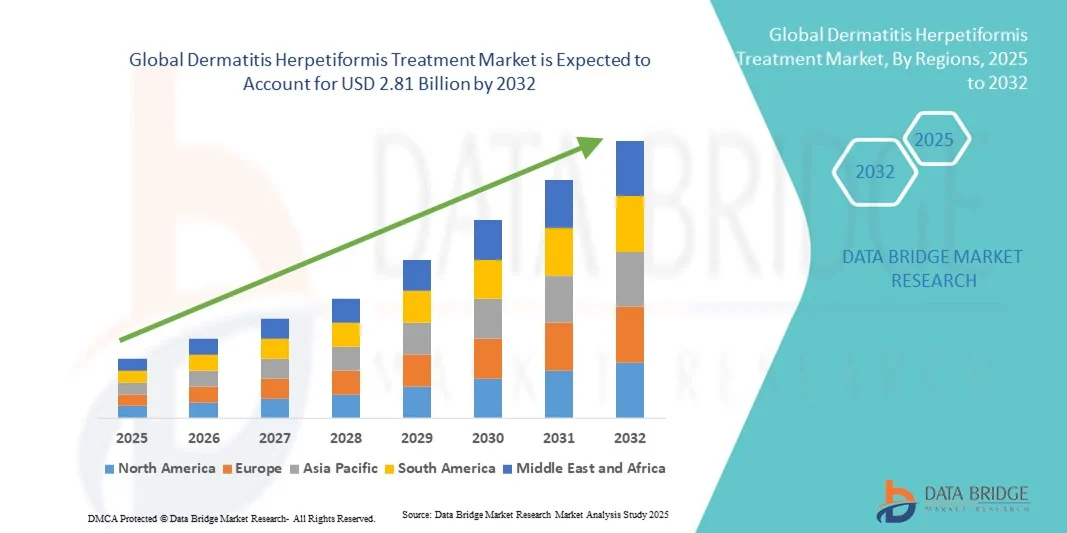
- The global dermatitis herpetiformis treatment market size was valued at USD 1.70 billion in 2024 and is expected to reach USD 2.81 billion by 2032, at a CAGR of 6.50% during the forecast period
- This growth is primarily driven by increasing awareness and diagnosis rates of dermatitis herpetiformis (DH), a chronic autoimmune skin condition linked to gluten sensitivity
- Rising consumer demand for effective, user-friendly, and integrated treatment solutions for both residential and commercial settings is establishing DH treatments as the modern approach to managing this condition. These converging factors are accelerating the adoption of DH treatment solutions, thereby significantly boosting the industry's growth
Dermatitis Herpetiformis Treatment Market Analysis
- Dermatitis herpetiformis (DH) treatments, including medications and therapies targeting the autoimmune skin condition associated with gluten sensitivity, are increasingly essential in both clinical and home-based care settings due to their effectiveness in managing chronic symptoms, reducing flare-ups, and improving patient quality of life
- The rising demand for DH treatments is primarily driven by increasing awareness, improved diagnostic rates, growing prevalence of celiac disease, and the need for convenient, effective, and patient-friendly management solutions
- North America dominated the dermatitis herpetiformis treatment market with the largest revenue share of 43% in 2024, characterized by early adoption of advanced healthcare technologies, high healthcare spending, and a strong presence of leading pharmaceutical companies, with the U.S. showing significant growth in treatment adoption, driven by innovations in drug therapies and personalized patient care approaches
- Asia-Pacific is expected to be the fastest-growing region in the dermatitis herpetiformis treatment market during the forecast period due to increasing healthcare awareness, rising disposable incomes, and improving access to specialized dermatological care
- Medication segment dominated the dermatitis herpetiformis treatment market with a market share of 60.5% in 2024, driven by its established efficacy, patient adherence, and integration into standard treatment protocols for long-term management of DH symptoms
Report Scope and Dermatitis Herpetiformis Treatment Market Segmentation
|
Attributes |
Dermatitis Herpetiformis Treatment Key Market Insights |
|
Segments Covered |
|
|
Countries Covered |
North America
Europe
Asia-Pacific
Middle East and Africa
South America
|
|
Key Market Players |
|
|
Market Opportunities |
|
|
Value Added Data Infosets |
In addition to the insights on market scenarios such as market value, growth rate, segmentation, geographical coverage, and major players, the market reports curated by the Data Bridge Market Research also include in-depth expert analysis, patient epidemiology, pipeline analysis, pricing analysis, and regulatory framework |
Dermatitis Herpetiformis Treatment Market Trends
Advancement in Targeted and Personalized Therapies
- A significant and accelerating trend in the global dermatitis herpetiformis treatment market is the development of targeted and personalized drug therapies that aim to minimize symptoms while reducing side effects
- For instance, newer dapsone formulations with modified-release profiles enable tailored dosing to individual patient needs, improving adherence and tolerability. Biologic therapies and enzyme-based treatments are being explored to provide more precise intervention at the molecular level, potentially offering long-term symptom relief
- Digital health platforms and mobile apps are facilitating personalized treatment plans, enabling patients and clinicians to monitor disease activity and optimize therapy schedules remotely
- This trend towards individualized, evidence-based treatments is fundamentally reshaping patient expectations for DH management, with companies such as Alnylam Pharmaceuticals developing RNAi-based therapies targeting specific autoimmune pathways
- The demand for personalized and precision DH treatments is increasing across both clinical and home-care settings, as patients prioritize efficacy, convenience, and reduced adverse effects
- Telemedicine consultations are gaining traction, allowing dermatologists to remotely assess symptoms and adjust treatment plans without requiring in-person visits
- Collaborations between pharmaceutical companies and tech firms are enhancing treatment monitoring and adherence through smart devices and connected healthcare solutions
Dermatitis Herpetiformis Treatment Market Dynamics
Driver
Increasing Awareness and Diagnosis Rates
- The rising prevalence of celiac disease and autoimmune skin conditions, along with improved awareness among patients and healthcare professionals, is a key driver for the growth of the DH treatment market
- For instance, in March 2024, GlaxoSmithKline launched awareness campaigns to improve early DH diagnosis and patient adherence to treatment protocols
- Early diagnosis allows for timely intervention with dapsone and gluten-free diet adherence, which can prevent severe flare-ups and complications
- Healthcare initiatives promoting education on gluten sensitivity and autoimmune disorders are increasing patient demand for effective DH treatments
- The combination of better diagnostic tools, patient education, and growing healthcare access is propelling the adoption of DH treatment solutions in both developed and emerging markets
- Rising social media influence and patient advocacy groups are educating individuals about DH symptoms, driving more patients to seek medical care and treatment
- Increasing investment in research for novel therapies and improved formulations is expanding the range of available treatment options, further boosting market growth
Restraint/Challenge
Limited Drug Options and High Treatment Costs
- The restricted number of approved medications for dermatitis herpetiformis, coupled with high costs for novel therapies, is a major challenge for market expansion
- For instance, advanced biologics or enzyme-based treatments often come with premium pricing, limiting access for patients in developing regions or underinsured populations
- While dapsone remains the standard treatment, potential side effects such as hemolytic anemia or neuropathy can discourage long-term adherence among patients
- Regulatory hurdles for new drug approvals and clinical trials for rare autoimmune conditions further slow market growth and innovation
- Overcoming these challenges through expanded R&D, patient assistance programs, and improved affordability will be critical to sustaining DH treatment market growth
- Limited awareness and misdiagnosis in rural or low-income regions hinder timely treatment initiation, affecting overall market penetration
- Insurance coverage gaps for newer DH therapies and gluten-free diet programs continue to restrict access, posing a barrier to wider adoption
Dermatitis Herpetiformis Treatment Market Scope
The market is segmented on the basis of treatment, route of administration, end-user, and distribution channel.
- By Treatment
On the basis of treatment, the dermatitis herpetiformis treatment market is segmented into diet and medication. The medication segment dominated the market with the largest revenue share of 60.5% in 2024, primarily due to the widespread use of dapsone and sulfonamide drugs as first-line therapies for controlling symptoms such as blistering and itching. Medications provide rapid relief by targeting the autoimmune response, making them indispensable for managing flare-ups. Increased physician preference for pharmacological therapy and the growing introduction of advanced formulations, such as sustained-release dapsone, have further reinforced this segment’s dominance. In addition, ongoing R&D in biologics and enzyme inhibitors is expanding therapeutic options, supporting long-term market growth.
The diet segment is anticipated to witness the fastest growth rate from 2025 to 2032, driven by increasing awareness of gluten-free diets as an effective, non-pharmacological management approach for DH. Patients are increasingly adopting lifelong gluten elimination to reduce dependency on drugs and prevent disease recurrence. The availability of certified gluten-free food products and personalized nutrition programs further supports this trend. Healthcare professionals now emphasize diet modification as a complementary therapy to medication, and digital health platforms promoting dietary compliance are fueling this segment’s expansion.
- By Route of Administration
On the basis of route of administration, the market is segmented into topical and oral. The oral segment dominated the market in 2024, holding the largest revenue share, as oral medications such as dapsone and sulfapyridine remain the most effective and widely prescribed options for DH management. Oral administration provides systemic effects, offering faster symptom control and long-lasting relief compared to topical treatments. The convenience of tablets and capsules for home use has enhanced patient adherence, while ongoing improvements in oral drug formulations are minimizing side effects and toxicity risks. In addition, oral therapies are easily integrated into combination treatment regimens, further strengthening their clinical utility.
The topical segment is expected to witness the fastest growth during the forecast period due to rising demand for localized, low-risk treatment alternatives. Topical corticosteroids and immunomodulators are gaining popularity for mild DH cases or as adjunct therapies to minimize oral drug dosage. For instance, the development of targeted topical formulations with improved skin penetration and lower systemic absorption is encouraging their adoption. Patients increasingly favor topical treatments for their safety profile and suitability for self-management, particularly in early-stage or less severe manifestations.
- By End-User
On the basis of end-user, the market is segmented into hospitals, clinics, and others. The hospitals segment dominated the global DH treatment market with the largest share in 2024, driven by the availability of comprehensive diagnostic facilities and advanced dermatological care. Hospitals are often the first point of diagnosis for DH due to the need for skin biopsies and immunofluorescence testing. Furthermore, hospital-based dermatologists are well-equipped to manage severe cases and monitor patients for drug-related side effects. The integration of multidisciplinary care involving dermatologists, gastroenterologists, and dietitians enhances treatment outcomes and sustains the segment’s dominance.
The clinics segment is expected to register the fastest growth rate from 2025 to 2032, owing to the growing preference for specialized dermatology and allergy clinics that provide faster consultations and follow-up care. Clinics offer personalized treatment plans, including medication management and dietary guidance, making them a preferred choice for ongoing DH monitoring. The expansion of private dermatology centers and the rise of teledermatology services are further contributing to the segment’s growth. In addition, the affordability and accessibility of outpatient care compared to hospital services make clinics an attractive option for patients with mild to moderate disease.
- By Distribution Channel
On the basis of distribution channel, the market is segmented into hospital pharmacy, retail pharmacy, and others. The hospital pharmacy segment held the largest market share in 2024, supported by the high volume of prescriptions filled through hospital networks and the presence of trained pharmacists ensuring safe medication use. Hospital pharmacies play a critical role in dispensing dapsone and monitoring its dosage due to potential side effects such as hemolysis or anemia. They also ensure adherence to gluten-free prescriptions and offer patient counseling on drug interactions. The centralized distribution system within hospitals enhances reliability, safety, and access to specialized medications.
The retail pharmacy segment is projected to exhibit the fastest growth rate during the forecast period, driven by increasing patient preference for convenience and accessibility in purchasing prescribed drugs. Retail chains and independent pharmacies are expanding their inventory to include DH-related medications and gluten-free nutritional supplements. For instance, the growing trend of e-pharmacies offering home delivery of DH treatments has significantly boosted this channel. Retail pharmacies also provide consultation and medication reminders through digital platforms, improving patient compliance and supporting the segment’s rapid expansion.
Dermatitis Herpetiformis Treatment Market Regional Analysis
- North America dominated the dermatitis herpetiformis treatment market with the largest revenue share of 43% in 2024, characterized by early adoption of advanced healthcare technologies, high healthcare spending, and a strong presence of leading pharmaceutical companies
- Consumers in the region increasingly prioritize effective disease management through personalized medication and gluten-free dietary interventions, supported by a well-established network of dermatology and gastroenterology specialists
- This widespread adoption is further supported by high healthcare spending, extensive insurance coverage, and active research initiatives aimed at developing innovative drug formulations, establishing North America as the leading region in dermatitis herpetiformis treatment advancements
U.S. Dermatitis Herpetiformis Treatment Market Insight
The U.S. dermatitis herpetiformis (DH) treatment market captured the largest revenue share of 78% in 2024 within North America, driven by increasing awareness of autoimmune skin diseases and rising diagnosis rates. Growing adoption of gluten-free diets and advanced dapsone-based therapies are improving disease management outcomes. The availability of specialized dermatology and gastroenterology care, along with strong pharmaceutical R&D activity, further supports market growth. Moreover, the increasing focus on patient-centric treatment approaches and clinical trials for novel therapeutics is strengthening the U.S. market position.
Europe Dermatitis Herpetiformis Treatment Market Insight
The Europe DH treatment market is projected to expand at a steady CAGR throughout the forecast period, fueled by growing prevalence of celiac-associated skin disorders and improved access to diagnostic services. Strict dietary regulations and higher awareness of gluten intolerance are driving demand for effective treatment and gluten-free product options. European healthcare systems emphasize early diagnosis and consistent follow-up care, boosting patient outcomes. The region also benefits from supportive reimbursement frameworks and ongoing research in autoimmune skin conditions.
U.K. Dermatitis Herpetiformis Treatment Market Insight
The U.K. DH treatment market is anticipated to grow at a noteworthy CAGR during the forecast period, driven by increasing healthcare spending and improved patient awareness of celiac-related skin diseases. The country’s focus on preventive care and diet-based therapy is promoting early detection and long-term management of DH. Moreover, collaborations between research institutions and healthcare providers are advancing treatment options, while expanding gluten-free food availability further aids patient compliance and recovery rates.
Germany Dermatitis Herpetiformis Treatment Market Insight
The Germany DH treatment market is expected to expand at a considerable CAGR during the forecast period, fueled by rising adoption of precision medicine and improved diagnostic capabilities. The country’s robust healthcare infrastructure, coupled with its emphasis on quality care and dietary management, enhances treatment outcomes for DH patients. In addition, increased awareness campaigns, coupled with the integration of digital healthcare tools for monitoring autoimmune disorders, are propelling market expansion across both hospital and retail pharmacy settings.
Asia-Pacific Dermatitis Herpetiformis Treatment Market Insight
The Asia-Pacific DH treatment market is poised to grow at the fastest CAGR of around 22% during 2025–2032, driven by rising prevalence of gluten intolerance, growing healthcare expenditure, and expanding access to specialty dermatology care in countries such as China, Japan, and India. Increased awareness of autoimmune conditions, combined with improved dietary education and digital health platforms, is fueling diagnosis and treatment rates. Furthermore, emerging pharmaceutical players and supportive government initiatives for rare disease management are accelerating market penetration across the region.
Japan Dermatitis Herpetiformis Treatment Market Insight
The Japan DH treatment market is gaining momentum due to the country’s advanced medical technology, increasing gluten sensitivity awareness, and aging population. Japanese patients are increasingly adopting medically supervised gluten-free diets and dermatologist-prescribed therapies to control DH symptoms. The integration of telemedicine and AI-based diagnostic systems is improving patient monitoring and treatment adherence. Moreover, ongoing research collaborations between universities and biopharmaceutical firms are enhancing therapeutic innovation.
India Dermatitis Herpetiformis Treatment Market Insight
The India DH treatment market accounted for the largest revenue share in Asia Pacific in 2024, driven by growing diagnostic awareness, a rapidly urbanizing population, and increasing consumption of processed foods linked to gluten sensitivity. Rising healthcare investments, expanding dermatology clinic networks, and government-led health awareness programs are promoting early disease recognition. In addition, the availability of affordable generic medications and gluten-free alternatives supports strong market growth, making India a key emerging market for DH treatment.
Dermatitis Herpetiformis Treatment Market Share
The Dermatitis Herpetiformis Treatment industry is primarily led by well-established companies, including:
- Amgen Inc. (U.S.)
- AbbVie Ltd. (U.S.)
- Bristol-Myers Squibb Company (U.S.)
- Eli Lilly and Company (U.S.)
- Pfizer Inc. (U.S.)
- Novartis AG (Switzerland)
- Sanofi (France)
- GSK plc (U.K.)
- Johnson & Johnson Services, Inc. (U.S.)
- Merck & Co., Inc. (U.S.)
- Bayer AG (Germany)
- Takeda Pharmaceutical Company Limited (Japan)
- UCB S.A. (Belgium)
- Regeneron Pharmaceuticals, Inc. (U.S.)
- Abbott (U.S.)
- Teva Pharmaceutical Industries Ltd. (Israel)
- Horizon Therapeutics plc (Ireland)
- Dermira, Inc. (U.S.)
What are the Recent Developments in Global Dermatitis Herpetiformis Treatment Market?
- In May 2025, a case report published in JAAD Case Reports documented the successful treatment of a 21-year-old female with DH using dupilumab, a monoclonal antibody targeting IL-4 and IL-13 receptors. The patient achieved complete resolution of skin lesions and significant improvement in pruritus after 19 weeks of treatment. This case suggests that dupilumab may be a promising option for patients with DH unresponsive to conventional therapies
- In March 2025, Despite the promising case report, a review published in Dr. Oracle in March 2025 advised against using dupilumab for DH due to the lack of established clinical guidelines and evidence supporting its efficacy in this specific condition. The review emphasized the need for further research before considering dupilumab as a treatment option for DH
- In January 2024, A study published in ResearchGate in January 2024 reported significant improvement in DH symptoms with the use of tofacitinib, a Janus kinase (JAK) inhibitor. The patient, who had previously not responded to other treatments, showed marked reduction in skin lesions and pruritus after initiating tofacitinib therapy. This finding suggests that JAK inhibitors may offer a new therapeutic avenue for DH patients
- In November 2022, A study published in JAAD Case Reports in November 2022 reported that dupilumab did not effectively control DH symptoms in a patient. The patient experienced a flare-up of DH after initiating dupilumab treatment, indicating that this biologic agent may not be suitable for all DH patients
- In July 2021, A review published in Medscape in July 2021 reaffirmed that dapsone remains the first-line treatment for DH. The review highlighted the importance of a gluten-free diet and the use of dapsone to manage symptoms effectively. It also noted that while other therapies are being explored, dapsone continues to be the cornerstone of DH treatment

- Interactive Data Analysis Dashboard
- Company Analysis Dashboard for high growth potential opportunities
- Research Analyst Access for customization & queries
- Competitor Analysis with Interactive dashboard
- Latest News, Updates & Trend analysis
- Harness the Power of Benchmark Analysis for Comprehensive Competitor Tracking
Data collection and base year analysis are done using data collection modules with large sample sizes. The stage includes obtaining market information or related data through various sources and strategies. It includes examining and planning all the data acquired from the past in advance. It likewise envelops the examination of information inconsistencies seen across different information sources. The market data is analysed and estimated using market statistical and coherent models. Also, market share analysis and key trend analysis are the major success factors in the market report. To know more, please request an analyst call or drop down your inquiry.
The key research methodology used by DBMR research team is data triangulation which involves data mining, analysis of the impact of data variables on the market and primary (industry expert) validation. Data models include Vendor Positioning Grid, Market Time Line Analysis, Market Overview and Guide, Company Positioning Grid, Patent Analysis, Pricing Analysis, Company Market Share Analysis, Standards of Measurement, Global versus Regional and Vendor Share Analysis. To know more about the research methodology, drop in an inquiry to speak to our industry experts.
Data Bridge Market Research is a leader in advanced formative research. We take pride in servicing our existing and new customers with data and analysis that match and suits their goal. The report can be customized to include price trend analysis of target brands understanding the market for additional countries (ask for the list of countries), clinical trial results data, literature review, refurbished market and product base analysis. Market analysis of target competitors can be analyzed from technology-based analysis to market portfolio strategies. We can add as many competitors that you require data about in the format and data style you are looking for. Our team of analysts can also provide you data in crude raw excel files pivot tables (Fact book) or can assist you in creating presentations from the data sets available in the report.












