


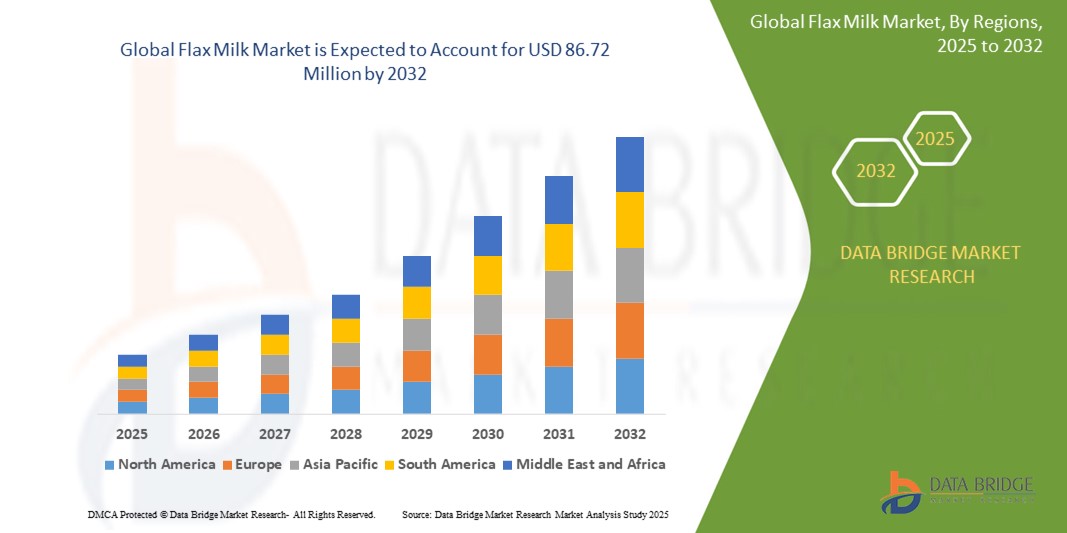
Flax Milk Market Size
- The global flax milk market size was valued at USD 47.90 million in 2024 and is expected to reach USD 86.72 million by 2032, at a CAGR of 7.70% during the forecast period
- The market growth is primarily driven by increasing consumer preference for plant-based and non-dairy milk alternatives, growing awareness of flax milk’s nutritional benefits, and the rising trend of vegan and lactose-free diets
- In addition, heightened demand for sustainable and eco-friendly food products, coupled with flax milk’s rich omega-3 fatty acid content, is positioning it as a popular choice among health-conscious consumers, significantly contributing to industry expansion
Flax Milk Market Analysis
- Flax milk, a plant-based milk derived from flaxseeds, is gaining traction as a nutritious and sustainable alternative to dairy and other non-dairy milks, offering benefits such as high omega-3 content, low calories, and allergen-free properties
- The surge in demand for flax milk is fueled by growing health consciousness, increasing prevalence of lactose intolerance, and a shift toward environmentally sustainable food choices
- North America dominated the flax milk market with the largest revenue share of 42.5% in 2024, driven by high consumer awareness of plant-based diets, strong retail infrastructure, and the presence of key market players. The U.S. leads the region, with significant adoption in health-focused retail chains and e-commerce platforms
- Asia-Pacific is expected to be the fastest-growing region during the forecast period, propelled by rising urbanization, growing disposable incomes, and increasing demand for healthy beverage options in countries such as China and India
- The unsweetened segment dominated the largest market revenue share of 45.3% in 2024, driven by consumer preference for low-sugar, health-focused options that align with dietary trends such as veganism and clean eating
Report Scope and Flax Milk Market Segmentation
|
Attributes |
Flax Milk Key Market Insights |
|
Segments Covered |
|
|
Countries Covered |
North America
Europe
Asia-Pacific
Middle East and Africa
South America
|
|
Key Market Players |
|
|
Market Opportunities |
|
|
Value Added Data Infosets |
In addition to the insights on market scenarios such as market value, growth rate, segmentation, geographical coverage, and major players, the market reports curated by the Data Bridge Market Research also include in-depth expert analysis, pricing analysis, brand share analysis, consumer survey, demography analysis, supply chain analysis, value chain analysis, raw material/consumables overview, vendor selection criteria, PESTLE Analysis, Porter Analysis, and regulatory framework. |
Flax Milk Market Trends
“Increasing Integration of Nutritional Enhancements and Functional Ingredients”
- The global flax milk market is experiencing a notable trend toward incorporating nutritional enhancements and functional ingredients to meet consumer demand for healthier, plant-based alternatives
- Advanced processing technologies enable manufacturers to fortify flax milk with vitamins, minerals, and omega-3 fatty acids, enhancing its appeal as a nutrient-rich dairy substitute
- For instances, companies such as Malibu Mylk are offering flax milk made from whole organic flaxseeds, sweetened naturally with dates, and free from added gums or synthetic vitamins, providing a fiber-rich, allergen-friendly product
- These innovations cater to health-conscious consumers seeking products that support heart health, digestion, and weight management, making flax milk more attractive to both individual consumers and foodservice industries
- Functional ingredients, such as plant-based proteins and probiotics, are being added to flax milk to enhance its versatility in applications such as smoothies, cereals, and baked goods
Flax Milk Market Dynamics
Driver
“Rising Demand for Plant-Based and Sustainable Beverages”
- The growing consumer preference for plant-based, vegan, and sustainable food options is a major driver for the global flax milk market
- Flax milk, derived from flaxseeds, offers a low environmental footprint compared to traditional dairy, with reduced greenhouse gas emissions and water usage, appealing to eco-conscious consumers
- Health-conscious consumers are drawn to flax milk’s high omega-3 fatty acid content, dietary fiber, and antioxidants, which support heart health, digestion, and overall wellness
- The proliferation of vegan eateries and cafes, particularly in regions such as Europe and North America, is increasing the visibility and demand for flax milk as a dairy alternative in beverages and culinary applications
- Retail expansion, including the availability of flax milk in hypermarkets/supermarkets, online stores, convenience stores, and other retail formats, is making the product more accessible to a broader consumer base
Restraint/Challenge
“High Production Costs and Limited Consumer Awareness”
- The high cost of producing flax milk, including sourcing organic flaxseeds and implementing advanced processing techniques, poses a significant barrier to market growth, particularly in cost-sensitive emerging markets
- The niche nature of flax milk, compared to more established plant-based milks such as almond or oat milk, results in limited economies of scale, increasing production and retail costs
- Consumer awareness of flax milk’s nutritional benefits and culinary uses remains relatively low in many regions, particularly in Asia-Pacific and Latin America, hindering widespread adoption
- Data from market analyses indicates that while North America dominates the flax milk market due to high consumer awareness and demand for organic products, the lack of education and marketing efforts in other regions limits market expansion
- Compliance with stringent food safety regulations and accurate labeling for nutritional content and allergens adds further complexity and cost for manufacturers, potentially deterring smaller players from entering the market
Flax Milk market Scope
The market is segmented on the basis of type and distribution channel.
- By Type
On the basis of type, the global flax milk market is segmented into original, flavoured, plain, and unsweetened. The unsweetened segment dominated the largest market revenue share of 45.3% in 2024, driven by consumer preference for low-sugar, health-focused options that align with dietary trends such as veganism and clean eating. Unsweetened flax milk is widely used in smoothies, coffee, and other beverages as a versatile dairy alternative.
The flavoured segment is expected to witness the fastest growth rate of 8.2% from 2025 to 2032, propelled by increasing consumer demand for diverse taste profiles and innovative flavor offerings, such as vanilla, chocolate, and fruit-based variants. Manufacturers are leveraging product innovation to cater to evolving consumer preferences, enhancing market appeal and adoption.
- By Distribution Channel
On the basis of distribution channel, the global flax milk market is segmented into hypermarkets/supermarkets, online stores, convenience stores, and other retail formats. The hypermarkets/supermarkets segment dominated the market with a revenue share of 47.2% in 2024, driven by their extensive reach, diverse product offerings, and strategic promotions such as discounts and bundled plant-based products. These retail formats provide convenience and accessibility, appealing to urban consumers seeking plant-based alternatives.
The online stores segment is anticipated to experience the fastest growth rate of 9.1% from 2025 to 2032. The rise of e-commerce platforms, coupled with increasing digital literacy and consumer preference for convenient doorstep delivery, is driving the expansion of online retail. Strategic partnerships between flax milk producers and e-commerce giants further enhance market reach and brand visibility, particularly in regions with growing internet penetration.
Flax Milk Market Regional Analysis
- North America dominated the flax milk market with the largest revenue share of 42.5% in 2024, driven by high consumer awareness of plant-based diets, strong retail infrastructure, and the presence of key market players. The U.S. leads the region, with significant adoption in health-focused retail chains and e-commerce platforms
- Consumers prioritize flax milk for its nutritional benefits, including high omega-3 fatty acids, fiber, and low-fat content, particularly in regions with growing health-conscious populations
- Growth is supported by advancements in product formulations, such as flavored and fortified options, alongside rising adoption in both retail and foodservice segments
U.S. Flax Milk Market Insight
The U.S. flax milk market captured the largest revenue share of 79.6% in 2024 within North America, fueled by strong demand for plant-based milk alternatives and growing awareness of health benefits such as heart health and weight management. The trend towards veganism and increasing regulations promoting clean labelling further boost market expansion. Major brands such as Good Karma Foods and Elmhurst 1925 complement retail sales, creating a robust product ecosystem.
Europe Flax Milk Market Insight
The Europe flax milk market is expected to witness significant growth, supported by regulatory emphasis on sustainable and organic products. Consumers seek flax milk for its nutritional profile and eco-friendly production, with growth prominent in both retail and foodservice applications. Countries such as Germany and the U.K. show significant uptake due to rising veganism and environmental concerns.
U.K. Flax Milk Market Insight
The U.K. market for flax milk is expected to witness rapid growth, driven by demand for cruelty-free and plant-based products in urban and suburban settings. Increased interest in health-conscious diets and awareness of flax milk’s omega-3 and fiber benefits encourage adoption. Evolving regulations on food safety and labeling influence consumer choices, balancing nutritional appeal with compliance.
Germany Flax Milk Market Insight
Germany is expected to witness rapid growth in the flax milk market, attributed to its advanced food processing sector and high consumer focus on health and sustainability. German consumers prefer unsweetened and fortified flax milk that supports heart health and digestion. The integration of these products in retail and foodservice applications supports sustained market growth.
Asia-Pacific Flax Milk Market Insight
The Asia-Pacific region is expected to witness the fastest growth rate, driven by expanding health consciousness and rising disposable incomes in countries such as China, India, and Japan. Increasing awareness of flax milk’s nutritional benefits, including omega-3 content and sustainability, boosts demand. Government initiatives promoting plant-based diets and environmental sustainability further encourage the use of flax milk.
Japan Flax Milk Market Insight
Japan’s flax milk market is expected to witness rapid growth due to strong consumer preference for high-quality, nutrient-rich plant-based milk alternatives that enhance health and wellness. The presence of major food and beverage manufacturers and integration of flax milk in retail and foodservice accelerate market penetration. Rising interest in organic and sustainable products also contributes to growth.
China Flax Milk Market Insight
China holds the largest share of the Asia-Pacific flax milk market, propelled by rapid urbanization, rising vegan populations, and increasing demand for plant-based milk alternatives. The country’s growing middle class and focus on healthy diets support the adoption of flax milk. Strong domestic manufacturing capabilities and competitive pricing enhance market accessibility.
Flax Milk Market Share
The flax milk industry is primarily led by well-established companies, including:
- Good Karma Foods (U.S.)
- FlaxUSA (U.S.)
- OOOMEGA (Austria)
- GO BEYOND LLC, (U.K.)
- Fleming Marrs Inc. (U.S.)
- Linwoods Health Foods (Ireland)
- Manitoba Milling Company (Canada)
- Nourish Organic Foods Pvt. Ltd. (India)
- Chaitanya Agro Herbals (India)
- Quadra Chemicals Ltd. (Canada)
- Omega Protein Corporation (U.S.)
- ALL ORGANIC TREASURES GMBH (Germany)
- Environmental Working Group (U.S.)
What are the Recent Developments in Global Flax Milk Market?
- In September 2024, companies in the flax milk market have prioritized allergy-friendly formulations, ensuring products are free from common allergens such as nuts, dairy, soy, lactose, and gluten. This focus caters to a wider consumer base with dietary restrictions, offering nutrient-rich, plant-based alternatives. Brands are introducing fortified options with calcium, vitamin D, and B12, alongside protein-enhanced variations such as pea protein blends. These innovations align with growing demand for safe, inclusive dairy-free choices
- In March 2024, companies in the flax milk market have focused on product innovation, introducing flaxseed milk formulations that support heart health and digestive wellness. These advancements include new flavors, fortified options with calcium, vitamin D, and vitamin B12, and protein-enriched variations such as pea protein blends. The market is expanding due to growing consumer demand for nutrient-rich, dairy-free alternatives.
- In April 2022, Malibu Mylk, a California-based non-dairy beverage brand, introduced Flax Mylk, the first-ever milk made from whole, organic flax seeds. Unlike traditional flax milk, this allergen-free alternative retains the entire flaxseed, ensuring high fiber content and vegan omega-3 benefits. It is free from gums, oils, and synthetic vitamins, with sweetened varieties using dates instead of refined sugar. Available in 700 U.S. grocery stores, Flax Mylk is also sold online via Thrive Market and Malibu Mylk’s website
- In April 2022, Scaler Bakery introduced Golden Flax Seed Scala Bread, expanding its flax-based product range beyond milk. This launch aligns with the growing flax milk market in North America and Europe, highlighting the versatility of flax seeds in baked goods. The bread promotes health benefits, including omega-3 fatty acids and protein content, catering to health-conscious consumers. This innovation reflects the broader application of flax seeds in functional foods
- In August 2021, Good Karma Foods launched its Flaxmilk line, marking its entry into the flax milk market. This plant-based beverage is enriched with essential Omega-3 fatty acids, leveraging the superfood properties of flax seeds to enhance nutrition, taste, and texture. Free from major allergens, Flaxmilk offers a creamy, fresh alternative with 1,200 mg of Omega-3s per serving, making it a leading contender in the dairy-free segment

- Interactive Data Analysis Dashboard
- Company Analysis Dashboard for high growth potential opportunities
- Research Analyst Access for customization & queries
- Competitor Analysis with Interactive dashboard
- Latest News, Updates & Trend analysis
- Harness the Power of Benchmark Analysis for Comprehensive Competitor Tracking
Global Flax Milk Market, Supply Chain Analysis and Ecosystem Framework
To support market growth and help clients navigate the impact of geopolitical shifts, DBMR has integrated in-depth supply chain analysis into its Global Flax Milk Market research reports. This addition empowers clients to respond effectively to global changes affecting their industries. The supply chain analysis section includes detailed insights such as Global Flax Milk Market consumption and production by country, price trend analysis, the impact of tariffs and geopolitical developments, and import and export trends by country and HSN code. It also highlights major suppliers with data on production capacity and company profiles, as well as key importers and exporters. In addition to research, DBMR offers specialized supply chain consulting services backed by over a decade of experience, providing solutions like supplier discovery, supplier risk assessment, price trend analysis, impact evaluation of inflation and trade route changes, and comprehensive market trend analysis.
Data collection and base year analysis are done using data collection modules with large sample sizes. The stage includes obtaining market information or related data through various sources and strategies. It includes examining and planning all the data acquired from the past in advance. It likewise envelops the examination of information inconsistencies seen across different information sources. The market data is analysed and estimated using market statistical and coherent models. Also, market share analysis and key trend analysis are the major success factors in the market report. To know more, please request an analyst call or drop down your inquiry.
The key research methodology used by DBMR research team is data triangulation which involves data mining, analysis of the impact of data variables on the market and primary (industry expert) validation. Data models include Vendor Positioning Grid, Market Time Line Analysis, Market Overview and Guide, Company Positioning Grid, Patent Analysis, Pricing Analysis, Company Market Share Analysis, Standards of Measurement, Global versus Regional and Vendor Share Analysis. To know more about the research methodology, drop in an inquiry to speak to our industry experts.
Data Bridge Market Research is a leader in advanced formative research. We take pride in servicing our existing and new customers with data and analysis that match and suits their goal. The report can be customized to include price trend analysis of target brands understanding the market for additional countries (ask for the list of countries), clinical trial results data, literature review, refurbished market and product base analysis. Market analysis of target competitors can be analyzed from technology-based analysis to market portfolio strategies. We can add as many competitors that you require data about in the format and data style you are looking for. Our team of analysts can also provide you data in crude raw excel files pivot tables (Fact book) or can assist you in creating presentations from the data sets available in the report.













