Hair Styling Products Market Size
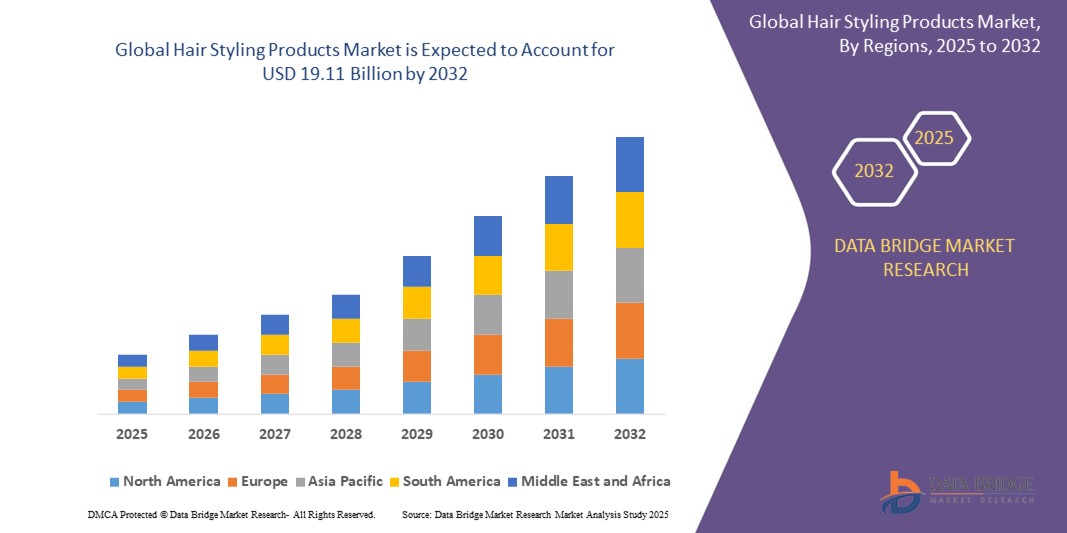
- The global hair styling products market size was valued at USD 11.12 billion in 2024 and is expected to reach USD 19.11 billion by 2032, at a CAGR of 7.00% during the forecast period
- The market growth is largely fueled by increasing consumer awareness regarding personal grooming and appearance, along with the influence of fashion trends and social media, driving demand for a wide range of hair styling products across all age groups
- Furthermore, rising demand for multifunctional and natural ingredient-based hair styling solutions is encouraging innovation and product development, thereby enhancing consumer engagement and significantly boosting the industry's growth
Hair Styling Products Market Analysis
- Hair styling products, including gels, waxes, sprays, mousses, pomades, and creams, are essential components of personal grooming routines across diverse consumer segments, driven by rising beauty consciousness and the growing influence of fashion trends through digital platforms and celebrity endorsements
- The demand for hair styling products is significantly fueled by the increasing focus on individual appearance, the rising number of salon services, and the expanding male grooming sector, particularly in urban areas and emerging economies
- North America dominates the hair styling products market with the largest revenue share of 32.6% in 2025, supported by high consumer spending on premium grooming products, strong brand presence, and a mature salon industry, with the U.S. witnessing growing demand for natural and multifunctional hair styling solutions
- Asia-Pacific is expected to be the fastest growing region in the hair styling products market during the forecast period due to rising disposable incomes, increasing urbanization, and the growing influence of K-beauty and global grooming trends among the youth population in countries such as India, China, and South Korea
- Hair gels segment is expected to dominate the hair styling products market with a market share of 36.9% in 2025, owing to its versatility, strong hold, and increasing popularity among both male and female consumers for structured and long-lasting hairstyles
Report Scope and Hair Styling Products Market Segmentation
|
Attributes |
Hair Styling Products Key Market Insights |
|
Segments Covered |
|
|
Countries Covered |
North America
Europe
Asia-Pacific
Middle East and Africa
South America
|
|
Key Market Players |
|
|
Market Opportunities |
|
|
Value Added Data Infosets |
In addition to the insights on market scenarios such as market value, growth rate, segmentation, geographical coverage, and major players, the market reports curated by the Data Bridge Market Research also include in-depth expert analysis, pricing analysis, brand share analysis, consumer survey, demography analysis, supply chain analysis, value chain analysis, raw material/consumables overview, vendor selection criteria, PESTLE Analysis, Porter Analysis, and regulatory framework. |
Hair Styling Products Market Trends
“Rising Demand for Natural, Multifunctional, and Gender-Inclusive Products”
- A significant and accelerating trend in the global hair styling products market is the shift towards natural, clean-label, and multifunctional formulations that cater to a wide spectrum of consumer preferences, including those seeking sustainable, non-toxic, and gender-inclusive beauty solutions. This evolution is reshaping product innovation and marketing strategies across the industry
- For instance, in March 2024, Unilever’s brand SheaMoisture expanded its “Men of Color” product range with styling products made from natural ingredients such as coconut oil and shea butter, responding to increasing demand for culturally inclusive and nourishing haircare solutions. Similarly, L'Oréal Professionnel has launched products under its Source Essentielle line that are vegan, sulfate-free, and composed of up to 99% natural-origin ingredients
- Multifunctionality is becoming a key product driver, with consumers increasingly preferring styling products that offer benefits beyond hold and texture. For example, in July 2023, Redken launched its Quick Blowout Heat Protection Spray which offers both styling and heat protection while improving hair manageability and shine — appealing especially to consumers looking to simplify their beauty routines
- There is also a rising trend toward gender-neutral branding in styling products. In April 2024, Prose introduced a customizable hair styling range marketed as gender-inclusive, reflecting growing consumer awareness and expectations around identity representation and personalization in grooming
- With increasing environmental awareness, sustainable packaging and cruelty-free certifications are becoming central to product positioning. For instance, in May 2023, Aveda launched new eco-conscious styling products packaged in recyclable bottles made with post-consumer recycled materials, reinforcing its brand ethos around environmental responsibility
- This trend toward natural, personalized, and ethically-conscious hair styling products is expected to further intensify as Gen Z and millennial consumers continue to demand transparency, efficacy, and inclusive representation from beauty brands globally
Hair Styling Products Market Dynamics
Driver
“Growing Demand Due to Beauty Consciousness, Digital Influence, and Male Grooming Expansion”
- The rising global emphasis on personal appearance, driven by increased beauty consciousness and the influence of digital media, is a significant driver for the growing demand for hair styling products. Consumers are becoming more experimental and willing to invest in haircare routines, boosting the consumption of styling products across genders and age groups
- For instance, in February 2024, L'Oréal announced a strategic expansion of its Studio Line styling range, specifically targeting Gen Z consumers through influencer marketing campaigns on TikTok and Instagram. This move reflects how digital trends are shaping purchasing decisions in the hair styling segment
- The expansion of the male grooming market has become a key growth driver, especially in emerging economies where grooming is increasingly associated with professionalism and self-confidence. In March 2024, Beardo (India) launched a new line of hair waxes and styling gels tailored specifically for men, addressing rising demand from urban millennial and Gen Z demographics
- Moreover, growing participation in social and professional activities post-pandemic has revitalized consumer interest in hair aesthetics. Events, office re-openings, and social media presence are motivating consumers to invest in styling products to enhance their appearance
- The availability of a broad variety of products—such as gels for long-lasting hold, sprays for volume, and creams for texture—enables customization for diverse hair types and styles, further encouraging regular use among consumers
- Retail innovations, including the growing presence of hair styling products in e-commerce platforms and subscription models, are also boosting accessibility and convenience, particularly among younger, tech-savvy consumers, thereby accelerating market growth across both developed and emerging regions
Restraint/Challenge
“Concerns over Harmful Ingredients and Rising Regulatory Scrutiny”
- Concerns surrounding the use of potentially harmful ingredients such as parabens, sulfates, phthalates, and alcohol in hair styling products are emerging as significant restraints on market growth. Increasing consumer awareness about health and environmental impacts is leading to greater scrutiny of product formulations and brand transparency
- For instance, in October 2023, several hair styling products sold in the U.S. were voluntarily recalled after the FDA raised concerns over the presence of undisclosed allergens and banned substances. This incident led to heightened consumer apprehension and prompted brands to reformulate or relabel their offerings
- Increasing global regulatory pressure is also posing challenges for manufacturers. The European Commission and regulatory bodies in countries such as Canada and Japan are tightening controls on ingredients used in cosmetic products, leading to potential delays in product launches and higher reformulation costs
- Addressing these concerns requires investment in research and development to create clean, safe, and effective alternatives that meet both regulatory standards and consumer expectations. Brands such as NATULIQUE and The Body Shop have begun emphasizing “free-from” claims (e.g., paraben-free, cruelty-free) in response to this shift in consumer priorities
- In addition, the rising cost of natural, certified organic ingredients—along with sustainable packaging—can drive up the final product price, which may act as a barrier for price-sensitive consumers in emerging markets
- Overcoming these challenges will depend on greater ingredient transparency, increased regulatory compliance, and the ability to balance safety, efficacy, and affordability in product innovation
Hair Styling Products Market Scope
The market is segmented on the basis of product, distribution channel, end use, and application.
• By Product
On the basis of product, the hair styling products market is segmented into hair gel, hair mousse, hairspray, styling creams and waxes, styling spray, and others. The hairspray segment dominates the largest market revenue share in 2025, driven by its long-standing popularity for providing hold and volume, especially in professional and consumer hairstyling routines. Hairsprays are widely favored for their versatility across hair types and styles, as well as their frequent use in salons and at-home applications
The styling creams and waxes segment is anticipated to witness the fastest growth rate from 2025 to 2032, fueled by increasing demand for natural looks, texture definition, and flexible hold. Styling creams and waxes offer enhanced nourishment and are increasingly being formulated with natural and organic ingredients, appealing to health-conscious and sustainability-driven consumers. The rise in male grooming trends and customization needs is further boosting demand in this segment
• By Distribution Channel
On the basis of distribution channel, the hair styling products market is segmented into warehouse clubs, convenience stores, specialist retailers, supermarkets and hypermarkets, variety stores, online retail, departmental stores, and others. The supermarkets and hypermarkets segment held the largest market revenue share in 2025, driven by their wide geographic presence, product variety, and promotional discounts, which attract a large customer base seeking convenience and affordability
The online retail segment is expected to witness the fastest CAGR from 2025 to 2032, driven by growing digital penetration, changing consumer buying behavior, and the convenience of home delivery. Online platforms also enable brands to reach a broader audience and leverage targeted marketing, reviews, and influencer collaborations to drive conversions
• By End-use
On the basis of end-use, the hair styling products market is segmented into male and female. The female segment accounted for the largest market revenue share in 2025, driven by high usage frequency, a wider range of product preferences, and increasing interest in hairstyling for different occasions. The introduction of gender-specific products and campaigns further strengthens brand loyalty among female consumers
The male segment is expected to witness the fastest CAGR from 2025 to 2032, supported by the growing male grooming culture, increasing awareness of appearance among men, and a rising number of brands launching male-centric styling lines. Demand is especially strong in urban and millennial demographics across emerging economies
• By Application
On the basis of application, the hair styling products market is segmented into household and commercial. The household segment accounted for the largest market revenue share in 2025, driven by increased at-home grooming during and after the pandemic, the influence of DIY tutorials on digital platforms, and the growing availability of professional-grade products for home use
The commercial segment is expected to witness the fastest CAGR from 2025 to 2032, driven by the expansion of salons, spas, and grooming studios globally. The professional sector increasingly demands high-performance styling products with long-lasting effects, contributing to the segment’s rapid growth
Hair Styling Products Market Regional Analysis
- North America dominates the hair styling products market with the largest revenue share of approximately 32.6% in 2025, driven by high consumer spending on personal care, widespread product availability, and strong influence from fashion and entertainment industries
- Consumers in the region highly value innovative formulations, premium product offerings, and the ability to achieve salon-like styling at home, leading to consistent demand across genders and age groups
- This widespread adoption is further supported by a well-established grooming culture, aggressive marketing by key brands, and the rapid growth of online retail platforms, establishing hair styling products as essential items in daily grooming routines for both household and professional use
U.S. Hair Styling Products Market Insight
The U.S. hair styling products market captured the largest revenue share within North America in 2025, fueled by a strong culture of personal grooming and styling innovation. Consumers increasingly seek diverse styling solutions that cater to varying hair types and trends, with growing demand for products that offer long-lasting hold and natural finishes. The expanding influence of social media and celebrity endorsements further drives market growth, alongside a surge in online retail channels providing easy access to premium and niche brands
Europe Hair Styling Products Market Insight
The European hair styling products market is projected to expand at a substantial CAGR throughout the forecast period, driven by rising awareness of personal grooming and a strong demand for professional-quality styling products. Stringent regulations on product safety and sustainability encourage manufacturers to innovate with natural and eco-friendly formulations. Increasing urbanization and a vibrant fashion industry stimulate consumption across residential and commercial sectors, with salons playing a significant role in market dynamics
U.K. Hair Styling Products Market Insight
The U.K. hair styling products market is anticipated to grow at a noteworthy CAGR during the forecast period, supported by the rising trend of personal grooming and increasing male grooming awareness. The growing popularity of multifunctional and styling products tailored to local hair textures and preferences boosts demand. The U.K.'s developed retail infrastructure, including a robust online presence, facilitates widespread product availability, driving market expansion
Germany Hair Styling Products Market Insight
The German hair styling products market is expected to expand at a considerable CAGR during the forecast period, fueled by growing consumer interest in sustainable and dermatologically tested products. Germany’s emphasis on high-quality, innovative hair care solutions, combined with a rising trend toward professional salon treatments at home, supports market growth. The country’s strong retail network and focus on eco-conscious consumers influence product development and consumption patterns
Asia-Pacific Hair Styling Products Market Insight
The Asia-Pacific hair styling products market is poised to grow at the fastest CAGR in 2025, driven by rapid urbanization, increasing disposable incomes, and rising awareness of personal grooming in countries such as China, India, Japan, and South Korea. The expanding youth population and influence of global fashion trends significantly boost demand. Growing penetration of e-commerce and increasing adoption of premium and organic styling products further propel market growth in the region
Japan Hair Styling Products Market Insight
The Japan hair styling products market is gaining momentum due to the country’s advanced beauty culture, preference for innovative and high-tech hair care solutions, and strong focus on quality and safety. Japanese consumers favor products that offer natural looks and multifunctional benefits, aligning with trends towards minimalistic and refined styling. The aging population also drives demand for gentle, easy-to-use styling products suitable for mature hair
China Hair Styling Products Market Insight
The China hair styling products market accounted for the largest market revenue share in Asia-Pacific in 2025, attributed to rapid urbanization, growing middle-class consumer base, and strong digital influence on beauty routines. Consumers show increasing interest in international brands and new product launches, with significant growth in demand for styling products that cater to diverse hair types and personalized styling needs. Government support for the cosmetics industry and the rise of professional salons contribute to market expansion
Hair Styling Products Market Share
The hair styling products industry is primarily led by well-established companies, including:
- L'oreal SA (France)
- Revlon, Inc. (U.S.)
- Coty, Inc. (U.K.)
- Indus Valley (India)
- Combe Incorporated (U.S.)
- Hoyu Co., Ltd (Japan)
- John Paul Mitchell Systems (U.S.)
- Cover Your Gray (U.S.)
- Kao Corporation (Japan)
- NATULIQUE ApS (Denmark)
- Puig (Spain)
- Coty Inc. (U.S.)
- Kao Corporation (Japan)
- The Estée Lauder Companies Inc. (U.S.)
- Oriflame Cosmetics AG (Switzerland)
- KOSÉ Corporation (Japan)
- CHANEL (U.K.)
Latest Developments in Global Hair Styling Products Market
-
In April 2024, The Estée Lauder Companies revealed groundbreaking research from its leading hair care brands, AVEDA and Bumble and bumble, in partnership with the University of Bradford. Their collaboration showcased advancements across multiple research areas, addressing the evolving needs of personal and professional hair care. Presented at the 13th World Congress for Hair Research, the findings focused on ingredient potency, environmental effects on hair fibers, scalp health, and reducing hair color damage. These innovations aim to set new industry standards and enhance hair care practices
- In February 2024, HASK launched the Tea Tree Oil & Rosemary Scalp Detox Dry Shampoo, a lightweight formula designed to refresh and rebalance the scalp. Infused with ultra-fine rice starch, it effectively removes oil, impurities, and odor while providing a cooling sensation to soothe greasy or itchy scalps. The dry shampoo revitalizes hair without leaving behind a chalky residue, making it a convenient solution for maintaining freshness between washes
- In June 2023, Procter & Gamble introduced #HairDNA, an innovative haircare microsite designed to provide expert advice and personalized solutions for consumers' top hair concerns. Launched exclusively on Lazada, Southeast Asia’s leading e-commerce platform, this initiative marked P&G’s first retailer partnership in the region. The microsite offers tailored recommendations across P&G brands, including Head & Shoulders, Pantene, Herbal Essences, and Rejoice, helping shoppers discover the best products for their unique hair needs
- In September 2022, L'Oréal Canada's Professional Products Division launched "Power of the Collective," a free online Diversity and Inclusion training program for hairstylists across Canada. This initiative aims to educate stylists on the diversity of hair types, fostering an inclusive and trusted salon environment. The first-year curriculum consists of six modules focused on haircutting, led by international experts specializing in different hair textures. The second year will emphasize styling techniques, while the third year will cover hair coloring. This program is designed to enhance hairstylists' expertise and promote diversity in the industry
- In December 2021, Procter & Gamble acquired Ouai, the haircare and styling brand founded by celebrity hairstylist Jen Atkin, marking its entry into the prestige haircare sector. Ouai, known for its minimalist aesthetic and sophisticated scents, will continue to operate independently under P&G’s ownership, maintaining its distinct identity within the beauty industry. Atkin will remain as Founder and Chief Creative Officer, ensuring the brand’s vision stays intact. This acquisition aligns with P&G’s strategy to expand into high-end haircare while leveraging Ouai’s strong consumer engagement

- Interactive Data Analysis Dashboard
- Company Analysis Dashboard for high growth potential opportunities
- Research Analyst Access for customization & queries
- Competitor Analysis with Interactive dashboard
- Latest News, Updates & Trend analysis
- Harness the Power of Benchmark Analysis for Comprehensive Competitor Tracking
Data collection and base year analysis are done using data collection modules with large sample sizes. The stage includes obtaining market information or related data through various sources and strategies. It includes examining and planning all the data acquired from the past in advance. It likewise envelops the examination of information inconsistencies seen across different information sources. The market data is analysed and estimated using market statistical and coherent models. Also, market share analysis and key trend analysis are the major success factors in the market report. To know more, please request an analyst call or drop down your inquiry.
The key research methodology used by DBMR research team is data triangulation which involves data mining, analysis of the impact of data variables on the market and primary (industry expert) validation. Data models include Vendor Positioning Grid, Market Time Line Analysis, Market Overview and Guide, Company Positioning Grid, Patent Analysis, Pricing Analysis, Company Market Share Analysis, Standards of Measurement, Global versus Regional and Vendor Share Analysis. To know more about the research methodology, drop in an inquiry to speak to our industry experts.
Data Bridge Market Research is a leader in advanced formative research. We take pride in servicing our existing and new customers with data and analysis that match and suits their goal. The report can be customized to include price trend analysis of target brands understanding the market for additional countries (ask for the list of countries), clinical trial results data, literature review, refurbished market and product base analysis. Market analysis of target competitors can be analyzed from technology-based analysis to market portfolio strategies. We can add as many competitors that you require data about in the format and data style you are looking for. Our team of analysts can also provide you data in crude raw excel files pivot tables (Fact book) or can assist you in creating presentations from the data sets available in the report.