Herbal Tea Market Size
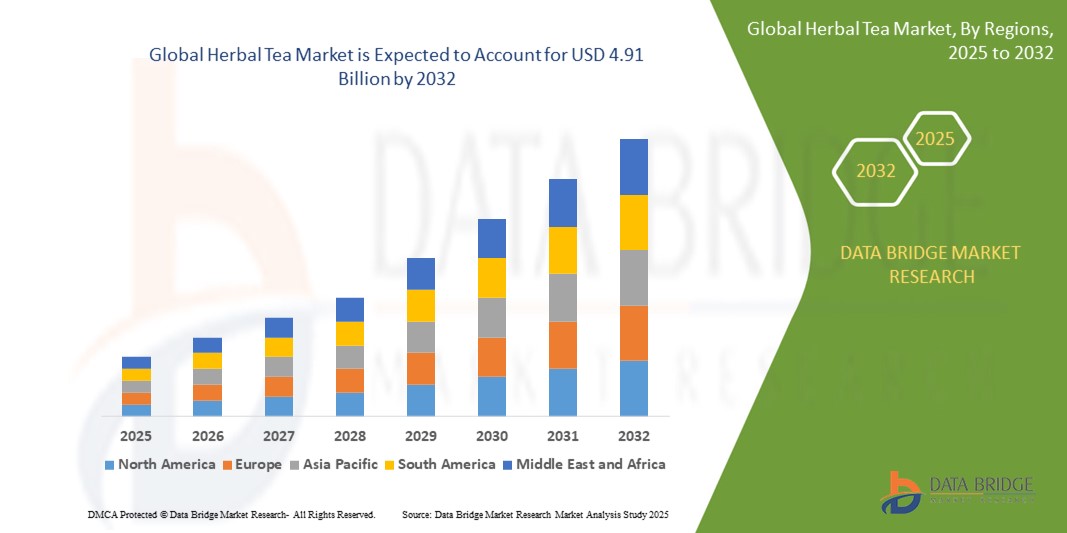
- The global herbal tea market size was valued at USD 3.82 billion in 2024 and is expected to reach USD 4.91 billion by 2032, at a CAGR of 3.20% during the forecast period
- The market growth is primarily driven by increasing consumer awareness of health and wellness, growing demand for natural and organic beverages, and the rising popularity of functional teas that offer specific health benefits
- In addition, the shift toward sustainable and eco-friendly packaging, coupled with the expansion of e-commerce platforms, is boosting the adoption of herbal tea products globally, further accelerating industry growth
Herbal Tea Market Analysis
- Herbal teas, made from dried herbs, spices, fruits, and other plant materials, are gaining popularity as a natural, caffeine-free alternative to traditional teas, appealing to health-conscious consumers in both residential and commercial settings
- The demand for herbal teas is fueled by growing awareness of their health benefits, such as improved digestion, stress relief, and enhanced cognitive function, alongside a rising preference for clean-label and organic products
- Asia-Pacific dominated the herbal tea market with the largest revenue share of 42.5% in 2024, driven by a strong cultural affinity for tea consumption, established herbal tea traditions, and the presence of key producers in countries such as China and India
- North America is expected to be the fastest-growing region during the forecast period, propelled by increasing consumer interest in wellness products, rising disposable incomes, and the growing popularity of specialty and functional teas
- The chamomile segment dominated the largest market revenue share of 34% in 2024, driven by its widespread popularity for its calming properties, stress relief, and digestive benefits, appealing to health-conscious consumers seeking relaxation
Report Scope and Herbal Tea Market Segmentation
|
Attributes |
Herbal Tea Key Market Insights |
|
Segments Covered |
|
|
Countries Covered |
North America
Europe
Asia-Pacific
Middle East and Africa
South America
|
|
Key Market Players |
|
|
Market Opportunities |
|
|
Value Added Data Infosets |
In addition to the insights on market scenarios such as market value, growth rate, segmentation, geographical coverage, and major players, the market reports curated by the Data Bridge Market Research also include in-depth expert analysis, pricing analysis, brand share analysis, consumer survey, demography analysis, supply chain analysis, value chain analysis, raw material/consumables overview, vendor selection criteria, PESTLE Analysis, Porter Analysis, and regulatory framework. |
Herbal Tea Market Trends
“Increasing Integration of Functional Ingredients and Sustainable Packaging”
- The global herbal tea market is experiencing a significant trend toward the integration of functional ingredients and sustainable packaging solutions
- Functional ingredients, such as superfoods and probiotics, are being incorporated to enhance the health benefits of herbal teas, targeting cognitive health, gut and digestive health, and multifunctional wellness
- These ingredients provide specific benefits such as stress relief, improved digestion, and immune support, aligning with consumer demand for holistic health solutions
- For instance, brands such as Organic India and Clipper Tea Company have introduced innovative blends such as Tulsi Detox Kahwa and orange & turmeric herbal tea, catering to wellness-focused consumers
- Sustainable packaging, including biodegradable tea bags, compostable pouches, and recyclable carton packs, is gaining traction as consumers prioritize eco-friendly products. Brands such as Twinings and Bigelow are leading with 100% biodegradable carton packs and plastic-free tea bags
- This trend enhances the appeal of herbal teas for health-conscious and environmentally aware consumers, driving market growth
Herbal Tea Market Dynamics
Driver
“Rising Demand for Health and Wellness Beverages”
- Increasing consumer awareness of health and wellness is a major driver for the global herbal tea market, with demand surging for natural, organic, and caffeine-free beverages
- Herbal teas, such as chamomile, ginger, and peppermint, are sought after for their therapeutic properties, including stress relief, digestive health, and immune system support
- Government initiatives promoting sustainable agricultural practices and organic certifications in regions such as Asia-Pacific and Europe are encouraging the production of high-quality herbal teas
- The rise of e-commerce platforms has expanded access to diverse herbal tea blends, enabling consumers to explore premium and specialty teas tailored to their preferences
- Manufacturers are increasingly offering ready-to-drink (RTD) herbal teas and innovative blends to meet the demand for convenient, health-focused beverages
Restraint/Challenge
“High Production Costs and Regulatory Compliance”
- The high cost of sourcing organic and ethically produced ingredients, along with the development of sustainable packaging, poses a significant barrier to market growth, particularly for small-scale producers in emerging markets
- Integrating functional ingredients, such as adaptogens or probiotics, into herbal tea formulations can be complex and costly, increasing retail prices and limiting affordability
- Regulatory challenges related to health claims and ingredient safety vary across regions, creating compliance issues for international manufacturers. For instances, differing standards in Asia-Pacific, North America, and Europe complicate product development and marketing
- Consumer concerns about the authenticity of health claims and the environmental impact of packaging materials can deter purchases, especially in regions with high awareness of sustainability and ethical sourcing
- These factors may slow market expansion in cost-sensitive markets and regions with stringent regulatory frameworks
Herbal Tea market Scope
The market is segmented on the basis of type, function, packaging type, raw material, product type, application, and distribution channel.
- By Type
On the basis of type, the global herbal tea market is segmented into cinnamon, dandelion, chamomile, ginger, turmeric, blends, and others. The chamomile segment dominated the largest market revenue share of 34% in 2024, driven by its widespread popularity for its calming properties, stress relief, and digestive benefits, appealing to health-conscious consumers seeking relaxation. Its versatility for hot and cold consumption further boosts its dominance.
The turmeric segment is expected to witness the fastest growth rate from 2025 to 2032, fueled by increasing consumer awareness of its anti-inflammatory and antioxidant properties, coupled with its vibrant flavor profile appealing to wellness-focused individuals.
- By Function
On the basis of function, the global herbal tea market is segmented into cognitive health, gut and digestive health, multifunctional, and others. The gut and digestive health segment accounted for the largest market revenue share of 40% in 2024, driven by rising consumer awareness of the importance of gut health and the popularity of ingredients such as ginger, peppermint, and fennel for digestive support.
The multifunctional segment is anticipated to experience the fastest growth rate from 2025 to 2032, as consumers increasingly seek herbal teas with multiple health benefits, such as stress relief, immune support, and detoxification, driven by the inclusion of adaptogens and superfoods.
- By Packaging Type
On the basis of packaging type, the global herbal tea market is segmented into loose tea, paper pouches, tea bags, carton packs, and can packaging. The tea bags segment dominated with a market revenue share of 39% in 2024, attributed to their convenience, portability, and ease of use, particularly for busy consumers and luxury hospitality settings.
The loose tea segment is expected to witness the fastest growth rate from 2025 to 2032, driven by growing demand for premium tea experiences, where consumers value the ability to customize flavor strength and engage in a ritualistic brewing process, supported by the rise of specialty tea shops and online retailers.
- By Raw Material
On the basis of raw material, the global herbal tea market is segmented into green tea, black tea, and yellow tea. The green tea segment held the largest market revenue share of 50% in 2024, owing to its widespread use in herbal tea formulations and its association with health benefits such as antioxidant properties and metabolism support.
The yellow tea segment is expected to grow at the fastest rate from 2025 to 2032, driven by its smoother taste and unique fermentation process, which appeals to consumers seeking novel and wellness-focused beverages.
- By Product Type
On the basis of product type, the global herbal tea market is segmented into syrups, premixes, powdered ready-to-drink, and liquid ready-to-drink. The liquid ready-to-drink segment accounted for the largest market revenue share of 45% in 2024, driven by the growing demand for convenient, on-the-go beverage options that cater to busy lifestyles.
The powdered ready-to-drink segment is anticipated to witness the fastest growth rate from 2025 to 2032, fueled by innovations in portable, easy-to-prepare herbal tea formulations that align with consumer preferences for convenience and health-focused products.
- By Application
On the basis of application, the global herbal tea market is segmented into commercial consumption and individual consumption. The individual consumption segment dominated with a market revenue share of 60% in 2024, driven by increasing consumer preference for natural, organic, and health-oriented beverages for personal wellness.
The commercial consumption segment is expected to experience rapid growth from 2025 to 2032, fueled by the rising incorporation of herbal teas in hospitality settings, such as cafes, restaurants, and luxury hotels, where premium and functional tea blends are integrated into gourmet menus.
- By Distribution Channel
On the basis of distribution channel, the global herbal tea market is segmented into store-based and non-store-based. The store-based segment held the largest market revenue share of 32% in 2024, driven by the wide availability of herbal tea products in supermarkets, hypermarkets, and specialty stores, where consumers can physically interact with products.
The non-store-based segment is anticipated to witness the fastest growth rate of 7.2% from 2025 to 2032, propelled by the rise of e-commerce platforms, subscription services, and direct-to-consumer models, which provide access to a broader range of herbal tea varieties and cater to the growing demand for convenience.
Herbal Tea Market Regional Analysis
- Asia-Pacific dominated the herbal tea market with the largest revenue share of 42.5% in 2024, driven by a strong cultural affinity for tea consumption, established herbal tea traditions, and the presence of key producers in countries such as China and India
- Consumers prioritize herbal teas for their functional benefits, such as cognitive health, digestive support, and stress relief, particularly in regions with growing health consciousness
- Growth is supported by innovations in tea blends, sustainable packaging, and rising adoption across commercial and individual consumption segments
U.S. Herbal Tea Market Insight
The U.S. herbal tea market is expected to witness significant growth, fueled by rising consumer awareness of wellness and natural remedies. Demand for herbal teas such as chamomile, ginger, and turmeric is driven by their health benefits and increasing popularity in cafes and retail. Evolving consumer preferences for organic and sustainable products, along with strong e-commerce growth, further boost market expansion.
Europe Herbal Tea Market Insight
The European herbal tea market is experiencing robust growth, driven by consumer demand for functional beverages that support health and wellness. Countries such as Germany and the U.K. show significant uptake due to rising environmental consciousness and a shift toward natural products. The market is supported by both commercial consumption in cafes and individual consumption through retail and online channels.
U.K. Herbal Tea Market Insight
The U.K. market for herbal teas is expected to grow steadily, driven by increasing demand for wellness-focused beverages and sustainable packaging options such as tea bags and carton packs. Consumers are drawn to blends offering cognitive and digestive health benefits. Regulatory emphasis on clean-label products and growing e-commerce penetration further encourage market growth.
Germany Herbal Tea Market Insight
Germany’s herbal tea market is poised for strong growth, supported by its health-conscious consumer base and preference for premium, organic herbal teas. Demand for functional teas, such as those promoting gut health and stress relief, is high. The integration of innovative blends and eco-friendly packaging in both retail and commercial settings drives sustained market expansion.
Asia-Pacific Herbal Tea Market Insight
The Asia-Pacific region dominates the global herbal tea market, propelled by deep-rooted tea culture, rising disposable incomes, and growing health awareness in countries such as China, India, and Japan. Demand for herbal teas, including green tea-based and blended varieties, is fueled by their health benefits and aesthetic appeal. Government initiatives promoting natural and sustainable products further support market growth.
Japan Herbal Tea Market Insight
Japan’s herbal tea market is experiencing rapid growth, driven by consumer preference for high-quality, health-focused teas such as green tea and chamomile blends. The presence of major tea manufacturers and the integration of herbal teas in both commercial and individual consumption accelerate market penetration. Rising interest in ready-to-drink and premix products also contributes to growth.
China Herbal Tea Market Insight
China holds the largest share of the Asia-Pacific herbal tea market, driven by rapid urbanization, increasing health consciousness, and a growing middle class. Demand for herbal teas such as ginger, turmeric, and dandelion is fueled by their functional benefits and cultural significance. Strong domestic production, competitive pricing, and expanding distribution channels, including non-store-based platforms, enhance market accessibility.
Herbal Tea Market Share
The herbal tea industry is primarily led by well-established companies, including:
- Tata Consumer Product Limited (India)
- Unilever (U.K.)
- Associated British Foods plc (U.K.)
- VAHDAM (India)
- Celestial Seasonings (U.S.)
- The Bombay Burmah Trading Corporation, Limited (India)
- Stash Tea (U.S.)
- Bigelow Tea (U.S.)
- Shangri La Tea Company Inc. (U.S.)
- Yogi (U.S.)
- PEET'S COFFEE (Canada)
- Numi, Inc. P.B.C (U.S.)
- Ono Teas (India)
- Dilmah Ceylon Tea Company PLC (Sri Lanka)
- Apeejay Surrendra Group (India)
What are the Recent Developments in Global Herbal Tea Market?
- In December 2024, Supreme Plc, a UK-based manufacturer of vapes, beverages, and consumer goods, acquired the iconic Typhoo Tea brand out of administration. The acquisition included Typhoo’s stock and trade debtors and marked a pivotal step in Supreme’s broader diversification strategy beyond vaping. With Typhoo’s strong brand recognition and established distribution across UK supermarkets, health retailers, and international markets, Supreme aims to rejuvenate the 121-year-old tea brand—particularly in the herbal and wellness tea segments
- In June 2023, Bigelow Tea and Stony Creek Brewery, two family-owned Connecticut-based companies, teamed up to launch a pair of tea-infused craft beers: No Comment and Carpe Tea-em. This marked their first-ever collaboration, blending Bigelow’s iconic teas with Stony Creek’s brewing expertise to create unique flavor profiles. No Comment is a smooth German-style lager infused with Bigelow’s “Constant Comment”—a blend of black tea, orange peel, and sweet spices—while Carpe Tea-em is a citrusy Hefeweizen brewed with Earl Grey tea. The partnership reflects a growing trend of cross-category innovation, appealing to both craft beer enthusiasts and wellness-minded tea drinkers
- In September 2023, Paris-based wellness tea brand Panda Tea announced a strategic partnership with global travel retailer Dufry to launch a curated collection of six premium organic herbal tea blends tailored for travelers. These blends—focused on energy, relaxation, digestion, and sleep—are crafted to offer wellness and comfort during journeys. The collaboration is set to expand Panda Tea’s footprint to over 20 international airports across the Americas, Europe, Asia, and the Middle East by the end of 2024. This move reflects the growing demand for health-conscious, travel-friendly beverage options in global retail spaces
- In June 2023, Traditional Medicinals, a leader in botanical wellness, introduced its Organic Lemon Ginger tea to the Canadian market. Crafted with a blend of organic ginger, lemon peel, lemongrass, and hibiscus, the tea offers a zesty, spicy flavor profile designed to support digestive health. This launch expanded the brand’s Canadian portfolio, aligning with its mission to deliver functional, plant-powered wellness through ethically sourced, organic ingredients. The blend is caffeine-free and formulated by expert herbalists, appealing to health-conscious consumers seeking natural digestive support
- In September 2022, Harney & Sons Fine Teas unveiled a whimsical collaboration with Disney, launching a limited-edition Disney Collection of herbal and specialty teas inspired by five iconic characters: Mickey Mouse, Minnie Mouse, Snow White, Jasmine, and Moana. Each blend was crafted to reflect the personality and charm of its namesake, using ingredients such as rosehips, vanilla, jasmine, apple pieces, and tropical flavors. The teas were packaged in collectible tins featuring character artwork, combining storytelling with sensory experience. This creative partnership not only expanded Harney & Sons’ brand visibility but also tapped into Disney’s global fanbase through nostalgic, lifestyle-driven marketing

- Interactive Data Analysis Dashboard
- Company Analysis Dashboard for high growth potential opportunities
- Research Analyst Access for customization & queries
- Competitor Analysis with Interactive dashboard
- Latest News, Updates & Trend analysis
- Harness the Power of Benchmark Analysis for Comprehensive Competitor Tracking
Global Herbal Tea Market, Supply Chain Analysis and Ecosystem Framework
To support market growth and help clients navigate the impact of geopolitical shifts, DBMR has integrated in-depth supply chain analysis into its Global Herbal Tea Market research reports. This addition empowers clients to respond effectively to global changes affecting their industries. The supply chain analysis section includes detailed insights such as Global Herbal Tea Market consumption and production by country, price trend analysis, the impact of tariffs and geopolitical developments, and import and export trends by country and HSN code. It also highlights major suppliers with data on production capacity and company profiles, as well as key importers and exporters. In addition to research, DBMR offers specialized supply chain consulting services backed by over a decade of experience, providing solutions like supplier discovery, supplier risk assessment, price trend analysis, impact evaluation of inflation and trade route changes, and comprehensive market trend analysis.
Data collection and base year analysis are done using data collection modules with large sample sizes. The stage includes obtaining market information or related data through various sources and strategies. It includes examining and planning all the data acquired from the past in advance. It likewise envelops the examination of information inconsistencies seen across different information sources. The market data is analysed and estimated using market statistical and coherent models. Also, market share analysis and key trend analysis are the major success factors in the market report. To know more, please request an analyst call or drop down your inquiry.
The key research methodology used by DBMR research team is data triangulation which involves data mining, analysis of the impact of data variables on the market and primary (industry expert) validation. Data models include Vendor Positioning Grid, Market Time Line Analysis, Market Overview and Guide, Company Positioning Grid, Patent Analysis, Pricing Analysis, Company Market Share Analysis, Standards of Measurement, Global versus Regional and Vendor Share Analysis. To know more about the research methodology, drop in an inquiry to speak to our industry experts.
Data Bridge Market Research is a leader in advanced formative research. We take pride in servicing our existing and new customers with data and analysis that match and suits their goal. The report can be customized to include price trend analysis of target brands understanding the market for additional countries (ask for the list of countries), clinical trial results data, literature review, refurbished market and product base analysis. Market analysis of target competitors can be analyzed from technology-based analysis to market portfolio strategies. We can add as many competitors that you require data about in the format and data style you are looking for. Our team of analysts can also provide you data in crude raw excel files pivot tables (Fact book) or can assist you in creating presentations from the data sets available in the report.