


Hydrocephalus Shunts Market Size
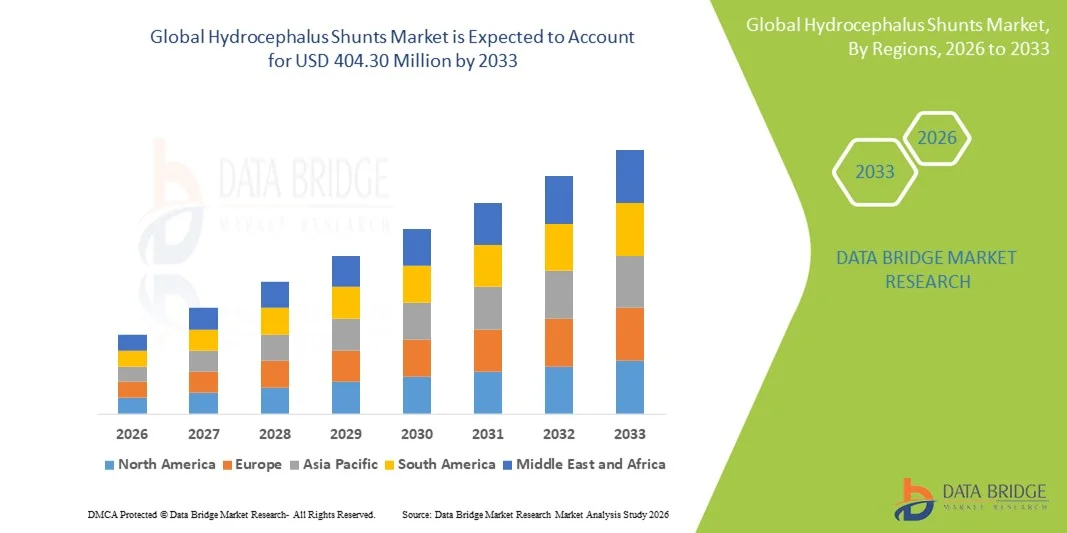
- The global hydrocephalus shunts market size was valued at USD 330.02 million in 2025 and is expected to reach USD 404.30 million by 2033, at a CAGR of 2.57% during the forecast period
- The market growth is primarily driven by the rising prevalence of hydrocephalus across pediatric and adult populations, along with continuous technological advancements in shunt systems that improve pressure regulation, durability, and patient outcomes
- Furthermore, increasing awareness, improved access to neurosurgical care, and growing demand for reliable, long-term cerebrospinal fluid management solutions are positioning hydrocephalus shunts as a critical standard of care, thereby significantly accelerating overall market growth
Hydrocephalus Shunts Market Analysis
- Hydrocephalus shunts, used to manage excess cerebrospinal fluid accumulation in the brain, are essential neurosurgical devices for treating hydrocephalus across pediatric and adult populations, playing a critical role in preventing increased intracranial pressure and related neurological complications
- The growing demand for hydrocephalus shunts is primarily driven by the rising prevalence of congenital and acquired hydrocephalus, increasing survival rates of premature infants, and continuous technological advancements in shunt components that enhance safety, accuracy, and long-term performance
- North America dominated the hydrocephalus shunts market with the largest revenue share of 39.2% in 2025, supported by well-established healthcare infrastructure, high awareness levels, and strong adoption of advanced shunt technologies, with the U.S. witnessing consistent growth due to a high volume of neurosurgical procedures and ongoing innovation by leading medical device manufacturers
- Asia-Pacific is expected to be the fastest growing region in the hydrocephalus shunts market during the forecast period due to improving access to neurosurgical care, increasing healthcare investments, and a growing pediatric population across emerging economies
- Hydrocephalus valves segment dominated the hydrocephalus shunts market with a market share of 58.6% in 2025, driven by their essential role in regulating cerebrospinal fluid flow and pressure, along with the increasing clinical adoption of programmable and pressure-adjustable valve systems
Report Scope and Hydrocephalus Shunts Market Segmentation
|
Attributes |
Hydrocephalus Shunts Key Market Insights |
|
Segments Covered |
|
|
Countries Covered |
North America
Europe
Asia-Pacific
Middle East and Africa
South America
|
|
Key Market Players |
|
|
Market Opportunities |
|
|
Value Added Data Infosets |
In addition to the insights on market scenarios such as market value, growth rate, segmentation, geographical coverage, and major players, the market reports curated by the Data Bridge Market Research also include in-depth expert analysis, patient epidemiology, pipeline analysis, pricing analysis, and regulatory framework |
Hydrocephalus Shunts Market Trends
Technological Advancements in Programmable and MRI-Compatible Shunt Systems
- A significant and accelerating trend in the global hydrocephalus shunts market is the increasing adoption of programmable and MRI-compatible shunt systems, which allow non-invasive adjustment of cerebrospinal fluid pressure settings and improve long-term patient management
- For instance, programmable valve systems from leading manufacturers enable clinicians to fine-tune pressure settings post-implantation without additional surgery, reducing revision rates and improving patient comfort and outcomes
- Technological advancements in hydrocephalus shunts include enhanced valve precision, anti-siphon mechanisms, and improved catheter materials that reduce blockage and infection risks. For instance, newer valve designs incorporate gravitational control features that adapt to patient posture and daily activity levels
- The integration of advanced shunt technologies into neurosurgical workflows facilitates more personalized treatment approaches, allowing clinicians to manage pediatric and adult hydrocephalus cases more effectively across different care settings
- This trend toward more reliable, adjustable, and patient-centric shunt systems is reshaping clinical expectations for hydrocephalus treatment. Consequently, companies such as Medtronic and Integra LifeSciences are focusing on next-generation programmable valves with enhanced safety and MRI compatibility
- The demand for technologically advanced hydrocephalus shunts is steadily increasing across hospitals and specialized neurosurgical centers, as healthcare providers prioritize improved outcomes, reduced complications, and long-term cost efficiency
- Increased collaboration between medical device manufacturers and academic research institutions is further accelerating innovation in shunt design and clinical performance validation
Hydrocephalus Shunts Market Dynamics
Driver
Rising Prevalence of Hydrocephalus and Advancements in Neurosurgical Care
- The increasing prevalence of congenital and acquired hydrocephalus, combined with advancements in neurosurgical techniques and diagnostic capabilities, is a major driver fueling demand for hydrocephalus shunts
- For instance, in 2025, several tertiary hospitals expanded pediatric neurosurgery units and adopted advanced shunt systems to manage the growing number of premature infants diagnosed with post-hemorrhagic hydrocephalus
- As awareness and early diagnosis of hydrocephalus improve, timely surgical intervention using shunt systems is becoming more common, supporting consistent demand across pediatric and adult patient populations
- Furthermore, improvements in healthcare infrastructure and access to specialized neurosurgical care are enabling higher procedure volumes, particularly in developed regions with established reimbursement frameworks
- The availability of clinically proven shunt technologies and standardized treatment protocols is increasing physician confidence, further supporting adoption in hospitals and ambulatory surgical centers
- These factors collectively reinforce hydrocephalus shunts as a critical and indispensable solution for long-term cerebrospinal fluid management, sustaining steady market growth
- Growing government and non-profit initiatives focused on pediatric neurological disorders are contributing to earlier treatment adoption and increased procedure volumes
- Expanding insurance coverage and reimbursement support for neurosurgical procedures in developed markets are further strengthening demand for hydrocephalus shunt systems
Restraint/Challenge
High Revision Rates and Infection Risks with Shunt Procedures
- The risk of shunt-related complications, including infections, blockages, and mechanical failure, remains a significant challenge limiting optimal outcomes and broader confidence in hydrocephalus shunt treatments
- For instance, clinical studies and hospital reports indicate that a notable proportion of pediatric patients require shunt revision surgeries within the first few years of implantation due to malfunction or infection
- Shunt infections can lead to prolonged hospital stays, increased healthcare costs, and adverse neurological outcomes, creating hesitation among clinicians and caregivers regarding long-term reliance on shunt-based treatment
- In addition, variability in patient anatomy and disease progression makes achieving optimal shunt performance challenging, particularly in infants and complex adult cases
- Addressing these concerns requires continued innovation in biocompatible materials, antimicrobial coatings, and improved valve designs, along with strict surgical protocols and post-operative monitoring
- Overcoming these clinical and operational challenges will be essential for enhancing treatment reliability, reducing revision rates, and ensuring sustained growth of the hydrocephalus shunts market
- Limited availability of skilled neurosurgeons in low- and middle-income regions further restricts timely access to shunt implantation procedures
- Regulatory approval complexities and lengthy clinical validation requirements for new shunt technologies can delay product commercialization and innovation uptake
Hydrocephalus Shunts Market Scope
The market is segmented on the basis of product type, age group, and end-user.
- By Product Type
On the basis of product type, the global hydrocephalus shunts market is segmented into hydrocephalus valves and hydrocephalus catheters. The hydrocephalus valves segment dominated the market in 2025 with a market share of 58.6%, driven by their critical role in regulating cerebrospinal fluid (CSF) flow and maintaining optimal intracranial pressure. Valves are the core functional component of shunt systems, directly influencing treatment effectiveness and patient outcomes. The widespread adoption of programmable and pressure-adjustable valves has further strengthened this segment, as they allow non-invasive pressure adjustments and reduce the need for revision surgeries. Hospitals and neurosurgeons increasingly prefer advanced valve technologies due to improved clinical control and flexibility in managing both pediatric and adult patients. In addition, higher pricing of valves compared to catheters contributes to their larger revenue share. Continuous innovation focused on MRI compatibility, anti-siphon features, and gravitational control mechanisms also supports the dominance of this segment.
The hydrocephalus catheters segment is expected to be the fastest growing during the forecast period, supported by rising surgical volumes and growing awareness of catheter-related complications requiring timely replacement. Technological improvements in catheter materials, such as enhanced biocompatibility and antimicrobial coatings, are improving durability and reducing infection risks. Increasing focus on reducing shunt failure rates is encouraging the adoption of next-generation catheters with improved flow dynamics. Growth is further supported by expanding access to neurosurgical procedures in emerging economies, where demand for complete shunt systems is rising. As healthcare systems emphasize long-term treatment reliability, the demand for high-quality catheters is expected to grow steadily.
- By Age Group
On the basis of age group, the hydrocephalus shunts market is segmented into pediatric and adult patients. The pediatric segment dominated the market in 2025, owing to the high prevalence of congenital hydrocephalus and post-hemorrhagic hydrocephalus in infants and young children. Premature births significantly increase the risk of hydrocephalus, leading to early diagnosis and surgical intervention. Pediatric patients often require shunt implantation at a very young age, resulting in long-term dependency on shunt systems and multiple follow-up procedures. High clinical priority for early intervention to prevent developmental delays further supports strong demand in this segment. Specialized pediatric neurosurgical units in developed healthcare systems also contribute to higher procedure volumes. In addition, strong focus on improving survival and neurological outcomes in children reinforces the dominance of the pediatric segment.
The adult segment is anticipated to be the fastest growing segment over the forecast period, driven by the increasing incidence of normal pressure hydrocephalus (NPH), brain tumors, traumatic brain injuries, and infections affecting the adult population. Aging populations, particularly in developed regions, are contributing to higher diagnosis rates of adult-onset hydrocephalus. Improved diagnostic imaging and greater awareness among clinicians are leading to increased identification and treatment of adult cases. Advances in shunt technology tailored for adult physiology are also supporting adoption. As quality-of-life outcomes gain importance in adult neurology care, demand for shunt procedures in this segment is expected to grow at a faster pace.
- By End-User
On the basis of end-user, the hydrocephalus shunts market is segmented into hospitals and ambulatory surgical centers. The hospitals segment dominated the market in 2025, driven by the complexity of hydrocephalus surgeries and the need for specialized neurosurgical infrastructure. Hospitals are equipped with advanced imaging systems, intensive care units, and multidisciplinary neurosurgical teams essential for managing high-risk pediatric and adult cases. Most shunt implantation and revision surgeries are performed in hospital settings due to the need for continuous post-operative monitoring. Higher patient inflow, availability of reimbursement support, and access to advanced programmable shunt technologies further strengthen hospital dominance. Teaching hospitals and tertiary care centers also play a major role in adopting innovative shunt systems. As a result, hospitals remain the primary end-users in this market.
The ambulatory surgical centers segment is expected to witness the fastest growth during the forecast period, supported by the increasing shift toward minimally invasive neurosurgical procedures and cost-efficient care models. Improvements in surgical techniques and patient selection criteria are enabling certain shunt-related procedures to be safely performed in outpatient settings. Ambulatory centers offer shorter hospital stays, lower procedure costs, and faster recovery times, making them attractive for selected adult patients. Growing investment in specialized outpatient surgical facilities is further accelerating this trend. As healthcare systems focus on reducing inpatient burden, ambulatory surgical centers are expected to play an increasingly important role in the hydrocephalus shunts market.
Hydrocephalus Shunts Market Regional Analysis
- North America dominated the hydrocephalus shunts market with the largest revenue share of 39.2% in 2025, supported by well-established healthcare infrastructure, high awareness levels, and strong adoption of advanced shunt technologies
- Healthcare providers in the region place strong emphasis on early diagnosis, effective long-term management, and the use of programmable and MRI-compatible shunt technologies to improve patient outcomes
- This widespread adoption is further supported by high healthcare spending, well-established reimbursement frameworks, a strong presence of leading medical device manufacturers, and the availability of specialized neurosurgical expertise, positioning hydrocephalus shunts as a standard treatment solution across pediatric and adult patient populations
U.S. Hydrocephalus Shunts Market Insight
The U.S. hydrocephalus shunts market captured the largest revenue share within North America in 2025, driven by a high prevalence of congenital and acquired hydrocephalus and the country’s advanced neurosurgical infrastructure. Healthcare providers increasingly prioritize early diagnosis and long-term disease management using technologically advanced shunt systems. Strong adoption of programmable and MRI-compatible valves, combined with high healthcare spending and favorable reimbursement policies, continues to support market growth. Moreover, the presence of leading medical device manufacturers and ongoing clinical innovation significantly contribute to the expansion of the hydrocephalus shunts market in the U.S.
Europe Hydrocephalus Shunts Market Insight
The Europe hydrocephalus shunts market is projected to expand at a steady CAGR during the forecast period, primarily driven by well-established public healthcare systems and rising awareness of neurological disorders. Increasing focus on early pediatric screening and standardized neurosurgical treatment protocols is supporting shunt adoption across the region. Growth is observed across both pediatric and adult patient populations, with hospitals being the primary treatment centers. In addition, continuous investments in healthcare infrastructure and research are encouraging the adoption of advanced shunt technologies in Europe.
U.K. Hydrocephalus Shunts Market Insight
The U.K. hydrocephalus shunts market is anticipated to grow at a noteworthy CAGR during the forecast period, supported by a strong national healthcare system and increasing emphasis on early intervention for neurological conditions. Rising awareness of normal pressure hydrocephalus among the aging population is contributing to higher diagnosis rates. The adoption of programmable shunt systems within specialized neurosurgical centers is also increasing. Furthermore, ongoing clinical research and structured care pathways are expected to sustain market growth in the U.K.
Germany Hydrocephalus Shunts Market Insight
The Germany hydrocephalus shunts market is expected to expand at a considerable CAGR, driven by the country’s advanced medical technology ecosystem and strong focus on precision healthcare. Germany’s robust hospital infrastructure and high availability of skilled neurosurgeons support consistent demand for shunt implantation procedures. Increasing adoption of technologically advanced valves and catheters aligns with the country’s emphasis on quality and patient safety. In addition, strong regulatory frameworks and insurance coverage further facilitate market growth across pediatric and adult segments.
Asia-Pacific Hydrocephalus Shunts Market Insight
The Asia-Pacific hydrocephalus shunts market is poised to grow at the fastest CAGR during the forecast period, driven by improving access to neurosurgical care, rising healthcare expenditure, and a large pediatric population. Countries such as China, India, and Japan are witnessing increasing diagnosis rates due to better imaging facilities and growing awareness. Government initiatives aimed at strengthening healthcare infrastructure are further accelerating market expansion. As access to specialized neurological care improves, demand for hydrocephalus shunt systems is expected to rise significantly across the region.
Japan Hydrocephalus Shunts Market Insight
The Japan hydrocephalus shunts market is gaining steady momentum due to the country’s advanced healthcare system and rapidly aging population. Increased incidence of adult-onset and normal pressure hydrocephalus is driving demand for shunt procedures. Japan places strong emphasis on technological precision and patient safety, supporting adoption of advanced, MRI-compatible shunt systems. Integration of standardized neurosurgical practices and strong post-operative care infrastructure further contributes to market growth.
India Hydrocephalus Shunts Market Insight
The India hydrocephalus shunts market accounted for a significant revenue share in Asia-Pacific in 2025, supported by a high birth rate, increasing cases of congenital hydrocephalus, and expanding access to pediatric neurosurgical care. Rapid improvements in healthcare infrastructure and rising awareness among clinicians are enabling earlier diagnosis and treatment. Government healthcare initiatives and the growth of tertiary care hospitals are improving procedural volumes. In addition, the availability of cost-effective shunt systems and increasing domestic manufacturing capabilities are key factors propelling market growth in India.
Hydrocephalus Shunts Market Share
The Hydrocephalus Shunts industry is primarily led by well-established companies, including:
- Medtronic (Ireland)
- Integra LifeSciences Holdings Corporation (U.S.)
- B. Braun SE (Germany)
- Sophysa SA (France)
- Natus Medical Incorporated (U.S.)
- Spiegelberg GmbH & Co. KG (Germany)
- Christoph Miethke GmbH & Co. KG (Germany)
- Kaneka Medix Corporation (Japan)
- G. Surgiwear Ltd. (India)
- HpBio Próteses, Inc. (Brazil)
- TKB Corporation (Japan)
- Phoenix Biomedical Corporation (U.S.)
- BeckerSmith Medical, Inc. (U.S.)
- Möller Medical GmbH (Germany)
- Boston Scientific Corporation (U.S.)
- MicroPort Scientific Corporation (China)
- Stryker (U.S.)
- Terumo Corporation (Japan)
- Smith & Nephew (U.K.)
- Abbott (U.S.)
What are the Recent Developments in Global Hydrocephalus Shunts Market?
- In July 2025, Harvard bioengineers developed a computational model to personalize brain shunt implants, enabling simulation of shunt performance tailored to individual anatomy and fluid dynamics, a step toward customized shunt solutions that could improve patient outcomes and reduce complications
- In March 2025, researchers reported the development of the VIEshunt, an intelligent and electromechanical prototype shunt system, representing a significant research advancement toward smart shunt technology that dynamically responds to physiological conditions to better regulate CSF drainage
- In July 2023, Anuncia Medical commercially launched the ReFlow™ Mini Flusher across leading neurosurgical centers in the U.S., expanding available tools for reducing shunt malfunction and enabling broader clinical use of the second-generation flushing technology alongside existing shunt systems
- In June 2023, Anuncia Medical announced the successful U.S. launch and first implant of its second-generation ReFlow™ Mini Flusher device, a novel non-invasive accessory for hydrocephalus shunt systems that helps restore and maintain CSF flow with a simple flush action, enabling neurosurgeons and caregivers to manage shunt occlusions more effectively
- In April 2021, Medtronic launched an advanced version of its programmable hydrocephalus shunt valve, the StrataMR II, designed to improve CSF pressure precision and reliability, helping clinicians reduce revision surgeries and better manage hydrocephalus across patient populations

- Interactive Data Analysis Dashboard
- Company Analysis Dashboard for high growth potential opportunities
- Research Analyst Access for customization & queries
- Competitor Analysis with Interactive dashboard
- Latest News, Updates & Trend analysis
- Harness the Power of Benchmark Analysis for Comprehensive Competitor Tracking
Data collection and base year analysis are done using data collection modules with large sample sizes. The stage includes obtaining market information or related data through various sources and strategies. It includes examining and planning all the data acquired from the past in advance. It likewise envelops the examination of information inconsistencies seen across different information sources. The market data is analysed and estimated using market statistical and coherent models. Also, market share analysis and key trend analysis are the major success factors in the market report. To know more, please request an analyst call or drop down your inquiry.
The key research methodology used by DBMR research team is data triangulation which involves data mining, analysis of the impact of data variables on the market and primary (industry expert) validation. Data models include Vendor Positioning Grid, Market Time Line Analysis, Market Overview and Guide, Company Positioning Grid, Patent Analysis, Pricing Analysis, Company Market Share Analysis, Standards of Measurement, Global versus Regional and Vendor Share Analysis. To know more about the research methodology, drop in an inquiry to speak to our industry experts.
Data Bridge Market Research is a leader in advanced formative research. We take pride in servicing our existing and new customers with data and analysis that match and suits their goal. The report can be customized to include price trend analysis of target brands understanding the market for additional countries (ask for the list of countries), clinical trial results data, literature review, refurbished market and product base analysis. Market analysis of target competitors can be analyzed from technology-based analysis to market portfolio strategies. We can add as many competitors that you require data about in the format and data style you are looking for. Our team of analysts can also provide you data in crude raw excel files pivot tables (Fact book) or can assist you in creating presentations from the data sets available in the report.













