


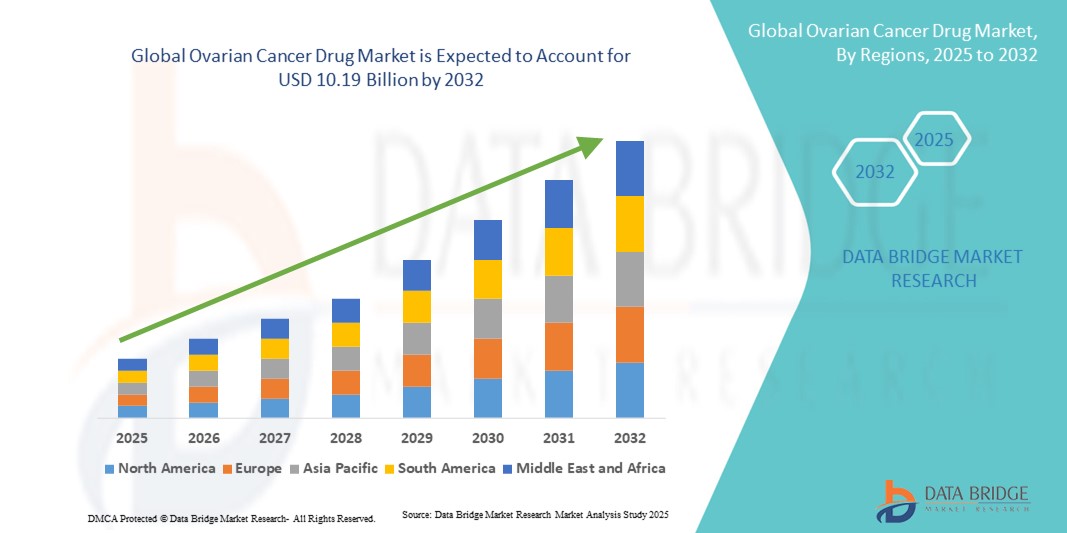
Ovarian Cancer Drug Market Size
- The global ovarian cancer drug market size was valued at USD 3.49 billion in 2024 and is expected to reach USD 10.19 billion by 2032, at a CAGR of 14.30% during the forecast period
- The market growth is largely driven by the increasing prevalence of ovarian cancer, growing awareness of early diagnosis, and continuous advancements in targeted therapies and immunotherapies
- Furthermore, rising investments in research and development, along with the expansion of healthcare infrastructure and accessibility to novel treatment options, are positioning ovarian cancer drugs as essential in modern oncology care. These converging factors are accelerating the adoption of innovative therapies, thereby significantly boosting the industry's growth
Ovarian Cancer Drug Market Analysis
- Ovarian cancer drugs, including chemotherapy agents and targeted therapies, are increasingly vital components of modern oncology treatment due to their effectiveness in improving survival, personalized dosing, and integration with precision medicine strategies
- The escalating demand for ovarian cancer drugs is primarily fueled by the rising prevalence of ovarian cancer, growing awareness of early diagnosis, and increasing preference for advanced, combination, and less toxic therapies
- North America dominated the ovarian cancer drug market with the largest revenue share of 39.4% in 2024, driven by advanced healthcare infrastructure, high healthcare expenditure, and a strong presence of leading pharmaceutical players
- Asia-Pacific is expected to be the fastest-growing region in the ovarian cancer drug market during the forecast period due to improving healthcare access, increasing oncology awareness, and rising investments in medical research and drug approvals
- Paclitaxel-based drugs dominated the ovarian cancer drug market with a market share of 38.3% in 2024, driven by their extensive use in first-line chemotherapy, established clinical efficacy, and frequent combination with platinum-based agents for enhanced therapeutic outcomes
Report Scope and Ovarian Cancer Drug Market Segmentation
|
Attributes |
Ovarian Cancer Drug Key Market Insights |
|
Segments Covered |
|
|
Countries Covered |
North America
Europe
Asia-Pacific
Middle East and Africa
South America
|
|
Key Market Players |
|
|
Market Opportunities |
|
|
Value Added Data Infosets |
In addition to the insights on market scenarios such as market value, growth rate, segmentation, geographical coverage, and major players, the market reports curated by the Data Bridge Market Research also include in-depth expert analysis, pricing analysis, brand share analysis, consumer survey, demography analysis, supply chain analysis, value chain analysis, raw material/consumables overview, vendor selection criteria, PESTLE Analysis, Porter Analysis, and regulatory framework. |
Ovarian Cancer Drug Market Trends
Advancements in Targeted and Combination Therapies
- A significant and accelerating trend in the global ovarian cancer drug market is the growing adoption of targeted therapies, including PARP inhibitors, anti-angiogenic agents, and combination regimens with platinum- and taxane-based chemotherapies. This integration of advanced therapies is significantly enhancing patient outcomes and improving progression-free survival
- For instance, drugs such as Olaparib and Niraparib are increasingly used in maintenance therapy post-chemotherapy for patients with BRCA mutations, offering a more personalized treatment approach. Similarly, combination therapies involving Paclitaxel (Taxol) and Carboplatin (Paraplatin, Paraplat) remain the cornerstone of first-line treatment due to their proven efficacy
- Advancements in therapy enable oncologists to tailor treatment based on genetic profiling, tumor stage, and prior response, improving therapeutic effectiveness while minimizing adverse effects. Furthermore, ongoing research into immunotherapies and novel drug delivery mechanisms is expanding options for resistant or recurrent ovarian cancer cases
- The integration of molecular diagnostics with treatment selection allows for a more precise approach to care, facilitating better monitoring, early intervention, and adaptation of treatment plans according to patient-specific responses
- This trend toward more targeted, personalized, and combination treatment protocols is fundamentally reshaping expectations in ovarian cancer therapy. Consequently, pharmaceutical companies such as AstraZeneca and GlaxoSmithKline are expanding R&D pipelines to focus on innovative drugs, combination therapies, and biomarker-driven treatments
- The demand for advanced ovarian cancer therapies is growing rapidly across both developed and emerging markets, as healthcare providers and patients increasingly prioritize treatment efficacy, safety, and personalized care
Ovarian Cancer Drug Market Dynamics
Driver
Rising Incidence and Growing Awareness of Early Detection
- The increasing prevalence of ovarian cancer, coupled with rising awareness of early diagnosis and treatment options, is a significant driver for the heightened demand for ovarian cancer drugs
- For instance, in 2024, multiple awareness campaigns and early screening initiatives in North America and Europe contributed to earlier detection, allowing more patients to benefit from targeted therapies and first-line chemotherapy regimens
- As patients and healthcare providers recognize the critical importance of timely intervention, drugs offering improved survival rates and reduced toxicity profiles are becoming the preferred choice
- Furthermore, expansion of healthcare infrastructure, oncology centers, and reimbursement coverage in both developed and emerging markets are enabling wider access to advanced therapies
- The growing adoption of precision medicine, genetic testing, and molecular profiling to guide treatment selection is further propelling demand, allowing clinicians to optimize drug efficacy for individual patients
Restraint/Challenge
High Treatment Costs and Side Effect Management
- The relatively high cost of novel ovarian cancer drugs, including targeted therapies and combination regimens, poses a significant challenge to broader market penetration, particularly in price-sensitive regions
- For instance, maintenance therapy with PARP inhibitors such as Olaparib or Niraparib can be cost-prohibitive without insurance coverage, limiting accessibility for many patients
- Managing side effects, including myelosuppression, neuropathy, and gastrointestinal toxicity, also presents challenges for both patients and healthcare providers, requiring careful monitoring and supportive care
- While generic chemotherapy agents such as Paclitaxel and Carboplatin remain more affordable, newer targeted drugs often involve premium pricing, which can hinder widespread adoption
- Overcoming these challenges through cost-reduction strategies, patient assistance programs, development of oral or less toxic formulations, and education on side effect management will be vital for sustained market growth
Ovarian Cancer Drug Market Scope
The market is segmented on the basis of drug class and distribution channel.
- By Drug Class
On the basis of drug class, the ovarian cancer drug market is segmented into Paclitaxel-based drugs, Cisplatin-based drugs, Carboplatin-based drugs, Doxorubicin (Adriamycin) and its liposomal formulations, Cyclophosphamide-based drugs, Gemcitabine, and Topotecan-based drugs. The Paclitaxel-based drugs segment dominated the market with the largest revenue share of 38.3% in 2024, driven by its widespread use as a first-line chemotherapy agent in combination with platinum-based drugs. Paclitaxel (Taxol) is highly effective in inhibiting ovarian cancer cell proliferation and is considered a cornerstone of standard treatment protocols. Its dominance is further reinforced by the availability of multiple branded formulations, including Taxol, which are extensively prescribed across hospitals and oncology centers. The segment benefits from established clinical efficacy, extensive physician familiarity, and strong patient outcomes, making it the preferred choice for first-line and recurrent treatment regimens.
The doxorubicin hydrochloride and liposomal formulations segment is anticipated to witness the fastest growth from 2025 to 2032, fueled by increasing adoption of less toxic and more targeted chemotherapeutic options. Liposomal Doxorubicin (DOXIL, LipoDox, Dox-SL) reduces cardiotoxicity and enhances drug delivery to tumor tissues, improving patient tolerance and quality of life. This growth is also supported by expanding awareness of liposomal therapies among oncologists and patients, coupled with ongoing research for combination therapy applications and novel delivery methods in recurrent ovarian cancer cases.
- By Distribution Channel
On the basis of distribution channel, the ovarian cancer drug market is segmented into hospital pharmacies, retail pharmacies, and online pharmacies. The hospital pharmacies segment dominated the market with a 52.7% share in 2024, as the administration of ovarian cancer drugs is largely supervised by healthcare professionals. Hospital pharmacies provide direct access to chemotherapy agents, targeted therapies, and combination regimens, ensuring safe handling, proper dosing, and patient monitoring. This segment benefits from the integration of oncology services within hospitals, clinical guidelines favoring hospital administration, and reimbursement coverage that facilitates patient access. Hospitals are also the primary source for high-cost and intravenous drugs, making this channel the largest contributor to market revenue.
The online pharmacies segment is expected to witness the fastest growth during the forecast period, driven by increasing digital adoption, convenience of home delivery, and rising availability of oral and self-administered formulations. Online pharmacies enable patients, especially in urban and semi-urban areas, to access medications without frequent hospital visits, improving adherence to treatment regimens. Growth is further supported by patient assistance programs, telemedicine consultations, and partnerships between e-pharmacies and pharmaceutical companies to deliver oncology drugs safely and efficiently
Ovarian Cancer Drug Market Regional Analysis
- North America dominated the ovarian cancer drug market with the largest revenue share of 39.4% in 2024, driven by advanced healthcare infrastructure, high healthcare expenditure, and a strong presence of leading pharmaceutical players
- Patients and healthcare providers in the region highly value the efficacy, safety, and advanced treatment options offered by targeted therapies, chemotherapy, and combination regimens, including drugs such as Paclitaxel, Carboplatin, and PARP inhibitors
- This strong market presence is further supported by high awareness of early diagnosis and treatment, extensive insurance coverage, and ongoing clinical research initiatives, establishing advanced ovarian cancer therapies as the preferred solution for improving patient outcomes across both hospital and outpatient settings
U.S. Ovarian Cancer Drug Market Insight
The U.S. ovarian cancer drug market captured the largest revenue share of 41% in 2024 within North America, driven by advanced healthcare infrastructure, strong oncology research, and high awareness of early detection programs. Patients increasingly prioritize therapies offering higher efficacy, improved progression-free survival, and manageable side effects, such as Paclitaxel, Carboplatin, and PARP inhibitors. The country has a robust network of oncology centers, hospitals, and clinical trial facilities, facilitating early adoption of novel therapies and combination regimens. In addition, widespread insurance coverage and reimbursement policies enable broader access to high-cost targeted drugs, further supporting market expansion. The growing emphasis on precision medicine, biomarker testing, and personalized treatment plans is also reinforcing the market’s growth trajectory.
Europe Ovarian Cancer Drug Market Insight
The Europe ovarian cancer drug market is projected to expand at a substantial CAGR during the forecast period, primarily driven by rising incidence rates of ovarian cancer, increasing healthcare spending, and stringent regulatory frameworks promoting early detection and treatment. Countries such as Germany, France, and Italy are witnessing growing adoption of combination chemotherapy, targeted therapies, and maintenance therapies with PARP inhibitors. European patients benefit from well-established hospital-based oncology programs and structured treatment protocols. Moreover, healthcare systems are increasingly supporting personalized medicine approaches, including genetic testing for BRCA mutations, which enables clinicians to select the most effective drugs for individual patients. This combination of advanced medical infrastructure and policy support is fueling sustained market growth.
U.K. Ovarian Cancer Drug Market Insight
The U.K. ovarian cancer drug market is anticipated to grow at a noteworthy CAGR during the forecast period, driven by increasing awareness about ovarian cancer symptoms, government-led screening programs, and adoption of advanced therapies. Patients and healthcare providers are increasingly opting for combination regimens involving platinum-based chemotherapy and novel drugs such as liposomal Doxorubicin and PARP inhibitors to improve survival rates while reducing adverse effects. The presence of strong clinical research networks, including public-private collaborations and ongoing trials, ensures early access to innovative therapies. In addition, the U.K.’s healthcare infrastructure and National Health Service (NHS) support timely treatment delivery, contributing to higher market penetration.
Germany Ovarian Cancer Drug Market Insight
The Germany ovarian cancer drug market is expected to expand at a considerable CAGR during the forecast period, fueled by high awareness of ovarian cancer, advanced medical facilities, and strong emphasis on personalized treatment options. Hospitals and oncology centers are increasingly integrating combination chemotherapy and targeted therapies into standard treatment protocols, improving patient outcomes and reducing relapse rates. Government initiatives, healthcare reimbursement policies, and support for clinical research further promote access to innovative ovarian cancer drugs. In addition, German patients benefit from the country’s focus on evidence-based medicine, leading to faster adoption of clinically validated therapies.
Asia-Pacific Ovarian Cancer Drug Market Insight
The Asia-Pacific ovarian cancer drug market is poised to grow at the fastest CAGR of 23% during 2025–2032, driven by rising ovarian cancer incidence, improving healthcare infrastructure, and increasing access to advanced therapies in countries such as China, Japan, and India. Growing awareness about early detection, government initiatives promoting cancer care, and the expansion of private and public oncology centers are supporting the adoption of combination chemotherapy and targeted therapies. The region is also witnessing increasing investments by pharmaceutical companies to introduce high-efficacy drugs at affordable prices. Moreover, the development of e-pharmacies and telemedicine platforms is enhancing patient access, especially in semi-urban and rural areas.
Japan Ovarian Cancer Drug Market Insight
The Japan ovarian cancer drug market is gaining momentum due to the country’s high healthcare standards, focus on precision medicine, and growing adoption of targeted therapies such as PARP inhibitors and liposomal Doxorubicin. Japan’s aging population, high incidence of ovarian cancer among women over 50, and preference for patient-friendly, less toxic treatments are key growth drivers. Hospitals and specialized oncology centers are increasingly integrating molecular profiling and genetic testing to optimize treatment selection. The focus on research and early adoption of innovative therapies also contributes to the rapid market expansion.
India Ovarian Cancer Drug Market Insight
The India ovarian cancer drug market accounted for the largest market revenue share in Asia-Pacific in 2024, attributed to improving healthcare infrastructure, increasing awareness of ovarian cancer, and wider availability of advanced drugs at competitive prices. Hospitals, oncology centers, and emerging e-pharmacy channels are enabling greater patient access to both chemotherapy and targeted therapies. Government initiatives such as cancer screening programs and smart city healthcare plans, combined with the growing urban middle-class population, are further driving market growth. The presence of domestic pharmaceutical manufacturers producing cost-effective drugs also enhances affordability and accessibility, expanding the market reach to a wider patient base.
Ovarian Cancer Drug Market Share
The ovarian cancer drug industry is primarily led by well-established companies, including:
- AstraZeneca (U.K.)
- Bristol-Myers Squibb Company (U.S.)
- Merck & Co., Inc. (U.S.)
- Pfizer Inc. (U.S.)
- Lilly USA, LLC (U.S.)
- Johnson & Johnson and its affiliates (U.S.)
- Novartis AG (Switzerland)
- F. Hoffmann-La Roche Ltd (Switzerland)
- Sanofi (France)
- GSK plc (U.K.)
- AbbVie Inc. (U.S.)
- Bayer AG (Germany)
- Amgen Inc. (U.S.)
- Boehringer Ingelheim International GmbH (Germany)
- Teva Pharmaceutical Industries Ltd. (Israel)
- Baxter International Inc. (U.S.)
- Hikma Pharmaceuticals PLC (U.K.)
- Eisai Co., Ltd. (Japan)
What are the Recent Developments in Global Ovarian Cancer Drug Market?
- In May 2025, Pfizer announced a substantial licensing agreement with Chinese biotechnology firm 3SBio, valued at USD 1.25 billion upfront, with potential milestones up to USD 4.8 billion. This deal grants Pfizer rights outside of China to a bispecific antibody drug candidate targeting colorectal, ovarian, and non-small cell lung cancers. The candidate is set to enter Phase III trials in China later in 2025, highlighting Pfizer's strategic expansion into innovative oncology treatments in the Asian market
- In December 2024, GlaxoSmithKline (GSK) announced that its cancer drug Jemperli (dostarlimab), when combined with standard chemotherapy and Zejula (niraparib), improved progression-free survival in patients with advanced ovarian cancer. The combination met the primary goal of a late-stage trial, offering a potential new treatment option for patients with this challenging condition
- In April 2024, Danish pharmaceutical company Genmab acquired U.S.-based biotech firm ProfoundBio for USD 1.8 billion in cash. This acquisition enhances Genmab's oncology portfolio, providing access to advanced antibody-drug conjugates (ADCs), including Rina-S, a promising drug currently in Phase 2 clinical trials for ovarian cancer. The acquisition underscores Genmab's commitment to expanding its presence in the oncology sector, particularly in ovarian cancer treatments
- In March 2024, the U.S. Food and Drug Administration (FDA) granted full approval to Elahere (mirvetuximab soravtansine-gynx) for the treatment of adult patients with folate receptor alpha (FRα)-positive, platinum-resistant epithelial ovarian, fallopian tube, or primary peritoneal cancer. This approval marked a significant advancement in targeted therapy for ovarian cancer
- In November 2023, AbbVie announced the acquisition of ImmunoGen for USD 10.1 billion, significantly enhancing its portfolio of cancer treatments. This acquisition includes Elahere, an antibody-drug conjugate for treating platinum-resistant ovarian cancer, marking a strategic move to strengthen AbbVie's oncology offerings

- Interactive Data Analysis Dashboard
- Company Analysis Dashboard for high growth potential opportunities
- Research Analyst Access for customization & queries
- Competitor Analysis with Interactive dashboard
- Latest News, Updates & Trend analysis
- Harness the Power of Benchmark Analysis for Comprehensive Competitor Tracking
Data collection and base year analysis are done using data collection modules with large sample sizes. The stage includes obtaining market information or related data through various sources and strategies. It includes examining and planning all the data acquired from the past in advance. It likewise envelops the examination of information inconsistencies seen across different information sources. The market data is analysed and estimated using market statistical and coherent models. Also, market share analysis and key trend analysis are the major success factors in the market report. To know more, please request an analyst call or drop down your inquiry.
The key research methodology used by DBMR research team is data triangulation which involves data mining, analysis of the impact of data variables on the market and primary (industry expert) validation. Data models include Vendor Positioning Grid, Market Time Line Analysis, Market Overview and Guide, Company Positioning Grid, Patent Analysis, Pricing Analysis, Company Market Share Analysis, Standards of Measurement, Global versus Regional and Vendor Share Analysis. To know more about the research methodology, drop in an inquiry to speak to our industry experts.
Data Bridge Market Research is a leader in advanced formative research. We take pride in servicing our existing and new customers with data and analysis that match and suits their goal. The report can be customized to include price trend analysis of target brands understanding the market for additional countries (ask for the list of countries), clinical trial results data, literature review, refurbished market and product base analysis. Market analysis of target competitors can be analyzed from technology-based analysis to market portfolio strategies. We can add as many competitors that you require data about in the format and data style you are looking for. Our team of analysts can also provide you data in crude raw excel files pivot tables (Fact book) or can assist you in creating presentations from the data sets available in the report.













