


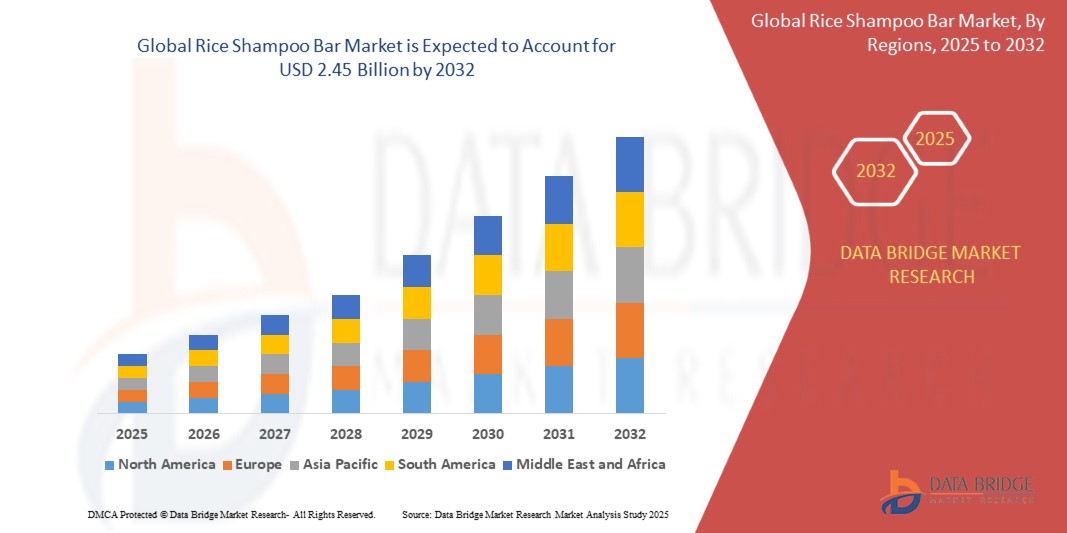
Rice Shampoo Bar Market Size
- The global rice shampoo bar market size was valued at USD 1.47 billion in 2024 and is expected to reach USD 2.45 billion by 2032, at a CAGR of 6.60% during the forecast period
- This growth is driven by factors such as the rising consumer shift towards sustainable and eco-friendly hair care products that reduce plastic waste and promote natural ingredients
Rice Shampoo Bar Market Analysis
- Rice shampoo bars are becoming a popular choice in daily hair care routines due to their gentle cleansing properties and naturally nourishing ingredients such as fermented rice water
- Their solid format and traditional formulation appeal to consumers looking for sustainable, easy-to-use products that deliver both hair health and eco-conscious benefits
- North America is expected to dominate the Rice Shampoo Bars market 38.05 % share due to strong consumer interest in eco-friendly and clean beauty products
- Asia-Pacific is expected to be the fastest growing region with a share of 9.9% in the Rice Shampoo Bar market during the forecast period due to cultural familiarity with rice-based beauty practices
- The rice bran extract surgery segment is expected to dominate the rice shampoo bar market with the largest in 2025 due to its rich antioxidant content and scalp-nourishing properties. Increasing demand for natural and functional ingredients in hair care products further supports its growth
Report Scope and Rice Shampoo Bar Market Segmentation
|
Attributes |
Rice Shampoo Bar Key Market Insights |
|
Segments Covered |
|
|
Countries Covered |
North America
Europe
Asia-Pacific
Middle East and Africa
South America
|
|
Key Market Players |
|
|
Market Opportunities |
|
|
Value Added Data Infosets |
In addition to the insights on market scenarios such as market value, growth rate, segmentation, geographical coverage, and major players, the market reports curated by the Data Bridge Market Research also include import export analysis, production capacity overview, production consumption analysis, price trend analysis, climate change scenario, supply chain analysis, value chain analysis, raw material/consumables overview, vendor selection criteria, PESTLE Analysis, Porter Analysis, and regulatory framework. |
Rice Shampoo Bar Market Trends
“Sustainable Packaging Driving Rise in Rice Shampoo Bars”
- The rice shampoo bar market is seeing increased popularity due to the growing appeal of zero-waste packaging in personal care products
- Consumers are drawn to plastic-free formats that reduce environmental impact while delivering natural hair care benefits
- Brands are emphasizing sustainable packaging made from biodegradable or recyclable materials to align with eco-conscious preferences
- The compact and travel-friendly design of rice shampoo bars also contributes to reduced shipping emissions and lower carbon footprints
- Transparent labeling and minimalistic product design further support the demand for clean and responsible consumption
- For instance, some brands use compostable wrappers or reusable tins to encourage waste-free usage from purchase to disposal
- The shift toward environmentally friendly hair care is driving more innovation in both product formulation and packaging choices
- In conclusion, as awareness of packaging waste grows, rice shampoo bars stand out as a leading example of how personal care can be both effective and eco-responsible
Rice Shampoo Bar Market Dynamics
Driver
“Eco-Conscious Packaging Fuels Rice Shampoo Bar Market”
- Leading personal care companies have been adopting shampoo bars with compact solid formats that do not require traditional liquid packaging, drastically cutting plastic usage and aligning with green product positioning seen in brands such as Ethique and Lush
- Many rice shampoo bars now feature compostable wrappers made from cornstarch or kraft paper and reusable storage tins which appeal to consumers seeking long-term sustainable lifestyle choices as observed in retail platforms such as Amazon and Whole Foods
- The solid nature of rice shampoo bars allows for concentrated formulas that last longer than liquid shampoos which reduces repurchase frequency and contributes to less packaging waste over time
- Smaller product dimensions and lightweight design help reduce transport-related emissions since more units can be shipped in less space which is a growing logistics strategy among environmentally conscious DTC brands
- The packaging often includes clean labeling with minimalistic designs using soy-based inks and recycled paper to reflect values of transparency and reduced environmental footprint appealing to the modern eco-aware shopper
Opportunity
“Growth in Clean Beauty and Minimalist Hair Care”
- The clean beauty trend is creating a strong opportunity for rice shampoo bars as consumers seek products with fewer chemicals and simpler formulations
- These bars provide gentle cleansing and nourishment using natural rice-based ingredients aligning with minimalist personal care preferences
- The appeal of using one product for multiple hair care needs supports the growing shift toward streamlined beauty routines
- For instance, rice water rinse routines have gone viral on social media driving curiosity and adoption of rice shampoo bars among beauty-conscious users
- Transparent labeling and visible ingredient lists are attracting users who prioritize clarity and performance in their personal care choices
- In conclusion, as clean beauty becomes mainstream rice shampoo bars are well placed to grow by offering simplicity and natural care in one convenient product
Restraint/Challenge
“Limited Consumer Awareness and Product Familiarity”
- Limited awareness of how to use rice shampoo bars or what benefits they offer creates hesitation among mainstream consumers especially first-time buyers
- Myths such as poor lather or unsuitability for different hair types make consumers less such as to switch from traditional liquid shampoos
- The initial transition phase to natural hair care can lead to temporary dissatisfaction which may discourage repeat purchases
- For instance, many users report needing time to adjust when moving from chemical-based products to natural bars which affects short-term perceptions
- Visibility in conventional stores is low reducing opportunities for discovery and making awareness campaigns and educational content critical for adoption
- In conclusion, until consumers feel informed and confident about rice shampoo bars this lack of familiarity may slow down their wider acceptance despite growing interest in sustainable hair care
Rice Shampoo Bar Market Scope
The market is segmented on the basis of ingredient type, packaging, end user, distribution channel, and product type.
|
Segmentation |
Sub-Segmentation |
|
By Ingredient Type |
|
|
By Packaging |
|
|
By End User |
|
|
By Distribution Chanel |
|
|
By Product Type |
|
In 2025, the Rice Bran Extract segment is projected to dominate the market with a largest share in ingredient type segment
The rice bran extract surgery segment is expected to dominate the rice shampoo bar market with the largest in 2025 due to its rich antioxidant content and scalp-nourishing properties. Increasing demand for natural and functional ingredients in hair care products further supports its growth. In addition, as awareness grows around the harmful effects of synthetic additives in conventional shampoos, consumers are increasingly gravitating towards functional botanicals like rice bran extract that offer both therapeutic and cosmetic benefits. This trend is further amplified by the clean beauty movement and eco-conscious packaging practices, making rice shampoo bars an appealing option for health- and environment-conscious.
The rice protein segment is expected to account for the largest share during the forecast period in ingredient segment market
In 2025, the rice protein segment is expected to dominate the market with the largest market due to rising demand for plant-based, sustainable ingredients. Its gentle, nourishing properties make it ideal for eco-conscious personal care products. It helps strengthen hair strands, improve elasticity, and add volume without causing irritation, making it a preferred choice in eco-conscious and sensitive-skin-friendly formulations. Additionally, its compatibility with biodegradable and zero-waste formats, such as shampoo bars, further supports its growing appeal in the natural beauty and wellness space.
Rice Shampoo Bar Market Regional Analysis
“North America Holds the Largest Share in the Rice Shampoo Bar Market”
- North America leads the rice shampoo bar market with 38.05 % share strong consumer interest in eco-friendly and clean beauty products
- The region shows high adoption of plastic-free and sustainable personal care alternatives across both urban and suburban areas
- Established personal care brands are launching solid shampoo lines that include rice-based ingredients to meet growing demand
- Consumers in the United States are particularly drawn to brands that promote cruelty-free testing and biodegradable packaging
- For instance, rice shampoo bars are increasingly featured on major e-commerce platforms and wellness retail chains across the region
- In conclusion the North American market continues to dominate due to a mature clean beauty landscape and evolving consumer values
“Asia-Pacific is Projected to Register the Highest CAGR in the Rice Shampoo Bar Market”
- Asia Pacific is witnessing rapid growth in the rice shampoo bar market with a share of 9.9% due to cultural familiarity with rice-based beauty practices
- Urban consumers are shifting toward minimalist hair care routines that emphasize gentle and natural ingredients
- The region’s younger population is highly engaged with online beauty trends driving increased interest in shampoo bars
- Local brands are innovating with traditional rice water formulations and modern packaging to appeal to contemporary users
- For instance, online influencers across Asia are popularizing rice shampoo routines leading to growing demand for natural alternatives
- In conclusion Asia Pacific is the fastest-growing region due to its alignment with natural beauty traditions and digital consumer influence
Rice Shampoo Bar Market Share
The market competitive landscape provides details by competitor. Details included are company overview, company financials, revenue generated, market potential, investment in research and development, new market initiatives, global presence, production sites and facilities, production capacities, company strengths and weaknesses, product launch, product width and breadth, application dominance. The above data points provided are only related to the companies' focus related to market.
The Major Market Leaders Operating in the Market Are:
- Lush Fresh Handmade Cosmetics (U.K.)
- Ethique (U.S.)
- JR Liggett's (U.S.)
- Chagrin Valley Soap & Salve (U.S.)
- Friendly Soap (U.K.)
- Basin White (U.S.)
- Beauty and the Bees (Australia)
- Little Seed Farm (U.S.)
- Earthy Goodness (New Zealand)
- Wildland Organics (U.S.)
- HiBAR (U.S.)
- Unwrapped Life (Canada)
- The Solid Bar Company (U.K.)
- Rocky Mountain Soap Company (Canada)
- Acure (U.S.)
- Plaine Products (U.S.)
- The Earthling Co. (U.S.)
- Biovène Barcelona (Spain)
- Balade en Provence (France)
- Eco Roots (U.S.)
Latest Developments in Global Rice Shampoo Bar Market
- In July 2022, Lush Fresh Handmade Cosmetics introduced its innovative Naked Mascara, formulated primarily with butters and waxes, reflecting its dedication to zero-waste beauty solutions. This product launch strengthened Lush’s brand identity and competitiveness in the natural and sustainable cosmetics market
- In January 2024, HiBAR, Inc. announced that it had been awarded ‘Vegan Certification’ by the Vegan Society. This achievement adds to its prior recognition, having already earned the Leaping Bunny Certification from the Coalition for Consumer Information on Cosmetics (CCIC) for its shampoo and conditioner bars. The new certification is expected to further support HiBAR’s mission to promote vegan ingredient sourcing and raise consumer awareness about the advantages of plant-based products
- In July 2024, L'Oréal S.A. and Debut Biotech formed a partnership to co-develop bio-identical ingredients for use across L'Oréal’s global beauty and personal care product lines, including skincare, haircare, color cosmetics, and fragrances. This collaboration marks a joint commitment to advancing sustainability in the beauty industry. The bio-based ingredients will be produced using Debut Biotech’s proprietary biomanufacturing platform, which leverages a combination of fermentation and cell-free technology
- In November 2023, Ethique took a significant step toward sustainability by aiming to reduce plastic bottle usage, reinforcing its commitment to eco-friendly practices. This initiative not only aligned with growing consumer demand for sustainable products but also enhanced Ethique’s reputation and positioning within the personal care industry

- Interactive Data Analysis Dashboard
- Company Analysis Dashboard for high growth potential opportunities
- Research Analyst Access for customization & queries
- Competitor Analysis with Interactive dashboard
- Latest News, Updates & Trend analysis
- Harness the Power of Benchmark Analysis for Comprehensive Competitor Tracking
Global Rice Shampoo Bar Market, Supply Chain Analysis and Ecosystem Framework
To support market growth and help clients navigate the impact of geopolitical shifts, DBMR has integrated in-depth supply chain analysis into its Global Rice Shampoo Bar Market research reports. This addition empowers clients to respond effectively to global changes affecting their industries. The supply chain analysis section includes detailed insights such as Global Rice Shampoo Bar Market consumption and production by country, price trend analysis, the impact of tariffs and geopolitical developments, and import and export trends by country and HSN code. It also highlights major suppliers with data on production capacity and company profiles, as well as key importers and exporters. In addition to research, DBMR offers specialized supply chain consulting services backed by over a decade of experience, providing solutions like supplier discovery, supplier risk assessment, price trend analysis, impact evaluation of inflation and trade route changes, and comprehensive market trend analysis.
Data collection and base year analysis are done using data collection modules with large sample sizes. The stage includes obtaining market information or related data through various sources and strategies. It includes examining and planning all the data acquired from the past in advance. It likewise envelops the examination of information inconsistencies seen across different information sources. The market data is analysed and estimated using market statistical and coherent models. Also, market share analysis and key trend analysis are the major success factors in the market report. To know more, please request an analyst call or drop down your inquiry.
The key research methodology used by DBMR research team is data triangulation which involves data mining, analysis of the impact of data variables on the market and primary (industry expert) validation. Data models include Vendor Positioning Grid, Market Time Line Analysis, Market Overview and Guide, Company Positioning Grid, Patent Analysis, Pricing Analysis, Company Market Share Analysis, Standards of Measurement, Global versus Regional and Vendor Share Analysis. To know more about the research methodology, drop in an inquiry to speak to our industry experts.
Data Bridge Market Research is a leader in advanced formative research. We take pride in servicing our existing and new customers with data and analysis that match and suits their goal. The report can be customized to include price trend analysis of target brands understanding the market for additional countries (ask for the list of countries), clinical trial results data, literature review, refurbished market and product base analysis. Market analysis of target competitors can be analyzed from technology-based analysis to market portfolio strategies. We can add as many competitors that you require data about in the format and data style you are looking for. Our team of analysts can also provide you data in crude raw excel files pivot tables (Fact book) or can assist you in creating presentations from the data sets available in the report.













