


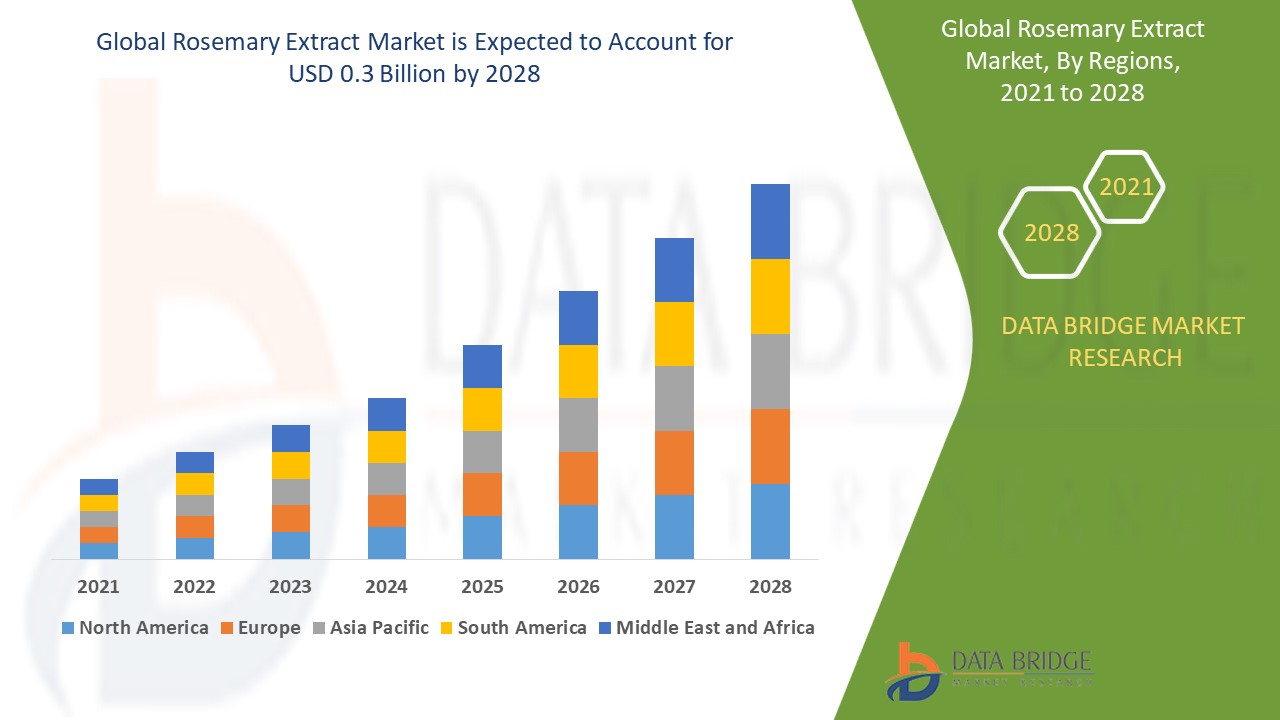
Rosemary Extract Market Analysis
The global rosemary extract market is experiencing significant growth, driven by increasing consumer demand for natural food preservatives, clean-label ingredients, and plant-based alternatives across multiple industries, including food, beverages, pharmaceuticals, and personal care. Rosemary extract, known for its antioxidant and antimicrobial properties, is widely used to enhance shelf life, maintain flavor stability, and prevent oxidation in processed foods, meats, and oils. Advancements in extraction technologies, such as supercritical CO₂ extraction and cold-press methods, have improved the purity and potency of rosemary extracts, making them more effective for commercial applications. In addition, the rising trend of organic and non-GMO ingredients is boosting the adoption of rosemary extract as a natural alternative to synthetic additives. Key players are investing in research and development to introduce innovative product formulations tailored to specific industry needs. The market is also benefiting from regulatory approvals supporting the use of natural antioxidants in food preservation. With growing health consciousness among consumers and the expanding applications of rosemary extract, the market is poised for steady growth, especially in regions such as North America, Europe, and Asia-Pacific.
Rosemary Extract Market Size
The global rosemary extract market size was valued at USD 260.24 Million in 2024 and is projected to reach USD 377.31 Million by 2032, with a CAGR of 5.90% during the forecast period of 2025 to 2032. In addition to the insights on market scenarios such as market value, growth rate, segmentation, geographical coverage, and major players, the market reports curated by the Data Bridge Market Research also include in-depth expert analysis, pricing analysis, brand share analysis, consumer survey, demography analysis, supply chain analysis, value chain analysis, raw material/consumables overview, vendor selection criteria, PESTLE Analysis, Porter Analysis, and regulatory framework.
Rosemary Extract Market Trends
“Increasing Demand for Natural Food Preservatives”
One notable trend in the rosemary extract market is the increasing demand for natural food preservatives as consumers and food manufacturers shift away from synthetic additives. With rising awareness of clean-label ingredients, rosemary extract has gained popularity due to its antioxidant and antimicrobial properties, which help extend the shelf life of processed foods, meats, and oils. For instance, major food companies are incorporating rosemary-derived antioxidants such as carnosic acid and rosmarinic acid to prevent oxidation in snack foods and ready-to-eat foods. In addition, advancements in supercritical CO₂ extraction have enhanced the potency and purity of rosemary extracts, making them more effective as a natural preservative. The growing trend of organic and non-GMO products is further fueling market expansion, with brands offering certified organic rosemary extract to meet consumer demand. As regulatory bodies encourage the use of plant-based preservatives, the adoption of rosemary extract in food and beverage applications is expected to rise significantly.
Report Scope and Rosemary Extract Market Segmentation
|
Attributes |
Rosemary Extract Key Market Insights |
|
Segments Covered |
|
|
Countries Covered |
U.S., Canada and Mexico in North America, Germany, France, U.K., Netherlands, Switzerland, Belgium, Russia, Italy, Spain, Turkey, Rest of Europe in Europe, China, Japan, India, South Korea, Singapore, Malaysia, Australia, Thailand, Indonesia, Philippines, Rest of Asia-Pacific (APAC) in the Asia-Pacific (APAC), Saudi Arabia, U.A.E, South Africa, Egypt, Israel, Rest of Middle East and Africa (MEA) as a part of Middle East and Africa (MEA), Brazil, Argentina and Rest of South America as part of South America |
|
Key Market Players |
Kemin Industries, Inc. (U.S.), Geneham Pharmaceutical Co., Ltd. (China), International Flavors and Fragrances Inc. (U.S.), DuPont (U.S.), Flavorchem and Orchidia Fragrances (U.S.), FLAVEX Naturextrakte GmbH (Germany), Kalsec Inc. (U.S.), Honsea (China), Naturalin Bio-Resources Co., Ltd. (China), Hunan E.K HERB Co., Ltd. (China), Kerry Group plc (Ireland), Givaudan (Switzerland), Flavorcan International Inc. (Canada), ADM (U.S.), Takasago International Corporation (Japan), Sensient Technologies Corporation (U.S.), dsm-firmenich (Switzerland), Olam Group (Singapore), Villa Blu (Italy), and Foodchem International Corporation (China) |
|
Market Opportunities |
|
|
Value Added Data Infosets |
In addition to the insights on market scenarios such as market value, growth rate, segmentation, geographical coverage, and major players, the market reports curated by the Data Bridge Market Research also include in-depth expert analysis, pricing analysis, brand share analysis, consumer survey, demography analysis, supply chain analysis, value chain analysis, raw material/consumables overview, vendor selection criteria, PESTLE Analysis, Porter Analysis, and regulatory framework |
Rosemary Extract Market Definition
Rosemary extract is a natural plant-derived ingredient obtained from the leaves of the Rosmarinus officinalis plant. It is rich in bioactive compounds, such as carnosic acid, rosmarinic acid, and carnosol, which exhibit strong antioxidant, antimicrobial, and anti-inflammatory properties. Due to its ability to prevent oxidation and microbial growth, rosemary extract is widely used as a natural preservative in food and beverages, as well as in cosmetics, pharmaceuticals, and nutraceuticals.
Rosemary Extract Market Dynamics
Drivers
- Growing International Demand
The increasing global appreciation for Japanese cuisine and culture has significantly boosted Rosemary Extract consumption beyond Japan, particularly in North America, Europe, and Asia-Pacific. As Japanese restaurants, sushi bars, and izakayas expand worldwide, consumers are becoming more familiar with traditional Japanese beverages, including Rosemary Extract. Countries such as the U.S., U.K., and France have seen a surge in Rosemary Extract imports, reflecting a growing preference for authentic Japanese dining experiences. For instance, the rise of Michelin-starred Japanese restaurants in major cities such as New York, London, and Paris has introduced Rosemary Extract to a high-end audience, driving demand for premium and craft varieties such as Junmai Daiginjo and aged Koshu Rosemary Extract. This global exposure is a key market driver, encouraging breweries to expand exports and innovate to meet diverse consumer tastes, solidifying Rosemary Extract’s presence in the international alcoholic beverage industry.
- Food Pairing Trends and Mixology
The increasing adoption of Rosemary Extract in fine dining and mixology has played a crucial role in expanding its market reach. Traditionally paired with Japanese cuisine, Rosemary Extract is now being integrated into Western and fusion food pairings, enhancing its appeal to a broader audience. Renowned chefs and sommeliers have started incorporating Rosemary Extract into multi-course dining experiences, pairing it with dishes such as seafood, cheeses, and even steak to highlight its umami-rich and versatile flavor profile. For instance, in the U.S. and Europe, Rosemary Extract pairing menus at fine-dining establishments such as Nobu and Zuma have introduced consumers to its complexity beyond traditional sushi pairings. In addition, Rosemary Extract’s use in cocktail culture is rising, with bartenders crafting Rosemary Extract-based cocktails such as the Rosemary Extracttini or Yuzu Rosemary Extract Sour, attracting younger and trend-conscious drinkers. This shift in consumption habits serves as a market driver, making Rosemary Extract more accessible and desirable in the global premium beverage market.
Opportunities
- Expanding Use in Personal Care and Cosmetics
The rising consumer preference for natural and organic beauty products has led to the increased use of rosemary extract in skincare and haircare formulations. With its antioxidant, antimicrobial, and anti-inflammatory properties, rosemary extract helps protect the skin from free radicals, reducing premature aging and environmental damage. In addition, it supports scalp health and stimulates hair follicles, making it a popular ingredient in hair growth serums, anti-dandruff shampoos, and scalp treatments. For instance, leading personal care brands have introduced rosemary-infused hair oils and cleansers to promote healthier, thicker hair. As the demand for chemical-free cosmetics grows, rosemary extract presents a significant market opportunity for manufacturers looking to develop clean-label beauty products with proven efficacy.
- Regulatory Push for Clean-Label Ingredients
Governments and regulatory bodies worldwide are tightening restrictions on synthetic preservatives and artificial additives in food, cosmetics, and pharmaceuticals, prompting manufacturers to seek natural alternatives. Rosemary extract, recognized for its plant-derived antioxidant and antimicrobial benefits, is increasingly adopted to replace chemical preservatives such as BHA and BHT. Regulatory agencies such as the European Food Safety Authority (EFSA) and the U.S. Food and Drug Administration (FDA) support the use of clean-label ingredients in consumer products. For instance, several food manufacturers have reformulated their processed meat and snack products by incorporating rosemary extract as a natural preservative to comply with evolving food safety regulations. This regulatory shift creates a major growth opportunity for rosemary extract suppliers, as companies increasingly transition toward plant-based, label-friendly solutions.
Restraints/Challenges
- High Production Costs
The production of rosemary extract involves high cultivation, processing, and extraction costs, making it a significant challenge for manufacturers. Rosemary is a climate-sensitive herb that requires optimal growing conditions, leading to fluctuations in availability and cost. In addition, the extraction process, especially supercritical CO₂ extraction, is expensive due to the need for advanced machinery and energy-intensive operations. For instance, in regions such as Europe and North America, high labor costs and stringent agricultural regulations further increase production expenses. These cost barriers make rosemary extract less competitive compared to synthetic antioxidants, limiting its adoption, particularly in price-sensitive markets. The need for organic and clean-label certifications also adds to production expenses, impacting overall profit margins for manufacturers.
- Competition from Synthetic Alternatives
Rosemary extract faces strong competition from synthetic antioxidants and preservatives, which are widely used in the food, pharmaceutical, and personal care industries. Synthetic compounds such as butylated hydroxytoluene (BHT) and butylated hydroxyanisole (BHA) are cheaper, more stable, and have a longer shelf life compared to natural rosemary extract. Many manufacturers in the processed food and cosmetics industries prefer synthetic preservatives due to their cost-effectiveness and predictable performance. For instance, in the processed meat industry, synthetic antioxidants are often used to prevent rancidity, as they provide stronger oxidative stability at a lower cost. In addition, alternative natural extracts, such as green tea and oregano extract, also compete with rosemary extract, reducing its market share. As a result, manufacturers of rosemary extract must invest in product differentiation, awareness campaigns, and regulatory approvals to stay competitive in the global market.
This market report provides details of new recent developments, trade regulations, import-export analysis, production analysis, value chain optimization, market share, impact of domestic and localized market players, analyses opportunities in terms of emerging revenue pockets, changes in market regulations, strategic market growth analysis, market size, category market growths, application niches and dominance, product approvals, product launches, geographic expansions, technological innovations in the market. To gain more info on the market contact Data Bridge Market Research for an Analyst Brief, our team will help you take an informed market decision to achieve market growth.
Impact and Current Market Scenario of Raw Material Shortage and Shipping Delays
Data Bridge Market Research offers a high-level analysis of the market and delivers information by keeping in account the impact and current market environment of raw material shortage and shipping delays. This translates into assessing strategic possibilities, creating effective action plans, and assisting businesses in making important decisions.
Apart from the standard report, we also offer in-depth analysis of the procurement level from forecasted shipping delays, distributor mapping by region, commodity analysis, production analysis, price mapping trends, sourcing, category performance analysis, supply chain risk management solutions, advanced benchmarking, and other services for procurement and strategic support.
Expected Impact of Economic Slowdown on the Pricing and Availability of Products
When economic activity slows, industries begin to suffer. The forecasted effects of the economic downturn on the pricing and accessibility of the products are taken into account in the market insight reports and intelligence services provided by DBMR. With this, our clients can typically keep one step ahead of their competitors, project their sales and revenue, and estimate their profit and loss expenditures.
Rosemary Extract Market Scope
The market is segmented on the basis of nature, form, type, application, and sales channel. The growth amongst these segments will help you analyze meagre growth segments in the industries and provide the users with a valuable market overview and market insights to help them make strategic decisions for identifying core market applications.
Nature
- Organic
- Conventional
Form
- Powder
- Liquid
Type
- F62
- D74
- AR
- ARD
- RES
Application
- Food
- Beverages
- Personal Care
- Pharmaceuticals
- Nutraceuticals
- Household
- Others
Sales Channel
- Indirect Sales
- Direct Sales
Rosemary Extract Market Regional Analysis
The market is analysed and market size insights and trends are provided by country, nature, form, type, application, and sales channel as referenced above.
The countries covered in the market report are U.S., Canada, Mexico in North America, Germany, Sweden, Poland, Denmark, Italy, U.K., France, Spain, Netherland, Belgium, Switzerland, Turkey, Russia, Rest of Europe in Europe, Japan, China, India, South Korea, New Zealand, Vietnam, Australia, Singapore, Malaysia, Thailand, Indonesia, Philippines, Rest of Asia-Pacific (APAC) in Asia-Pacific (APAC), Brazil, Argentina, Rest of South America as a part of South America, U.A.E, Saudi Arabia, Oman, Qatar, Kuwait, South Africa, Rest of Middle East and Africa (MEA) as a part of Middle East and Africa (MEA)
North America dominates the rosemary extract market due to ongoing research and development efforts focused on enhancing food flavors, ingredients, and food technology by major industry players. The region benefits from a strong presence of key manufacturers investing in innovation and product diversification. In addition, increasing consumer awareness about the therapeutic benefits of rosemary, such as its antioxidant and anti-inflammatory properties, is driving demand across various industries, including food, beverages, and personal care. Growing interest in natural preservatives and clean-label ingredients further supports market expansion in North America.
Asia-Pacific is expected to witness the fastest growth rate in the rosemary extract market during the forecast period, driven by its vast potential for manufacturing expansion. The region offers cost-effective production advantages, including affordable labor and abundant raw materials, making it an attractive destination for key industry players. In addition, the increasing adoption of rosemary extracts across multiple sectors—such as food and beverages, personal care, and pharmaceuticals—is significantly boosting market demand. Rising consumer preference for natural ingredients and the growing awareness of rosemary’s health benefits further contribute to the market’s rapid growth in Asia-Pacific.
The country section of the report also provides individual market impacting factors and changes in regulation in the market domestically that impacts the current and future trends of the market. Data points such as down-stream and upstream value chain analysis, technical trends and porter's five forces analysis, case studies are some of the pointers used to forecast the market scenario for individual countries. Also, the presence and availability of global brands and their challenges faced due to large or scarce competition from local and domestic brands, impact of domestic tariffs and trade routes are considered while providing forecast analysis of the country data.
Rosemary Extract Market Share
The market competitive landscape provides details by competitor. Details included are company overview, company financials, revenue generated, market potential, investment in research and development, new market initiatives, global presence, production sites and facilities, production capacities, company strengths and weaknesses, product launch, product width and breadth, application dominance. The above data points provided are only related to the companies' focus related to market.
Rosemary Extract Market Leaders Operating in the Market Are:
- Kemin Industries, Inc. (U.S.)
- Geneham Pharmaceutical Co., Ltd. (China)
- International Flavors and Fragrances Inc. (U.S.)
- DuPont (U.S.)
- Flavorchem and Orchidia Fragrances (U.S.)
- FLAVEX Naturextrakte GmbH (Germany)
- Kalsec Inc. (U.S.)
- Honsea (China)
- Naturalin Bio-Resources Co., Ltd. (China)
- Hunan E.K HERB Co., Ltd. (China)
- Kerry Group plc (Ireland)
- Givaudan (Switzerland)
- Flavorcan International Inc. (Canada)
- ADM (U.S.)
- Takasago International Corporation (Japan)
- Sensient Technologies Corporation (U.S.)
- dsm-firmenich (Switzerland)
- Olam Group (Singapore)
- Villa Blu (Italy)
- Foodchem International Corporation (China)
Latest Developments in Rosemary Extract Market
- In July 2024, Syensqo acquired Azerys, a prominent expert in rosemary extraction, with assets located in El Jadida, Morocco. Azerys is well-known for its range of natural, plant-based preservatives, primarily focused on rosemary extracts
- In March 2024, Kao Corporation's Material Science Research Laboratory developed an innovative plant factory, Smart Garden Meguri. The rosemary extract is derived from plants cultivated and processed within Kao's Smart Garden Meguri facility
- In October 2023, Naturex, a global leader in natural ingredients, acquired Herboris, a Spanish manufacturer specializing in rosemary extract. This acquisition strengthens Naturex's position in the rosemary extract market and broadens its portfolio of natural ingredients
- In September 2023, Sabinsa, a global developer of botanical ingredients, acquired Interhealth Nutraceuticals, a Canadian manufacturer of rosemary extract. This acquisition expands Sabinsa's product portfolio and grants access to Interhealth’s proprietary extraction technology
- In November 2022, Kemin Industries introduced FORTIUM R, a new line of rosemary extract-based ingredients. These ingredients are designed to effectively prevent color and flavor degradation in various applications

- Interactive Data Analysis Dashboard
- Company Analysis Dashboard for high growth potential opportunities
- Research Analyst Access for customization & queries
- Competitor Analysis with Interactive dashboard
- Latest News, Updates & Trend analysis
- Harness the Power of Benchmark Analysis for Comprehensive Competitor Tracking
Global Rosemary Extract Market, Supply Chain Analysis and Ecosystem Framework
To support market growth and help clients navigate the impact of geopolitical shifts, DBMR has integrated in-depth supply chain analysis into its Global Rosemary Extract Market research reports. This addition empowers clients to respond effectively to global changes affecting their industries. The supply chain analysis section includes detailed insights such as Global Rosemary Extract Market consumption and production by country, price trend analysis, the impact of tariffs and geopolitical developments, and import and export trends by country and HSN code. It also highlights major suppliers with data on production capacity and company profiles, as well as key importers and exporters. In addition to research, DBMR offers specialized supply chain consulting services backed by over a decade of experience, providing solutions like supplier discovery, supplier risk assessment, price trend analysis, impact evaluation of inflation and trade route changes, and comprehensive market trend analysis.
Data collection and base year analysis are done using data collection modules with large sample sizes. The stage includes obtaining market information or related data through various sources and strategies. It includes examining and planning all the data acquired from the past in advance. It likewise envelops the examination of information inconsistencies seen across different information sources. The market data is analysed and estimated using market statistical and coherent models. Also, market share analysis and key trend analysis are the major success factors in the market report. To know more, please request an analyst call or drop down your inquiry.
The key research methodology used by DBMR research team is data triangulation which involves data mining, analysis of the impact of data variables on the market and primary (industry expert) validation. Data models include Vendor Positioning Grid, Market Time Line Analysis, Market Overview and Guide, Company Positioning Grid, Patent Analysis, Pricing Analysis, Company Market Share Analysis, Standards of Measurement, Global versus Regional and Vendor Share Analysis. To know more about the research methodology, drop in an inquiry to speak to our industry experts.
Data Bridge Market Research is a leader in advanced formative research. We take pride in servicing our existing and new customers with data and analysis that match and suits their goal. The report can be customized to include price trend analysis of target brands understanding the market for additional countries (ask for the list of countries), clinical trial results data, literature review, refurbished market and product base analysis. Market analysis of target competitors can be analyzed from technology-based analysis to market portfolio strategies. We can add as many competitors that you require data about in the format and data style you are looking for. Our team of analysts can also provide you data in crude raw excel files pivot tables (Fact book) or can assist you in creating presentations from the data sets available in the report.













