


What is the Asia-Pacific Anti-Snoring Devices and Snoring Surgery Market Size and Growth Rate?
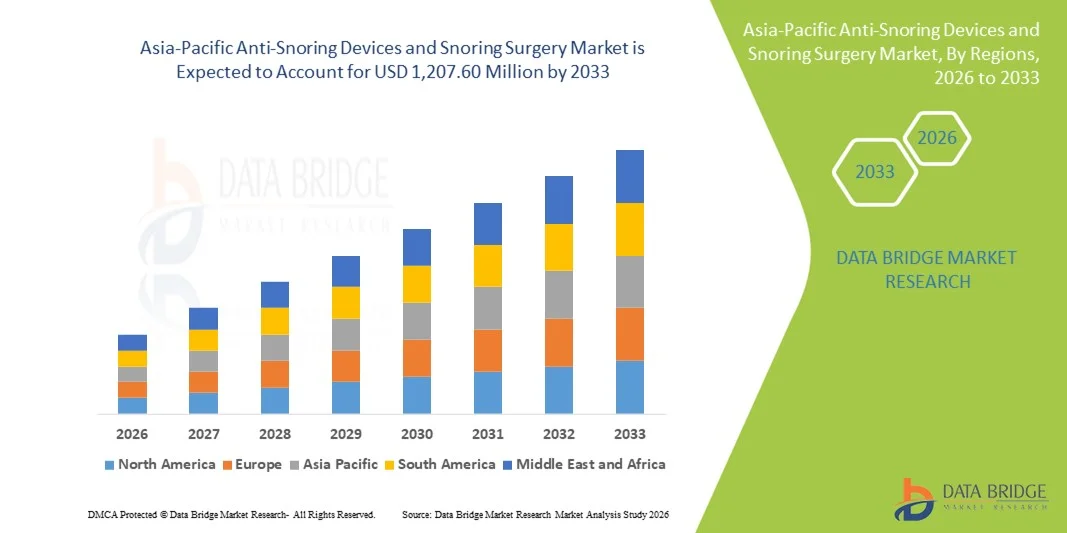
- As per Data Bridge Market Research Analysis the Asia-Pacific anti-snoring devices and snoring surgery market size was valued at USD 486.34 million in 2025 and is expected to reach USD 1,207.60 million by 2033, at a CAGR of 12.04% during the forecast period
- The market growth is largely fueled by the growing prevalence of sleep apnea and snoring issues, increased diagnosis rates, and stronger consumer preference for effective non‑invasive and minimally invasive treatments. This has led to greater adoption of oral appliances, positional therapy devices, nasal devices, and surgical procedures in both home and clinical care settings
- Furthermore, rising demand for comfortable, user‑friendly, and cost‑effective anti‑snoring solutions, coupled with rapid technological advancements in device design and digital health integration, is enhancing treatment accessibility and patient compliance. These converging factors are accelerating uptake of anti‑snoring devices and surgeries, thereby significantly boosting the industry’s growth across the Asia‑Pacific region
Market Size & Forecast
- Global Market Value (2025): USD 486.34 million in 2025
- Expected Market Value (2033): USD 1,207.60 million by 2033
- Forecast CAGR (2026–2033): 12.04%
Asia-Pacific Anti-Snoring Devices and Snoring Surgery Market Analysis
- Anti-snoring devices and snoring surgeries, including oral appliances, nasal devices, positional therapy solutions, and minimally invasive surgical interventions, are becoming essential for managing sleep-related breathing disorders in both home and clinical settings due to their effectiveness, convenience, and improving patient compliance
- The rising prevalence of sleep apnea, growing awareness of snoring-related health risks, and increasing preference for non-invasive and personalized treatment options are the primary drivers of market demand across Asia-Pacific
- China dominated the Asia-Pacific anti-snoring devices and snoring surgery market with the largest revenue share of 38.5% in 2025, driven by increasing awareness of sleep-related disorders, expanding healthcare infrastructure, and rising adoption of non-invasive anti-snoring devices and surgical procedures
- India is expected to be the fastest-growing country during the forecast period due to increasing urbanization, rising disposable incomes, and improving healthcare accessibility, which are boosting awareness and adoption of anti-snoring treatments
- Oral appliance segment dominated the Asia-Pacific market in 2025 with a market share of 47.9%, driven by their non-invasive nature, ease of use, and growing acceptance among patients as a first-line therapy for snoring and mild-to-moderate obstructive sleep apnea
Report Scope and Asia-Pacific Anti-Snoring Devices and Snoring Surgery Market Segmentation
|
Attributes |
Asia-Pacific Anti-Snoring Devices and Snoring Surgery Key Market Insights |
|
Segments Covered |
|
|
Countries Covered |
Asia-Pacific
|
|
Key Market Players |
|
|
Market Opportunities |
|
|
Value Added Data Infosets |
In addition to the insights on market scenarios such as market value, growth rate, segmentation, geographical coverage, and major players, the market reports curated by the Data Bridge Market Research also include in-depth expert analysis, patient epidemiology, pipeline analysis, pricing analysis, and regulatory framework |
What is the Key Trend in the Asia-Pacific Anti-Snoring Devices and Snoring Surgery Market?
Integration of AI and Sleep Monitoring Technologies
- A significant and accelerating trend in the Asia-Pacific anti-snoring devices and snoring surgery market is the incorporation of AI-enabled sleep tracking and connected mobile applications, enhancing personalized treatment and real-time monitoring of snoring and apnea patterns
- For instance, the SomnoTrack oral appliance connects with a mobile app to provide nightly feedback and alerts, helping users adjust device settings for optimal therapy. Similarly, ResMed’s AI-enabled nasal devices offer adaptive airflow adjustments based on detected breathing irregularities
- AI integration in anti-snoring devices enables predictive analysis of sleep patterns and treatment outcomes, providing patients and clinicians with actionable insights. For instance, devices such as SnoreLab’s smart oral appliances can detect snoring severity trends and send intelligent notifications to encourage adherence
- The seamless integration of anti-snoring devices with mobile platforms and cloud-based health systems allows centralized tracking of patient progress, enabling clinicians to monitor multiple patients remotely and adjust treatments without frequent clinic visits
- This trend toward intelligent, connected, and user-friendly snoring solutions is reshaping patient expectations for sleep disorder management. Consequently, companies such as Philips Respironics are developing AI-powered oral appliances with automatic adjustment features and real-time mobile feedback
- The demand for anti-snoring devices and smart surgical monitoring systems is growing rapidly across residential and clinical settings, as patients increasingly prioritize comfort, effectiveness, and connected healthcare functionality
- Integration with telehealth platforms is emerging as a trend, allowing clinicians to remotely guide treatment, monitor device usage, and provide timely interventions, expanding access to care in remote or underserved areas
Asia-Pacific Anti-Snoring Devices and Snoring Surgery Market Dynamics
Driver
Rising Prevalence of Sleep Disorders and Awareness
- The increasing prevalence of sleep apnea and snoring, coupled with growing awareness of related health risks, is a significant driver for heightened demand for anti-snoring devices and surgical interventions
- For instance, in March 2025, SomnoHealth launched a campaign highlighting sleep apnea risks and promoting AI-enabled oral devices, which is expected to drive market growth during the forecast period
- As patients become more aware of the health consequences of untreated snoring, anti-snoring devices provide solutions such as oral appliances, positional therapy devices, and minimally invasive surgical procedures, improving patient outcomes
- Furthermore, the rising adoption of home sleep monitoring systems and mobile health apps is making anti-snoring devices an integral part of patient-centered care, allowing clinicians to provide personalized guidance remotely
- The convenience of non-invasive devices, coupled with mobile connectivity for real-time monitoring, and increasing availability of affordable treatment options, are key factors propelling adoption in both home and clinical settings
- Increasing partnerships between device manufacturers and hospitals or sleep clinics are expanding distribution networks and enhancing patient access to anti-snoring solutions
- Rising interest in holistic and lifestyle-based interventions, such as positional therapy and customized oral appliances, is creating opportunities for product innovation and differentiation within the market
Restraint/Challenge
Compliance Issues and Regulatory Hurdles
- Challenges surrounding patient compliance with device usage and post-surgical care pose a significant barrier to broader market penetration, as effectiveness depends heavily on consistent use
- For instance, clinical reports indicate some patients discontinue oral appliance therapy due to discomfort or difficulty adjusting, affecting overall treatment outcomes
- Ensuring patient adherence through improved device ergonomics, guided usage programs, and telehealth follow-ups is crucial for building trust and achieving desired results. In addition, regulatory approval processes across different countries in Asia-Pacific can delay product launches and increase costs
- While innovations continue, the relatively high cost of advanced AI-enabled devices and minimally invasive surgeries can be a barrier for price-sensitive patients, particularly in developing countries. Although more affordable solutions are emerging, premium features such as integrated mobile tracking or adaptive airflow adjustments come at a higher price
- Overcoming these challenges through enhanced patient education, simplified device design, telemonitoring support, and streamlined regulatory pathways will be vital for sustained growth in the Asia-Pacific market
- Limited awareness and inconsistent insurance coverage for anti-snoring devices and surgical procedures in some countries can hinder adoption among potential patients
- Cultural stigma and patient reluctance to seek treatment for snoring and sleep apnea in certain regions can delay diagnosis and reduce market penetration, creating a need for targeted awareness campaigns
Asia-Pacific Anti-Snoring Devices and Snoring Surgery Market Scope
The market is segmented on the basis of device type and surgical procedure.
- By Device Type
On the basis of device type, the market is segmented into oral appliances, nasal devices, position control devices, chin straps, tongue-stabilizing devices, and expiratory positive airway pressure (EPAP) therapy devices. The oral appliances segment dominated the Asia-Pacific market in 2025 with the largest revenue share of 47.9%, driven by their non-invasive nature and established effectiveness in reducing mild-to-moderate snoring and obstructive sleep apnea. Patients and clinicians often prefer oral appliances as a first-line therapy due to their ease of use and minimal side effects compared to surgical interventions. The market sees strong demand for custom-fitted devices that enhance comfort and compliance, particularly among urban populations in China, Japan, and India. Integration with digital health apps and AI-enabled monitoring features is further increasing adoption by providing real-time feedback and adherence tracking. Oral appliances also benefit from increasing insurance coverage and clinician recommendations, reinforcing their dominant position. Overall, their convenience, effectiveness, and accessibility make oral appliances the preferred choice for both home and clinical settings.
The position control devices segment is anticipated to witness the fastest CAGR of 13.5% from 2026 to 2033, fueled by rising awareness of positional therapy as a non-invasive snoring treatment. These devices encourage patients to sleep in positions that reduce airway obstruction, improving treatment outcomes without the need for surgery or continuous positive airway pressure. Adoption is particularly increasing in India and Southeast Asia, where affordability and simplicity of use are highly valued. Integration with wearable sleep monitors and mobile apps allows users to track sleep positions and receive personalized feedback, further boosting adoption. Healthcare providers are increasingly recommending position control therapy as part of multi-modal treatment plans. The compact design, portability, and low maintenance requirements of these devices contribute to their growing popularity.
- By Surgical Procedure
On the basis of surgical procedure, the market is segmented into laser-assisted uvulopalatoplasty, radiofrequency ablation, Pillar Procedure, Uvulopalatopharyngoplasty (UPPP), injection snoreplasty, palatal stiffening, sclerotherapy, and other surgical procedures. The UPPP segment dominated the Asia-Pacific anti-snoring surgery market in 2025 with the largest revenue share of 41%, driven by its long-established clinical effectiveness for moderate to severe obstructive sleep apnea and persistent snoring. Surgeons and patients prefer UPPP due to its ability to remove excess tissue in the throat, significantly widening the airway and providing durable outcomes. The procedure is commonly performed in leading hospitals in China, Japan, and South Korea, supported by skilled ENT specialists and advanced surgical facilities. Patient awareness campaigns and insurance coverage in these countries have increased acceptance. Furthermore, ongoing improvements in minimally invasive techniques and post-operative care are reducing recovery times and complications. UPPP remains the preferred surgical intervention in clinical practice due to its proven efficacy, making it the dominant segment.
The radiofrequency ablation (RFA) segment is expected to witness the fastest CAGR of 15% from 2026 to 2033, driven by its minimally invasive approach and quick recovery times. RFA uses low-intensity energy to reduce excess soft tissue in the soft palate, tongue base, or uvula, offering effective treatment with reduced pain and post-operative complications. Its adoption is increasing in urban hospitals across India and Southeast Asia due to growing patient preference for less invasive procedures. The procedure can often be performed on an outpatient basis, reducing hospitalization costs and increasing accessibility. Integration with pre- and post-operative digital monitoring for patient compliance is further accelerating adoption. Rapid procedural advancements and growing physician familiarity are expected to solidify RFA as the fastest-growing surgical intervention in the region.
Asia-Pacific Anti-Snoring Devices and Snoring Surgery Market Regional Analysis
- China dominated the Asia-Pacific anti-snoring devices and snoring surgery market with the largest revenue share of 38.5% in 2025, driven by increasing awareness of sleep-related disorders, expanding healthcare infrastructure, and rising adoption of non-invasive anti-snoring devices and surgical procedures
- Patients in the country highly value effective, easy-to-use oral appliances, positional therapy devices, and minimally invasive surgical solutions that improve sleep quality and overall health outcomes, boosting demand in both home and clinical settings
- This widespread adoption is further supported by rising disposable incomes, urbanization, and the increasing availability of advanced diagnostic and treatment options, establishing anti-snoring devices and surgeries as preferred solutions for both individual patients and sleep clinics
The China Asia-Pacific Anti-Snoring Devices and Snoring Surgery Market Insight
China dominated the Asia-Pacific anti-snoring devices and snoring surgery market in 2025, capturing the largest revenue share of 38.5%, supported by high awareness of sleep apnea and snoring-related health risks. The market benefits from a large pool of urban patients seeking non-invasive therapies such as oral appliances, EPAP devices, and positional therapy devices. Rapidly improving hospital infrastructure, availability of minimally invasive surgical procedures, and increasing number of certified sleep clinics are contributing to strong growth. Integration of anti-snoring devices with mobile health applications for real-time tracking and AI-assisted adjustments is further enhancing patient adherence. Moreover, growing government support for public health awareness campaigns and preventive care programs is expanding the potential customer base. Overall, China remains the largest and most mature market in the region, combining strong healthcare capacity with rising patient demand.
Japan Asia-Pacific Anti-Snoring Devices and Snoring Surgery Market Insight
The Japan Asia-Pacific anti-snoring devices and snoring surgery market is witnessing strong growth due to the country’s tech-savvy population, advanced healthcare standards, and increasing prevalence of sleep disorders among adults. AI-enabled oral appliances, positional therapy devices, and minimally invasive surgeries are gaining traction in hospitals and specialized clinics. Japan’s aging population is particularly driving demand for user-friendly, safe, and effective non-invasive treatments that improve quality of life while minimizing recovery times. Telehealth and mobile-connected monitoring systems are increasingly being used to track therapy adherence, making treatments more accessible for elderly patients. In addition, Japanese consumers are willing to invest in premium medical devices that provide personalized feedback, comfort, and efficacy, which further fuels market expansion.
India Asia-Pacific Anti-Snoring Devices and Snoring Surgery Market Insight
India accounted for a significant revenue share in the Asia-Pacific anti-snoring devices and snoring surgery market in 2025, fueled by rapid urbanization, rising disposable incomes, and growing awareness of sleep disorders. Oral appliances and positional therapy devices are witnessing strong adoption across residential, hospital, and sleep clinic segments. Government initiatives promoting smart healthcare, preventive treatment, and digital health platforms are further accelerating growth. Affordable device options provided by domestic manufacturers make anti-snoring treatments accessible to a broader population. Furthermore, increasing recognition of sleep apnea as a serious health issue by clinicians and insurance providers is driving adoption in middle- and upper-income urban populations.
South Korea Asia-Pacific Anti-Snoring Devices and Snoring Surgery Market Insight
South Korea is emerging as a high-growth market due to advanced hospital infrastructure, rising awareness of sleep-related disorders, and strong adoption of minimally invasive surgical procedures such as radiofrequency ablation. Patients are increasingly opting for outpatient surgeries and non-invasive devices that reduce recovery time and post-procedural discomfort. The high penetration of mobile health monitoring, AI-assisted treatment recommendations, and patient-centric care models is enhancing therapy compliance. Urban populations are particularly adopting oral appliances and positional therapy devices for improved sleep quality. In addition, ongoing technological innovations and growing clinician awareness are boosting adoption rates, positioning South Korea as a key growth market in the Asia-Pacific region.
Which are the Top Companies in Asia-Pacific Anti-Snoring Devices and Snoring Surgery Market?
The Asia-Pacific Anti-Snoring Devices and Snoring Surgery industry is primarily led by well-established companies, including:
- ResMed Inc. (U.S.)
- Fisher & Paykel Healthcare Corporation Limited (New Zealand)
- SomnoMed Limited (Australia)
- Snore Circle (China)
- Smart Nora (Canada)
- SnoreEzzz (India)
- Good Morning Snore Solution (U.S.)
- Tomed Dr. Toussaint GmbH (Germany)
- Apnea Sciences Corporation (U.S.)
- TAP Sleep Care (China)
- VVFLY Electronics Co., Ltd. (China)
- Airway Management Inc. (U.S.)
- Sleeping Well LLC (U.S.)
- Meditas Ltd (U.S.)
- AccuMED Corp (U.S.)
- Rhinomed Limited (Australia)
- Hivox Biotek Inc. (China)
- Inspire Medical Systems (U.S.)
- LivaNova PLC (U.K.)
- The Pure Sleep Company (U.S.)
What are the Recent Developments in Asia-Pacific Anti-Snoring Devices and Snoring Surgery Market?
- In November 2025, Bumrungrad International Hospital in Thailand introduced Hypoglossal Nerve Stimulation (HNS) treatment for obstructive sleep apnea, a cutting‑edge therapy that involves implanting a device to stimulate the airway‑opening nerve, offering a CPAP‑alternative solution for severe snoring/OSA patients
- In July 2025, the Excellence Center for Sleep Disorders at King Chulalongkorn Memorial Hospital (Thai Red Cross Society) in Thailand began offering Hypoglossal Nerve Stimulation (HGNS) surgery for obstructive sleep apnea, a surgical treatment that stimulates the nerve controlling tongue muscles to reduce airway obstruction the first such program in Thailand and among the fourth in Asia implementing this advanced technique
- In September 2024, ResMed launched the AirTouch N30i fabric‑wrapped nasal CPAP mask, designed to improve comfort, breathability, and adherence to therapy for sleep apnea and snoring, making continuous positive airway pressure treatment easier to use globally
- In March 2023, Singapore General Hospital (SGH) began offering a new sleep apnea therapy involving implantable hypoglossal nerve stimulation, which works such as a pacemaker for sleep breathing by keeping the airway open during sleep representing a surgical alternative for patients unable to tolerate traditional CPAP
- In May 2022, the oral dental technology company Illusion Aligners launched a new anti‑snoring oral device designed for ease of use and improved comfort that helps reduce snoring and treat mild obstructive sleep apnea, reflecting product innovation in anti‑snoring hardware

- Interactive Data Analysis Dashboard
- Company Analysis Dashboard for high growth potential opportunities
- Research Analyst Access for customization & queries
- Competitor Analysis with Interactive dashboard
- Latest News, Updates & Trend analysis
- Harness the Power of Benchmark Analysis for Comprehensive Competitor Tracking
Data collection and base year analysis are done using data collection modules with large sample sizes. The stage includes obtaining market information or related data through various sources and strategies. It includes examining and planning all the data acquired from the past in advance. It likewise envelops the examination of information inconsistencies seen across different information sources. The market data is analysed and estimated using market statistical and coherent models. Also, market share analysis and key trend analysis are the major success factors in the market report. To know more, please request an analyst call or drop down your inquiry.
The key research methodology used by DBMR research team is data triangulation which involves data mining, analysis of the impact of data variables on the market and primary (industry expert) validation. Data models include Vendor Positioning Grid, Market Time Line Analysis, Market Overview and Guide, Company Positioning Grid, Patent Analysis, Pricing Analysis, Company Market Share Analysis, Standards of Measurement, Global versus Regional and Vendor Share Analysis. To know more about the research methodology, drop in an inquiry to speak to our industry experts.
Data Bridge Market Research is a leader in advanced formative research. We take pride in servicing our existing and new customers with data and analysis that match and suits their goal. The report can be customized to include price trend analysis of target brands understanding the market for additional countries (ask for the list of countries), clinical trial results data, literature review, refurbished market and product base analysis. Market analysis of target competitors can be analyzed from technology-based analysis to market portfolio strategies. We can add as many competitors that you require data about in the format and data style you are looking for. Our team of analysts can also provide you data in crude raw excel files pivot tables (Fact book) or can assist you in creating presentations from the data sets available in the report.













