



Global Online Entertainment Market, By Form (Video, Audio, Games, Internet Radio, Others), Revenue Model (Subscription, Advertisement, Sponsorship, Others), Devices (Smartphones, Smart TVs, Projectors, and Monitors, Laptop, Desktops, and Tablets, Others) – Industry Trends and Forecast to 2031.
Каковы размеры и темпы роста рынка онлайн-развлечений
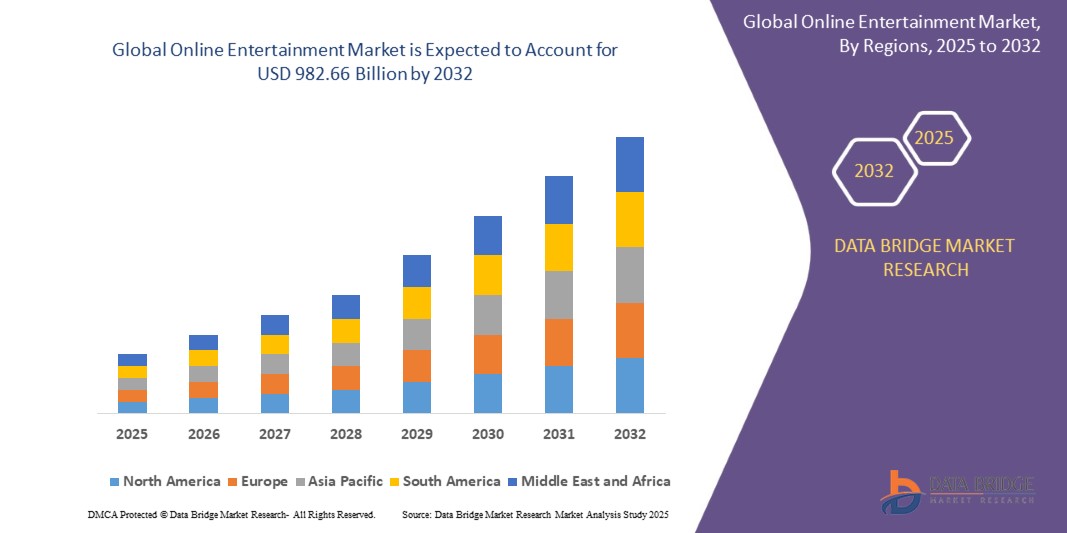
- Согласно анализу Data Bridge Market Research, глобальный рынок онлайн-развлечений был оценен как наиболее привлекательный.316,80 млрд долларов в 2024 годуОжидается, что он достигнет982,66 млрд долларов США к 2032 году
- В течение прогнозируемого периода с 2025 по 2032 год рынок, скорее всего, будет расти.CAGR 15,20%,В первую очередь это обусловлено такими факторами, как рост проникновения интернета, увеличение использования смартфонов и расширение платформ OTT.
- Рынок также извлекает выгоду из технологических достижений, таких как виртуальная реальность (VR), дополненная реальность (AR) и интерактивные потоковые функции, которые повышают вовлеченность пользователей.
Размер рынка и прогноз
- Глобальная рыночная стоимость (2024):316,80 млрд долларов
- Ожидаемая рыночная стоимость (2032):982,66 млрд долларов
- Прогноз CAGR (2025-2032): 15.20%
Каковы основные выводы рынка онлайн-развлечений
- Онлайн-развлекательные платформы жизненно важны для предоставления цифрового контента в различных форматах, включая потоковое видео, потоковую музыку, онлайн-игры и живые события. Эти платформы позволяют пользователям получать доступ к развлекательному контенту по требованию в любое время и в любом месте.
- Спрос на онлайн-развлечения в значительной степени обусловлен увеличением проникновения в Интернет, ростом использования смартфонов и растущей популярностью платформ OTT. Более половины мирового спроса обусловлено потребностью в услугах потокового видео, причем в таких регионах, как Северная Америка и Азиатско-Тихоокеанский регион, наблюдается самый высокий рост из-за увеличения потребления контента.
- Северная Америка доминирует на мировом рынке онлайн-развлечений, что обусловлено ее большим цифровым населением, ростом местных ОТТ-платформ и увеличением располагаемых доходов, особенно в таких странах, как США и Канада.
- Например, число платных подписчиков потоковых сервисов в таких странах, как США и Канада, выросло, что отражает переход к привычкам потребления в цифровом формате, с растущим предпочтением локализованного контента и развлечений.
- Во всем мире развлекательные онлайн-платформы являются наиболее заметным источником потребления контента, опережая традиционные медиа-форматы, такие как телевидение и радио, и продолжают играть ключевую роль в формировании будущего доставки развлечений в различных демографических группах.
Сфера охвата и сегментация рынка онлайн-развлечений
|
Атрибуты |
Онлайн развлечения Key Market Insights |
|
Сегменты покрыты |
|
|
Страны, охваченные |
Северная Америка
Европа
Азиатско-Тихоокеанский регион
Ближний Восток и Африка
Южная Америка
|
|
Ключевые игроки рынка |
|
|
Рыночные возможности |
|
|
Информационные наборы данных с добавленной стоимостью |
В дополнение к информации о рыночных сценариях, таких как рыночная стоимость, темпы роста, сегментация, географическое покрытие и основные игроки, рыночные отчеты, курируемые Data Bridge Market Research, также включают углубленный экспертный анализ, анализ цен, анализ доли бренда, опрос потребителей, анализ демографии, анализ цепочки поставок, анализ цепочки создания стоимости, обзор сырья / расходных материалов, критерии выбора поставщиков, анализ PESTLE, анализ Porter и нормативную базу. |
Каковы основные тенденции на рынке онлайн-развлечений
«Рост интеграции интерактивных и иммерсивных технологий»
- Одной из заметных тенденций на мировом рынке онлайн-развлечений является растущая интеграция интерактивных и иммерсивных технологий, таких как виртуальная реальность.Дополненная реальность (AR)360-градусный видеоконтент
- Эти технологии повышают вовлеченность пользователей, предоставляя более захватывающие и интерактивные впечатления на развлекательных платформах, таких как игры, потоковое вещание и виртуальные концерты.
- Например, VR-игры произвели революцию в том, как пользователи испытывают развлечения, предлагая полное погружение, в то время как AR трансформирует мобильные приложения, позволяя пользователям взаимодействовать с виртуальными объектами в их реальной среде, создавая новые способы повествования и потребления контента.
- Прямые трансляции также включают в себя эти захватывающие технологии, чтобы предложить поклонникам уникальный и совместный опыт, такой как концерты с дополненной реальностью или интерактивные спортивные мероприятия.
- Эта тенденция формирует будущее онлайн-развлечений, стимулируя вовлеченность пользователей и привлекая более молодую, технически подкованную аудиторию, которая требует более динамичного, основанного на опыте контента.
Динамика рынка онлайн развлечений
водитель
«Увеличение спроса на контент по запросу и потоковые услуги»
- Растущий спрос на контент по запросу и потоковые услуги значительно стимулирует рост глобального рынка онлайн-развлечений.
- По мере того, как потребители все больше отходят от традиционного телевидения, спрос на цифровой контент, к которому можно получить доступ в любое время и в любом месте, продолжает расти, особенно среди молодых людей, которые предпочитают гибкость и удобство.
- Платформы OTT (Over-the-Top), такие как Netflix, Disney+ и Amazon Prime Video, приобрели огромную популярность, предлагая широкий спектр фильмов, телешоу и оригинального программирования для глобальной аудитории.
- Растущее внедрение смарт-телевизоров, потоковых устройств и высокоскоростных интернет-соединений позволило большему количеству домохозяйств получить доступ к потоковым услугам, что еще больше стимулирует рост рынка.
- Поскольку потребление контента становится более персонализированным, платформы расширяют свои предложения, чтобы удовлетворить разнообразную аудиторию, предоставляя индивидуальные рекомендации и локализованный контент для привлечения более широкой аудитории.
- Этот переход к потоковым сервисам и контенту по требованию меняет развлекательный ландшафт, предоставляя новые возможности роста для онлайн-провайдеров и создателей контента.
Например,
- В 2023 году сообщалось, что глобальные подписки на стриминговые сервисы превысили 1,1 млрд. Это продолжающееся увеличение числа подписчиков подчеркивает растущий спрос на развлекательный контент по требованию.
- В 2022 году в отчете PwC было подчеркнуто, что глобальный рынок OTT, по прогнозам, вырастет на 17,5% до 2026 года, чему будет способствовать увеличение потребительских предпочтений в отношении потребления цифрового контента по сравнению с традиционными медиа.
- В результате растущий спрос на контент по требованию и потоковые услуги значительно стимулирует глобальный рынок онлайн-развлечений. Потребители все чаще отказываются от традиционного телевидения в пользу гибкого доступа к цифровому контенту в любое время, особенно среди молодых людей, которые ценят удобство.
Возможность
«AI-Driven Персонализация и создание контента»
- ИнтеграцияИскусственный интеллект (AI)В развлекательных платформах революционизирует обнаружение, курирование и создание контента, предоставляя гиперперсонализированный пользовательский опыт на основе привычек просмотра, предпочтений и моделей взаимодействия.
- ИИ позволяет настраивать контент в режиме реального времени - от адаптивных сюжетных линий в потоковых сервисах до интеллектуальных музыкальных плейлистов - повышая удовлетворенность пользователей и удержание на развлекательных платформах
Кроме того, контент, созданный искусственным интеллектом (AIGC), включая музыку, искусство и даже сценарий, открывает новые творческие возможности и снижает производственные затраты, позволяя небольшим создателям и студиям конкурировать в глобальном масштабе.
- Например, в 2023 году Spotify улучшила функцию AI DJ, позволяя пользователям получать персонализированные комментарии и музыкальное курирование, что привело к увеличению времени сеанса на 20% среди пользователей поколения Z.
- В 2024 году Netflix представила динамические трейлеры с искусственным интеллектом, которые адаптируются в режиме реального времени на основе поведения пользователей, значительно улучшая показатели вовлеченности и переход по продвигаемому контенту.
По мере того, как технологии ИИ продолжают развиваться, онлайн-развлекательные платформы могут предоставлять более динамичный, адаптированный и экономически эффективный контент, стимулируя более глубокое вовлечение пользователей и расширяя стратегии монетизации в экосистеме цифровых развлечений.
Сдержанность/вызов
«Рост стоимости лицензирования контента и проблемы авторского права»
- Растущие расходы на лицензирование контента и вопросы авторского права представляют собой серьезную проблему для глобального рынка онлайн-развлечений, особенно затрагивая потоковые платформы и производителей контента.
- Обеспечение прав на высококачественный контент, такой как фильмы, телешоу и живые события, часто может включать многомиллионные сделки, увеличивая эксплуатационные расходы для платформ OTT и влияя на прибыльность.
- Кроме того, нарушения авторских прав и пиратство остаются постоянными проблемами, поскольку незаконное распространение контента негативно влияет на получение доходов и усложняет усилия по защите контента.
Например,
- В 2023 году, согласно отчету PwC, глобальное пиратство ежегодно обходилось индустрии развлечений более чем в 50 миллиардов долларов, затрагивая как создателей контента, так и дистрибьюторов и усложняя ландшафт для законного распространения контента.
- Поскольку затраты на лицензирование растут, а проблемы с интеллектуальной собственностью становятся все более распространенными, онлайн-развлекательные платформы сталкиваются с растущим финансовым давлением, которое может помешать их способности расширять или поддерживать свои библиотеки контента, что в конечном итоге ограничивает рост рынка.
Рынок онлайн развлечений
Рынок сегментируется на основе формы, модели дохода, устройств, конечного пользователя и приложения.
|
Сегментация |
Подсегментация |
|
по форме |
|
|
Модель доходов |
|
|
С помощью устройств |
|
|
Конечный пользователь |
|
|
С помощью приложения |
|
В каком регионе самая большая доля рынка онлайн-развлечений
Северная Америка является доминирующим регионом на рынке онлайн-развлечений.
- Северная Америка доминирует на мировом рынке онлайн-развлечений, что обусловлено высоким проникновением интернета, развитой цифровой инфраструктурой и сильным присутствием ключевых игроков рынка, таких как Netflix, Amazon и Disney+.
- США занимают значительную долю из-за широкого внедрения потоковых сервисов, высоких располагаемых доходов и сильной культуры потребления цифрового контента в различных демографических группах.
- Наличие устоявшихся платежных систем, сильных ОТТ-платформ и расширение смарт-устройств еще больше укрепляют рынок в регионе.
- Кроме того, растущий спрос на оригинальный контент и локализованное программирование наряду с быстрым ростом мобильной потоковой передачи способствует расширению рынка в Северной Америке.
Азиатско-Тихоокеанский регион, по прогнозам, зарегистрирует самый высокий темп роста
- Ожидается, что в Азиатско-Тихоокеанском регионе будут наблюдаться самые высокие темпы роста на мировом рынке онлайн-развлечений, обусловленные быстрым расширением доступа в Интернет, внедрением смартфонов и увеличением потребления мобильных данных.
- Такие страны, как Китай, Индия и Япония, становятся ключевыми рынками из-за их большого, молодого населения и растущего сдвига в сторону цифрового потребления контента.
- Китай с его быстро развивающимся рынком OTT и местными потоковыми платформами, такими как iQIYI и Tencent Video, остается крупным игроком. Растущий интерес страны к интерактивным развлечениям и локализованному контенту также стимулирует рост.
- Индия с ее растущим средним классом, растущим проникновением смартфонов и повышенным спросом на недорогие модели подписки является одним из самых быстрорастущих рынков потоковых услуг в регионе.
- Япония, известная своей высокотехнологичной индустрией и сильной потребительской культурой вокруг развлечений, продолжает лидировать в принятии аниме и нишевого контента на цифровых платформах, способствуя своей позиции в качестве ключевого рынка онлайн-развлечений.
Доля рынка онлайн развлечений
Конкурентный ландшафт рынка предоставляет детали конкурентам. Подробности включают в себя обзор компании, финансовые показатели компании, генерируемые доходы, рыночный потенциал, инвестиции в исследования и разработки, новые рыночные инициативы, глобальное присутствие, производственные площадки и объекты, производственные мощности, сильные и слабые стороны компании, запуск продукта, ширина и широта продукта, доминирование приложений. Приведенные выше данные касаются только фокуса компаний на рынке.
Основными лидерами рынка, работающими на рынке, являются:
- Netflix (США)
- Amazon Prime Video (США)
- Disney+ (США)
- Хулу (США)
- YouTube (США)
- Tencent Video (Китай)
- Alibaba Group (Китай)
- Spotify (Швеция)
- Apple TV+ (США)
- WarnerMedia (США)
- ViacomCBS (США)
- Билибили (Китай)
- iQIYI (Китай)
- Юку (Китай)
- Пандора (США)
- SoundCloud (Германия)
- TikTok (Китай)
- Року (США)
- Sling TV (США)
- Старз (США)
Каковы последние события на рынке онлайн-развлечений
- В августе 2023 года,МиксиаЯпонская компания мобильных развлеченийУстанавливаяФонд корпоративного венчурного капитала (CVC)ценится в50 миллионов доллароввИндияФонд планирует выделить 30-50 млрд иен (200-350 млн долларов США) на приобретение, слияние и стратегическое партнерство с 23 по 25 финансовый год. Этот шаг подчеркивает стремление MIXI расширить свое присутствие на быстрорастущем индийском рынке, который является ключевым регионом для глобального сектора онлайн-развлечений.
- В августе 2023 года,Penn EntertainmentаАмериканская игорная компанияВступив в аСтратегическое партнерствосДисней ESPNперезагрузить и перезапустить егоспортивная книгапод именемСтавка ESPNЭто сотрудничество означает значительный шаг в развивающемся ландшафте онлайн-ставок на спорт и развлечений. Используя устоявшийся бренд и аудиторию ESPN, этот шаг направлен на расширение присутствия Penn Entertainment на рынке и расширение его охвата в растущем секторе спортивных ставок.
- В январе 2022 года,MicrosoftОн раскрыл свое намерениеприобретать Исполнитель: Activision BlizzardаАмериканская компания видеоигрС целью расширения своих игровых предложений и повышения доступности игрового опыта на всех устройствах. Это приобретение отражает стратегические усилия Microsoft по укреплению своих позиций в растущем секторе цифровых развлечений и игр. Включив обширный портфель знаковых игровых франшиз Activision Blizzard, Microsoft стремится диверсифицировать и обогатить свои онлайн-развлекательные услуги.
- В феврале 2022 года,Sony Music EntertainmentиSony Pictures EntertainmentзапущенныйSony Entertainment Talent Ventures (SETVI)асовместное предприятиеОн был разработан для того, чтобы задействовать быстро растущую индустрию развлечений в Индии. Предприятие охватывает несколько секторов, включая кино, музыку, телевидение, цифровые медиа и игры, с акцентом на использование огромного пула талантов Индии для стимулирования стратегических инвестиций и партнерских отношений. Эта инициатива согласуется с растущим спросом на разнообразный локальный контент на мировом рынке онлайн-развлечений.
- В феврале 2021 года,Disney+расширение своего глобального присутствия за счетвведениетотЗвездный брендвАвстралия, Новая Зеландия, Западная Европа и КанадаЭтот стратегический шаг усиливает присутствие Disney на конкурентном рынке онлайн-развлечений, предлагая широкий спектр общего развлекательного контента, включая фильмы, телесериалы и документальные фильмы. С помощью бренда Star Disney стремится укрепить свой географический охват и лучше обслуживать меняющиеся предпочтения потребителей в этих ключевых регионах.
SKU-
Получите онлайн-доступ к отчету на первой в мире облачной платформе рыночной аналитики

- Интерактивная панель анализа данных
- Панель анализа компании для возможностей с высоким потенциалом роста
- Доступ аналитика-исследователя для настройки и запросов
- Анализ конкурентов с помощью интерактивной панели
- Последние новости, обновления и анализ тенденций
- Используйте возможности сравнительного анализа для комплексного отслеживания конкурентов
Методология исследования
Сбор данных и анализ базового года выполняются с использованием модулей сбора данных с большими размерами выборки. Этап включает получение рыночной информации или связанных данных из различных источников и стратегий. Он включает изучение и планирование всех данных, полученных из прошлого заранее. Он также охватывает изучение несоответствий информации, наблюдаемых в различных источниках информации. Рыночные данные анализируются и оцениваются с использованием статистических и последовательных моделей рынка. Кроме того, анализ доли рынка и анализ ключевых тенденций являются основными факторами успеха в отчете о рынке. Чтобы узнать больше, пожалуйста, запросите звонок аналитика или оставьте свой запрос.
Ключевой методологией исследования, используемой исследовательской группой DBMR, является триангуляция данных, которая включает в себя интеллектуальный анализ данных, анализ влияния переменных данных на рынок и первичную (отраслевую экспертную) проверку. Модели данных включают сетку позиционирования поставщиков, анализ временной линии рынка, обзор рынка и руководство, сетку позиционирования компании, патентный анализ, анализ цен, анализ доли рынка компании, стандарты измерения, глобальный и региональный анализ и анализ доли поставщика. Чтобы узнать больше о методологии исследования, отправьте запрос, чтобы поговорить с нашими отраслевыми экспертами.
Доступна настройка
Data Bridge Market Research является лидером в области передовых формативных исследований. Мы гордимся тем, что предоставляем нашим существующим и новым клиентам данные и анализ, которые соответствуют и подходят их целям. Отчет можно настроить, включив в него анализ ценовых тенденций целевых брендов, понимание рынка для дополнительных стран (запросите список стран), данные о результатах клинических испытаний, обзор литературы, обновленный анализ рынка и продуктовой базы. Анализ рынка целевых конкурентов можно проанализировать от анализа на основе технологий до стратегий портфеля рынка. Мы можем добавить столько конкурентов, о которых вам нужны данные в нужном вам формате и стиле данных. Наша команда аналитиков также может предоставить вам данные в сырых файлах Excel, сводных таблицах (книга фактов) или помочь вам в создании презентаций из наборов данных, доступных в отчете.











