Algae-based aquafeed refers to fish and seafood feed formulated using algae as a primary ingredient, either as a direct protein, lipid, or micronutrient source. Algae, particularly microalgae, are rich in essential fatty acids (such as omega-3s), proteins, vitamins, and minerals. This sustainable alternative to traditional fishmeal and fish oil reduces pressure on wild fish stocks and supports eco-friendly aquaculture practices. Algae-based feed enhances the nutritional profile of farmed seafood and contributes to better water quality in aquaculture systems. As demand for sustainable food sources grows, algae-based aquafeed offers a promising solution to support global aquaculture development responsibly.
Access Full Report @ https://www.databridgemarketresearch.com/reports/global-and-us-algae-based-aquafeed-market
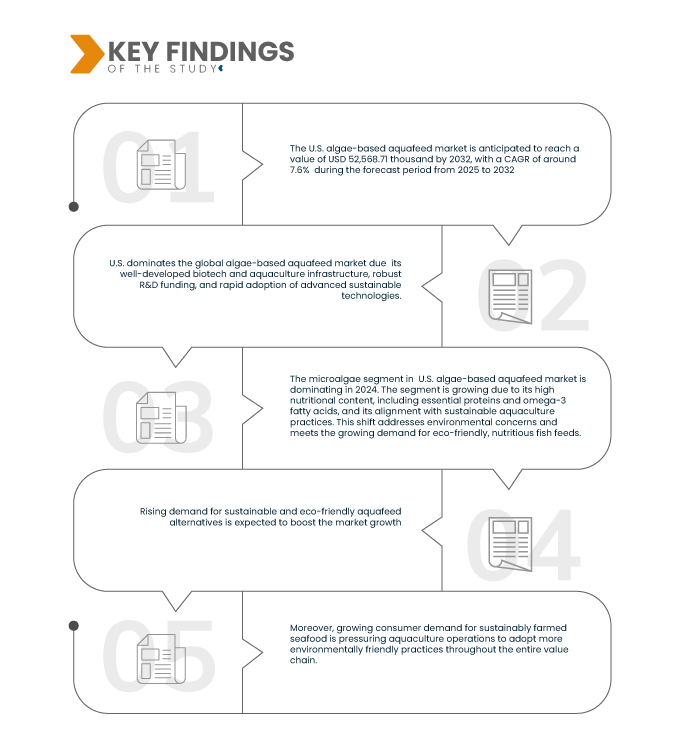
Data Bridge Market Research analyzes that the U.S. Algae-based Aquafeed Market is expected to reach USD 52,568.71 thousand by 2032 from USD USD 29,484.00 thousand in 2024, growing at a substantial CAGR of 7.6% in the forecast period of 2025 to 2032.
Key Findings of the Study
High Nutritional Value of Algae, Including Omega-3 Fatty Acids and Essential Amino Acids
Algae, particularly microalgae, are naturally rich in omega-3 fatty acids such as EPA and DHA, which are crucial for the growth, immune function, and reproductive health of farmed fish and shrimp. Traditionally sourced from fish oil, omega-3s are increasingly being extracted from algae to avoid the environmental downsides of overfishing. In addition to fatty acids, algae contain high-quality proteins and essential amino acids that support optimal development and metabolic functions in aquaculture species. These nutrients are not only vital for animal health but also enhance the nutritional value of the final seafood product, catering to health-conscious consumers. Moreover, the digestibility of algae-based feed ingredients often surpasses that of conventional plant-based alternatives, improving feed efficiency and reducing waste outputs. As aquaculture continues to expand to meet global seafood demand, algae-based feeds offer a nutritionally complete and sustainable option to support high-performance aquaculture systems.
Report Scope and Market Segmentation
|
Report Metric
|
Details
|
|
Forecast Period
|
2025 to 2032
|
|
Base Year
|
2024
|
|
Historic Year
|
2023 (Customizable 2018-2023)
|
|
Quantitative Units
|
Revenue in USD Million
|
|
Segments Covered
|
U.S. Algae-based aquafeed Market, By Type (Microalgae and Macroalgae), By Fish Species (Monoculture and Poly Culture), By Source (Marine Water, Fresh Water and Brackish Water), By Form (Dry, Wet and Live Feeds), By Feeding Method (Mechanized Feeding and Hand Feeding /Manual Feeding), By Packaging (Bulk Packaging, Retail Packaging), By Distribution Channel (Direct and Retail)
|
|
Countries Covered
|
U.S.
|
|
Market Players Covered
|
ADM, Reed Mariculture, Alltech., Corbion, Veramaris, Brine Shrimp Direct, Inc., Hikari Sales USA, Inc., Fluval and, among others
|
|
Data Points Covered in the Report
|
In addition to the insights on market scenarios such as market value, growth rate, segmentation, geographical coverage, and major players, the market reports curated by the Data Bridge Market Research also include depth expert analysis, patient epidemiology, pipeline analysis, pricing analysis, and regulatory framework.
|
Segment Analysis
U.S. algae-based aquafeed market is segmented into seven segments based on type, fish species, source, form, feeding method, packaging, and distribution channel.
- On the basis of type, the U.S. algae-based aquafeed market is segmented into microalgae and macroalgae.
In 2025, the microalgae segment is expected to dominate the market
In 2025, the microalgae is expected to dominate the market with a market share of 89.78% due to its high nutritional content, including essential proteins and omega-3 fatty acids, and its alignment with sustainable aquaculture practices. This shift addresses environmental concerns and meets the growing demand for eco-friendly, nutritious fish feeds.
- On the basis of fish species, the market is segmented into monoculture and poly culture
In 2025, the monoculture segment is expected to dominate the market
In 2025, the monoculture segment is expected to dominate the market with a market share of 62.18% due to its streamlined cultivation processes, cost-effectiveness, and consistent quality. Monoculture systems facilitate controlled growth conditions, enhancing biomass yield and simplifying harvesting. This efficiency supports the increasing demand for sustainable and high-quality aquafeed solutions in the aquaculture industry.
- On the basis of source, the market is segmented into marine water, fresh water, and brackish water. In 2025, the marine water segment is expected to dominate the market with a market share of 48.17%.
- On the basis of form, the market is segmented into dry, wet, live feeds. In 2025, the dry segment is expected to dominate the market with a market share of 70.14%.
- On the basis of feeding method, the market is segmented into mechanized feeding, hand feeding /manual feeding. In 2025, the mechanized feeding segment is expected to dominate the market with a market share of 64.26%.
- On the basis of packaging, the market is segmented into bulk packaging, retail packaging. In 2025, the bulk packaging segment is expected to dominate the market with a market share of 67.61%.
- On the basis of distribution channel, the market is segmented into direct and retail. In 2025, the direct segment is expected to dominate the market with a market share of 58.12%.
Major Players
Data Bridge Market Research analyzes ADM (U.S.), Reed Mariculture (U.S.), Alltech (U.S.), Corbion (Netherlands), Veramaris (Netherlands), as the major market players of the market.

Market Development
- In February 2025, Aperture Pet & Life has announced an exclusive North American distribution partnership with Germany-based Giesemann Aquaristic. This collaboration will bring Giesemann’s premium aquarium lighting, equipment, and accessories to the U.S. market. Retailers can now access these high-quality products through Aperture’s distribution network.
- In July 2024, INVE Aquaculture has announced a strategic partnership with Reed Mariculture Inc. to expand its distribution network across the U.S. and Canada. This collaboration aims to enhance access to INVE’s advanced aquaculture nutrition and health products, backed by Reed Mariculture’s market expertise and customer reach.
- In May 2025, Reed Mariculture announced a strategic partnership with INVE Aquaculture, a global leader in aquaculture nutrition and health solutions. The collaboration aims to enhance Reed Mariculture’s product portfolio and technical offering by integrating INVE’s specialized nutrition and health products. As part of the partnership, Reed Mariculture will strengthen its role in supporting sustainable aquaculture practices while expanding its customer reach across North America by leveraging INVE’s global expertise and product innovation.
- In November 2023, Alltech and Finnforel have jointly acquired the Raisioaqua fish feed facility to complete a sustainable, circular-economy fish-farming chain in Finland. This partnership aims to enhance eco-friendly aquaculture nutrition and expand innovative recirculating aquaculture systems globally.
- In August 2023, Veramaris announced a big data partnership highlighting the benefits of Optimum Omega Nutrition in Norwegian salmon farming. This collaboration demonstrates the product’s positive impact on fish health and feed optimization, supporting sustainable aquaculture practices.
For more detailed information about the U.S. algae-based aquafeed Market report, click here – https://www.databridgemarketresearch.com/reports/global-and-us-algae-based-aquafeed-market