Circumvent the Tariff challenges with an agile supply chain Consulting
Supply Chain Ecosystem Analysis now part of DBMR Reports
Global Disposable Medical Devices Sensors Market
Market Size in USD Billion
CAGR :
%
USD
8.63 Billion
USD
18.36 Billion
2024
2032
Forecast Period
2025 –2032
Market Size(Base Year)
USD
8.63 Billion
Market Size (Forecast Year)
USD
18.36 Billion
CAGR
%
Major Markets Players
Koninklijke Philips N.V.
Medtronic
NXP Semiconductors.
Honeywell International Inc
Smiths Medical
Global Disposable Medical Devices Sensors Market Segmentation, By Sensor Type (Biosensors, Temperature Sensors, Pressure Sensors, Accelerometer Sensors, Image Sensors, and Others), Placement Type (Strip Sensors, Wearable Sensors, Implantable Sensors, Invasive Sensors, and Ingestible Sensors), Application (Diagnostics, Therapeutics, Patient Monitoring, and Imaging) – Industry Trends and Forecast to 2032
Disposable Medical Devices Sensors Market Analysis
The disposable medical device sensors market is witnessing significant advancements due to new sensor technologies and enhanced materials. One of the latest methods is the integration of flexible and stretchable sensors into wearable devices, improving comfort and accuracy. These sensors are increasingly used in patient monitoring systems, providing real-time data on vital signs such as heart rate, blood pressure, and glucose levels. The integration of biosensors that can detect chemical markers is also expanding, particularly in chronic disease management, offering non-invasive monitoring solutions.
Technology advancements in smart adhesives and nano-coatings are improving sensor durability and precision, making them more reliable for single-use applications. In addition, wireless communication through IoT-enabled devices allows for real-time data transmission, enhancing remote patient monitoring and care.
The growth of the disposable medical device sensors market is largely driven by an aging population, an increase in chronic diseases, and demand for cost-effective, efficient healthcare solutions. The market is projected to grow significantly due to these technological advancements and the rising need for patient-centric care and personalized treatments.
Disposable Medical Devices Sensors Market Size
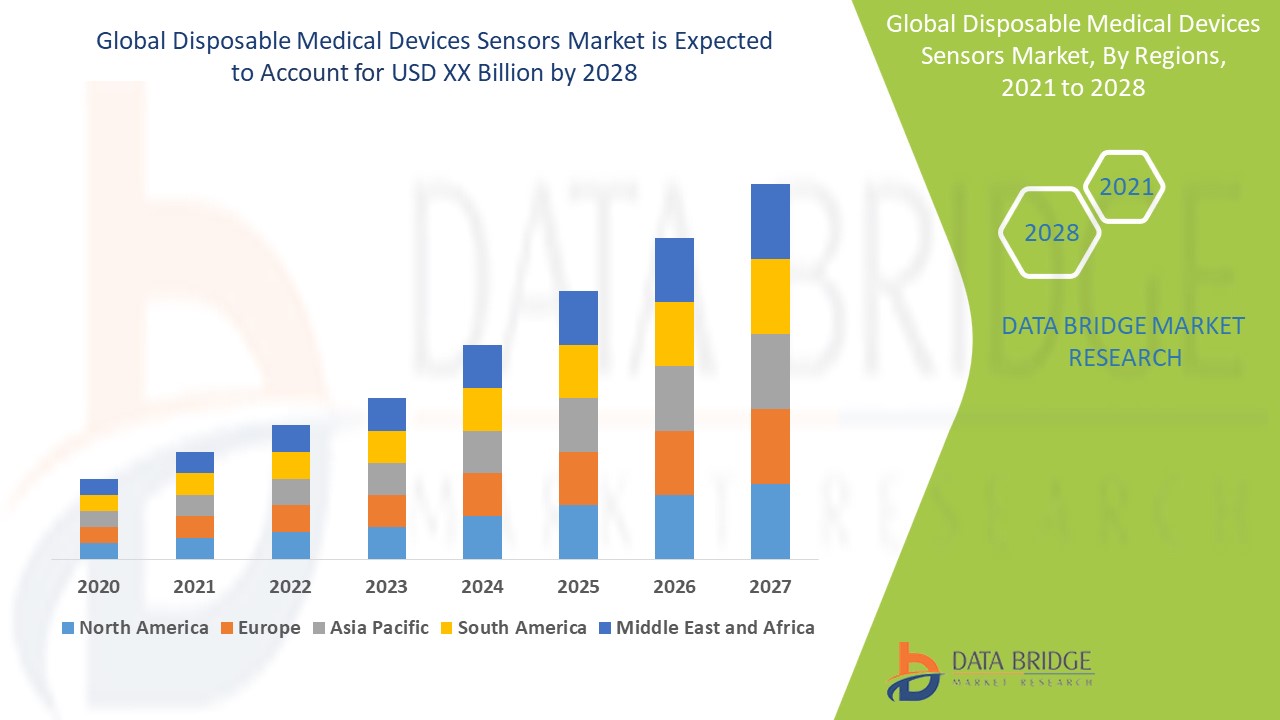
The global disposable medical devices sensors market size was valued at USD 8.63 billion in 2024 and is projected to reach USD 18.36 billion by 2032, with a CAGR of 9.90% during the forecast period of 2025 to 2032. In addition to the insights on market scenarios such as market value, growth rate, segmentation, geographical coverage, and major players, the market reports curated by the Data Bridge Market Research also include depth expert analysis, patient epidemiology, pipeline analysis, pricing analysis, and regulatory framework.
Disposable Medical Devices Sensors Market Trends
“Integration of IoT in Disposable Medical Device Sensors”
One specific trend driving the growth of the disposable medical device sensors market is the integration of Internet of Things (IoT) technology. IoT-enabled sensors enhance patient monitoring by providing real-time data collection and analysis, making it easier for healthcare professionals to make timely decisions. These sensors are designed to be low-cost, single-use, and disposable, ensuring hygiene and minimizing risk of cross-contamination. For instance, companies such as Medtronic have developed IoT-connected sensors for remote monitoring of patients with chronic conditions such as diabetes. This trend is expected to boost demand for disposable sensors in both hospital settings and home healthcare applications, making healthcare delivery more efficient and accessible.
Report Scope and Disposable Medical Devices Sensors Market Segmentation
Attributes
Disposable Medical Devices Sensors Key Market Insights
By Placement Type: Strip Sensors, Wearable Sensors, Implantable Sensors, Invasive Sensors, and Ingestible Sensors
By Application: Diagnostics, Therapeutics, Patient Monitoring, and Imaging
Countries Covered
U.S., Canada and Mexico in North America, Germany, France, U.K., Netherlands, Switzerland, Belgium, Russia, Italy, Spain, Turkey, Rest of Europe in Europe, China, Japan, India, South Korea, Singapore, Malaysia, Australia, Thailand, Indonesia, Philippines, Rest of Asia-Pacific (APAC) in the Asia-Pacific (APAC), Saudi Arabia, U.A.E, South Africa, Egypt, Israel, Rest of Middle East and Africa (MEA) as a part of Middle East and Africa (MEA), Brazil, Argentina and Rest of South America as part of South America
Key Market Players
Koninklijke Philips N.V. (Netherlands), Medtronic (U.S.), NXP Semiconductors (Netherlands), Honeywell International Inc. (U.S.), Smiths Medical (U.K.), General Electric Company (U.S.), Analog Devices, Inc. (U.S.), TE Connectivity (Switzerland), Sensirion AG (Switzerland), STMicroelectronics (France), OmniVision Technologies, Inc. (U.S.), MEMSIC Semiconductor Co., Ltd. (China), Olympus Corporation (Japan), Texas Instruments Incorporated (U.S.), Renesas Electronics Corporation (Japan), Qualcomm Technologies, Inc. (U.S.), NovoSci (U.S.), KATECHO, LLC. (U.S.), GENTAG, Inc. (U.S.), and SSI Electronics (U.S.)
Market Opportunities
Improved Sensor Materials
Increasing Chronic Disease Prevalence
Value Added Data Infosets
In addition to the insights on market scenarios such as market value, growth rate, segmentation, geographical coverage, and major players, the market reports curated by the Data Bridge Market Research also include depth expert analysis, patient epidemiology, pipeline analysis, pricing analysis, and regulatory framework.
Disposable Medical Devices Sensors Market Definition
Disposable medical device sensors are single-use sensors designed to monitor and measure various physiological parameters in patients. These sensors are typically used in diagnostic and therapeutic applications, such as monitoring vital signs, glucose levels, or cardiac rhythms. Made from cost-effective materials, they are designed for single-patient use to reduce the risk of cross-contamination and improve patient safety. With advancements in technology, disposable sensors are becoming more accurate, compact, and easy to integrate with electronic health systems. These sensors contribute to the growing demand for point-of-care diagnostics, especially in emergency settings and home healthcare.
Disposable Medical Devices Sensors Market Dynamics
Drivers
Growth in Wearable Medical Devices
The surge in wearable medical devices, including smartwatches, fitness trackers, and health monitoring wearables, is significantly driving the disposable medical devices sensors market. These sensors are crucial for tracking real-time data such as heart rate, blood oxygen levels, and glucose monitoring. For instance, devices such as the Apple Watch Series 9 and Fitbit Sense 2 utilize disposable sensors to enhance health-tracking accuracy. The demand for such wearables has expanded due to rising health awareness and preference for personalized healthcare. In addition, the integration of advanced technologies such as AI and IoT in wearables further amplifies the role of disposable sensors, fueling market growth globally.
Rising Demand for Home Healthcare
The rising trend of home healthcare, particularly post-pandemic, is a significant driver of the disposable medical devices sensors market. With an increasing preference for at-home medical care, patients require easy-to-use devices for continuous health monitoring. For instance, disposable glucose sensors have become essential for diabetes management, enabling patients to monitor their glucose levels without frequent hospital visits. Similarly, wearable sensors for heart rate and oxygen saturation monitoring have gained traction among individuals managing chronic conditions. This shift to home-based care ensures convenience, reduces healthcare costs, and minimizes infection risks, fostering a growing demand for disposable sensors tailored to personal health management.
Opportunities
Improved Sensor Materials
The advancement in biocompatible, flexible, and skin-friendly materials for disposable sensors presents significant growth opportunities in the market. These innovations ensure enhanced performance, user comfort, and reduced risks of skin irritation, making them highly suitable for continuous use in both clinical and homecare environments. Flexible sensors made from materials such as silicone and polymer composites are particularly gaining traction due to their adaptability and reliability. Furthermore, these materials enable integration into wearables, opening doors for applications in remote health monitoring and fitness tracking. With rising consumer demand for safe and effective healthcare solutions, the improved material design is driving adoption and fostering innovation in disposable medical sensor technology.
Increasing Chronic Disease Prevalence
The increasing prevalence of chronic diseases such as diabetes, cardiovascular conditions, and respiratory disorders is driving the demand for continuous monitoring devices, creating significant opportunities in the disposable medical device sensors market. These sensors, used in glucose monitors, cardiac monitors, and respiratory devices, offer real-time data and ease of use for patients managing long-term conditions. The growing emphasis on early diagnosis and proactive health management further boosts their adoption. In addition, healthcare providers are increasingly turning to disposable sensors for improved hygiene and infection control. As chronic conditions continue to rise globally, the market for innovative, cost-effective disposable sensors is poised for substantial growth.
Restraints/Challenges
High Costs of Advanced Sensors
High costs associated with advanced disposable medical device sensors are a significant restraint in the market. Sensors that incorporate technologies such as wireless connectivity, real-time data analytics, and miniaturization often require costly materials and complex manufacturing processes. These expenses increase the overall price of the devices, making them less accessible in cost-sensitive markets, particularly in developing regions where healthcare budgets are limited. As a result, adoption may be slower in these areas, limiting the market’s expansion potential. The high price point also challenges healthcare providers who are under pressure to manage costs, leading to reluctance in fully integrating these advanced disposable sensors into routine medical practices.
Regulatory Compliance and Approval Delays
Regulatory compliance and approval delays significantly hinder the disposable medical device sensors market. The stringent regulations set by authorities such as the FDA and CE require extensive testing and documentation, which can extend the time required for product approval. For smaller manufacturers, this process can be particularly challenging due to limited resources and capacity to meet these complex requirements. As a result, lengthy approval timelines delay product launches, reducing the speed at which innovative solutions can reach the market. In addition, the costs associated with complying with regulatory standards can strain financial resources, further impeding the growth and market entry of new players.
This market report provides details of new recent developments, trade regulations, import-export analysis, production analysis, value chain optimization, market share, impact of domestic and localized market players, analyses opportunities in terms of emerging revenue pockets, changes in market regulations, strategic market growth analysis, market size, category market growths, application niches and dominance, product approvals, product launches, geographic expansions, technological innovations in the market. To gain more info on the market contact Data Bridge Market Research for an Analyst Brief, our team will help you take an informed market decision to achieve market growth.
Disposable Medical Devices Sensors Market Scope
The market is segmented on the basis of sensor type, placement type and application. The growth amongst these segments will help you analyze meagre growth segments in the industries and provide the users with a valuable market overview and market insights to help them make strategic decisions for identifying core market applications.
Sensor Type
Biosensors
Temperature Sensors
Pressure Sensors
Accelerometer Sensors
Image Sensors
Others
Placement Type
Strip Sensors
Wearable Sensors
Implantable Sensors
Invasive Sensors
Ingestible Sensors
Application
Diagnostics
Blood Glucose Test Strip Sensors
Pregnancy Test Strip Sensors
Drug and Alcohol Test Strip Sensors
Infectious Disease Test Strip Sensors
Therapeutics
Dialysis Device Sensors
Cardiac Catheter Sensors
Insulin Pump Sensors
Patient Monitoring
Continuous Blood Pressure Monitors
Pulse Oximeters
Cardiac Monitors
Continuous Glucose Monitoring (CGM) Devices
Smart Pills
Other Patient Monitoring Devices
Imaging
Capsule Endoscope Sensors
Disposable Endoscope Sensors
Disposable Medical Devices Sensors Market Regional Analysis
The market is analysed and market size insights and trends are provided by country, sensor type, placement type and application as referenced above.
The countries covered in the market report are U.S., Canada, Mexico in North America, Germany, Sweden, Poland, Denmark, Italy, U.K., France, Spain, Netherland, Belgium, Switzerland, Turkey, Russia, Rest of Europe in Europe, Japan, China, India, South Korea, New Zealand, Vietnam, Australia, Singapore, Malaysia, Thailand, Indonesia, Philippines, Rest of Asia-Pacific (APAC) in Asia-Pacific (APAC), Brazil, Argentina, Rest of South America as a part of South America, U.A.E, Saudi Arabia, Oman, Qatar, Kuwait, South Africa, Rest of Middle East and Africa (MEA) as a part of Middle East and Africa (MEA)
North America is expected to dominate the disposable medical devices sensors market due to its advanced technological infrastructure and a strong focus on innovative healthcare solutions. Increased investments and funding from both government and private organizations further fuel research and development activities, driving market growth. In addition, the region’s robust healthcare system, coupled with rising demand for minimally invasive procedures, enhances the adoption of disposable medical device sensors for patient monitoring and diagnostics.
Asia-Pacific is estimated to grow in the disposable medical devices sensors market during the forecast period due to the rise in scientific research projects, advancements in healthcare, and increasing demand for innovative medical technologies. The region's rapid urbanization, growing healthcare expenditure, and improving access to healthcare services are driving market expansion. In addition, the surge in disposable income in countries such as China and India further supports the adoption of advanced disposable medical devices in the healthcare sector.
The country section of the report also provides individual market impacting factors and changes in regulation in the market domestically that impacts the current and future trends of the market. Data points such as down-stream and upstream value chain analysis, technical trends and porter's five forces analysis, case studies are some of the pointers used to forecast the market scenario for individual countries. Also, the presence and availability of global brands and their challenges faced due to large or scarce competition from local and domestic brands, impact of domestic tariffs and trade routes are considered while providing forecast analysis of the country data.
Disposable Medical Devices Sensors Market Share
The market competitive landscape provides details by competitor. Details included are company overview, company financials, revenue generated, market potential, investment in research and development, new market initiatives, global presence, production sites and facilities, production capacities, company strengths and weaknesses, product launch, product width and breadth, application dominance. The above data points provided are only related to the companies' focus related to market.
Disposable Medical Devices Sensors Market Leaders Operating in the Market Are:
Koninklijke Philips N.V. (Netherlands)
Medtronic (U.S.)
NXP Semiconductors (Netherlands)
Honeywell International Inc. (U.S.)
Smiths Medical (U.K.)
General Electric Company (U.S.)
Analog Devices, Inc. (U.S.)
TE Connectivity (Switzerland)
Sensirion AG (Switzerland)
STMicroelectronics (France)
OmniVision Technologies, Inc. (U.S.)
MEMSIC Semiconductor Co., Ltd. (China)
Olympus Corporation (Japan)
Texas Instruments Incorporated (U.S.)
Renesas Electronics Corporation (Japan)
Qualcomm Technologies, Inc. (U.S.)
NovoSci (U.S.)
KATECHO, LLC. (U.S.)
GENTAG, Inc. (U.S.)
SSI Electronics (U.S.)
Latest Developments in Disposable Medical Devices Sensors Market
In March 2024, A team from Tokyo University of Science (TUS) has developed a groundbreaking flexible paper-based AI health sensor. This innovative device integrates nanocellulose and zinc oxide (ZnO) nanoparticles to deliver real-time optical input, offering significant potential in health monitoring technologies due to its flexibility, lightweight design, and advanced sensing capabilities
In January 2024, Medtronic plc, a global leader in healthcare innovation, has announced the CE (Conformité Européenne) mark approval for its MiniMed 780G system with Simplera Sync. This system introduces a disposable, all-in-one continuous glucose monitor (CGM) that eliminates the need for over-tape or finger sticks, providing seamless diabetes management and enhanced patient comfort
In January 2024, Inspira Technologies OXY B.H.N Ltd., known for pioneering life support technologies, revealed plans to launch a single-use disposable blood oxygenation kit. This kit, currently under development for the INSPIRA ART medical device series, aims to revolutionize respiratory support by providing efficient and portable oxygenation solutions for critical care patients
In June 2021, OMNIVISION Technologies, Inc. unveiled the first 8-megapixel (MP) resolution sensors designed for both reusable and single-use endoscopes. These sensors, offering enhanced imaging quality, support medical applications outside the visible spectrum, marking a significant advancement in medical imaging. The new OH08B sensor boosts the capability of endoscopes and promises to expand market opportunities
In February 2021, Hill-Rom made a strategic acquisition by paying EarlySense USD 30 million for its contactless continuous monitoring technology. With a focus on advancing remote patient care, this acquisition strengthens Hill-Rom’s portfolio, enabling the company to integrate next-generation AI-based sensing technologies into its healthcare solutions, improving patient outcomes and care efficiency
In 2021, Abbott received FDA Emergency Use Authorization (EUA) for its BinaxNOW COVID-19 AG self-test. This over-the-counter, non-prescription test allows asymptomatic individuals to detect COVID-19 infections easily and quickly, revolutionizing testing accessibility. The rapid and user-friendly nature of this self-test has contributed significantly to global pandemic management efforts
In 2020, Medtronic received FDA approval for its MiniMed 770G hybrid closed-loop system, which includes the Guardian Sensor 3 and the MiniMed Mobile app. This system provides continuous glucose monitoring, enabling real-time adjustments to insulin delivery. It enhances diabetes management by reducing the burden of constant monitoring and helping maintain stable blood sugar levels
In May 2020, Philips introduced a next-generation wearable biosensor designed for clinical COVID-19 surveillance. This small, disposable biosensor, worn as a patch for five days, is capable of continuously monitoring patient health indicators. It connects to a scalable hub that allows healthcare providers to monitor multiple patients simultaneously, enhancing early detection and patient deterioration identification
SKU-
Get online access to the report on the World's First Market Intelligence Cloud
Interactive Data Analysis Dashboard
Company Analysis Dashboard for high growth potential opportunities
Research Analyst Access for customization & queries
Competitor Analysis with Interactive dashboard
Latest News, Updates & Trend analysis
Harness the Power of Benchmark Analysis for Comprehensive Competitor Tracking
Research Methodology
Data collection and base year analysis are done using data collection modules with large sample sizes. The stage includes obtaining market information or related data through various sources and strategies. It includes examining and planning all the data acquired from the past in advance. It likewise envelops the examination of information inconsistencies seen across different information sources. The market data is analysed and estimated using market statistical and coherent models. Also, market share analysis and key trend analysis are the major success factors in the market report. To know more, please request an analyst call or drop down your inquiry.
The key research methodology used by DBMR research team is data triangulation which involves data mining, analysis of the impact of data variables on the market and primary (industry expert) validation. Data models include Vendor Positioning Grid, Market Time Line Analysis, Market Overview and Guide, Company Positioning Grid, Patent Analysis, Pricing Analysis, Company Market Share Analysis, Standards of Measurement, Global versus Regional and Vendor Share Analysis. To know more about the research methodology, drop in an inquiry to speak to our industry experts.
Customization Available
Data Bridge Market Research is a leader in advanced formative research. We take pride in servicing our existing and new customers with data and analysis that match and suits their goal. The report can be customized to include price trend analysis of target brands understanding the market for additional countries (ask for the list of countries), clinical trial results data, literature review, refurbished market and product base analysis. Market analysis of target competitors can be analyzed from technology-based analysis to market portfolio strategies. We can add as many competitors that you require data about in the format and data style you are looking for. Our team of analysts can also provide you data in crude raw excel files pivot tables (Fact book) or can assist you in creating presentations from the data sets available in the report.
Claudio Rondena
Group Business Development & Strategic Marketing Director, C.O.C Farmaceutici SRL
"This morning we were involved in the first part, the data presentation of MKT analysis, selected abstract from your work. The board team was really impressed and very appreciated, as well."
David Manning - Thermo Fisher Scientific
Director, Global Strategic Accounts,
Dear Ricky, I want to thank you for the excellent market analysis (LIMS INSTALLED BASE DATA) that you and your team delivered, especially end of year on short notice.
Sachin and Shraddha captured the requirements, determined their path forward and executed quickly.
You, Sachin and Shraddha have been a pleasure to work with – very responsive, professional and thorough.
Your work is much appreciated.
Manager - Market Analytics,
Uriah D. Avila - Zeus Polymer Solutions
Thank you for all the assistance and the level of detail in the market report. We are very pleased with the results and the customization. We would like to continue to do business.
Business Development Manager,
(Pharmaceuticals Partner for Nasal Sprays) | Renaissance Lakewood LLC
DBMR was attentive and engaged while discussing the Global Nasal Spray Market. They understood what we were looking for and was able to provide some examples from the report as requested. DBMR Service team has been responsive as needed. Depending on what my colleagues were looking for, I will recommend your services and would be happy to stay connected in case we can utilize your research in the future.
Business Intelligence and Analytics,
Ipsen Biopharm Limited
We are impressed by the CENTRAL PRECOCIOUS PUBERTY (CPP) TREATMENT report - so a BIG thanks to you colleagues.
Competition Analyst,
Basler Web
I just wanted to share a quick note and let you know that you guys did a really good job. I’m glad I decided to work with you. I shall continue being associated with your company as long as we have market intelligence needs.
Marketing Director,
Buhler Group
It was indeed a good experience, would definitely recommend and come back for future prospects.
COO,
A global leader providing Drug Delivery Services
DBMR did an outstanding job on the Global Drug Delivery project, We were extremely impressed by the simple but comprehensive presentation of the study and the quality of work done. This report really helped us to access untapped opportunities across the globe.
Marketing Director,
Philips Healthcare
The study was customized to our targets and needs with well-defined milestones. We were impressed by the in-depth customization and inclusion of not only major but also minor players across the globe. The DBMR Market position grid helped us to analyze the market in different dimension which was very helpful for the team to get into the minute details.
Product manager,
Fujifilms
Thankful to the team for the amazing coordination, and helping me at the last moment with my presentation. It was indeed a comprehensive report that gave us revenue impacting solution enabling us to plan the right move.
Investor relations,
GE Healthcare
Thank you for the report, and addressing our needs in such short time. DBMR has outdone themselves in this project with such short timeframe.
Market Analyst,
Medincell
We found the results of this study compelling and will help our organization validate a market we are considering to enter. Thank you for a job well done.
Andrew - Senior Global Marketing Manager,
Medtronic (US)
I want to thank you for your help with this report – It’s been very helpful in our business planning and it well organized.
Amarildo - Manager, Global Strategic Alignment
MasterCard
We believe the work done by Data Bridge Team for our requirements in the North America Loyalty Management Market was fantastic and would love to continue working with your team moving forward.
Tor Hammer
Green Nexus LLc
Thank you for your quick response to this unfortunate circumstance. Please extend my thanks to your reach team. I will be contacting you in the future with further projects
I acknowledge the difficulty given by the very short warning for this report, and I think that its quality and your delivering time have been very satisfying.
Obviously, as a provider Data Bridge Market Research will be considered as a plus for future needs of Nippon Gases.
Yuki Kopyl (Asian Business Development Department)
UENO FOOD TECHNO INDUSTRY, LTD. (JAPAN)
Xylose report was very useful for our team. Thank you very much & hope to work with you again in the future